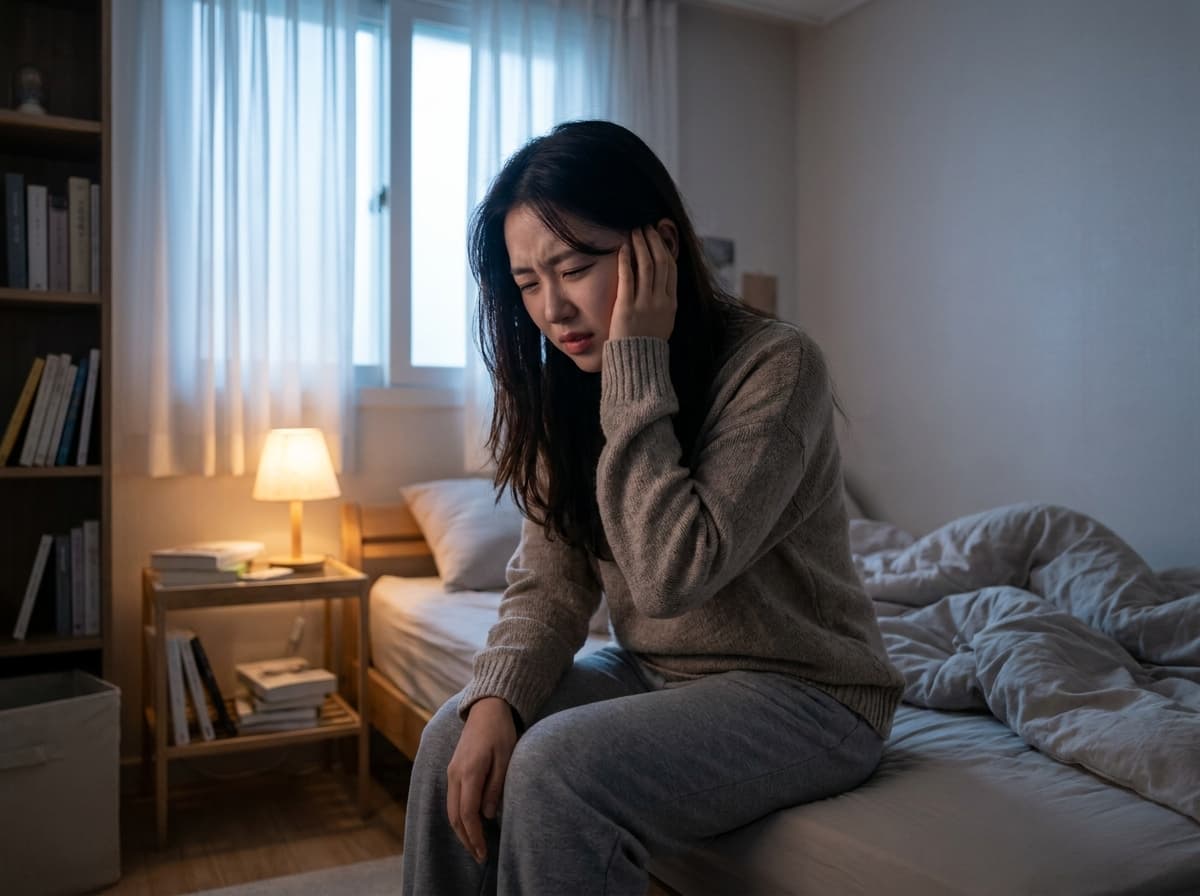
My head is shaking and aching Could it be the autonomic nervous system
Hello. This is Dalimchae Korean Medicine Clinic. # My head is shaking and aching, could it be the autonomic nervous system? As you age, many people complain that 'my head is shaking and aching.' It's too much of a burden and pain in daily life to simply dismiss it as a sign of aging. If frequent headaches are accompanied by a lack of clarity and dizziness, we must consider the possibility of an imbalance in the autonomic nervous system, a crucial regulation system in our body. 💡 **[Key Answer]** **3 most common causes of 'my head is shaking and aching':** ① **Autonomic Imbalance**: Stress and aging cause the brain's homeostasis regulation function to decline, leading to overactivity of the sympathetic nervous system. ② **Cervical Instability and Muscle Tension**: Poor posture or degenerative changes stiffen muscles around the neck and compress nerves, causing headaches. ③ **Chronic Stress and Overwork**: Continuous mental and physical fatigue cause brain function decline and inflammatory responses, worsening headaches. Dalimchae Clinic resolves the root cause of headaches by relieving brain overload and restoring overall body balance through **autonomic stabilization treatment**. --- ### Why does the head shake and ache more as we age? As we age, the symptom 'my head is shaking and aching' becomes more common. Rather than dismissing this as a mere phenomenon of aging, it's important to understand the complex changes in our body. One of the primary causes is a decline in the function of the autonomic nervous system. The autonomic nervous system is a system that automatically regulates our body's biological functions, but its regulatory capacity weakens and balance is easily broken when exposed to aging or chronic stress. Particularly, when the sympathetic nervous system is excessively activated, blood vessels constrict and muscles tense up, preventing smooth blood flow to the head and potentially causing headaches. Furthermore, degenerative changes in the cervical spine (neck bone) or chronic tension in the surrounding muscles are also significant causes of head shaking and headaches. When the neck bones become unstable or the muscles around the neck stiffen, they can compress the occipital nerve, causing tingling or dull pain from the back of the head to the crown. These structural issues and functional abnormalities of the autonomic nervous system often work together to manifest as complex symptoms like 'my head is shaking and aching.' ### Why does it keep hurting even when tests are 'normal'? Many people visit hospitals for headaches or head shaking only to hear "everything is fine" or "it's normal" after various tests. However, it's frustrating to feel discomfort and pain without finding a cause. This is likely due to 'functional issues' that do not appear in imaging tests. An imbalance in the autonomic nervous system is not a damage to a specific organ, but a problem with the body's regulatory function itself, so it often doesn't show up on standard tests. For example, if the function to regulate blood flow to the brain declines, or if the balance of neurotransmitters in the brain is broken, or if the brain continues to be in an overexcited state due to excessive secretion of stress hormones, headaches can occur. In Korean medicine, this state is seen as 'brain overheating' or 'imbalance of Qi and Blood circulation,' focusing on correcting subtle functional abnormalities of the body that are not visible to the eye. At Dalimchae Clinic Songdo, we help improve chronic headaches and head shaking symptoms by finding and resolving the causes of these functional imbalances, rather than simply suppressing symptoms. ### How are headaches treated in Korean medicine? Korean medicine views a headache not as simple pain in the head, but as a result of a broken balance in the entire body. Especially, the symptom of the head shaking and aching is interpreted as a result of a complex interplay between autonomic nervous system abnormalities, Qi and Blood circulation disorders, and physical aging and stress. Therefore, we diagnose each individual's constitution, symptom patterns, and lifestyle habits to provide customized treatment. According to a research summary by the Cochrane Collaboration published by the Association of Korean Medicine in 2016, an analysis of 4,985 patients across 22 clinical studies concluded that acupuncture is effective in preventing migraine occurrences. This study confirmed that acupuncture significantly reduced migraine occurrence rates by 50% or less compared to a placebo, and this preventive effect lasted for more than 6 months. Additionally, compared to conventional headache prevention medications, acupuncture was more effective in initial treatment responses, showed no difference in long-term effects, and had significantly fewer side effects. This suggests that acupuncture can be a safe and effective alternative for chronic headache management. Also, a study published in a domestic academic journal in the early 2010s compared the effects of catgut embedding therapy (13 patients) and acupuncture (13 patients) on 26 patients with chronic tension-type headaches. The results showed that both groups saw significant reductions in pain scores across various headache-related self-assessment indices such as the Visual Analog Scale (VAS), Henry Ford Hospital Headache Disability Inventory (HDI), and Headache Impact Test (HIT). Although there was no statistically significant difference between the two groups, this is an important result showing that both catgut embedding and acupuncture can effectively improve pain in chronic tension-type headache patients. Based on this research data, Dalimchae Clinic applies a combination of acupuncture, pharmacopuncture, and herbal medicine treatment to resolve the root cause of headaches. We focus particularly on calming the excitement of the brain and nervous system and restoring the balance of the autonomic nervous system. At Songdo Headache Clinic Dalimchae Clinic, we help break the cycle of pain and restore a healthy body state by reinforcing weakened organ functions and improving systemic Qi and Blood circulation. ### Why is autonomic stabilization important for headaches? The brain is the command center that oversees all functions of our body, and the autonomic nervous system plays a crucial role in delivering commands from this center to the entire body and regulating the activities of each organ. This is why autonomic stabilization treatment is important when symptoms like head shaking and aching appear. When the balance of the autonomic nervous system is broken, the brain cannot rest and maintains a state of excessive excitement or tension. It's like an overheated engine. This leads to various symptoms such as chronic headaches, dizziness, and insomnia. At Dalimchae Clinic, we resolve this state of brain overload and restore the balance between the sympathetic and parasympathetic nervous systems through autonomic stabilization treatment. Lowering the excessive heat in the nervous system and creating an environment where the brain can rest comfortably — called 'Su-seung-hwa-gang' in Korean medicine — is the key. Just as every electricity in a house must be supplied smoothly when the circuit breaker switch operates stably, all organs including the brain can function properly only when the autonomic nervous system is stable. Many people seeking Songdo Autonomic Nervous System Clinic are experiencing overall health recovery beyond simple headache relief through this fundamental treatment. --- **▶ Am I having autonomic headaches? Symptom Checklist** If 3 or more of the following apply, you may suspect a headache due to autonomic imbalance. * My head often feels throbbing or heavy for no particular reason. * Headaches worsen under stress, and my neck and shoulders stiffen. * I feel tired even after enough sleep, and have trouble falling asleep or wake up often. * My chest feels stuffy or palpitations occur, and it's hard to breathe sometimes. * Digestion is poor, and I often feel bloated or stuffy. * My hands and feet are cold or numb, and heat often rises to my face or body. * I suddenly feel dizzy or find it hard to keep balance during daily life. * Mood swings are severe, and I often feel anxious or restless. **Judgment Criteria:** * **3 or more apply**: Suspect headache due to autonomic imbalance; consider Korean medicine complex treatment. * **5 or more apply**: Immediate visit for precise diagnosis and treatment is recommended to improve symptoms. --- **Q. Can senile headaches be improved with Korean medicine treatment?** A. Yes, senile headaches are likely to occur due to complex causes such as a decline in autonomic function and Qi and Blood circulation issues. Korean medicine treatment helps resolve the root cause of headaches by stabilizing the autonomic nervous system and restoring systemic functions according to each patient's constitution and symptoms. **Q. I am dependent on headache medicine; is it okay to take it with herbal medicine?** A. Generally, yes. However, it may vary depending on the individual's health status and the type of medication being taken, so you must decide after consulting with medical staff. Korean medicine treatment focuses on reducing dependence on headache medicine and preventing pain recurrence. **Q. Headaches and dizziness appear together; can they be treated simultaneously?** A. Yes, they can. Headaches and dizziness are often deeply related to autonomic imbalance and brain function abnormalities. At Dalimchae Clinic, we treat both headaches and dizziness through integrated treatment that stabilizes the autonomic nervous system and improves brain function by identifying the common cause of the two symptoms. --- Symptoms like 'my head is shaking and aching' are not problems that can be solved by enduring. You no longer have to ignore the signals your body has been sending for a long time. If you approach it in the right direction, your body will react faster than you think. Bring your symptoms as they are. Dalimchae Clinic will find the cause together. Where life blooms. For herbal medicine, it's Dalimchae Korean Medicine Clinic. Check your symptoms similar to mine through the AI consultation on the Dalimchae Clinic website first! This article is health information compiled by Dalimchae medical staff based on questions frequently received in the treatment room. Medical Supervision | Dalimchae Clinic Songdo Branch Korean Medicine Doctor Oh Hyunmin (Headache Column) based on Brain/Autonomic Nervous System treatment standards.