
Hello. This is Dalimchae Korean Medicine Clinic.
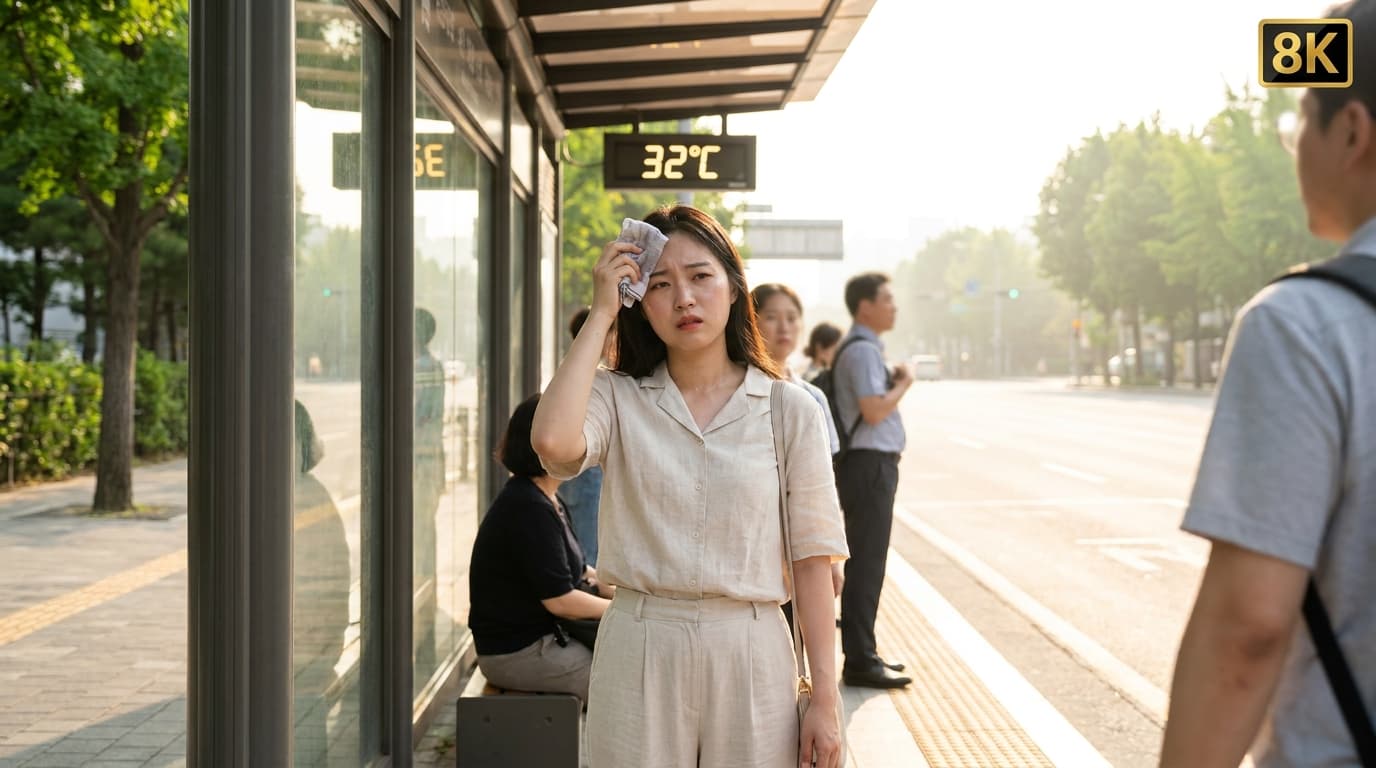
I sweat way too much. Is it just my constitution, or is it hyperhidrosis?
Are you experiencing discomfort in your daily life because you sweat unusually much? If sweat drips down your back even when you are still, and you hesitate to go out without a handkerchief, it's hard to simply dismiss it as having a 'sweaty constitution.' Especially if you've had embarrassing experiences like your hands getting soaked or sweat beading on your face in important situations, you should suspect 'hyperhidrosis' beyond a simple constitutional issue. Sweat is essential for body temperature regulation, but excessive sweating can significantly lower your quality of life.
💡 [Key Answer] The 3 most common causes of the symptom 'I sweat too much': ① Autonomic nervous system imbalance / ② Internal heat imbalance / ③ Stress and psychological tension Dalimchae Korean Medicine Clinic focuses on normalizing sweat secretion by stabilizing an overactive autonomic nervous system and restoring the body's overall balance.
How can you distinguish between normal sweat and hyperhidrosis?
Sweating is an important body temperature regulation system for our bodies. It's a natural physiological phenomenon to sweat when it's hot or when exercising. However, hyperhidrosis refers to a pathological state where sweat is secreted excessively beyond such physiological needs. According to statistics from the Health Insurance Review and Assessment Service, as of 2023, more than 15,000 people per year visit medical institutions for hyperhidrosis, and it is estimated that there are far more potential patients who are actually enduring discomfort.
So, how can you know if the sweating you are experiencing is hyperhidrosis? You can self-diagnose through the following criteria. If sweat is excessively secreted in specific areas such as hands, feet, or armpits for more than 6 months without a special underlying disease, or if sweat is symmetrical, and daily life is hindered by sweat more than once a week, you should suspect hyperhidrosis. In particular, if symptoms appeared before the age of 25, if there is a family history, or if you wake up from sleep due to sweat, you should consider professional examination if two or more apply.
Why does hyperhidrosis occur? It's not just a 'sweat gland problem.'
Many people think that sweating a lot is just a problem with the sweat glands, but the core cause of hyperhidrosis is deeply related to our body's 'autonomic nervous system imbalance.' In particular, excessive activation of the sympathetic nervous system stimulates sweat glands and induces unnecessary sweat secretion.
In Korean medicine, hyperhidrosis is viewed within the category of sweating (汗症). It is explained as being caused by a combination of factors such as weakening of the lung (肺) function that opens and closes pores, accumulation of internal damp-heat (濕熱) due to decreased spleen and stomach (脾胃) function responsible for moisture metabolism, and an Yin-deficiency (陰虛) state where the heart and kidneys are exhausted and body fluids become insufficient. In addition, mental tension or stress deepens the instability of the autonomic nervous system, acting as a major factor that worsens sweat secretion. From this perspective, hyperhidrosis should be understood not just as a problem of skin sweat glands, but as a signal that the balance deep inside the body has been broken.
How is hyperhidrosis treated in Korean medicine? Finding the balance of the autonomic nervous system.
Dalimchae Korean Medicine Clinic in Incheon focuses on resolving the autonomic nervous system imbalance, the root cause of hyperhidrosis, and cultivating the body's own power to regulate sweat. Calming the excessively excited sympathetic nervous system and supplementing insufficient body fluids (Jin-yeok) are the core treatment directions.
Recent clinical research results also support the effectiveness of Korean medicine treatment for hyperhidrosis. A study published in the Journal of Korean Medical Ophthalmology, Otolaryngology & Dermatology in 2022 conducted a systematic literature review and meta-analysis on herbal medicine treatment for hyperhidrosis. As a result of synthesizing the results of a total of 8 related clinical studies, it was found that herbal medicine treatment showed significant effects compared to Western medicine treatment, and it was also found to be more advantageous in terms of side effects (p<0.05). The researchers concluded that these results provide a basis for herbal medicine treatment for hyperhidrosis and suggest a safer and more effective treatment possibility.
In addition, a case report published in Dove Medical Press in January 2026 observed clinically significant improvement in a 66-year-old male patient with chronic hyperhidrosis after 42 days of single administration of Samhwangsasim-tang extract granules. The patient's spontaneous sweating completely improved from 10 points on the NRS (Numeric Rating Scale) to 0 points and from 4 points on the HDSS (Hyperhidrosis Disease Severity Scale) to 1 point, and facial flushing also decreased to the 20-30% level. This study suggested that the heat-clearing (淸熱), anti-inflammatory, and metabolic regulation properties of Samhwangsasim-tang can contribute to normalizing skin temperature and regulating sweat. Like this, Dalimchae Korean Medicine Clinic helps to normalize the function of sweat glands by regulating internal imbalance, lowering excessive heat, and reinforcing energy through herbal prescriptions suitable for each individual's constitution and symptoms.
Furthermore, a trend study on TCM clinical research on oral herbal medicine treatment for primary hyperhidrosis in children published in the Journal of Pediatrics of Korean Medicine in 2022 analyzed 5 randomized controlled clinical trials (RCTs) and confirmed that oral herbal medicine treatment for childhood hyperhidrosis is effective. In particular, it was also revealed that treatment effects begin to appear when taking herbal medicine for more than 1 month, providing important information for establishing treatment plans for childhood hyperhidrosis. These studies suggest that hyperhidrosis is a problem caused by regulation abnormalities of the autonomic nervous system, and show that Korean medicine treatment is effective in correcting the balance of the body beyond simply suppressing sweat.
Dalimchae's 3 Core Treatment Principles: Autonomic Stabilization
Our body's autonomic nervous system regulates all body functions while maintaining balance like a car's engine and brake. Hyperhidrosis is like a state where this autonomic nervous system, especially the engine called the sympathetic nervous system, is excessively overheated and does not stop. If there is a problem in communication between the brain and the gut (gut-brain axis), or if chronic stress and fatigue accumulate, the balance of the autonomic nervous system is broken, and as the brain cannot rest sufficiently, abnormalities occur in the regulation function of the body as a whole. This leads to an imbalance in body heat and confusion in sweat secretion regulation function, causing excessive sweat to flow.
At Dalimchae Korean Medicine Clinic, we focus on stabilizing such 'overheated autonomic nervous system.' We alleviate the tension of the excessively excited sympathetic nervous system and strengthen the function of the parasympathetic nervous system to help the body return to a comfortable and stable state. In Korean medicine, this is sometimes explained with concepts such as 'Su-seung-hwa-gang (升降),' aiming for treatment that balances the circulation of the entire body by lowering the rising heat and raising the cool energy below. By cooling the excessive heat in the nervous system and creating an environment where the brain can rest sufficiently, we contribute to restoring the function of the autonomic nervous system that regulates sweat and ultimately normalizing sweat secretion. This process is a fundamental treatment that helps the body itself regain a healthy balance, rather than simply suppressing sweat. This can be a beneficial approach for those who complain of autonomic nervous system-related symptoms such as stress, insomnia, headaches, and dizziness along with hyperhidrosis.
Could I also have hyperhidrosis? Self-checklist
Check if you fall under the following questions.
- Sweat Excess Symptom Checklist
- I sweat excessively for more than 6 months for no particular reason.
- Sweat occurs symmetrically in specific areas such as both hands, feet, and armpits.
- I am hindered in my daily life because of sweat at least once a week.
- Sweat excess symptoms started before the age of 25.
- There are people in my family who sweat a lot.
- I feel uncomfortable due to sweat even when sleeping, or have woken up due to sweat.
- Sweating tends to be more severe during stress or tension.
Judgment Criteria:
- If 2-3 apply: Suspected early hyperhidrosis or autonomic imbalance → Review lifestyle management and Incheon hyperhidrosis Korean medicine clinic consultation.
- If 4 or more apply: High possibility of hyperhidrosis → Immediate precise examination and Korean medicine complex treatment at Dalimchae Korean Medicine Clinic Incheon Branch is recommended.
FAQ – Frequently Asked Questions about Hyperhidrosis
Q. Can hyperhidrosis be cured naturally? A. Some mild hyperhidrosis can be improved through lifestyle changes or stress management, but chronic hyperhidrosis is difficult to cure naturally. Especially if autonomic nervous system imbalance is the main cause, it is important to receive fundamental treatment with the help of an expert.
Q. How long does hyperhidrosis treatment take? A. The duration of hyperhidrosis treatment depends on the severity of the individual's symptoms, cause, and constitution. Recent hyperhidrosis often requires about 3 months of treatment, and chronic cases often require around 6 months. In the case of childhood hyperhidrosis, research shows that effects begin to appear after taking herbal medicine for at least 1 month.
Q. Are there any other methods besides surgery for hyperhidrosis? A. Yes, hyperhidrosis surgery has side-effect risks such as compensatory hyperhidrosis. Dalimchae Korean Medicine Clinic Incheon Branch performs non-surgical treatment that restores autonomic nervous system balance and normalizes sweat secretion through Korean medicine treatments such as herbal medicine, acupuncture, pharmacopuncture, and moxibustion.
Q. Are the treatment methods different for hand/foot hyperhidrosis and general hyperhidrosis? A. Hyperhidrosis can be divided into focal hyperhidrosis (hands, feet, armpits, etc.) and generalized hyperhidrosis depending on the occurrence area. Focal hyperhidrosis is deeply related to emotional causes and sympathetic over-excitation, while generalized hyperhidrosis can involve a combination of systemic problems such as internal heat imbalance and Yin deficiency (陰虛). Dalimchae Korean Medicine Clinic provides customized treatment considering the patient's symptom type and constitution.
Hyperhidrosis is not a problem that can be solved by enduring. You no longer have to ignore the body's signals sent for a long time. If you approach it in the right direction, your body will react faster than you think. Bring your symptoms as they are. At Dalimchae Korean Medicine Clinic Incheon Branch, we will find the cause together.
Where life blooms. For herbal medicine, it's Dalimchae Korean Medicine Clinic. Check your symptoms similar to mine through the AI consultation on the Dalimchae Korean Medicine Clinic website first!
This article is health information compiled by Dalimchae medical staff based on questions frequently received in the treatment room. Medical Supervision | Incheon Branch Korean Medicine Doctor Min Jihong (Skin Symptom Column) based on skin symptom column treatment standards. #Hyperhidrosis #SweatExcess #AutonomicNervousSystem #IncheonHyperhidrosisClinic #KoreanMedicineTreatment #LifestyleManagement #ReasonForSweatingALot