
Hello, this is Dalimchae Korean Medicine Clinic.
Why You Should Check When Spotting Occurs After Intercourse
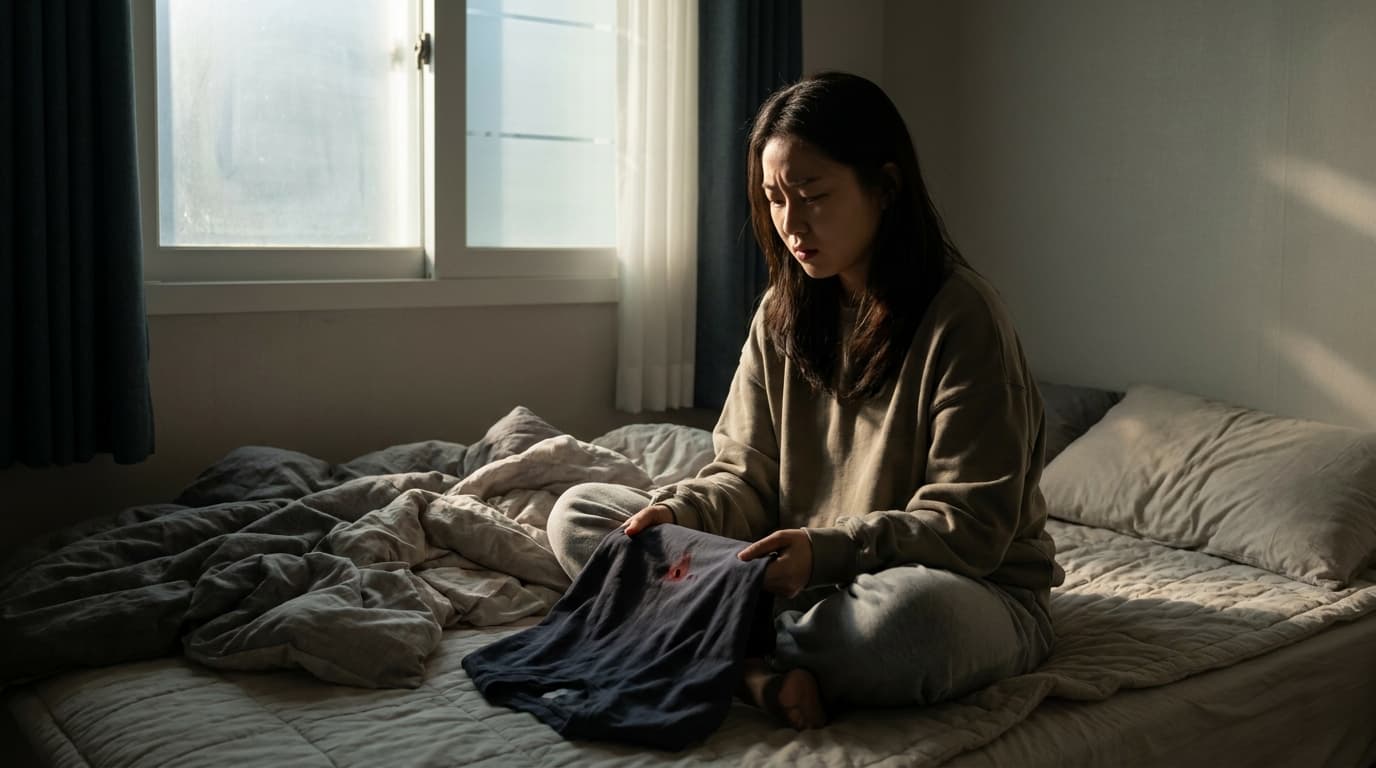
"Spotting keeps occurring after intercourse." This single phrase brings embarrassment and anxiety to many women. They worry if something serious has happened or hesitate to visit a hospital. However, spotting after sexual intercourse is a more common symptom than expected, with various causes. It is an important bodily signal that should not be simply dismissed as embarrassing or ignored.
💡 Key Answer Top 3 most common causes of spotting after intercourse: ① Cervical erosion or inflammation / ② Cervical polyp / ③ Endometrial changes due to hormonal imbalance Dalimchae Korean Medicine Clinic helps restore a healthy women's body without unnecessary bleeding and recover fundamental uterine health through constitutional improvement.
Is Spotting After Intercourse Okay to Ignore?
Spotting after intercourse can occur in about 9% of women of childbearing age, usually manifesting as small amount of bleeding. While it sometimes disappears on its own as a temporary phenomenon, professional examination is definitely necessary if it recurs or bleeding increases. In particular, since it can be a sign of serious diseases such as cervical cancer or cervical dysplasia, leaving it unattended based on self-diagnosis is dangerous. It is important to pay close attention to bodily signals and figure out the exact root cause. Dalimchae Korean Medicine Clinic in Songdo listens attentively to women's delicate bodily changes and aids healthy recovery.
Why Does Spotting Keep Occurring After Intercourse? Common Causes
The causes of bleeding after sexual intercourse vary, and most are related to microscopic damage, inflammation, or hormonal changes in the cervix or vagina.
- Cervical Erosion and Inflammation: Cervical erosion is a condition where cells that should be inside the cervical canal are exposed to the outside, and blood vessels in this area are very fragile, easily damaged during intercourse to cause bleeding. It commonly appears in adolescents, pregnant women, and women taking oral contraceptives where hormonal fluctuations are active. When inflammatory conditions (cervicitis, vaginitis, etc.) accompany, blood vessels become even more vulnerable, increasing bleeding risk.
- Cervical Polyps: Benign tumors occurring on the cervix, which can easily bleed due to friction during intercourse. Most are benign, but removal may be considered if they grow larger or cause discomfort.
- Vaginal Dryness: When entering menopause or experiencing hormonal imbalance, severe vaginal dryness can cause microscopic wounds on the vaginal wall due to friction during intercourse, leading to bleeding. This is closely related to decreased estrogen levels.
- Endometrial Changes and Hormonal Imbalance: When hormonal changes according to the menstrual cycle become unstable, the endometrium becomes sensitive, inducing abnormal bleeding after intercourse. In addition, imbalance of the autonomic nervous system affects the overall female hormone system, triggering abnormal bleeding.
- Rare but Serious Causes: Postcoital bleeding can appear as an initial symptom of serious diseases such as cervical cancer, endometrial cancer, uterine fibroids, and adenomyosis. Careful examination is especially required if you are over 35 years old, have a history of HPV infection, or abnormal cervical cytology results.
What is the Relationship Between Hormonal Imbalance, Autonomic Nervous System, and Postcoital Bleeding?
The autonomic nervous system of our body automatically regulates vital functions such as heartbeat, digestion, and hormone regulation without conscious effort. When the balance of the autonomic nervous system breaks down due to stress, overwork, or lack of sleep, this soon causes confusion in hormone secretion and can affect uterine health. In particular, female hormones are heavily influenced by the autonomic nervous system, so instability of the autonomic nervous system can cause menstrual irregularities and endometrial instability, acting as a cause of abnormal bleeding such as postcoital bleeding. This often leads to 'unexplained' bleeding where no special abnormalities are found in Western medical examinations.
At Dalimchae Korean Medicine Clinic Songdo Branch, we aim to solve these fundamental problems through herbal medicine treatment for autonomic nervous system stabilization and hormone balance. This is because the uterus has the power to regenerate and recover on its own, but its ability can deteriorate when the overall balance of the body is broken.
How Does Korean Medicine View and Treat Postcoital Bleeding?
In Korean medicine, postcoital bleeding is not viewed simply as a problem of a specific area, but interpreted as originating from the imbalance of overall Qi and blood circulation and uterine environment. In particular, 'blood stasis (stagnant blood due to poor circulation)' and 'qi deficiency (lack of energy)' are regarded as major causes of women's diseases. If Qi and blood circulation are not smooth and blood stasis accumulates in the uterus, the regenerative capacity of the uterus and surrounding tissues decreases, making them vulnerable to inflammation and prone to bleeding.
In a systematic review and meta-analysis published in 2023 in the 「Traditional and Complementary Medicine Research Center, Mazandaran University of Medical Sciences」, the efficacy of herbal medicines was evaluated in a total of 1715 women with menorrhagia participating in 19 randomized controlled trials. As a result, herbal medicines showed a significant effect in reducing bleeding severity and menstrual days (p<0.001 in all 1st, 2nd, and 3rd menstrual cycles), confirming a tendency for the effect to persist over time. The researchers concluded that these results suggest herbal medicine can be an effective complementary therapy for managing abnormal uterine bleeding.
In addition, in a study by Qaraaty et al. published in the 「F1000Research」 journal in 2022, 13 women experiencing abnormal uterine bleeding (menometrorrhagia) due to uterine fibroids were asked to take a specific medicinal plant mixture (Mentha pulegium L and Artemisia abrotanum L) tea for 3 months. As a result, 10 of the participating women were able to avoid surgery, and the average bleeding days significantly decreased from 11.50 days (±3.77) before treatment to 7.60 days (±2.11) after treatment (p=0.01). This shows that Korean medicine treatment can provide practical help in improving the uterine environment and alleviating bleeding symptoms in women. Based on these data, Dalimchae Korean Medicine Clinic identifies the fundamental cause of postcoital bleeding and helps restore overall women's health by improving the uterine environment and preventing bleeding recurrence through customized herbal medicine prescriptions and acupuncture/moxibustion treatments tailored to individual body conditions.
The Impact of Dalimchae's Constitutional Improvement Treatment on Women's Health
Dalimchae Korean Medicine Clinic goes beyond simply suppressing symptoms, aiming to build a body where symptoms do not turn back on rather than just turning them off. Spotting after intercourse is also viewed as occurring when the resilience and balance of the uterus and the whole body weaken and break, building a body that can maintain health on its own through constitutional improvement.
By thoroughly diagnosing individual constitutions and health states, we prescribe customized herbal medicines that promote uterine blood circulation, reduce inflammation, and restore hormone balance. In addition, acupuncture and moxibustion treatments smooth Qi and blood circulation around the uterus, stabilize autonomic nervous system imbalances caused by stress, and help the uterus function healthily. Through this, we can expect the effect of improving overall women's health problems such as menstrual irregularities, menstrual cramps, and chronic vaginitis along with bleeding symptoms. Dalimchae Korean Medicine Clinic in Songdo does its best to help women's bodies regain healthy vitality.
Postcoital Bleeding Self-Checklist
Check how many of the following apply to you:
- Spotting after intercourse repeats consistently rather than once or twice.
- Abnormal uterine bleeding frequently occurs even when it is not the menstrual period.
- Lower abdominal pain or pelvic discomfort accompanies spotting.
- Frequently feel vaginal dryness or pain during sexual intercourse.
- Feel that the body is very tired and immunity has dropped recently due to stress or overwork.
- Have heard abnormal findings in past cervical cancer screening.
- Symptoms appeared after starting or stopping oral contraceptives.
- Amount of leukorrhea has increased, with changes in color or odor.
Evaluation Criteria:
- 3+ items apply: Uterine environment and hormonal imbalance suspected. Consider consulting Dalimchae's constitutional improvement treatment.
- 5+ items apply: Active precise diagnosis and treatment may be needed. Do not hesitate to visit Dalimchae Korean Medicine Clinic Songdo Branch for accurate examination.
FAQ. Frequently Asked Questions
Q. How serious is spotting after intercourse? A. Most are not serious diseases, but it can be an early sign of important diseases such as cervical cancer or dysplasia. Especially if it repeats or bleeding volume is large, accurate examination must be received.
Q. Can bleeding after intercourse be treated with Korean medicine? A. Yes, Korean medicine views the fundamental cause of postcoital bleeding as body Qi/blood imbalance and uterine environment problems, and proceeds with constitutional improvement treatment. Through herbal medicine and acupuncture/moxibustion, it helps increase uterine resilience and regain hormone balance.
Q. Can abnormal bleeding after intercourse heal naturally? A. Bleeding due to temporary micro-damage sometimes stops on its own. However, if the cause is not resolved, the probability of recurrence is high, and serious diseases may be missed, so consulting professional medical staff rather than self-judgment is important.
Q. I have menstrual irregularities along with spotting after intercourse, can they be treated together? A. Yes, menstrual irregularities and postcoital bleeding are both closely related to hormonal imbalance and uterine environment problems. Dalimchae's constitutional improvement treatment focuses on balancing overall women's health, making it effective in improving both symptoms together.
The bodily signal "Spotting keeps occurring after intercourse" is not a problem solved by enduring. You no longer need to turn away from bodily signals sent for a long time. Approaching in the right direction makes the body react faster than expected. Bring the symptoms you are experiencing as they are. Dalimchae Korean Medicine Clinic will find the cause together and help you regain a healthy life.
Where life blossoms. Herbal medicine is Dalimchae Korean Medicine Clinic. Check symptoms similar to yours first through Dalimchae Korean Medicine Clinic homepage AI consultation!
This health information was compiled together by Dalimchae medical staff based on questions frequently received in the clinic room. Medical Review | Dalimchae Korean Medicine Clinic Songdo Branch, Korean Medicine Doctor Oh Hyunmin (Women's Health Column)