
Hello, this is Dalimchae Korean Medicine Clinic.
Feeling Dizzy When Standing Up, Could It Be a Serious Illness?
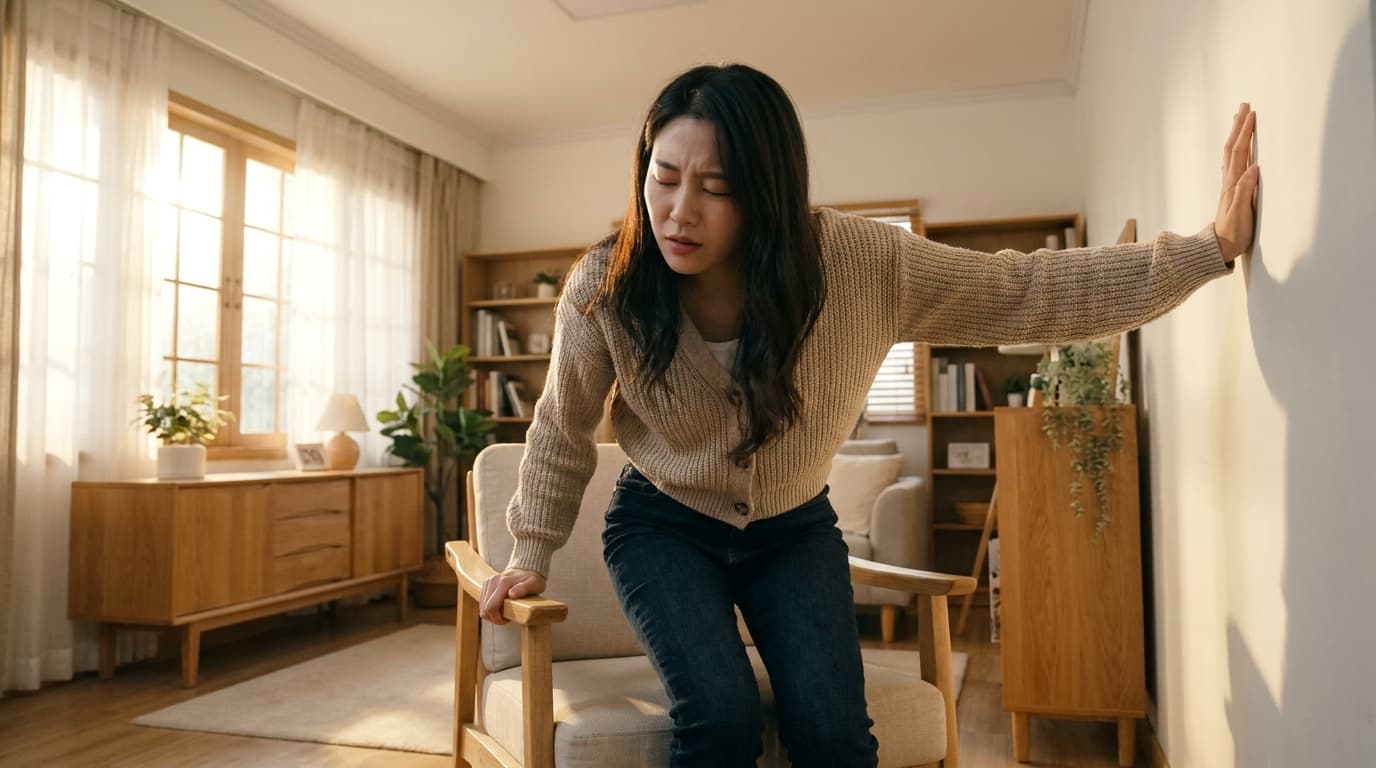
Every time you stand up, experiencing dizziness, blurred vision, or unsteadiness is something most people have felt at least once or twice. It is easy to brush it off thinking "I must be tired" or "My anemia is acting up," but if these symptoms recur, they cause significant inconvenience in daily life and fill you with anxiety about whether something might be wrong with your body. Especially symptoms like "feeling dizzy when standing up" are not just momentary phenomena, but can be a sign that an important balance system in your body has a problem.
💡 [Key Answer]
Top 3 most common causes of "feeling dizzy when standing up":
① Orthostatic hypotension: Blood pressure regulation failure during posture changes / ② BPPV (Ear crystals): Small stone issues inside the ear / ③ Autonomic imbalance: Nervous system malfunction caused by stress and overwork.
Dalimchae Korean Medicine Clinic treats the root cause of dizziness by restoring the balance of the brain and body through autonomic stabilization.
Why Does Dizziness Occur When Standing Up?
Dizziness, or a spinning sensation when suddenly standing up from sitting or lying down, can sometimes appear as a temporary blood circulation problem, but it can also be a sign of a specific condition. Our body regulates blood pressure and blood flow when changing postures to maintain a constant supply of blood to the brain. However, when this regulatory function has problems, the amount of blood going to the brain momentarily decreases, causing dizziness.
One of the most common causes is orthostatic hypotension. It can be diagnosed if systolic blood pressure drops by 20mmHg or more and diastolic blood pressure drops by 10mmHg or more when standing up from a lying position. This is often caused by the autonomic nervous system failing to properly regulate blood pressure. In addition, peripheral causes such as BPPV or vestibular neuritis, which involve problems in the inner ear's balance organs, can also trigger dizziness. However, if dizziness recurs even when no special abnormalities are found in examinations, autonomic ataxia can be suspected.
Yes, it is deeply related. The autonomic nervous system plays an important role in maintaining body homeostasis without our conscious awareness, such as heart rate, blood pressure, digestion, and temperature regulation. In particular, when the balance between the sympathetic and parasympathetic nervous systems involved in blood pressure regulation is broken, blood pressure drops sharply when standing up or rises abnormally high instead, causing blood circulation problems and inducing dizziness.
According to a study titled "Autonomic dysfunction in patients with orthostatic dizziness" published by Lee Hwa-jung and Kim Ha-young research team in Annals of Clinical Neurophysiology (ACN) in 2023, autonomic dysfunction is frequently observed in patients with orthostatic dizziness, and the interpretation of autonomic function test results such as the head-up tilt test and Valsalva test is important in diagnosing and managing underlying conditions. The researchers concluded that appropriate treatment can help improve dizziness and prevent falls. As such, the autonomic nervous system plays a core role in maintaining body balance; therefore, when autonomic balance collapses, the brain cannot rest and errors occur in various body functions, leading not only to dizziness but also to chronic fatigue, headaches, and insomnia.
How Does Korean Medicine View and Treat the Cause of Dizziness?
In Korean medicine, dizziness is not viewed solely as a problem of the ear or brain. It is seen as occurring due to complex causes such as Qi-Blood circulation imbalance in our body, weakened organ function, and autonomic nervous system disturbance caused by stress. In particular, among many patients visiting Incheon Dizziness Korean Medicine Clinic, there are many cases suffering from chronic dizziness even though there are no special abnormalities in examinations. In such cases, excessive excitement or depression of the autonomic nervous system can be the root cause.
According to a clinical case report published in 2026, "Complex Korean Medicine Treatment for a Patient with Benign Paroxysmal Positional Vertigo and Qi Deficiency: A Case Report," applying complex Korean medicine treatment including herbal medicine and Chuna therapy to a Benign Paroxysmal Positional Vertigo (BPPV) patient accompanied by Qi deficiency symptoms resulted in dizziness decreasing from NRS (Numerical Rating Scale) 8 upon hospitalization to NRS 1 upon discharge, and DHI (Dizziness Handicap Inventory) score also significantly improved from 64 points (severe handicap) before treatment to 10 points (mild handicap) after treatment. In addition, another case reported by Jaseng Hospital of Oriental Medicine in 2023 showed that diagnosis of unexplained dizziness as phlegm dizziness (Damhun) and Korean medicine treatment centered on Banhabackchulcheonma-tang significantly improved K-DHI (Korean version Dizziness Handicap Inventory) and VAS (Visual Analog Scale) scores during hospitalization. These studies suggest that Korean medicine-based treatment can have a meaningful effect on improving dizziness.
Dalimchae Korean Medicine Clinic Incheon Branch aims for autonomic stabilization treatment based on these data, seeking to solve dizziness by finding its root rather than simply suppressing symptoms. We calm the excitement of the brain and autonomic nervous system overheated by stress and overwork, and create an environment where the body can restore its balance and heal itself. Lowering the heat of the nervous system and creating an environment where the brain can rest — in Korean medicine, this is called Suseung-hwagang (Water Up, Fire Down) — focuses on smoothing blood circulation, stabilizing sensitive nerves, and preventing recurrence of dizziness.
Self-Checklist for Dizziness When Standing Up and Autonomic Imbalance
Check if any of the following questions apply to you.
- You frequently experience darkened vision and a spinning sensation when standing up suddenly.
- Fatigue is severe and your body does not feel refreshed even after adequate rest.
- You frequently feel heart palpitations or tightness in your chest.
- Your head feels unclear, heavy, or foggy.
- You have cold hands/feet or numbness symptoms.
- You experience cold sweats or difficulty regulating body temperature.
- You suffer from other discomfort symptoms together such as insomnia, indigestion, or constipation.
If 3 or more apply → Suspect autonomic function decline → Consider complex Korean medicine treatment
If 5 or more apply → Immediate expert consultation and clinic visit recommended
FAQ: Frequently Asked Questions About Dizziness
Q. I feel dizzy when standing up, is it because of anemia? A. Anemia can also be a cause of dizziness, but dizziness occurring when standing up is often caused by a combination of other factors such as orthostatic hypotension or autonomic imbalance. Accurate diagnosis requires examining various possibilities.
Q. Dizziness, headaches, and chronic fatigue appear together, can they be treated together? A. Yes, perfectly possible. Dizziness, headaches, and chronic fatigue often have a deep connection with autonomic nervous system imbalance. Dalimchae Korean Medicine Clinic Incheon Branch's autonomic stabilization treatment helps comprehensively improve various symptoms by restoring nervous system balance.
Q. Can dizziness heal naturally? A. Temporary dizziness can improve with sufficient rest and stress management, but if it recurs chronically or interferes with daily life, it is difficult to heal naturally. Ignoring body signals and leaving them unattended can worsen symptoms, so receiving appropriate treatment early is important.
Dizziness when standing up is not a problem that can be solved by enduring. You no longer have to turn away from the body signals sent for a long time. When approached in the right direction, the body responds faster than you think. Bring the symptoms you are experiencing as they are. Dalimchae Korean Medicine Clinic will find the cause together.
A place where life blooms. Herbal medicine is undoubtedly Dalimchae Oriental Clinic.
Check your similar symptoms first through Dalimchae Korean Medicine Clinic website AI consultation!
This health information was compiled together by Dalimchae medical staff based on questions frequently received in the clinic room.
Medical Supervision | Brain & Autonomic Practice Standard, Dalimchae Oriental Clinic Incheon Branch, Korean Medicine Doctor Yang Yuchan (Dizziness Column)