
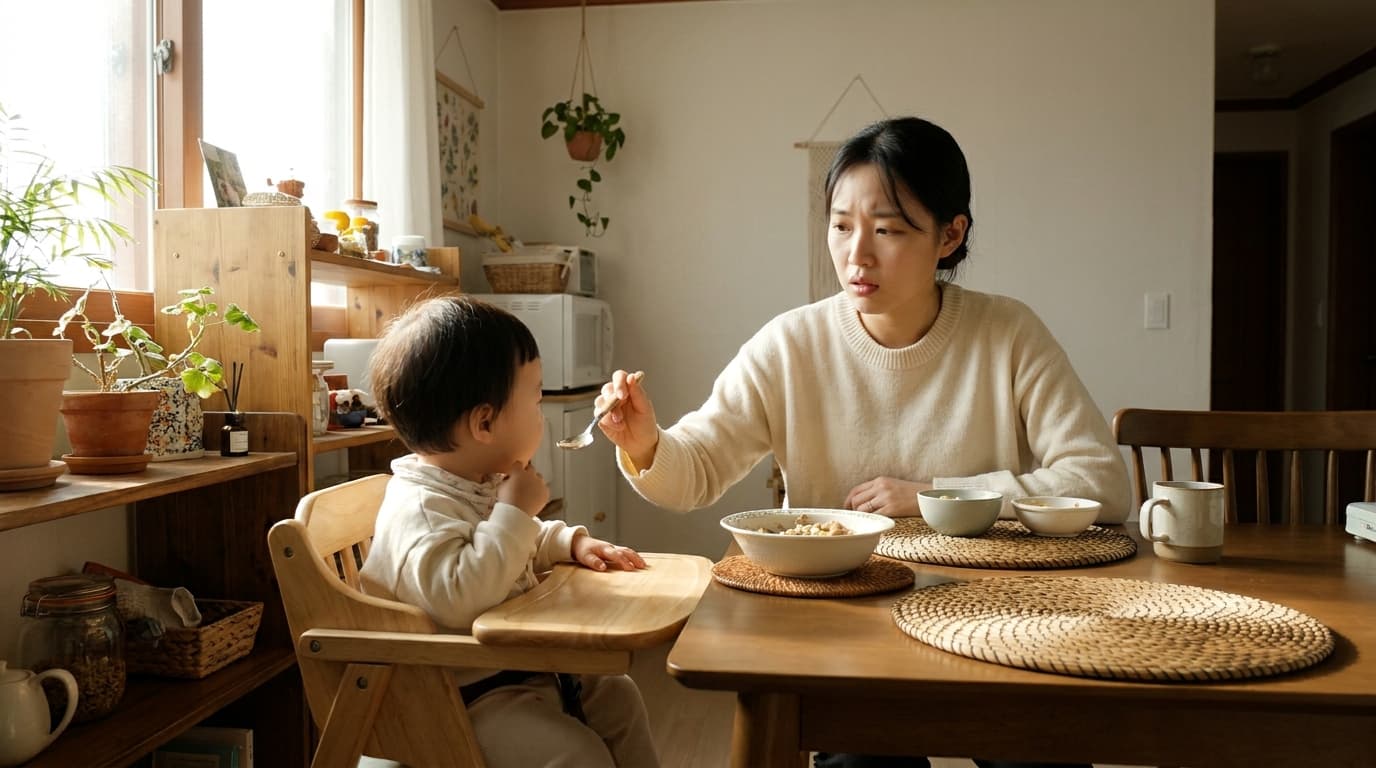
아이가 몇 숟가락 먹고 배부르대요? 성장에 중요한 '이것' 놓치지 마세요.
Hello, this is Dalimchae Korean Medicine Clinic. # Why Does Your Child Say They Are Full After a Few Spoons? Don't Miss This Crucial Growth Factor. "My child says they are full after just a few spoons." Many parents struggle and sigh during every mealtime. Repeating the cycle of trying to force feed while the child runs away often leads to self-blame: "Why is only my child like this?" Dismissing it as mere picky eating causes worry, and anxiety about nutritional deficiencies during the growth period keeps parents on edge. A child's food refusal and inadequate intake are among parents' biggest concerns. 💡 **[Key Answer]** **Top 3 most common causes for a child feeling full after just a few spoons:** ① Weakened gastrointestinal function and lack of digestive enzymes / ② Gut health issues due to intestinal microbiome imbalance / ③ Mealtime stress and emotional factors. Dalimchae Korean Medicine helps restore your child's digestive function and improve gut health through a **gut detoxification** approach, naturally promoting appetite and healthy growth. ## Why Won't Our Child Eat? Children refuse to eat for complex reasons, often going beyond simply being "picky eaters." In Korean medicine, pediatric poor appetite is viewed as a weakening of the Spleen and Stomach (脾胃) functions. These organs govern digestion and nutrient absorption; when their function declines, food is not properly digested, and even without overt indigestion symptoms, discomfort in the stomach lowers appetite. Particularly during growth periods, children's digestive systems are immature and easily burdened, and their intestinal environment can be more unstable than adults'. Gut health is directly linked to immunity; an increase in harmful gut bacteria reduces nutrient absorption and causes mucosal inflammation affecting the entire body. Stress, poor eating habits, and aversion to specific foods also combine. ## Feeling Full After a Few Spoons Is Not Just Picky Eating. When a child stops eating after a few spoonfuls claiming they are "full," it may be a bodily signal that cannot be brushed off as picky eating. This often occurs because weakened stomach function slows digestion, causing food to stay in the stomach longer and creating premature satiety. Chronic poor appetite leads to nutritional imbalances, heightening risks of poor height growth, underweight status, lowered immunity, frequent colds, and decreased concentration. Such issues are emphasized in Korean clinical medicine. A 2026 study by Kyung Hee University and Korea Institute of Oriental Medicine researchers titled "Development of Evidence-Based Korean Medicine Clinical Practice Guidelines for Pediatric Anorexia" showed herbal medicine treatment significantly improved pediatric appetite loss. Meta-analysis of 4 randomized controlled trials (RCTs) and 1 before-after study revealed that children receiving herbal treatment gained an average of 0.86 kg more weight compared to control/placebo groups (MD 0.86 kg, 95% CI [0.40, 1.32]), with a Total Effective Rate (TER) 1.52 times higher (RR 1.52, 95% CI [1.33, 1.74]). Researchers concluded herbal treatment is an effective and safe option for pediatric anorexia. Additionally, a 2022 systematic review and meta-analysis published in <Frontiers in Pharmacology> by KIOM, Dongguk University, and Kyung Hee University research teams analyzed 205 RCTs, showing herbal medicine increased total effective rate for appetite loss by 1.58 times (RR 1.58, 95% CI 1.34, 1.85) compared to placebo, alongside significant improvements in anthropometric markers, gastrointestinal biomarkers, and nutritional indices without serious adverse events. Based on these data, Dalimchae Korean Medicine provides customized treatments improving digestive function and gut health tailored to the child's body. ## Transform Your Child's Internal Environment with Dalimchae's 'Gut Detox' Treatment Dalimchae Korean Medicine Clinic Songdo branch approaches pediatric poor appetite not merely as a behavioral issue, but as an imbalance in the **Gut-Brain Axis** and gut health. The gut-brain axis is a close connection network between the gut and brain; poor gut health affects brain function, impacting appetite regulation and emotional stability. Our **Gut Detox** treatment focuses on breaking the vicious cycle where toxins accumulated in the gut barrier travel through the blood to create systemic inflammation and lower immunity. Customized herbal medicine matching the child's constitution and symptoms activates stomach peristalsis and promotes digestive enzyme secretion. Simultaneously, it fosters beneficial gut flora and suppresses harmful bacteria to strengthen the gut barrier and enhance nutrient absorption. Unnecessary waste and toxins are cleared, normalizing gut function so children naturally regain appetite and grow healthily. Our Songdo clinic provides tailored Korean medical treatments considering children's overall health and growth development. Many parents visiting for baby feeding refusal experience positive changes in increased food intake and improved picky eating habits through gut detox treatment. ## Pediatric Appetite Loss Self-Diagnosis Checklist If your child checks 3 or more items, professional help for pediatric poor appetite may be needed: * □ Significantly less food intake compared to peers. * □ Extremely difficult to get down even a spoonful of rice. * □ Severe picky eating regarding specific foods, rarely trying new foods. * □ Mealtimes take over 30 minutes or running away from the dinner table. * □ Frequently saying "I'm full" and stopping meals after a few spoons. * □ Frequently seeking snacks and eating less regular meals as a result. * □ Height or weight smaller than peers, causing growth concerns. * □ Frequent digestive issues like constipation or diarrhea. * □ Weak immunity with frequent colds or allergies. **3+ checked:** Suspicion of appetite loss due to weakened digestive function; clinical consultation recommended. **5+ checked:** High impact on growth and health; immediate consultation at our Songdo clinic recommended. --- **Q. My child refuses to eat much. Does it affect height growth?** A. Yes, nutritional imbalance from poor appetite is closely related to height growth. Insufficient supply of protein, vitamins, and minerals during growth periods can delay development, and frequent illnesses from lowered immunity also hinder growth. **Q. How does Korean medical treatment for pediatric poor appetite work?** A. Dalimchae Korean Medicine Clinic Songdo branch diagnoses the child's constitution, stomach condition, and intestinal environment comprehensively to prescribe customized herbal medicine. Through gut detox treatment strengthening stomach function and improving the intestinal environment, we help children naturally feel hungry and eat healthily. **Q. My child says they are full after a few spoons. Is there anything I can do at home?** A. Establishing regular meal times and reducing snacks is important. Rather than forcing various foods, start with foods the child likes and gradually expand the range while creating a joyful meal atmosphere. However, if symptoms persist, professional medical consultation is necessary. --- Pediatric appetite loss is not something to just endure and wait out. You no longer need to ignore the body's signals sent over a long time. Approaching in the right direction yields rapid bodily response. Bring your current symptoms as they are. Dalimchae Korean Medicine Clinic will find the cause together with you. A place where life blooms. Herbal medicine is Dalimchae. Check similar symptoms first via Dalimchae Korean Medicine Clinic website AI consultation! This health information was compiled together by Dalimchae medical staff based on frequent questions in the clinic. Medical Supervision | Dalimchae Korean Medicine Clinic Songdo Branch Practitioner Oh Hyun민 (Appetite Problem Column)