
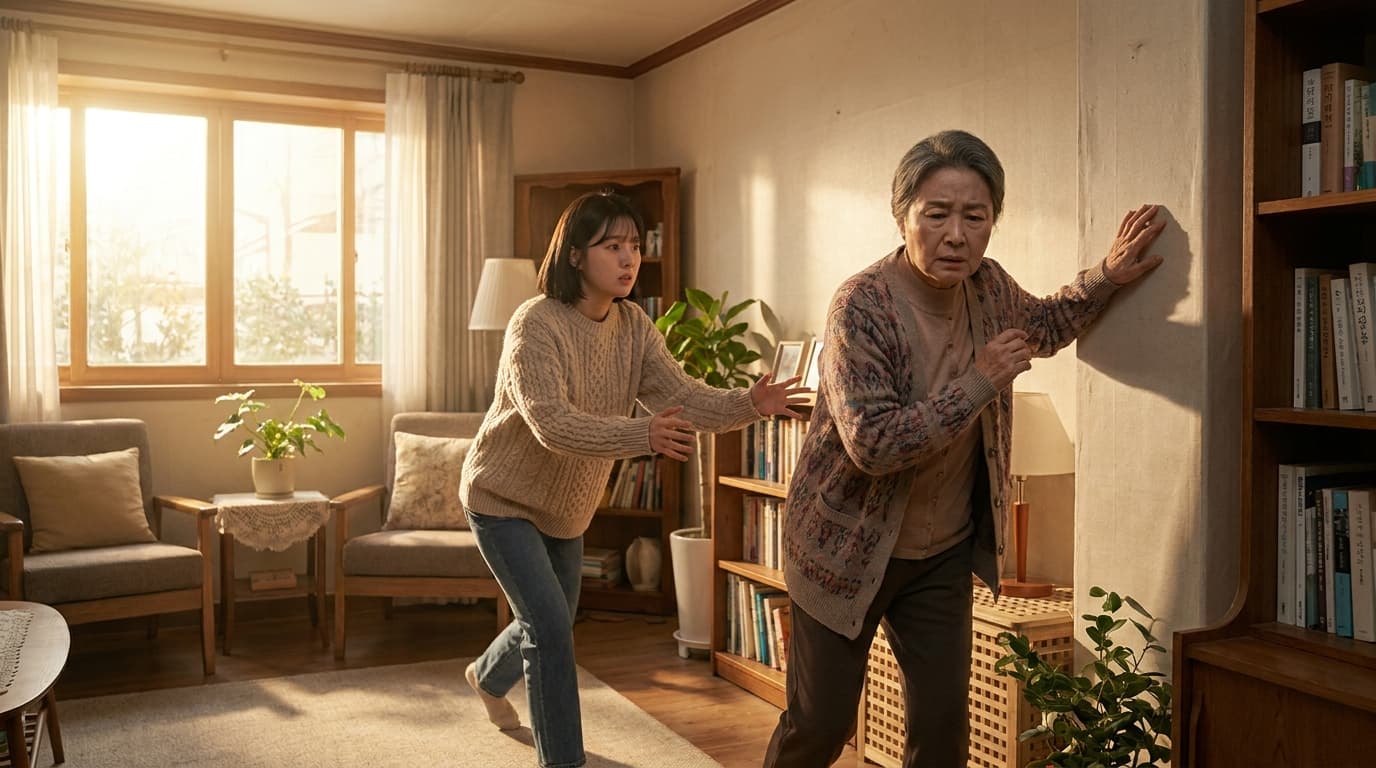
자꾸 비틀거려요, 왜 그럴까요? 노인 어지럼증, 자율신경 균형이 답입니다.
Hello, this is Dalimchae Korean Medicine Clinic. # Why Do I Keep Stumbling? Autonomic Balance is the Answer for Elderly Dizziness. When parents see elderly parents losing their center saying "I keep stumbling" unlike usual, or complaining of sudden dizziness, children's hearts become anxious. Even if you take them to the hospital worrying if it's a serious illness, you often hear that there is nothing special. However, dizziness that persists without a clear cause not only significantly degrades the quality of life, but also can lead to serious injuries due to falls, so it should never be lightly passed over. This is not a natural phenomenon due to aging, but may be a warning signal that something is wrong with our body's balance control system. 💡 **[Key Answer]** Top 3 most common causes of 'I keep stumbling' symptoms: ① Sensory integration function decline due to aging / ② Cerebral blood circulation disorder and vestibular organ function weakening / ③ Autonomic imbalance due to stress and overwork Dalimchae Korean Medicine Clinic approaches treatment by restoring the balance of broken autonomic nerves to solve the root cause of dizziness. ## I Keep Stumbling When Walking, Is It Simple Aging? Many people think that dizziness naturally occurs as they age, but this is a misconception. Of course, as aging progresses, the functions of sensory organs that maintain balance, such as vision, vestibular organs, and proprioception, generally decline. However, beyond simply declining functions, if an imbalance of the autonomic nervous system, which is our body's central control system, occurs, dizziness can become more severe and chronic. In particular, it has been reported that about 20% of elderly people aged 65 and over experienced dizziness or balance disorder in the past year, and survey results show that the prevalence rate exceeds 80% in those aged 80 and over. If dizziness persists, or if symptoms such as tinnitus, hearing loss, and headache are accompanied, it is important to accurately identify the cause and receive treatment. ## What is the Principle by Which Autonomic Dysfunction Causes Dizziness? The autonomic nervous system in our body is divided into sympathetic and parasympathetic nerves, unconsciously regulating essential functions for maintaining life such as heartbeat, blood pressure, digestion, respiration, and body temperature. When the balance of this autonomic nervous system breaks down due to stress, overwork, or irregular lifestyle habits, an error occurs in the body's control system, much like an engine overheating. In particular, the role of the autonomic nervous system is very critical in blood flow control to the brain, fine functions of the vestibular organ, and information integration processes required to maintain the body's overall sense of balance. When the autonomic nervous system becomes unstable, the brain cannot rest sufficiently and always maintains a tense state, making it easy to feel dizzy even with small stimuli and difficult to maintain body balance. This is like a sensitive warning light, with our body sending danger signals. This autonomic imbalance is also the main cause of 'chronic dizziness' where no special abnormalities are found in various tests. ## How Does Korean Medicine View and Treat Dizziness? In Korean medicine, dizziness is called 'Hyeonhun (眩暈)', and includes not only dizziness symptoms but also various accompanying symptoms such as stumbling, weakness, blurred vision, and nausea. Causes are largely divided into Dam eum (痰飮), Ganyangsanghang (肝陽上亢), Giheolhyuheo (氣血兩虛), and Sinjeongbujeok (腎精不足), and elderly dizziness in particular is considered to be deeply related to overall functional decline of the body, such as Sinjeongbujeok and Giheolhyuheo. This is in line with the functional decline of the autonomic nervous system referred to in modern medicine. In a case report by Park Jung-gun et al. research team published in the 『Journal of Korean Medicine』 in 2024, administration of Gamiboik-tang, acupuncture treatment, and physical therapy for about 4 weeks to 1 chronic elderly dizziness patient showed effectiveness in improving dizziness symptoms. This patient was also confirmed to have improved balance sensation in the body balance test (upright test item of dizziness test). The researchers noted that these results show the potential of Korean medicine treatment for elderly dizziness. Although there is a limit to generalization with a single case report, it is significant in that Korean medicine treatment alone improved symptoms in a situation where case reports of Korean medicine treatment for elderly dizziness are rare. In addition, according to a Medicom News report in August 2026, Dong-eui University College of Korean Medicine Kim Dan-ah research team published a single case study result applying complex treatment such as herbal medicine, acupuncture, and electroacupuncture for 48 days to patients with stress-induced non-rotational dizziness. In this study, not only dizziness and walking ability of the patient, but also autonomic balance measured by heart rate variability (HRV) was improved. In particular, the LF/HF ratio indicating sympathetic-parasympathetic balance decreased from 20.773 before treatment to 8.519 after treatment, alleviating sympathetic hyperactivity, and TP (total power), an indicator of overall autonomic activity, increased from 617.953 ㎳² to 1,577.246 ㎳². The researchers concluded that Korean medicine treatment showed potential for symptom improvement along with improvement of autonomic indices in dizziness of unclear cause. Based on these research data, Dalimchae Korean Medicine Clinic Incheon Branch approaches dizziness from the perspective that it stems not from simple symptoms, but from the body's balance system, especially autonomic imbalance. We focus on lowering excessive heat in the nervous system and creating an environment where the brain can comfortably rest, thereby emphasizing restoring the body's natural regulatory ability. ## Dalimchae Korean Medicine Clinic's Autonomic Stabilization Treatment Principle The symptom of "I keep stumbling" due to dizziness is a signal that the body's regulatory capacity has reached its limit. At Dalimchae Korean Medicine Clinic, the **autonomic stabilization** treatment principle is applied to these brain and autonomic related diseases. When the balance of autonomic nerves collapses, the brain cannot rest and overheats, causing continuous dizziness even if there are no problems with the vestibular organ or cerebral blood circulation responsible for balance sensation. This is like a breaker switch going down, making the body's energy unstable. We help restore the autonomic nervous system by correcting the imbalance of internal organs through herbal medicine, and induce stabilization of the central nervous system including the brain stem by relaxing tense muscles and nerves with acupuncture and pharmacopuncture treatments. In particular, among Incheon dizziness Korean medicine clinics, Dalimchae Korean Medicine Clinic conducts delicate treatment that helps regain the balance of sympathetic and parasympathetic nerves according to each patient's constitution and symptoms. Through this process, the brain regains stability, the body's sensory integration function normalizes, and you can escape from the "I keep stumbling" symptom and regain a stable daily life. ## Could My Dizziness Also Be Due to Autonomic Imbalance? (Symptom Checklist) If 3 or more of the following items apply, it is recommended to suspect dizziness due to autonomic imbalance and consider complex Korean medicine treatment. If 5 or more apply, immediate hospital visit is recommended. * Sudden blackout and dizzy feeling when standing up suddenly. * Rotational dizziness where surroundings spin around frequently appears. * My body sways even when staying still and **I keep stumbling**. * Headache, tinnitus, and ringing in the ears are accompanied with dizziness. * Poor digestion, stuffy stomach, and frequent cold sweats. * Difficulty falling asleep at night or frequently waking up, poor sleep quality. * Anxiety, nervousness, and heart palpitations without special reason. * Dizziness becomes worse when stress or fatigue accumulates. * Neck and shoulders are always stiff and painful. * Dizziness persists even though western medical tests find no special cause. **3-4 items apply:** Suspected autonomic imbalance -> Consider precise diagnosis and complex Korean medicine treatment **5 or more items apply:** Severe autonomic functional decline -> Recommended immediate visit to Incheon autonomic Korean medicine clinic ## FAQ **Q. How long should elderly dizziness be treated to recover?** A. The treatment period for elderly dizziness varies depending on the cause, symptom severity, and patient's health status. At Dalimchae Korean Medicine Clinic, autonomic balance is restored through personalized treatment, and continuous treatment for usually 3 to 6 months may be required. **Q. I have tinnitus and headaches along with dizziness, can they be treated together?** A. Yes, dizziness, tinnitus, headaches, etc. often stem from autonomic imbalance and can be treated together. Dalimchae Korean Medicine Clinic Incheon Branch conducts integrated Korean medicine treatment aiming for overall stabilization of the nervous system to improve accompanying symptoms together. **Q. Can dizziness heal naturally?** A. Temporary dizziness can improve with sufficient rest, but if symptoms like "I keep stumbling" repeat chronically, natural recovery is difficult. In particular, dizziness due to autonomic imbalance is a state where the body's regulatory ability has declined, so active treatment is necessary. **Q. Even though tests at the hospital show no abnormalities, my dizziness is severe. Is diagnosis possible at a Korean medicine clinic?** A. Yes, dizziness where no special abnormality is found in Western medical tests is deeply related to autonomic ataxia. At Dalimchae Korean Medicine Clinic, subtle imbalances of the body are diagnosed through pulse wave test and autonomic balance test, and customized treatment plans are established based on this. Dizziness such as **"I keep stumbling"** is not a problem that can be solved by enduring it. You no longer need to turn away from the body's signals sent for a long time. If you approach in the right direction, your body reacts faster than you think. Bring the symptoms you are experiencing as they are. Dalimchae Korean Medicine Clinic will find the cause together. Where life blooms. Herbal medicine is Dalimchae Korean Medicine Clinic. Check symptoms similar to yours first through the AI consultation on the Dalimchae Korean Medicine Clinic website! This article is health information organized together by Dalimchae medical staff based on questions actually received often in the consultation room. Medical Supervision | Brain & Autonomic Treatment Standard Dalimchae Korean Medicine Clinic Incheon Branch Korean Medicine Doctor Yang Yu-chan