
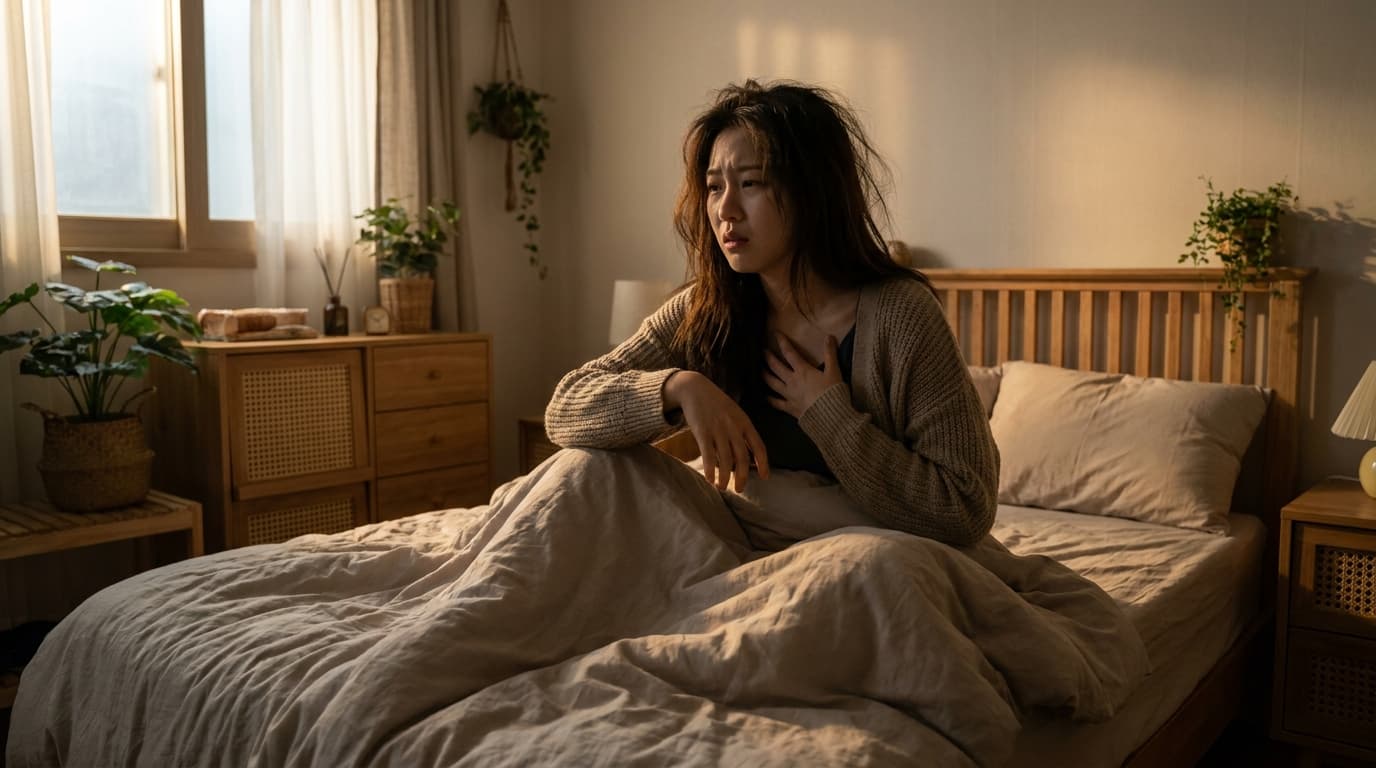
갑자기 숨이 턱 막히고 답답해요? 자율신경 과부하로 인한 몸의 경고일 수 있습니다.
Hello, this is Dalimchae Korean Medicine Clinic. # Sudden shortness of breath and tightness? It may be a warning from your body due to autonomic overload. Have you ever experienced your heart beating rapidly and feeling a sudden shortness of breath for no apparent reason? Accompanied by intense fear of dying, feeling weak all over, and sweating profusely, you visit hospitals for various tests only to be told "everything is normal." This frustrating situation is not yours alone. These symptoms may be a warning from your body due to 'autonomic overload', commonly seen in modern life and experienced by many visitors to Dalimchae Korean Medicine Clinic Songdo branch. 💡 **Key Answer** **Top 3 most common causes of 'sudden shortness of breath and tightness':** ① Autonomic imbalance due to extreme stress / ② Overactivation of anxiety circuits in the brain / ③ Vicious cycle of psychological factors and physical symptoms Dalimchae Korean Medicine Clinic restores the balance of the brain and autonomic nervous system through **autonomic stabilization treatment**, calming the body's overly sensitive alarm system. ## Why do shortness of breath and tightness suddenly strike? Sudden shortness of breath and chest tightness can occur due to various causes, but if they recur without underlying physical conditions, 'autonomic imbalance' can be suspected. Our body's autonomic nervous system is a system that automatically regulates vital functions such as respiration, heart rate, digestion, and body temperature without conscious effort. However, cumulative stress, irregular lifestyle habits, and fatigue break this balance, hyperactivating the sympathetic nervous system and malfunctioning the body's 'alarm system'. The brain sends danger signals even in non-dangerous situations, the heart beats excessively, breathing accelerates, and blood pressure rises. These symptoms are core features of panic disorder, and patients feel extreme fear of heart attack or suffocation. Many visitors seeking Songdo anxiety disorder Korean medicine clinic suffer from these psychosomatic symptoms. ## Could it be anxiety or panic disorder? What is the self-diagnosis method? If sudden shortness of breath and chest tightness recur, anxiety disorder or panic disorder can be suspected. Panic attacks occur unexpectedly and usually peak within 10 minutes, lasting 20 to 30 minutes before subsiding. However, residual symptoms of anxiety or physical discomfort may persist for hours or longer. Use the following checklist for self-diagnosis; if many items apply, seeking professional help is recommended. **[Anxiety Disorder and Autonomic Overload Symptom Checklist]** 1. Suddenly feel heart racing or chest tightness and difficulty breathing. 2. Swept by intense fear of dying or feeling out of control. 3. Feel like reality is not real or you have changed. 4. Numbness or tingling in hands and feet, trembling or shaking. 5. Sweating, feeling hot or having chills. 6. Dizziness, lightheadedness, or feeling like you might faint. 7. Nausea, stomach discomfort, or poor digestion. 8. Constant worry and fear about when symptoms will recur. 9. Avoiding specific places or situations out of fear of anxiety symptoms. 10. Difficulty falling asleep at night, frequent waking, trouble sleeping deeply. * **3 or more apply:** Suspected autonomic nervous system overload or anxiety symptoms. Consultation at Songdo autonomic Korean medicine clinic recommended. * **5 or more apply:** High probability of anxiety disorder or panic disorder. Immediate professional consultation and treatment planning needed. ## What happens to our body when autonomic balance breaks? The autonomic nervous system consists of sympathetic and parasympathetic nerves, regulating body functions through antagonistic action. The sympathetic nervous system activates during tension and stress to put the body in emergency mode, while the parasympathetic nervous system activates during rest and relaxation to stabilize the body. Modern chronic stress and irregular living excessively hyperactivate sympathetic nerves, breaking balance. The brain remains in constant excessive tension, leading to decreased Heart Rate Variability (HRV), an indicator of autonomic dysfunction. When autonomic balance collapses, the brain cannot rest. Brain overactivation makes the amygdala, which regulates emotions, sensitive, easily triggering anxiety and fear. Furthermore, this anxiety manifests as chest tightness, indigestion, chronic fatigue, sleep disorders, headaches, and dizziness, significantly reducing quality of life. Insomnia, where sleeping becomes difficult and various thoughts race upon lying down at night, is a typical sign of autonomic imbalance. Repeating these physical symptoms traps patients in a vicious cycle of further anxiety. ## How does Korean medicine treat anxiety and tightness? Korean medicine views anxiety symptoms like 'sudden shortness of breath and tightness' not merely as psychological problems, but as imbalances in overall physical health, especially autonomic abnormalities. In particular, heart and gallbladder functions are closely linked to anxiety, as the heart governs mental activity and the gallbladder governs decisiveness. When stress or heart/gallbladder qi weakens, 'Shimdam Heogeop-jeung' (timid heart and gallbladder syndrome) occurs, causing anxiety, respiratory distress, and heart palpitations. Dalimchae Korean Medicine Clinic Songdo branch focuses on treatments that help restore autonomic balance and allow the brain to comfortably relax. This process—lowering excessive nerve heat and creating an environment for the brain to rest and recover, known in Korean medicine as 'Suseunghwagang' (water rises, fire descends) — is achieved through customized herbal medicine, acupuncture, moxibustion, cupping, Chuna manual therapy, and Korean medical psychotherapy tailored to each patient's constitution and symptoms. **Related Recent Clinical Research Papers:** A retrospective study of 67 anxiety disorder patients published in the July 2024 journal <Healthcare> by Hanum Korean Neuropsychiatric Clinic showed that Korean medicine treatments (acupuncture, Korean medical psychotherapy, Chuna therapy, aromatherapy, herbal medicine, etc.) applied for at least 4 weeks significantly decreased anxiety (STAI X-1, STAI X-2, BAI), depression (BDI-II), and anger (AKI-K-I, AKI-K-O) indices compared to pre-treatment (p \< 0.0001), while significantly increasing quality of life (QoL) (p \< 0.0001). Researchers concluded that Korean medicine treatment helps improve clinical symptoms and quality of life in anxiety disorder patients. These data suggest that autonomic stabilization treatment at Dalimchae Korean Medicine Clinic plays an important role in restoring patients' physical and mental health. Additionally, a systematic review and meta-analysis of Korean medicine treatment effects on cardiac neurosis patients published in the February 2024 journal <Frontiers in Psychiatry> by Kyung Hee University College of Korean Medicine research team analyzed 151 randomized controlled trials across 9 databases. This study proved that herbal medicine treatment is effective in improving anxiety, depression, and somatization symptoms in cardiac neurosis patients characterized by autonomic dysfunction. Significant therapeutic effects were shown both with herbal medicine alone and when combined with Western medicine. These research results provide scientific grounds that Dalimchae Korean Medicine Clinic can offer effective solutions for patients suffering from chest tightness and shortness of breath due to autonomic imbalance. Dalimchae Korean Medicine Clinic Songdo branch provides customized treatments based on these scientific Korean medicine principles, comprehensively considering each patient's symptoms, constitution, and psychological state. Our goal is to help those seeking "Songdo anxiety disorder Korean medicine clinic" not just suppress symptoms, but enable their body to restore balance and lead a healthy life. ## How is Dalimchae Korean Medicine Clinic's Autonomic Stabilization Treatment Different? Dalimchae Korean Medicine Clinic's autonomic stabilization treatment focuses on fundamentally improving the state where the brain cannot rest due to autonomic imbalance. It is like cooling down an overheated engine and flipping the circuit breaker switch to stabilize the entire system. This is not merely subduing symptoms with medication, but cultivating the body's own power to maintain a healthy state. We thoroughly grasp each patient's lifestyle habits, stress factors, and physical reactions to calm excessive nervous system excitement and induce balanced autonomic states through the most suitable herbal prescriptions. In addition, acupuncture treatment stimulates specific meridians to smooth qi and blood circulation, relax stress-tended muscles, and provide direct stabilizing effects on the autonomic nervous system. Furthermore, Korean medical psychotherapy helps patients transform their perception of anxiety and develop self-stress management skills. Dalimchae Korean Medicine Clinic aims beyond mere symptom relief to maintain autonomic balance remarkably so that anxiety and tightness do not return, creating a healthy body. This greatly contributes to overall health recovery for those complaining of headaches, dizziness, indigestion, and insomnia together. **Q. How long does anxiety disorder take to treat and recover?** A. Treatment duration varies depending on symptom severity, duration, accompanying symptoms, and treatment response. Generally, consistent Korean herbal treatment leads to gradual symptom improvement over weeks to months, and management is required for a certain period to prevent recurrence. **Q. Can indigestion accompanying chest tightness be treated together?** A. Yes, it is possible. Autonomic imbalance from anxiety and stress affects the digestive system, frequently causing chest tightness along with indigestion. Dalimchae Korean Medicine Clinic's autonomic stabilization treatment aims for systemic balance recovery, so digestive symptoms can also be improved. **Q. Can anxiety disorder recover naturally?** A. Mild anxiety may recover naturally when stress factors disappear, but if symptoms like 'sudden shortness of breath and tightness' recur and interfere with daily life, professional help is needed. Leaving anxiety disorder untreated can lead to chronic progression or accompanying depression, making early treatment important. **Q. How does Korean medicine treatment differ from Western medicine?** A. Western medicine mainly controls symptoms through medication or cognitive behavioral therapy. Korean medicine views systemic imbalance, especially autonomic dysfunction, as the root cause, and enhances the body's resilience through comprehensive treatments tailored to individual constitution and symptoms, such as herbal medicine, acupuncture, and Korean medical psychotherapy. It can also be combined with Western treatment if needed. Symptoms like 'sudden shortness of breath and tightness' cannot be resolved by enduring them. You no longer need to ignore the body's signals sent over a long time. Approached in the right direction, the body responds faster than you think. Bring the symptoms you are experiencing as they are. Dalimchae Korean Medicine Clinic will find the cause together. Where life blooms. Herbal medicine is Dalimchae Korean Medicine Clinic. Check symptoms similar to your own through the AI consultation on the Dalimchae Korean Medicine Clinic website! This article is health information organized together by Dalimchae medical staff based on questions frequently received in the consultation room. Medical Supervision | Neurology & Autonomic System Treatment Standard, Dalimchae Korean Medicine Clinic Songdo Branch, Korean Medicine Doctor Oh Hyunmin (Anxiety Disorder Column)