
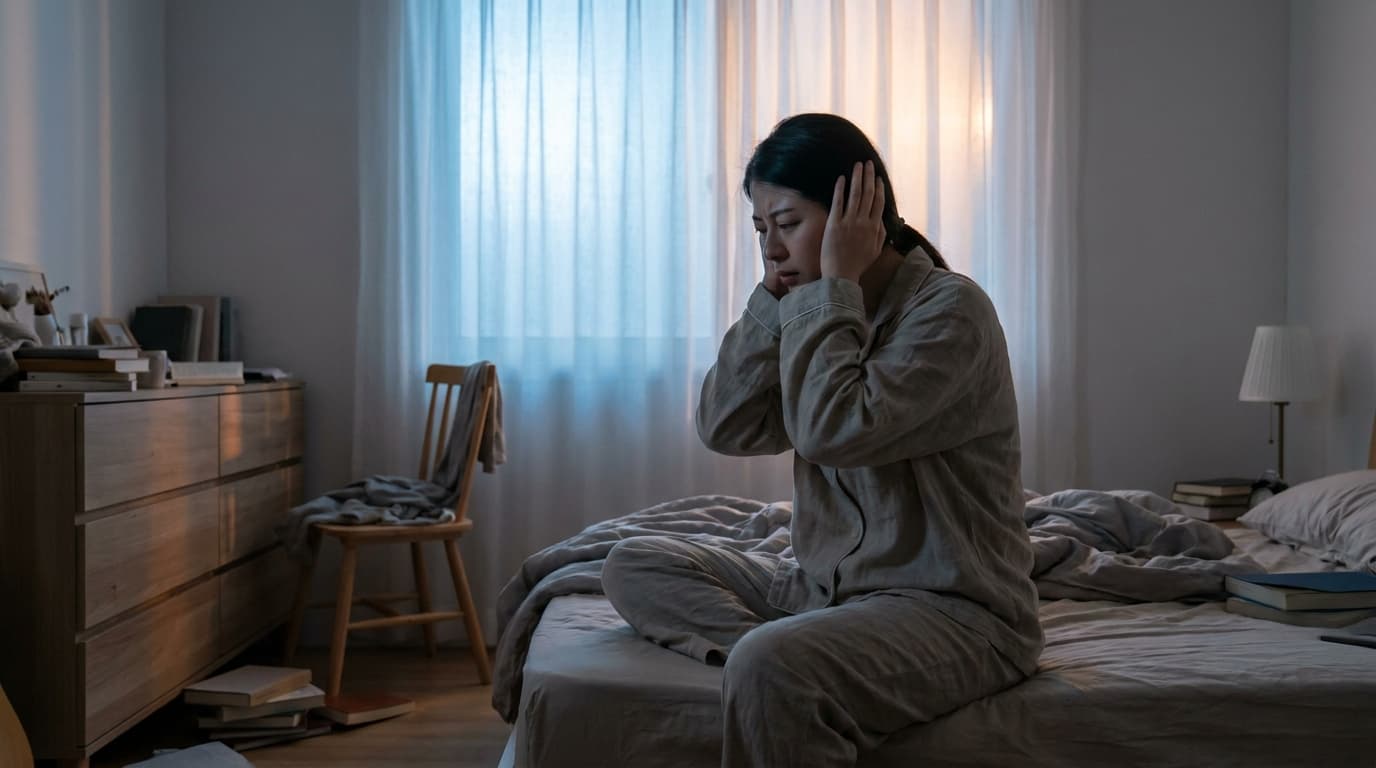
머리가 깨질 듯이 아파요? 단순 진통제는 답이 아닙니다.
Hello, this is Dalimchae Korean Medicine Clinic. # Severe Splitting Headache? Simple Painkillers Are Not the Answer. Many people suffer from severe headaches, throbbing as if their head is splitting, disrupting their sleep and daily lives. Have you visited hospitals without finding a special cause, feeling frustrated and just getting by day-to-day with painkillers? Headaches are more than just a painful symptom; they can be an important signal from our bodies. In particular, chronic headaches in modern individuals are often closely linked to imbalances in the autonomic nervous system. 💡 **[Core Answer]** Top 3 most common causes of severe splitting headaches: ① **Autonomic Imbalance**: Hyperactivity of the sympathetic nervous system due to stress overheats the cranial nerves. ② **Muscle Tension**: Chronic tension in the neck and shoulder muscles triggers headaches. ③ **Cerebral Blood Circulation Issues**: Changes in cerebral blood vessel pressure and reduced waste removal worsen pain. Dalimchae Korean Medicine Clinic restores the balance between brain and body through **autonomic stabilization**, resolving the root cause of headaches. ## Why Does Your Head Hurt So Badly? Could It Be Autonomic Ataxia? If you are suffering from persistent headaches without a clear cause, autonomic ataxia can be suspected. The autonomic nervous system is a crucial system regulating all organ functions in our body, and its balance can be disrupted by stress, overwork, or hormonal changes. In particular, excessive excitement of the sympathetic nervous system due to stress overheats cranial nerves, rapidly increases cerebral blood flow, and triggers pain. Such autonomic imbalance causes various forms of headaches, ranging from foggy feelings and poor concentration to dull, throbbing, or stinging sensations. Unexplained physical abnormalities in modern individuals, such as chronic headaches and indigestion, can be attributed to autonomic ataxia, which is caused by nerve regulation dysfunction rather than structural organ problems. ## Chronic Headaches: How Does Korean Medicine Treatment Help? Chronic headaches are often difficult to resolve fundamentally with simple painkiller use alone. Korean medicine views the causes of headaches in connection with qi and blood circulation disorders, emotional imbalances, phlegm (fluid retention), and overwork, applying various treatments such as acupuncture, moxibustion, herbal medicine, and pharmacopuncture according to the patient's constitution and symptoms. In particular, clinical studies have proven the effects of reducing headache intensity and frequency, as well as significantly decreasing painkiller intake. A research team led by Dr. Son Ja-yeon at Haeundae Jaseng Korean Medicine Hospital published a study in the international journal 'Journal of Clinical Medicine' in September 2024, evaluating the efficacy and safety of suboccipital pharmacopuncture treatment on 80 acute tension headache patients caused by traffic accidents. The research team divided patients into a pharmacopuncture combination group (40 patients) and a Korean medicine integrated treatment group (40 patients) for 1 year of treatment. As a result, the pharmacopuncture group showed a rapid decrease in the Numeric Rating Scale (NRS; 0~10) for headache intensity from a pre-treatment average of 6.91 to 3.84 after 3 days of hospitalization, and further decreased to 2.27 upon discharge, showing greater improvement than the control group (3.42). In addition, in the Headache Disability Inventory (HDI; 0~100), the pharmacopuncture group decreased to 35.78 on the 4th day of hospitalization, showing a significantly greater improvement than the control group (60.56). The researchers concluded based on these results that suboccipital pharmacopuncture treatment is effective and safe for improving symptoms in tension headache patients. These research findings well demonstrate how Korean medicine treatment is effective in resolving the root cause of headaches and improving patients' quality of life at Dalimchae Korean Medicine Clinic Songdo branch. A case report analysis study by Choi Jun-hyuk's research team published in the Journal of Preventive Korean Medicine in 2023 analyzed clinical research trends on Korean medicine treatments for tension-type headaches. This study analyzed 17 literature pieces published up to January 15, 2023, across 4 domestic databases (KISS, RISS, OASIS, ScienceON). The results showed that 'Cheonghyeolganggi-tang', 'GV20' acupoint acupuncture, 'CV12' moxibustion, 'GB20' pharmacopuncture, and 'Erythrina/turtle shell' were most frequently used in treating tension headaches, and all papers indicated that Korean medicine treatment improved tension-type headache symptoms. In particular, NRS and Visual Analog Scale (VAS) were used as major evaluation indices, and researchers confirmed that Korean medicine treatment is effective for tension headaches, concluding it can serve as a foundation for developing clinical practice guidelines. As such, headache Korean medicine clinics manage headaches through various Korean medicine treatment methods. ## Autonomic Stabilization: Fundamental Treatment to Cool Brain Overheating At Dalimchae Korean Medicine Clinic Songdo branch, headaches are not viewed merely as pain. Chronic headaches in modern individuals, especially symptoms like "splitting headaches," are often derived from autonomic imbalance. Much like an overheated engine causing problems, continuous stress and tension hyperactivate the sympathetic nervous system, overheating cranial nerves, which leads to headaches. Our Dalimchae Korean Medicine Clinic focuses on **autonomic stabilization** treatment to cool this brain overheating, restore autonomic balance, and create an environment where the body can heal itself. Lowering nervous system heat and creating an environment where the brain can rest—known in Korean medicine as water-fire coordination (수승화강)—improves cerebral blood flow and focuses on solving the root cause of headaches. As a Songdo autonomic nervous system Korean medicine clinic, we closely assess each patient's autonomic state to provide customized treatments. Many patients also complain of dizziness or tinnitus alongside headaches. Since these are also often rooted in autonomic imbalance and cerebral blood flow issues, an integrated treatment approach addressing both symptoms simultaneously is crucial. ## My Headaches Due to Autonomic Imbalance? Self-Diagnosis Checklist Check the following items. If 3 or more apply, autonomic imbalance headache can be suspected, and if 5 or more apply, immediate treatment consultation is recommended. * You feel you experience a lot of stress in daily life. * You frequently feel your heart pounding or feel stuffy in your chest. * Cold or numb hands and feet occur frequently. * You easily fatigue and always feel lethargic. * It is difficult to fall asleep or you wake up frequently at night (insomnia). * Digestion is poor, and your stomach feels bloated or stuffy. * Unexplained dizziness occurs frequently. * The back of your neck and shoulders are always stiff and sore. * You feel excessive anxiety or agitation. * You sweat easily or your body feels hot and cold alternately. **When 3 or more apply** → Suspect autonomic imbalance headache → Consider combined Korean medicine treatment **When 5 or more apply** → Autonomic ataxia treatment needed → Visit Songdo Korean Medicine Clinic recommended ## FAQ: Questions About Headaches Answered by Dalimchae Korean Medicine Clinic **Q. How long does chronic headache treatment take?** A. The treatment duration for chronic headaches varies depending on the cause and individual symptom severity. Dalimchae Korean Medicine Clinic focuses on improving the root cause, autonomic imbalance, to lower recurrence rates, generally requiring several weeks to months of steady treatment. Initial treatment targets pain relief, progressing toward restoring body balance and stabilizing autonomic functions. **Q. Is it okay to keep taking painkillers?** A. Painkillers temporarily relieve pain but fail to solve the root cause, and long-term use can lead to medication-overuse headaches or gastrointestinal side effects. Korean medicine treatment breaks the vicious cycle of pain, fosters the body's ability to self-regulate pain, and helps reduce reliance on painkillers. **Q. Can tension headaches and migraines also be treated with Korean medicine?** A. Yes, both tension headaches and migraines can be effectively managed with Korean medicine treatments. Various clinical studies have confirmed that acupuncture treatment reduces the frequency and severity of migraines and significantly reduces tension headache pain. Improvement is possible through customized herbal medicine, acupuncture, and pharmacopuncture treatments tailored to each patient's symptoms and constitution. **Q. Headaches and dizziness occur together; can they be treated together?** A. Yes, both headaches and dizziness often appear together due to brain and autonomic nervous system issues. Dalimchae Korean Medicine Clinic focuses on improving autonomic imbalance and cerebral blood flow—the common root causes of both symptoms—conducting integrated treatments effectively improving both symptoms simultaneously. Headaches that feel like your head is splitting are not problems solved by enduring alone. You no longer need to ignore the signals your body has been sending for a long time. When approached in the right direction, the body responds faster than you think. Bring the symptoms you are experiencing right now as they are. Dalimchae Korean Medicine Clinic Songdo branch will find the cause together with you. Where life blooms. Herbal medicine is, of course, Dalimchae Korean Medicine Clinic. Check symptoms similar to yours first through Dalimchae Korean Medicine Clinic website AI consultation! This article is health information compiled by Dalimchae medical staff based on frequent questions in the treatment room. Medical Supervision | Brain & Autonomic Nervous System Treatment Standard Dalimchae Korean Medicine Clinic Songdo branch Korean Medicine Doctor Oh Hyun-min (Headache Column)