
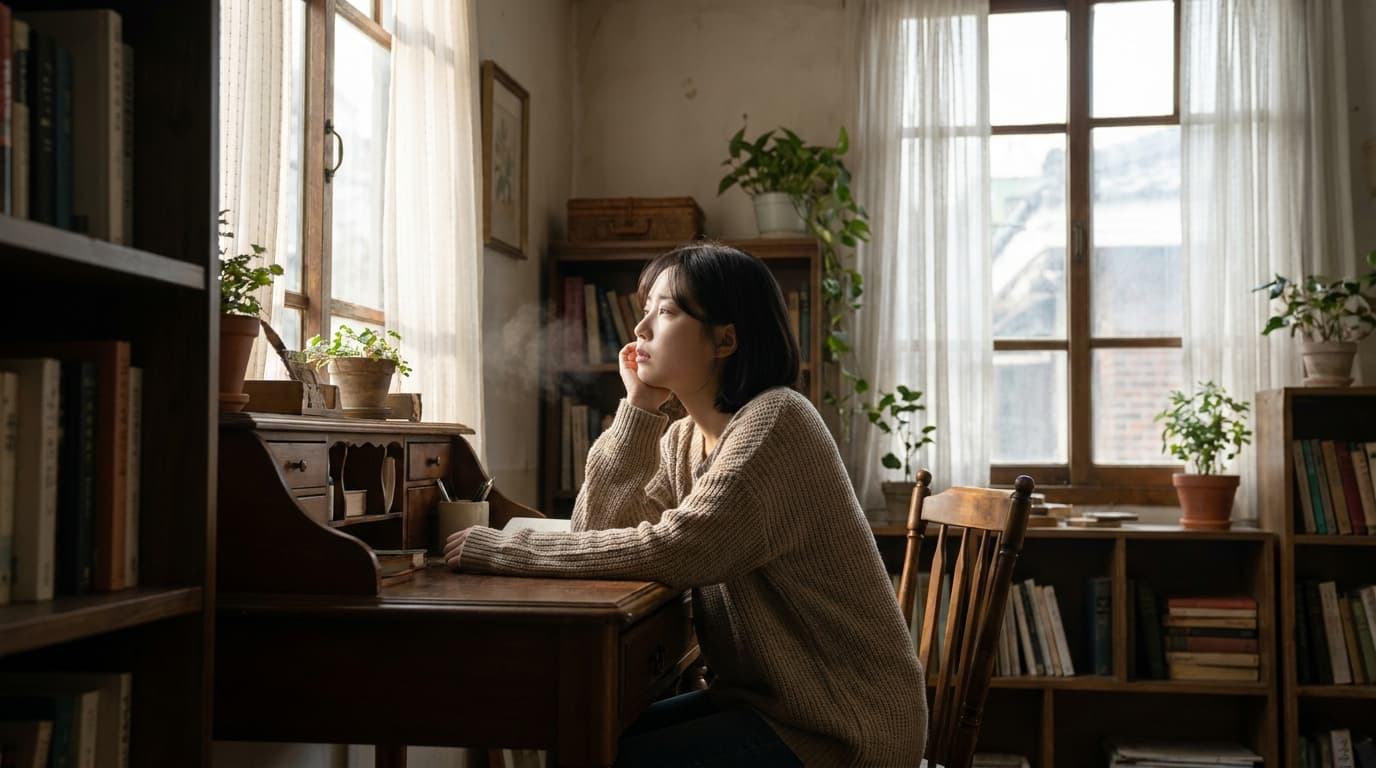
무기력하고 우울한 기분, 단순한 피로일까요? 우울증과의 진짜 차이와 해법
Hello, this is Dalimchae Korean Medicine Clinic. # Lethargy and Depressed Mood, Is It Simple Fatigue? Real Difference with Depression and Solutions Are you struggling with lethargy where even opening your eyes in the morning is a struggle and you don't want to do anything all day? Many people suffer from feeling down as if a deep shadow has been cast over their hearts, while activities that used to be enjoyable have lost their spark. Many people dismiss these feelings as mere fatigue or stress without much thought. However, if this lethargic and depressed mood persists, it may be an important warning signal sent by our body. 💡 **Core Answer** Top 3 most common causes of lethargic and depressed mood: ① Autonomic imbalance / ② Chronic stress / ③ Brain dysfunction. Dalimchae Korean Medicine Clinic fundamentally resolves lethargy and depression by creating a body where the brain rests and regains vitality through autonomic stabilization. ## How are lethargy and depression different? Many people confuse lethargy and depression or consider them the same condition. However, there is a clear distinction between the two, and it is important to understand that lethargy can be a precursor symptom of depression. Lethargy is literally a state of lacking energy and reduced motivation, which can appear as a response to simple fatigue or stress. On the other hand, depression refers to a pathological state where changes occur in the brain function and emotional regulation system itself. The biggest difference lies in 'loss of interest'. Simply lazy people avoid unwanted tasks, but still find joy and concentration in activities they like. However, lethargy caused by depression is characterized by a significant drop in interest in life itself, failing to feel pleasure even in previously enjoyed activities or hobbies. Since this lethargy may not just be burnout syndrome but an early or precursor sign of depression, active management and treatment are necessary if it persists for a long period. According to the World Health Organization (WHO), depression is projected to be one of the diseases troubling humanity most in the 21st century, and is forecasted to become the leading disease burden in high-income countries by 2030. ## Is the body's 'warning light' autonomic nervous system the real cause of lethargy and depression? Yes, that's correct. At the root of lethargy and depression often lies our body's 'autonomic imbalance'. The autonomic nervous system is the nervous system responsible for essential life-maintenance functions such as heartbeat, respiration, digestion, and body temperature regulation, regardless of our will. All systems of the body work smoothly through the balance of sympathetic and parasympathetic nerves. However, excessive stress, irregular lifestyle habits, and excessive tension disrupt this balance of the autonomic nervous system. As a response to stress, stress hormones such as cortisol are excessively secreted from the adrenal cortex, and when this becomes chronic, it leads to physical and psychological abnormal symptoms, inducing lethargy, anxiety, and sleep disorders. If autonomic imbalance persists, the brain cannot rest properly and remains in a state of constant overload, which can eventually develop not only physical symptoms such as insomnia, dizziness, and headaches, but also psychological problems like depression and panic disorder. In fact, stress-related autonomic ataxia can stand out from the traditional Korean medicine perspective that values the connection between mind and body. ## How does Korean medical treatment help improve lethargy and depressed mood? Korean medicine approaches lethargy and depressed mood not merely as mental problems, but from an integrated perspective of our body's internal organs (viscera), qi and blood circulation, and autonomic nervous system balance. You might wonder why treat the body when the heart hurts, but Korean medicine views the body's state as closely connected to the mind's state. In particular, the heart is viewed as an important organ governing spiritual and mental aspects; imbalances in heart function can cause problems throughout the body and lead to depression. In Korean medicine, depression is differentiated into qi stagnation (ki-ul), depressed fire (ul-hwa), qi deficiency (gi-heo), and customized treatments tailored to individual constitutions and symptoms are administered. The effectiveness of this Korean medical approach has been confirmed through various studies. A meta-analysis study published in the Journal of the Association of Korean Medicine in 2017 reported the effectiveness of acupuncture and moxibustion treatment for Chronic Fatigue Syndrome (CFS) patients. Analyzing a total of 31 clinical trials published up to May 2016, this study confirmed that combining or solely administering acupuncture and moxibustion treatment was effective in improving chronic fatigue symptoms compared to drug therapy. In particular, about 25~30% of chronic fatigue syndrome patients are accompanied by severe fatigue, brain dysfunction (memory and concentration decline), and depressive symptoms to the extent that normal social life is difficult. Thus, the efficacy of Korean medical treatment for chronic fatigue closely related to lethargy provides a positive treatment direction for those experiencing lethargy and depressed mood. Additionally, a study published in the Journal of Korean Medicine in 2024 investigated the clinical practice status of Korean medicine doctors for depression patients. According to an online survey targeting 712 Korean medicine doctors, acupuncture treatment (86.94%) and herbal medicine (83.29%) were found to be the most frequently utilized Korean medical treatments for depression management. This demonstrates that Korean medicine doctors actively utilize acupuncture and herbal medicine as core treatment modalities for depression management in clinical settings. Such treatments can help alleviate physical symptoms associated with depression and improve overall psychological states. Based on these data, Dalimchae Korean Medicine Clinic focuses on 'autonomic stabilization' treatment to correct autonomic imbalance, the root cause of lethargy and depressed mood. ### 'Autonomic Stabilization' where the autonomic balance is restored so the brain rests and regains vitality Our body's autonomic nervous system must operate with sympathetic and parasympathetic nerves balanced, much like a car's engine and brakes. When stress becomes severe, the sympathetic nerve, which is the accelerator, becomes excessively activated, causing the brain and body to fail to rest and fall into an overheated state. This can lead to brain dysfunction and weakened immunity, deepening lethargy and depression. Dalimchae Korean Medicine Clinic's autonomic stabilization treatment lowers the heat of the excessively excited sympathetic nerve and activates the function of the parasympathetic nerve, the brake, creating an environment where the brain can sufficiently rest. In Korean medicine, this is called 'suseunghwagang' (water rises, fire descends). In other words, the head is kept cool and the lower abdomen warm to smooth body qi and blood circulation, and to release tight and blocked qi caused by stress. Through this, brain function recovers and emotional stability is found, helping patients escape lethargy and depressed mood and regain daily vitality. Among Incheon depression Korean medicine clinics, Dalimchae Korean Medicine Clinic, specialized in autonomic imbalance treatment, restores autonomic balance and maximizes brain resilience through Korean medicine complex treatments such as precisely adjusted herbal medicine prescriptions, acupuncture, moxibustion, and pharmacopuncture tailored to each patient's symptoms and constitution. ## Could I also be suffering from lethargy or depression? Self-Checklist Check if you apply to the following questions: * ① Even after waking up in the morning, my body feels heavy as lead and unrefreshed. * ② I no longer feel any interest in activities or hobbies that used to be enjoyable. * ③ My mood sinks without special reason, and feelings of sadness or emptiness frequently occur. * ④ Concentration has dropped, significantly lowering work or academic efficiency. * ⑤ I have lost appetite or conversely developed a tendency to overeat, with weight changes. * ⑥ It is hard to fall asleep or I wake up frequently, and sleep does not relieve fatigue. * ⑦ I easily get irritated and sensitive over small matters, and relationships with people around me are uncomfortable. * ⑧ I have many negative thoughts, such as feeling worthless or feeling guilty about myself. * ⑨ I have had extreme thoughts like 'nothing is worth it' or 'I just want to disappear'. **Judgment Criteria:** * **3+ items apply:** Suspected lethargy or early depression due to autonomic imbalance. Get detailed consultation at Dalimchae Korean Medicine Clinic Incheon Branch. * **5+ items apply:** High possibility of severe lethargy or depression. Immediate professional diagnosis and Korean medicine complex treatment are strongly recommended. ## FAQ: Frequently Asked Questions About Lethargy and Depression **Q. Can lethargy and depression heal naturally?** A. Temporary lethargy can improve through sufficient rest and stress relief, but once it progresses to depression or if lethargy persists for a long time, natural recovery is difficult. Since leaving it unattended can worsen symptoms, getting professional help is important. **Q. How long does Korean medical treatment for depression take?** A. Although it may vary depending on the patient's symptom severity, duration of illness, and constitution, generally early depression patients can expect good prognosis within 3 to 6 months. Faster recovery is possible when accompanied by consistent treatment and lifestyle improvements. **Q. I have both lethargy and insomnia, can they be treated together?** A. Yes, lethargy and insomnia are representative symptoms of autonomic imbalance and are closely related. Dalimchae Korean Medicine Clinic's autonomic stabilization treatment simultaneously solves the root causes of both symptoms, resolving lethargy and inducing comfortable sleep, thereby improving overall quality of life. **Q. I am taking depression medication, can I combine Korean medical treatment?** A. Korean medical treatment can be combined even while taking Western medications. Many depression patients visit Korean medicine clinics due to side effects or lack of expected effectiveness from Western drugs. Dalimchae Korean Medicine Clinic Incheon Branch establishes safe and effective Korean medical treatment plans considering the patient's current state and medications. Lethargy and depressed mood are not problems solved by enduring. You no longer need to ignore the signals your body and mind have sent for a long time. Approaching in the right direction, the body responds faster than you think. Bring your current symptoms as they are. Dalimchae Korean Medicine Clinic will help you find the causes together and regain healthy life vitality. Where life blossoms. Herbal medicine is Dalimchae Korean Medicine Clinic. Check your similar symptoms first through Dalimchae Korean Medicine Clinic's homepage AI consultation! This article is based on frequently asked questions in the treatment room, health information compiled together by Dalimchae medical staff. Medical Review | Brain & Autonomic Nervous System Treatment Standard Dalimchae Korean Medicine Clinic Incheon Branch Korean Medicine Doctor Min Jihong (Depression Column) #Lethargy #Depression #AutonomicImbalance #IncheonDepressionClinic #IncheonKoreanMedicineClinic #ChronicFatigue #KoreanMedicineTreatment #DepressedMood Brain & Autonomic Nervous System - Autonomic Nervous System