
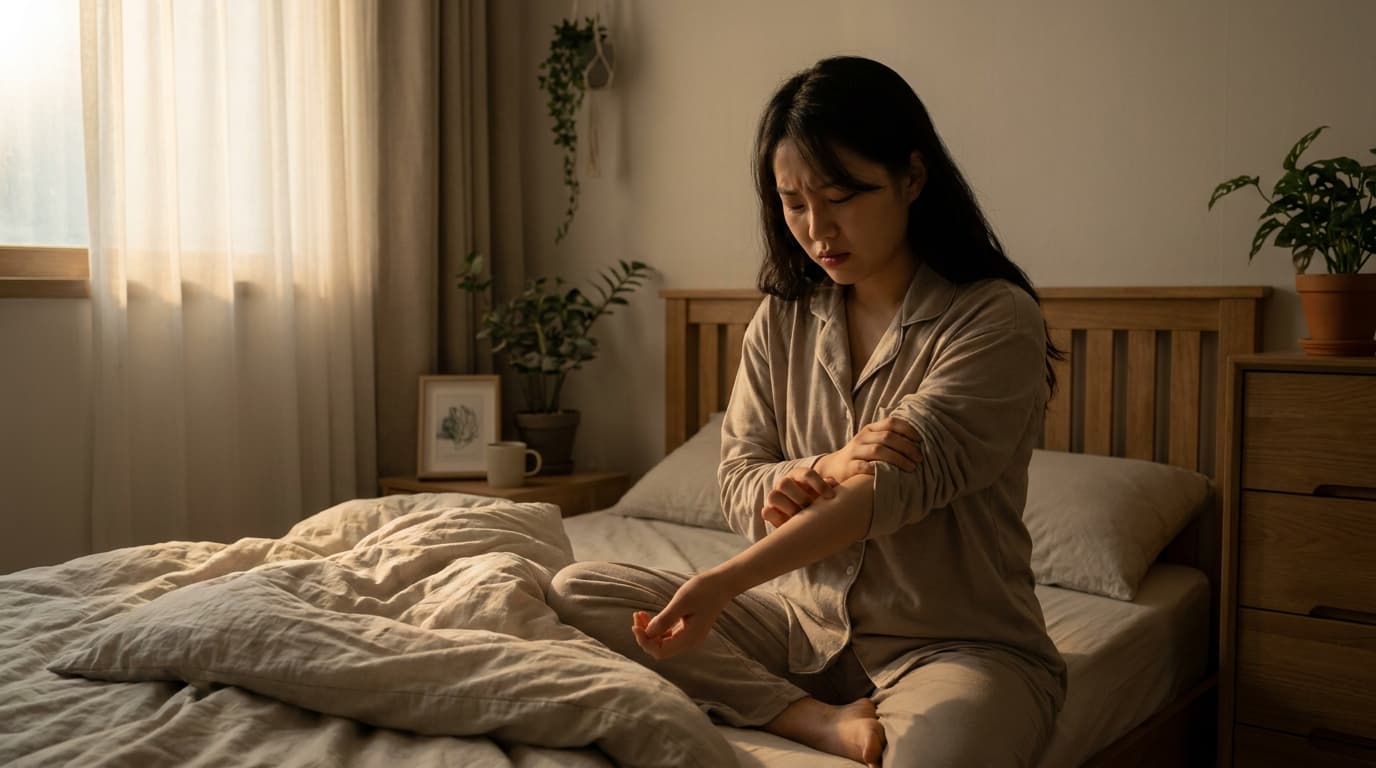
아토피 가려움, 피부과 치료만으로는 부족할 때: 근본 원인 해결 전략
Hello, this is Dalimchae Korean Medicine Clinic. # Atopic Itching: When Dermatology Treatment Is Not Enough: Root Cause Resolution Strategy Lingering atopic itching makes your skin worse and causes you to lose sleep as you scratch through the night. Many people grow exhausted as atopic dermatitis returns whenever they stop taking medication, even after applying ointments prescribed at the hospital. For those wondering about the difference between oriental atopic treatment and dermatology treatment and worrying about which is right for them, Dalimchae Korean Medicine Clinic shares the root cause of atopic dermatitis and effective management strategies. 💡 **Key Answer** Top 3 most common causes of recurring atopic dermatitis: ① **Gut health imbalance**: Influx of inflammatory substances due to barrier damage ② **Autonomic nervous system hyperactivation**: Immune response disruption due to stress and imbalance ③ **Chronic systemic inflammation**: Continuous skin reactions due to toxin accumulation Dalimchae Korean Medicine Clinic treats the root cause of atopic dermatitis as well as skin symptoms through **intestinal detox** and **autonomic nervous system stabilization**. ## Why does atopic dermatitis keep recurring and turning chronic? It is easy to think of atopic dermatitis as merely a skin problem. Red spots, itching, and dryness appearing on the skin are only visible symptoms, behind which complex internal imbalances are hidden. In particular, Westernized dietary habits, stress, and environmental pollution cause problems in gut health and the autonomic nervous system, leading to decreased immunity, which becomes the core cause of atopic recurrence. Chronic inflammatory reactions and hypersensitive responses of the immune system occurring inside the body manifest on the skin. ## How is oriental atopic treatment different from dermatology treatment? Dermatology treatment mainly focuses on alleviating inflammation and itching using steroid ointments or antihistamines. While such treatments are effective in quickly improving acute symptoms, prolonged use can cause side effects such as skin atrophy and vasodilation, and symptoms often recur when medication is stopped. On the other hand, Dalimchae Korean Medicine Clinic's oriental atopic treatment focuses not only on alleviating skin symptoms but also on correcting internal imbalances to build the body's strength to overcome disease on its own. In particular, it aims to restore gut health through 'intestinal detox' and find autonomic balance to stabilize the immune system. This is a fundamental treatment approach that enhances skin immunity and reduces hypersensitive responses to external stimuli to prevent recurrence. ### Why Gut Health is Key in Atopic Dermatitis Over 70% of our body's immune cells exist in the gut. In other words, the gut transcends a mere digestive organ to become a vital organ governing our body's immunity. When the intestinal barrier is damaged or the gut microbial balance is broken, problems like 'Leaky Gut Syndrome' occur, causing undigested food debris and toxins to flow through the blood and spread throughout the body. These toxins induce chronic inflammatory reactions and become the main culprit worsening atopic dermatitis. Atogenically, Dalimchae Korean Medicine Clinic restores such barrier damage through intestinal detox and balances beneficial bacteria, strengthening immunity right from the gut. ## Atopic Improvement Effects of Oriental Treatment Confirmed by Actual Studies Research on oriental treatment for atopic dermatitis actively explores fundamental immune regulation alongside inflammation relief. In a randomized controlled clinical study published in the June 2025 journal `Frontiers in Pharmacology`, research team Lee B et al. discovered that the traditional herbal decoction Bojungikgi-tang (BJT) significantly improved symptoms and altered the gut microbiome environment in patients with atopic dermatitis (AD) accompanied by loss of appetite. Administering BJT for 8 weeks to 26 adult patients with atopic dermatitis and loss of appetite showed significant improvements in atopic severity score (SCORAD) and quality of life (DLQI) indices, which were maintained up to 4 weeks post-treatment. Notably, gut microbiome analysis revealed significant changes in specific microorganisms such as `Gemella`, `Gemmiger formicilis`, and `Blautia_uc` in the BJT group, suggesting that herbal medicine can mediate therapeutic effects through regulation of the Gut-Skin Axis. The researchers concluded that BJT can serve as a safe and effective adjuvant therapy for patients with atopic dermatitis and gastrointestinal symptoms. These research results support why Dalimchae Korean Medicine Clinic values 'intestinal detox' in atopic treatment. Improvements in gut health play a core role in systemic immune regulation and skin inflammation relief. Furthermore, a study by Professor Kim Min-hee's research team at Gangdong Sacred Heart Hospital, reported through `Medipana News` in March 2024, revealed that gut microbial imbalance affects atopic dermatitis symptoms, and that herbal medicine and acupuncture treatment can effectively improve them. In particular, it was confirmed that herbal medicine can act as an effective prebiotic helping regulate gut microbial composition and metabolism while promoting the growth of beneficial bacteria. The research team confirmed that gut microbiome diversity increased in the herbal treatment group, while uremic substances derived from the gut microbiome increased only in the placebo group, which was also published in an SCI journal. This research emphasizes that atopic dermatitis should be approached from a systemic perspective rather than just a skin disease, and that when gastrointestinal symptoms accompany or imbalanced diets are maintained long-term, herbal and acupuncture treatments can lead to fundamental treatment through gut microbiome improvement. In addition, it was revealed that acupuncture treatment lowers sympathetic nervous system hyperactivation to improve itching, while improving gut function and the gut microbiome to produce synergistic effects with herbal medicine. Based on these latest research trends, Dalimchae Korean Medicine Clinic Incheon Branch closely diagnoses individual gut health states and autonomic balance, focusing on breaking the recurrence cycle of atopic dermatitis through customized oriental treatments. ## How is atopic dermatitis treated at Dalimchae Korean Medicine Clinic Incheon Branch? Atopic dermatitis is like a 'warning light' sent from deep within the body. Dalimchae Korean Medicine Clinic manages atopics centering on 'intestinal detox' treatment, which finds and resolves the root cause turning on that warning light rather than merely suppressing surface symptoms. Intestinal detox is a core treatment principle that prevents toxins accumulated in the intestinal barrier from traveling through blood to create systemic inflammation and disturb the immune system. At our Dalimchae Korean Medicine Clinic Incheon Branch, we treat atopic dermatitis through the following steps: 1. Precise diagnosis: Through oriental diagnoses such as pulse diagnosis, abdominal diagnosis, and tongue diagnosis, along with autonomic tests and stress tests, we closely analyze your current physical state and atopic onset causes. We intensively check for decreased gut function and autonomic imbalance. 2. Customized herbal prescription: We prescribe herbal medicine helpful in restoring gut health, strengthening the intestinal barrier, and discharging internal toxins. Along with this, we formulate herbs tailored to individual constitutions to stabilize excessively hyperactive autonomic nervous systems and regulate immunity. 3. Acupuncture and pharmacopuncture therapy: We rapidly alleviate skin inflammation and itching, improving qi and blood circulation to aid damaged skin regeneration. In addition, we apply acupuncture to acupoints effective in autonomic regulation to help regain systemic immune balance. 4. External treatment and lifestyle guidance: We manage external skin symptoms using oriental ointments or compresses, and provide detailed guidance on essential lifestyle management methods for atopic improvement, such as dietary habits, sleep habits, and stress management. Through this, the body builds self-recovery power, preventing atopic recurrence from a long-term perspective. This integrative approach leads to 'constitutional improvement'—not simply 'turning off symptoms' but 'making a body that won't turn on again.' If you are looking for an Incheon atopic clinic, experience fundamental treatment at Dalimchae Korean Medicine Clinic Incheon Branch. Especially for those complaining of other symptoms like headaches or indigestion, integrative treatment considering the Gut-Brain-Skin-Axis connection can be even more effective. ## Atopic Dermatitis Self-Diagnosis Checklist If you experience several of the following symptoms, receiving accurate diagnosis and treatment through consultation with Dalimchae Korean Medicine Clinic Incheon Branch medical staff is recommended: * Skin itching is severe enough to make falling asleep difficult. * Scratching the skin repeatedly results in oozing, bleeding, and scabbing. * Flaking frequently occurs and skin is rough due to dry skin. * Atopic symptoms become more severe when stressed or tired. * Eating specific foods makes itching or skin symptoms noticeably worse. * Experiencing gastrointestinal symptoms like indigestion, constipation, and diarrhea along with atopy. * Dermatology treatments provide only temporary relief, recurring once medication stops. * Hard to get restful sleep due to nighttime itching, feeling chronic fatigue. **Judgment Criteria:** * **3 or more apply:** Suspect atopy due to gut and autonomic imbalance, and consider oriental combination treatment. * **5 or more apply:** Immediate visit and precise diagnosis to initiate active treatment is important. ## FAQ: Resolving Questions About Atopic Dermatitis **Q. Can atopy be managed after treatment?** A. Atopic dermatitis is a chronic disease, but solving the root cause and improving constitution allows you to maintain healthy skin without symptoms. Dalimchae Korean Medicine Clinic proceeds with personalized treatment aiming for a healthy life without recurrence. **Q. Can children receive oriental treatment?** A. Yes, Dalimchae Korean Medicine Clinic's oriental treatments are safely prescribed to match children's constitutions and symptoms. Especially since pediatric atopy is a crucial period for growth and immunity, burden-free oriental treatment can be a great alternative. Parents looking for an Incheon Guwol-dong clinic can visit with peace of mind. **Q. Are there foods that are good or bad for atopy?** A. Individual dietary management is important as reactions to foods vary per patient. Generally, processed foods, flour, dairy, and instant foods should be avoided, and fresh vegetables, fruits, and whole grain diets are recommended. Dalimchae Korean Medicine Clinic also assists with detailed diet consultations during treatment. **Q. What is the relationship between atopy and stress?** A. Stress breaks autonomic balance, lowering immune function and worsening inflammatory reactions. Since this acts as a factor making atopic symptoms more severe, appropriate stress management is also very important in atopic treatment. Atopy is not a problem solved by endurance. You no longer need to ignore the body's signals sent over a long time. When approached in the right direction, the body responds faster than you think. Bring the symptoms you are experiencing just as they are. Dalimchae Korean Medicine Clinic will find the cause together. Where life blooms. Herbal medicine is Dalimchae Korean Medicine Clinic. Check symptoms similar to yours first through the AI consultation on the Dalimchae Korean Medicine Clinic website! Medical Supervision | Skin Disease Treatment Standard, Incheon Branch of Dalimchae Korean Medicine Clinic, Korean Medicine Doctor Yang Yuchan (Atopy Column)