
Hello. This is Dalimchae Oriental Medicine Clinic.
PMS Irritability, why you snap at your husband: It's a signal from your body.
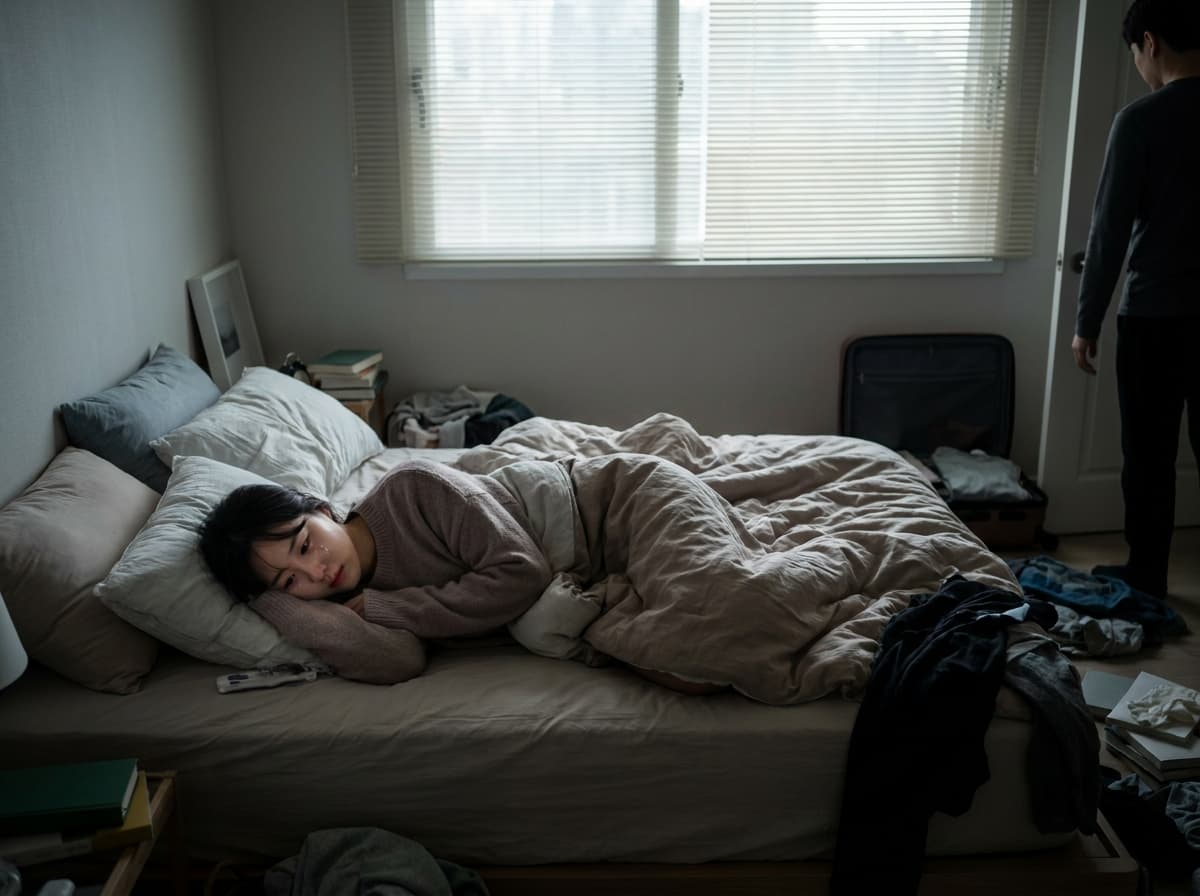
Every month, as that day approaches, do you experience mood swings as if you've become a different person, and explode in irritation at things that wouldn't normally bother you? In particular, you might find yourself unnecessarily raising your voice at your loving husband or having frequent regrets after minor arguments escalate. This 'PMS irritability' is not just an emotional issue; it could be an important signal your body is sending.
💡 Key Answer Top 3 common causes of PMS irritability: ① Changes in female hormone balance / ② Autonomic nervous system imbalance / ③ Decrease in neurotransmitters Dalimchae Oriental Medicine Clinic improves these symptoms by stabilizing the autonomic nervous system and restoring women's health, which are the root causes.
Why do I become so sensitive and explode in irritation just before my period?
Mood swings before menstruation are usually one of the main symptoms of Premenstrual Syndrome (PMS) or Premenstrual Dysphoric Disorder (PMDD). These refer to the physical and mental changes that occur from after ovulation until the start of menstruation. During this period, rapid changes in the female hormones estrogen and progesterone occur. These hormones affect the levels of neurotransmitters in the brain, especially serotonin, which regulates the feeling of happiness, making it difficult to control emotions.
Furthermore, when stress and fatigue accumulate, the balance of the autonomic nervous system is easily disrupted, making the sympathetic nervous system hyperactive. The autonomic nervous system regulates all unconscious functions of our body. When this balance is broken, the brain cannot rest sufficiently, and emotional regulation ability also decreases, making you more prone to sensitivity. Like an overheated engine, a situation repeats where you 'snap' and explode even at small stimuli.
PMS mood swings are not just a personality issue.
Many people blame themselves for PMS sensitivity and irritability, thinking, 'My personality is the problem,' or try to hide it, thinking, 'It seems only I am this severe.' However, this is never a matter of individual will or personality. It is a natural phenomenon resulting from complex interactions of the body's internal systems, especially hormones and the nervous system. Understanding this and viewing it objectively is the first step toward treatment. Instead of blaming yourself, it's important to listen to the signals your body is sending and receive appropriate help. Many women seeking a PMS oriental medicine clinic in Incheon visit us with these concerns.
How does Oriental medicine view Premenstrual Syndrome?
In Oriental medicine, PMS mood swings are not seen just as hormone problems. Functional imbalances of the five viscera and six entrails, especially states like 'Gangi-ulgyeol (Stagnation of Liver Gi)' and 'Sim-hyeol-heo (Heart Blood Deficiency)', are considered important. The liver is deeply involved in stress and emotional regulation. If the liver's energy becomes stagnant due to stress (Gangi-ulgyeol), it is believed that anger can easily rise, the chest feels tight, and various PMS symptoms like breast pain can be triggered. Also, if heart blood is insufficient (Sim-hyeol-heo), neurological symptoms such as anxiety, impatience, and insomnia can intensify. Dalimchae Oriental Medicine Clinic Incheon branch diagnoses these overall physical states and provides customized treatments.
Effects of Oriental medicine treatment confirmed by actual research
A study published in the 2017 『Journal of Obstetrics and Gynaecology Research』 verified the effectiveness of herbal medicine treatment for 120 patients with Premenstrual Syndrome (PMS). After comparing a group that took a specific herbal prescription for 3 months with a placebo group, the researchers found that the PMS symptom score in the herbal treatment group significantly decreased from an average of 34.2 points before treatment to 15.8 points after treatment (p<0.001). Particularly, a statistically significant difference compared to the control group was confirmed in improving psychological symptoms (irritability, anxiety, depression). The researchers concluded that herbal medicine effectively improves PMS symptoms by regulating the balance of the neuroendocrine system and alleviating inflammatory responses.
Also, a meta-analysis study published in the 2020 『Integrative Medicine Research』 analyzed a total of 35 randomized controlled trials (including a total of 3,230 patients with PMS and PMDD) and showed that herbal treatment has a significant effect on alleviating PMS and PMDD symptoms. Especially, high improvement rates were shown in various symptoms like pain, mood changes, and sleep disorders. It was emphasized that herbal treatment showed similar or better effects compared to Western medical treatment with fewer side effects. Based on these data, Dalimchae Oriental Medicine Clinic effectively manages mood swings caused by PMS through customized herbal treatments aimed at stabilizing women's autonomic nervous systems and restoring hormonal balance.
How does Dalimchae Oriental Medicine Clinic treat PMS mood swings?
Dalimchae Oriental Medicine Clinic finds the root cause of PMS irritability in autonomic nervous system stabilization. When the balance of the autonomic nervous system is broken, the brain cannot rest and remains in a constant state of tension. This becomes the reason why even small stimuli cause an overload and emotional sparks to fly, like a faulty circuit breaker.
Our body's brain and autonomic nervous system react very sensitively to stress and hormonal changes. Hormonal changes before menstruation affect the secretion of neurotransmitters like serotonin, which in turn breaks the balance of the autonomic nervous system and intensifies mood swings. To break this vicious cycle, Dalimchae Oriental Medicine Clinic focuses on restoring the autonomic balance.
Herbal medicine prepared according to individual constitution and symptoms facilitates the flow of Gi and blood in the body, lowers the heat of the nervous system overheated by stress, and creates an environment where the brain can rest comfortably. In Oriental medicine, this is also called 'Suseung-hwagang (Cooling the head and warming the core)', a concept of raising cold energy and lowering hot energy, helping peace of mind and body by regaining the autonomic balance. Also, by combining acupuncture, moxibustion, and pharmacopuncture treatment to stimulate specific acupuncture points, it helps regulate autonomic function and regain hormonal balance. This treatment is a fundamental approach to help the body regain its own healthy rhythm, rather than just suppressing symptoms. As a women's oriental medicine clinic in Incheon, Dalimchae Oriental Medicine Clinic prioritizes improving patients' quality of life.
PMS Irritability, consider treatment if you have these symptoms!
If you fall under 3 or more of the following items, there is a high possibility that PMS mood swings are related to autonomic nervous system imbalance. We recommend consulting with an expert and reviewing Oriental medical treatment. If you have 5 or more, it is better to start precision diagnosis and treatment through an immediate visit.
- You feel irritable and sensitive without a special reason 1-2 weeks before your period.
- You frequently get angry at your husband or family for minor things or have emotional outbursts.
- You become depressed or feel more anxiety more easily than usual.
- Even if you sleep enough, fatigue is not resolved and you feel lethargic.
- It is accompanied by chest tightness, palpitations, headaches, or dizziness.
- Digestion is poor, the stomach feels bloated, or constipation or diarrhea appears.
- You lose appetite for foods you normally eat well, or conversely, tend to binge eat.
- Physical discomforts such as headaches, breast pain, and lower abdominal pain also appear.
Q. When does PMS irritability start? A. Usually, symptoms begin to appear 7-10 days before the start of menstruation and tend to disappear as if they were never there once menstruation begins. Depending on the individual, some may feel symptoms from 2 weeks before.
Q. Can Premenstrual Syndrome be treated with Oriental medicine? A. Yes, it can be fully treated. In Oriental medicine, we approach the cause of PMS from a complex perspective, including not only hormonal changes but also autonomic nervous system imbalance and functional decline of the five viscera and six entrails, and proceed with customized treatment.
Q. Can PMS mood swings be controlled with lifestyle habits? A. Lifestyle improvement can help alleviate symptoms, but it may not be the fundamental solution. Use regular exercise, sufficient sleep, reducing caffeine and sugar intake, and stress management as auxiliary methods. If symptoms are severe, it's better to receive professional medical care at an oriental medicine clinic in Incheon.
Q. How long is the treatment period for Premenstrual Syndrome? A. It may vary depending on the individual's symptom severity, constitution, and cause. Generally, significant symptom improvement can be expected through steady treatment for about 3 months, after which symptoms are controlled through lifestyle management and auxiliary therapy.
PMS irritability is not a problem that is solved by enduring it. You no longer have to ignore the signals your body has been sending for a long time. If approached in the right direction, your body reacts faster than you think. Bring the symptoms you are experiencing as they are. Dalimchae Oriental Medicine Clinic will find the cause together.
A place where life blooms. Herbal medicine is, after all, Dalimchae Oriental Medicine Clinic. Check your symptoms first with the AI consultation on the Dalimchae Oriental Medicine Clinic website!
This article is health information summarized together by Dalimchae medical staff based on questions actually received many times in the consultation room. Medical Supervision | Min Jihong, Oriental Medical Doctor at Dalimchae Oriental Medicine Clinic Incheon Branch, based on women's and pregnancy treatment standards (PMS Column) #PMS #PMDD #IncheonPMSOrientalMedicineClinic #IncheonWomensOrientalMedicineClinic #AutonomicNervousSystem #OrientalMedicineTreatment #PMSIrritability