
Hello. This is Dalimchae Korean Medicine Clinic.
Why You Feel Tired After Sleep: Is Your Brain Failing to Rest?
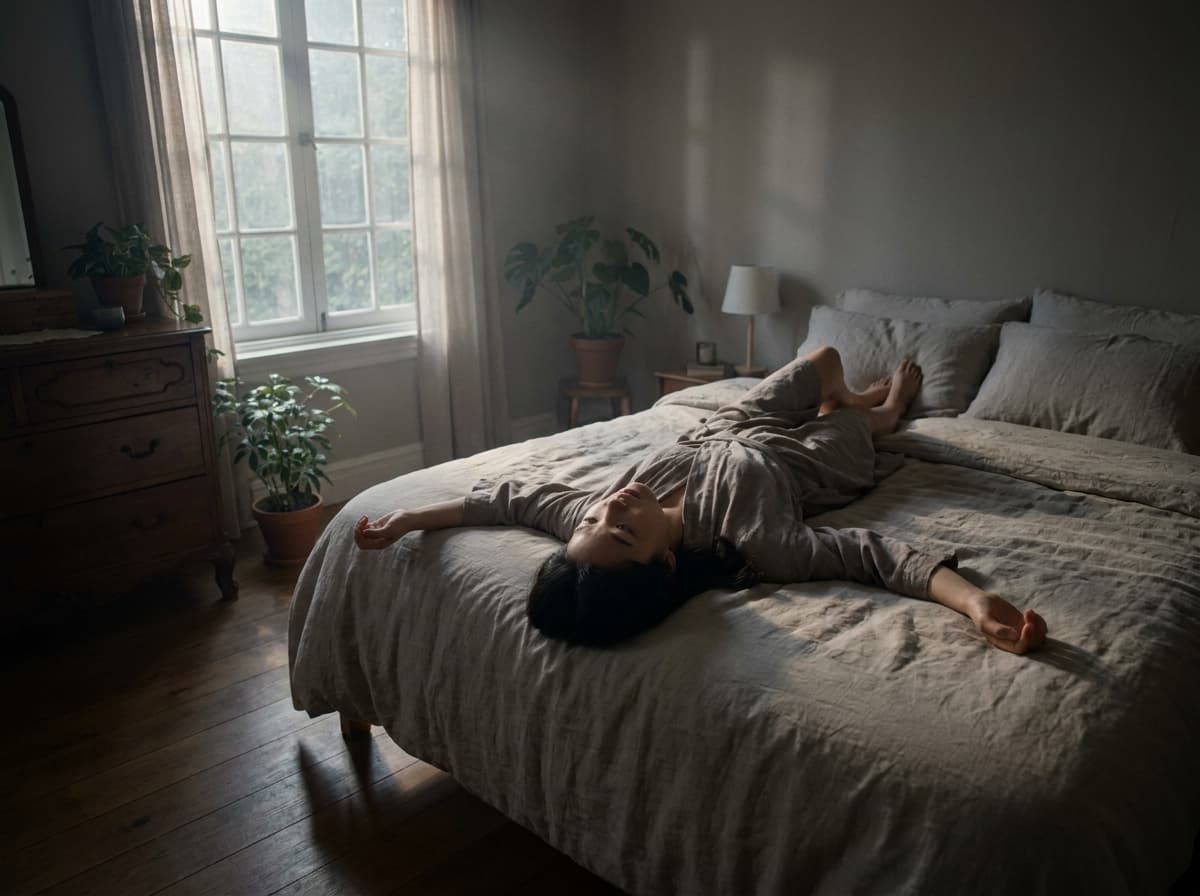
Have you often experienced waking up in the morning feeling heavy and mentally foggy, despite having spent the whole night in bed? If you feel tired and unrefreshed all day even after thinking you slept enough, it might not just be a matter of lacking sleep time. Many patients visit our Incheon branch complaining that they "feel tired even after sleeping" or "don't feel refreshed upon waking." These discomforts not only lower daily vitality but can also lead to various issues such as decreased concentration or mood swings. It is likely a warning signal that your body and brain are not sufficiently recovering.
💡 [Key Answer] The 3 most common causes of not feeling refreshed after waking up: ① Excessive brain arousal due to autonomic nervous system imbalance ② Brain overload and heat accumulation caused by stress and overwork ③ Lack of deep sleep and worsening of morning sleep inertia Dalimchae Korean Medicine Clinic creates an optimal environment where the brain can comfortably rest and recover through autonomic stabilization treatment.
Why is it not refreshing in the morning even after sleeping enough?
Sleep goes beyond simply lying down; it is a time for recovery where fatigue accumulated during the day is resolved and the functions of the body and brain are reorganized. However, not feeling refreshed after sleep means this recovery process is not occurring smoothly. Especially for modern individuals, the balance of the autonomic nervous system is often disrupted due to excessive stress and irregular lifestyle habits. The autonomic nervous system controls all involuntary functions of our body, such as heart rate, digestion, breathing, and temperature regulation, and is deeply involved in sleep and arousal cycles. The sympathetic nervous system tenses the body and consumes energy, while the parasympathetic nervous system relaxes the body and stores energy. These two nerves must be in balance to fall asleep comfortably at night and stay active during the day.
However, if the sympathetic nervous system is excessively hyperactive and tension persists, the brain remains in a state of subtle arousal even after falling asleep. This is the reason why you feel tired even after sleeping. This state lowers sleep quality, making it difficult to enter deep sleep (Slow-wave sleep, REM sleep), eventually hindering the sufficient recovery of the body and brain.
Is my brain overheated and unable to rest? What is autonomic imbalance?
The brain is an important organ that oversees all functions of our body. When stress, overwork, worry, or anxiety persists, the brain constantly processes information and reacts, easily falling into an overloaded state. Like an overheated engine, 'heat' accumulates in the brain, which becomes a major cause of breaking the balance of the autonomic nervous system. This autonomic imbalance not only directly lowers sleep quality but also causes chronic fatigue and manifests as various physical symptoms such as headaches, dizziness, and indigestion.
A review paper published in the Journal of Clinical Neurology in 2022 emphasized that sleep disorders are more common in patients with autonomic dysfunction, suggesting a bidirectional relationship between sleep and autonomic regulation. Furthermore, a study published in PubMed in 2025 targeting 73 peritoneal dialysis patients showed that skin sympathetic nerve activity (SKNA) had a significant correlation with sleep quality, and the group with good sleep quality showed statistically significantly higher SKNA values and several heart rate variability (HRV) indices (p=0.002, p=0.035, etc.). This demonstrates how important the harmonious function of the autonomic nervous system is to the quality of sleep.
Chronic fatigue and insomnia, how does Korean medicine approach them?
At Dalimchae Korean Medicine Clinic, we do not view the symptoms of not feeling refreshed after waking, chronic fatigue, and insomnia simply as sleep problems. We find and treat the root cause of the broken autonomic balance within the relationship between body, mind, and the brain. In Korean medicine, this state is diagnosed as 'nervous system overheating' or 'deficiency of Qi and Blood,' and the treatment aims to help the brain and body rest comfortably again.
According to a systematic review and meta-analysis study published in the Journal of Korean Medicine in 2020, applying Chuna therapy to chronic fatigue syndrome patients showed significant effects in improving general symptoms (n=291, p<0.00001), fatigue levels (n=487, p<0.00001), and sleep disorders (n=139, p=0.0008). Chuna therapy suggests that correcting the structural balance of the body from a Korean medicine perspective can improve the function of the autonomic nervous system, leading to enhanced sleep quality and fatigue recovery.
Additionally, a study published in 2026 targeting Korean adults revealed that 'sleep inertia,' the lack of refreshment in the morning, shows the strongest association with 'anxiety' as well as sleep patterns (p<.001). Researchers concluded that sleep inertia is not merely a result of sleep deprivation but a multidimensional phenomenon reflecting both sleep physiology and emotional regulation. These results imply that the evaluation of anxiety symptoms can be a key contributing factor for patients complaining of excessive grogginess in the morning.
Based on these research results, Dalimchae Korean Medicine Clinic provides integrated Korean medicine treatment to help recover the brain and autonomic nervous system. For those looking for an Incheon insomnia clinic, you can solve the root cause through a personalized treatment plan considering your individual symptoms and constitution at Dalimchae.
Dalimchae's Autonomic Stabilization Treatment Principles
Our body's autonomic nervous system activates the sympathetic nervous system during the day to supply energy needed for activities and makes the parasympathetic nervous system dominant at night to help with rest and recovery. However, when this balance is broken due to stress or overwork, the brain fails to press the 'OFF' switch even at night and maintains an excessively activated state. Dalimchae's autonomic stabilization treatment focuses on calming this overheating of the brain and autonomic nervous system and creating an environment where it can regain balance on its own and rest comfortably.
In Korean medicine, this is also explained by the principle of 'Suseunghwagang' (水昇火降). It is about lowering the heat (火) gathered in the head and raising the cold energy (水) from the lower abdomen to restore the circulation of Qi and Blood and the harmony of Yin and Yang throughout the body. Through complex Korean medicine treatments such as herbal prescriptions, acupuncture, moxibustion, and cupping that cool the excessive heat of the nervous system and create an environment for the brain to rest peacefully, we help regain the balance of the autonomic nervous system and escape from symptoms of feeling tired after sleep and chronic fatigue. Our medical staff at the Incheon branch analyzes each patient's symptoms, constitution, and lifestyle habits to suggest the best treatment. Those who also suffer from headaches or dizziness can expect overall symptom improvement through autonomic stabilization treatment.
Not refreshed after waking? Autonomic Imbalance Self-Diagnosis Checklist
Check how many of the following items apply to you.
- It is very hard to wake up in the morning, and the body feels heavy like a thousand pounds.
- Even after thinking I slept enough, I feel sleepy and tired during the day.
- It takes a long time to fall asleep, or I wake up frequently even after falling asleep.
- I dream a lot, and the dreams are vividly remembered after waking up.
- I am sensitive to stress and easily become anxious or restless over small things.
- Physical symptoms of unknown cause such as headaches, dizziness, and indigestion are accompanied.
- I sometimes feel my chest is stuffy or my heart is pounding.
- Certain areas like the neck and shoulders are always stiff and not easily relaxed.
- I look at my smartphone for a long time before going to bed or eat late-night snacks.
- It is difficult to fall asleep without sleeping pills or tranquilizers, or I am taking such medications.
Judgment Criteria:
- 3 or more items: Autonomic imbalance is suspected. Consider complex Korean medicine treatment for improving sleep quality.
- 5 or more items: There is a high possibility that autonomic nervous system function is significantly degraded. Immediate visit to an Incheon autonomic clinic for precise diagnosis and consultation is recommended.
Q. Can the symptoms of not feeling refreshed after waking up get better naturally? A. If it's due to temporary fatigue or stress, it can improve with sufficient rest and lifestyle changes. However, if symptoms persist for more than 3 months or gradually worsen, the root cause like autonomic imbalance must be resolved, so professional help is needed.
Q. Is it possible to treat insomnia and chronic fatigue at the same time? A. Yes, it is possible. Insomnia and chronic fatigue are often closely related to functional abnormalities of the autonomic nervous system. At Dalimchae Korean Medicine Clinic, we help regain overall body vitality by simultaneously improving both symptoms through treatment that restores autonomic balance.
Q. What is an autonomic nervous system test? A. Autonomic tests mainly use heart rate variability (HRV) tests to objectively evaluate the activity and balance of the autonomic nervous system. This is used to understand which side, the sympathetic or parasympathetic, is excessive or degraded, to establish a personalized treatment plan.
The reason why you don't feel refreshed after waking up is not a problem that can be solved by just enduring it. You no longer have to ignore the signals your body has been sending for a long time. If approached in the right direction, the body responds faster than you think. Bring the symptoms you are experiencing as they are. Dalimchae Korean Medicine Clinic's Incheon branch will find the cause together with you.
Where life blooms. Herbal medicine is, after all, Dalimchae Korean Medicine Clinic. Check your symptoms first through the AI consultation on Dalimchae's website!
This health information was compiled by the Dalimchae medical team based on actual questions received in the consultation room. Medical Supervision | Brain and Autonomic Nervous System Specialist at Dalimchae Incheon, Dr. Yang Yuchan (Insomnia Column)
#Insomnia #SleepDisorder #AutonomicNervousSystem #IncheonInsomniaClinic #IncheonClinic #ChronicFatigue #KoreanMedicine #BrainRest