
안녕하세요. 달임채한의원입니다.
Why My Mind Becomes Clearer When I Try to Sleep The Real Reasons for Sleepless Nights
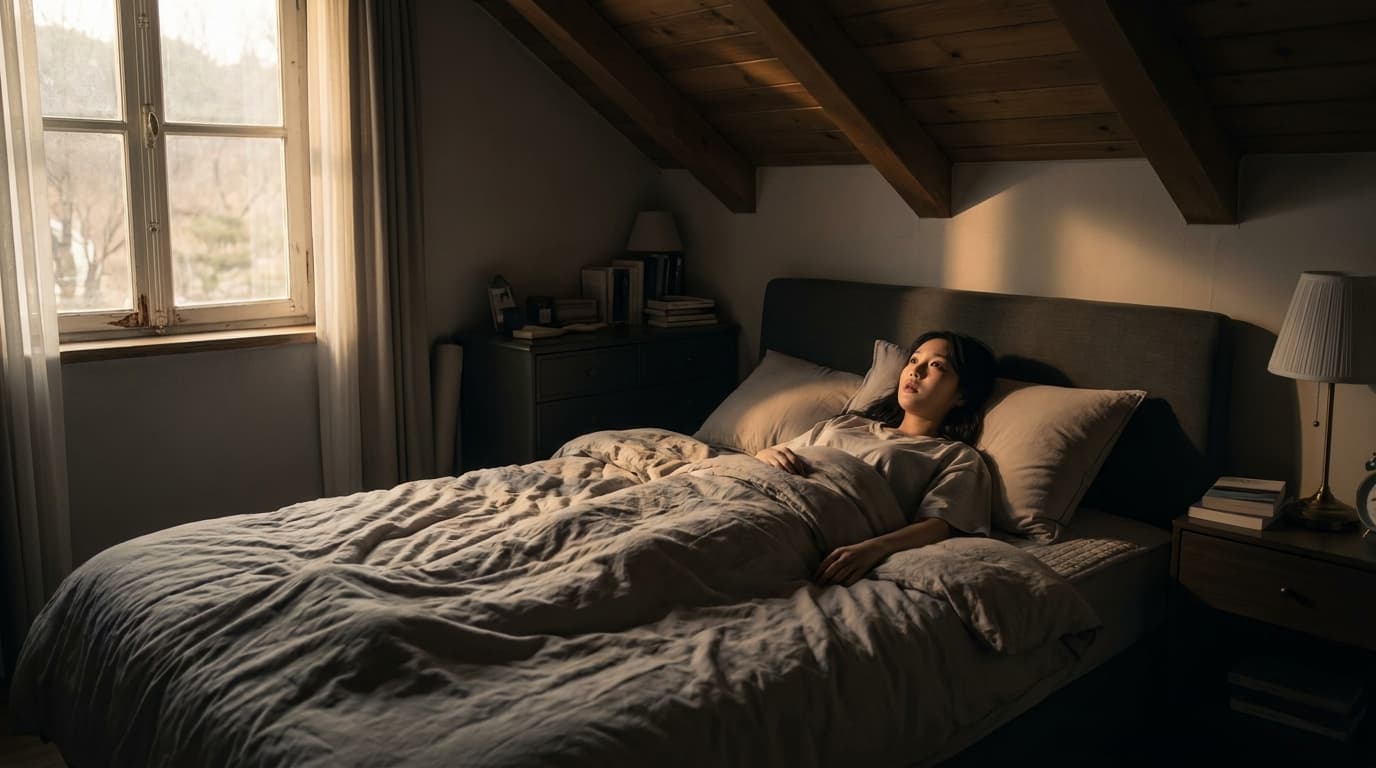
"My mind becomes clearer when I try to sleep." This is a representative symptom reported by many insomnia patients. Have you ever experienced difficulty falling wide awake when you go to bed even though you are tired during the day, with all sorts of thoughts swirling in your head? Such nocturnal arousal is not just a habit problem, but may be a warning sign that an important regulatory system in your body has problems. Amid the suffering of wanting to sleep comfortably but not going as intended, many people simply look for sleeping pills or resign themselves. However, if you understand the real cause of sleepless nights and start proper treatment, deep and comfortable sleep is never a dream.
💡 [Key Answer] The 3 most common causes of the symptom "My mind becomes clearer when I try to sleep": ① Autonomic Nervous System Overactivation / ② Excessive Stress and Anxiety / ③ Unnecessary Brain Arousal Dalimchae Korean Medicine Clinic helps you regain deep sleep by turning down the overheated brain switch through autonomic stabilization treatment.
Why does my mind become clearer only when I get into bed?
Sleep is a time for body and mind to rest and recover. However, when you go to bed and your mind feels clearer, your heart pounds, or anxiety sweeps over you, it is a signal that there is a problem with our body's system that manages sleep. One of the main causes of such sleepless nights is 'autonomic nervous system imbalance'. The autonomic nervous system regulates essential functions for maintaining life such as heartbeat, breathing, digestion, and sleep, regardless of our will. Among them, the sympathetic nervous system is responsible for tension and activity, while the parasympathetic nervous system is responsible for relaxation and rest. In insomnia patients, the sympathetic nervous system is overly activated even at night, making it easy for the brain to maintain an excitatory state.
Is my brain unable to rest even at night?
When the balance of the autonomic nervous system collapses, the brain cannot rest day and night, like an overheated engine. Stress and anxiety accumulated during the day, and stimulation such as smartphone use before sleep excessively arouse the brain, creating a state where the body is tired but the brain is not ready to sleep. In this state, it is difficult to fall asleep no matter how hard you try, and even if you barely fall asleep, you do not fall into deep sleep, resulting in degraded sleep quality such as waking up frequently at dawn or dreaming a lot. Eventually, you may not feel refreshed in the morning and experience symptoms such as fatigue, poor concentration, headache, and dizziness during the day.
How does Korean medicine view and treat insomnia?
Dalimchae Korean Medicine Clinic Incheon Branch diagnoses the root cause of sleepless nights as autonomic imbalance and brain overactivation, focusing on 'autonomic stabilization' treatment to correct it. The goal is to turn off the switch of the overheated brain, relax the tense body and mind, and naturally create an environment in the body where one can sleep. This approach goes beyond simply inducing sleep, helping to restore a healthy sleep pattern where one can induce and maintain deep sleep on one's own.
A clinical study of 60 chronic insomnia patients published in Annals of Translational Medicine in 2021 by a research team at Nanjing University of Chinese Medicine evaluated the effects of acupuncture treatment. As a result, the acupuncture group showed statistically significant decreases in Pittsburgh Sleep Quality Index (PSQI), anxiety and depression scales (HAMA, HAMD) compared to the sham acupuncture group. In particular, changes in neurotransmitters were confirmed, such as a decrease in corticosterone (CORT), a stress hormone, and an increase in 5-hydroxytryptamine (5-HT), a happiness hormone, confirming the mechanism by which acupuncture improves anxiety and depression accompanied by insomnia. The researchers concluded that acupuncture can effectively treat insomnia and accompanying symptoms through CORT and 5-HT regulation. Based on these data, Dalimchae Korean Medicine Clinic Incheon Branch strengthens the regulatory capacity of the autonomic nervous system and calms excessive brain arousal through acupuncture, helping patients regain comfortable and deep sleep.
In addition, herbal medicine treatment has also been shown to have a significant effect on improving insomnia. A 2022 meta-analysis study by Professor Sung-Woo Yoon's team in the Department of Internal Korean Medicine at Gangdong Kyung Hee University Hospital analyzed the efficacy and safety of herbal medicine treatment for insomnia in cancer patients. Integrating 10 clinical research data selected from 952 papers across 9 databases, herbal medicine treatment showed statistically significant improvement in sleep quality assessment indicators such as PSQI, sleep latency, and total sleep time. In particular, compared to the control group using Western medical sleeping pills such as zolpidem and estazolam, significant improvement was confirmed in the herbal medicine group. This study revealed that prescriptions such as Gamigwibi-tang and Cheonwangbosim-dan centered on Sanjo-in are mainly utilized, suggesting that herbal medicine treatment can be a safe and effective treatment for insomnia in cancer patients. Dalimchae Korean Medicine Clinic provides customized prescriptions tailored to each patient's constitution and symptoms through these traditional Korean medicine treatment methods, restoring the body's self-healing power and inducing stable sleep.
Principles of Dalimchae's Autonomic Stabilization Treatment
When the balance of the autonomic nervous system, the root of insomnia, collapses, the brain cannot rest and maintains a state of tension. The autonomic nervous system of our body regulates the functions of the whole body like a main switchboard. If this switch is broken and the sympathetic nervous system is overly turned on, no matter how hard you try, it is difficult to fall asleep. Dalimchae's autonomic stabilization treatment lowers the heat of the nervous system and creates an environment where the brain can rest, which is called 'Suseunghagang (水昇火降)' in Korean medicine. By making the head cool and the lower abdomen warm, it corrects body circulation and helps natural relaxation. Through this, it calms brain overactivation, increases resistance to stress, and restores body functions to sleep comfortably on its own. This is an important treatment process that goes beyond simply increasing sleep time, fundamentally improving sleep quality and recovering daytime vitality.
Insomnia Self-Diagnosis Checklist
Check the items that apply to you. Are these the signals your body is sending on sleepless nights?
- When I go to bed at night, my mind becomes clearer, making it difficult to fall asleep.
- It takes more than 30 minutes to fall asleep 3 or more times a week.
- I wake up frequently at dawn and have trouble falling back asleep.
- Total sleep time is often less than 6 hours, and I feel poor sleep quality.
- Even if I feel I slept enough, I am tired and sleepy during the day.
- I frequently feel chronic stress, anxiety, and depression.
- I experience physical symptoms such as headache, dizziness, and indigestion together.
- I spend a lot of time using electronic devices like smartphones and computers before bed.
[Judgment Criteria]
- 3 or more items apply: Autonomic imbalance-induced insomnia is suspected. It is time to consider complex Korean medicine treatment through expert consultation at Dalimchae Korean Medicine Clinic Incheon.
- 5 or more items apply: Severe insomnia can interfere with daily life. Immediate hospital visit is recommended to start active treatment.
FAQ: Frequently Asked Questions about Insomnia
Q. How long does it take to treat insomnia? A. Treatment duration varies depending on the severity, chronicity, cause, and body recovery capacity of each individual. Generally, continuous treatment and lifestyle improvements for about 3 to 6 months can gradually improve sleep quality. Dalimchae Korean Medicine Clinic Incheon Branch sets up a treatment plan tailored to your condition.
Q. Can I sleep without sleeping pills? A. Yes, it is fully possible. Korean medicine treatment focuses on restoring the body's natural sleep function rather than immediate effects like sleeping pills. By regaining autonomic balance and calming brain excitement to help you fall asleep and maintain deep sleep on your own, you can regain healthy sleep without sleeping pill dependency.
Q. Can insomnia get better naturally? A. Temporary sleep problems can improve naturally through lifestyle improvements, but chronic insomnia tends to become fixed or worse over time. In particular, hyperarousal states like "my mind becomes clearer when I try to sleep" indicate decreased autonomic function, so it is important to regain body balance through active treatment. It is recommended to visit an Incheon autonomic Korean medicine clinic for accurate diagnosis.
Q. Can insomnia, anxiety, and depression be treated together? A. Yes, insomnia is often deeply connected with anxiety or depression. Dalimchae's autonomic stabilization treatment helps alleviate anxiety and depression symptoms by balancing the overall autonomic nervous system as well as sleep. This is an integrative approach that improves physical symptoms together through mental stability.
Insomnia like "my mind becomes clearer when I try to sleep" is not something that can be resolved by enduring. You no longer have to ignore the body signals you have sent for a long time. Approaching in the right direction makes the body react faster than expected. Bring the symptoms you are experiencing as they are. We will find the cause together at Dalimchae Korean Medicine Clinic Songdo.
Where life blooms. Herbal medicine is Dalimchae Korean Medicine Clinic. Check your similar symptoms first through the Dalimchae Korean Medicine Clinic website AI consultation!
This article is health information organized together by Dalimchae medical staff based on questions frequently received in the treatment room. Medical Supervision | Brain & Autonomic Nervous System Treatment Standards, Dalimchae Korean Medicine Clinic Incheon Branch Korean Medicine Doctor Yang Yuchan (Insomnia Column)