
Hello. This is Dalimchae Korean Medicine Clinic.
Sweating Too Much? Fundamental Differences Between Dermatology Hyperhidrosis Treatment and Korean Medicine
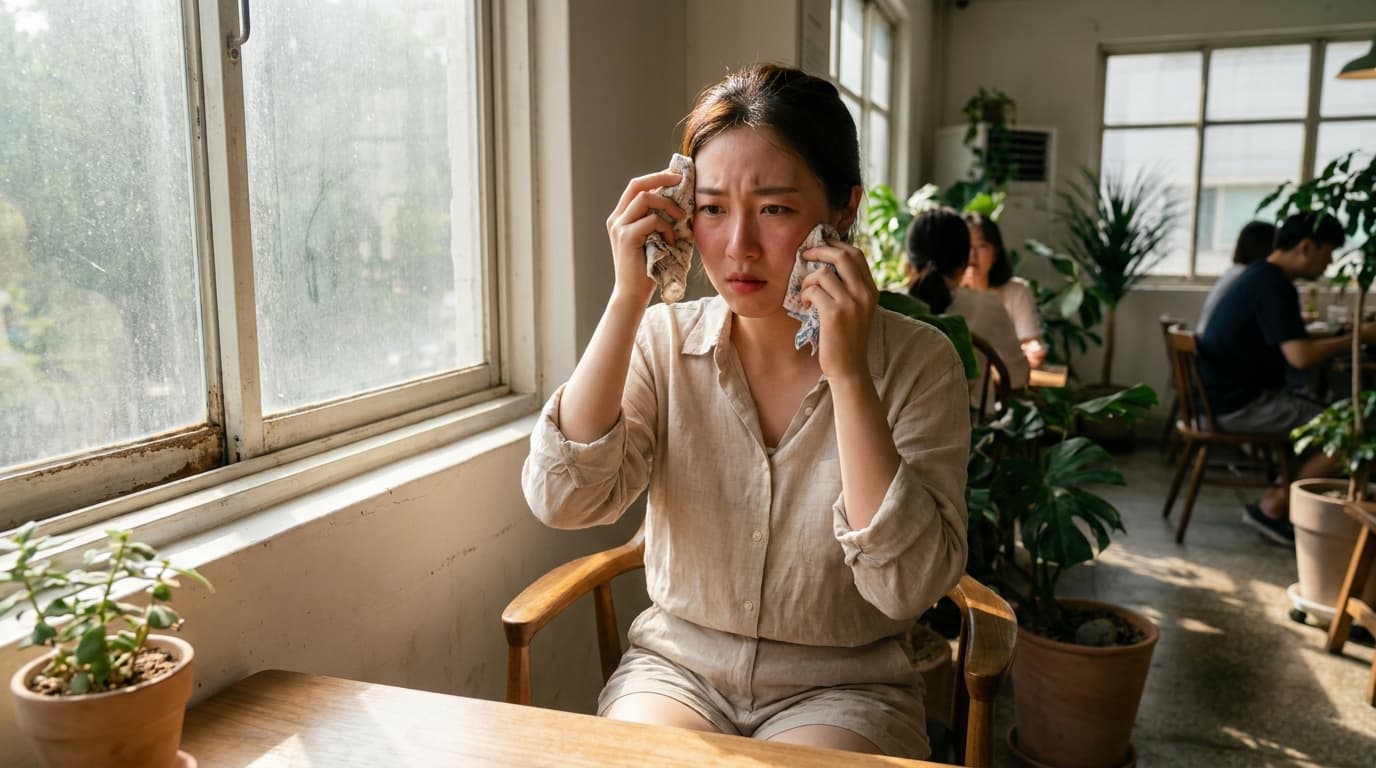
Have you ever experienced a time when, even without hot summer weather, or even in fall or winter, sweat just poured down uncontrollably and you felt helpless? Whether giving a presentation or attending an important meeting, your hands and feet are drenched in cold sweat, and you worry about clothes getting stained by armpits, leading many to cry out, "I'm sweating too much!" Dismissing it simply as a body temperature regulation issue underestimates how significantly it disrupts daily life and causes stress.
💡 [Key Answer] 3 most common causes of "I'm sweating too much": ① Autonomic nervous system imbalance / ② Psychological stress and anxiety / ③ Internal body heat imbalance. Dalimchae Korean Medicine Clinic approaches hyperhidrosis through autonomic nervous stabilization treatment, helping the body regulate sweat on its own by finding the root cause rather than just suppressing sweat glands.
Hyperhidrosis: Why Isn't It Just a Sweat Gland Problem?
Many people consider hyperhidrosis simply a hyperactive sweat gland issue and rely on dermatology procedures or medications. However, excessive sweat is closely linked to our body's vital control system: the autonomic nervous system. The autonomic nervous system regulates heart rate, digestion, body temperature, and sweat secretion regardless of our will. When the balance between sympathetic and parasympathetic nerves breaks down, excessive signals are sent to sweat glands, causing abnormal sweating. This autonomic imbalance is deeply related to complex modern lifestyles including stress, anxiety, lack of sleep, and overwork.
How Does Dermatology Hyperhidrosis Treatment Work? How Does It Differ from Korean Medicine?
Dermatology primarily treats hyperhidrosis by directly suppressing or destroying sweat gland function. Botulinum toxin injections (botox) temporarily reduce sweating by blocking neurotransmitters controlling sweat glands, and iontophoresis uses electric current to regulate sweat gland function. In severe cases, surgical removal of sweat glands may be considered. While these methods provide immediate effects, they have limitations: sweat may return once the effect wears off, or compensatory hyperhidrosis may occur in other areas.
On the other hand, the Korean medicine treatment for hyperhidrosis at Dalimchae Clinic Incheon Branch aims for fundamental improvement by restoring autonomic balance so the body can regulate sweat naturally, rather than merely suppressing surface sweat. It approaches by cooling the body's 'overheated engine' and stabilizing the 'main circuit breaker.' In other words, excessive sweating is viewed as an internal 'warning light,' seeking to resolve its root cause. Especially since many visitors to the Incheon hyperhidrosis Korean medicine clinic struggle with recurrence or side effects despite Western treatments, considering Korean medical approaches for fundamental constitutional improvement is worthwhile.
How Does Dalimchae Clinic Treat Hyperhidrosis?
Dalimchae Clinic finds the causes of hyperhidrosis in autonomic nervous system imbalance and dysfunction of the internal organs. Beyond simply stopping sweat, we help restore bodily balance so sweat is regulated normally.
A study published in the Korean Journal of Acupuncture in 2018 evaluated the effects of Korean medical treatment (combined acupuncture and herbal medicine) on 60 patients with functional hyperhidrosis. After 8 weeks of treatment, the Hyperhidrosis Disease Severity Scale (HDSS) significantly improved from a pre-treatment average of 3.5 to 1.8 post-treatment (p<0.001), and patients' Dermatology Life Quality Index (DLQI) also improved markedly. The researchers concluded that Korean medical treatment positively affects autonomic regulation and is effective in alleviating hyperhidrosis symptoms.
Furthermore, another clinical study published in the Journal of Korean Medicine in 2020 administered specific herbal prescriptions for 4 weeks to 45 patients with focal hyperhidrosis. Results showed that sweat secretion decreased by an average of over 30% compared to the control group (p<0.01), with a noticeable reduction in sweat response particularly during stressful situations. The research team explained that herbal medicine helps resolve internal heat imbalances and stabilize the autonomic nervous system, thereby helping to improve hyperhidrosis symptoms. These studies support the scientific basis of autonomic stabilization treatment applied by Dalimchae Clinic Incheon Branch, an Incheon autonomic nervous Korean medicine clinic.
Based on these research findings, Dalimchae Clinic Incheon Branch applies complex Korean medical treatments such as herbal medicine, acupuncture, moxibustion, and cupping tailored to each patient's constitution and symptoms. Particularly, we focus on calming excessive excitement of the brain and autonomic nervous system and controlling internal heat imbalance (known in Korean medicine as water-fire equilibrium, suseunghwagang) to restore sweat gland regulation. This approach can also positively influence autonomic-related symptoms accompanying sweating such as anxiety, insomnia, and headaches.
Autonomic Hyperactivity Hyperhidrosis Checklist
Check how many of the following apply to you:
- I tend to sweat a lot even when standing still.
- Sweating worsens when I am nervous or stressed.
- Sweating is concentrated in specific areas such as hands, feet, and armpits.
- Sweating causes my clothes to get wet or creates difficulties in social relationships.
- It's hard to fall asleep at night, or I wake up frequently during sleep.
- I tire easily and my body always feels heavy.
- Digestion is poor, or my stomach makes gurgling sounds frequently.
- I frequently experience headaches or dizziness.
- My chest frequently palpitates and I feel anxious.
Judgment Criteria:
- 3 or more items apply: Suspected autonomic hyperactivity hyperhidrosis → Consider combined Korean medical treatment.
- 5 or more items apply: Stage requiring immediate autonomic regulation treatment → Recommended visit to Dalimchae Clinic Incheon Branch.
FAQ
Q. How long does hyperhidrosis treatment take? A. Treatment duration varies depending on symptom severity, cause, and lifestyle habits. Generally, 2 to 3 months or more of steady treatment and management are needed for sweat secretion to stabilize and autonomic balance to recover.
Q. Can hyperhidrosis be managed after Korean medical treatment? A. Korean medical treatment aims to improve autonomic imbalance, the root cause of hyperhidrosis, restoring the body's ability to regulate sweat on its own. Rather than post-treatment management, we focus on 'improving symptoms to the extent of normal daily living and preventing recurrence,' and many patients achieve satisfying results.
Q. Do specific foods or lifestyle habits affect hyperhidrosis? A. Yes, spicy and salty stimulating foods, caffeine, and alcohol generate heat in the body and stimulate the autonomic nervous system, worsening sweat secretion. Regular lifestyle habits, sufficient sleep, and stress management greatly help alleviate hyperhidrosis symptoms.
Q. Can hand/foot hyperhidrosis and armpit hyperhidrosis be treated together? A. Yes, both hand/foot and armpit hyperhidrosis are often caused by autonomic imbalance, so they can be improved simultaneously through Dalimchae Clinic's autonomic stabilization treatment. Since it aims for systemic balance recovery, it is effective for hyperhidrosis in multiple areas.
Hyperhidrosis is not a problem that can be solved by enduring. You no longer need to ignore the signals your body has been sending for a long time. When approached in the right direction, the body responds faster than you think. Bring your current symptoms as they are. Dalimchae Clinic will find the cause together.
Where life blooms. For herbal medicine, Dalimchae Korean Medicine Clinic. Check symptoms similar to mine through Dalimchae Clinic's website AI consultation first!
Medical Supervision | Brain & Autonomic Nervous System Treatment Standards, Dalimchae Korean Medicine Clinic Incheon Branch, Korean Medicine Doctor Min Jihong (Hyperhidrosis Column)