
Hello. This is Dalimchae Korean Medicine Clinic.
Is Your Head Very Itchy and Flakes Falling? It's Not a Simple Scalp Problem.
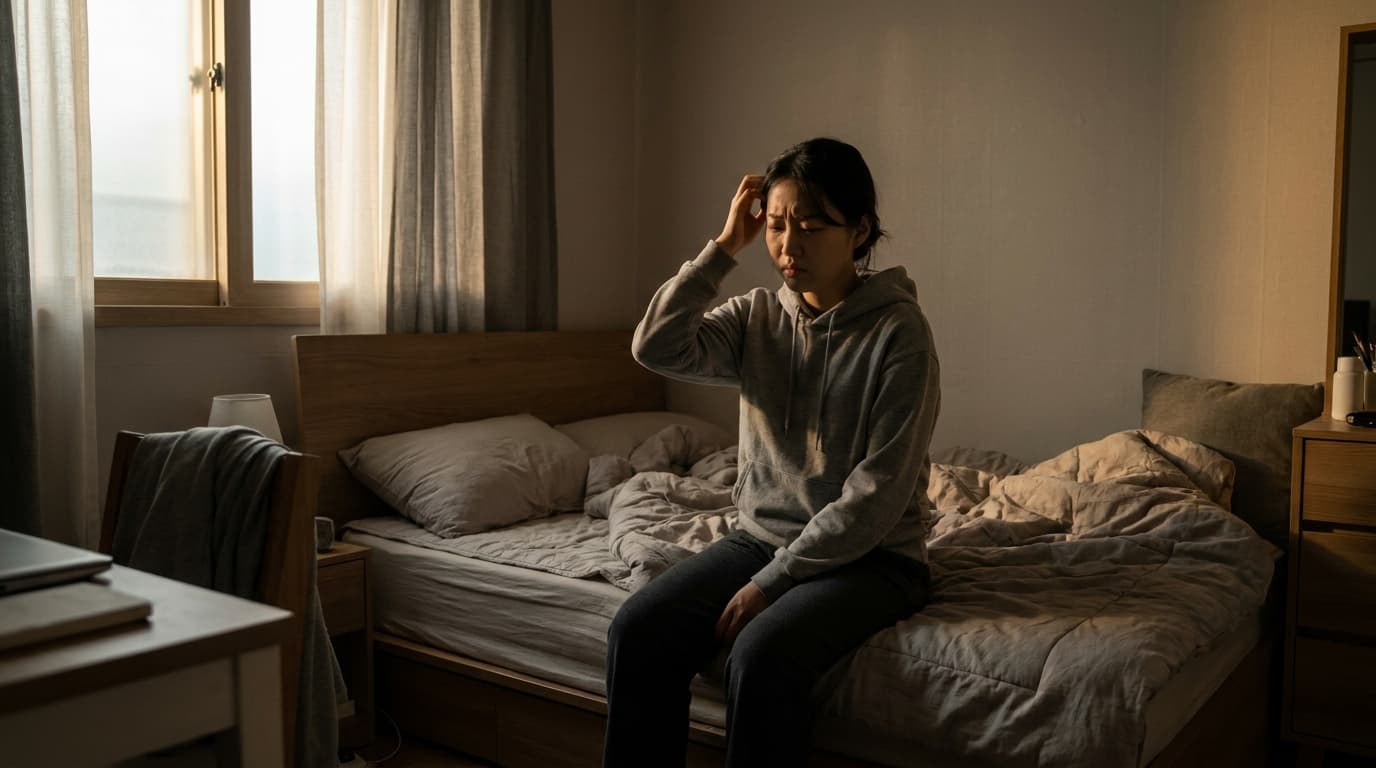
Have you ever been unable to sleep late at night because you were scratching your head? Or have you felt discouraged because of the white dandruff falling on your shoulders? Many people consider the symptom of my head being too itchy and dandruff falling as a simple scalp problem and rely on shampoos or ointments. However, if these symptoms repeat, it may not just be a scalp problem, but a warning sign sent by the imbalance within our body.
💡 [Key Answer] The 3 most common causes of the symptom my head being too itchy and dandruff falling: ① Gut environment imbalance and toxins / ② Autonomic nervous system disturbance due to stress / ③ Excessive sebum secretion and decreased immunity Dalimchae Korean Medicine Clinic restores scalp health by improving the body's fundamental environment through gut detox treatment.
What is the exact cause of itchy scalp and dandruff?
Scalp itching and dandruff are main symptoms of inflammatory diseases such as seborrheic dermatitis. The causes of these symptoms are complex, but in Korean medicine, they are not viewed as just a local problem. We see it as closely related to the imbalance of internal organ functions in our body, especially gut health. Gut microbiome imbalance can cause inflammatory reactions that lead to the scalp, and stress can disturb the autonomic nervous system, making sebum secretion excessive and weakening the scalp's immunity. Also, in Korean medicine, 'heat metabolism disorder' is seen as the fundamental cause, explaining that heat inside the body does not circulate properly and gathers in the upper body parts such as the head or face, worsening inflammation and sebum secretion.
Seborrheic dermatitis, isn't it just a skin problem?
Seborrheic dermatitis is a chronic inflammatory skin disease that mainly appears in areas with developed sebaceous glands such as the scalp, face, and chest. It is accompanied by symptoms such as red spots, itching, and dandruff, and if left untreated, it can lead to hair loss, so caution is required. Skin diseases tend to recur easily if only the visible symptoms are treated. This is because the skin is like a mirror reflecting the internal state of our body. Toxins accumulated on the intestinal wall can cause systemic inflammation through the blood, which becomes the cause of persistent inflammatory reactions on the scalp. Therefore, chronic scalp problems including seborrheic dermatitis are not simple skin problems, but diseases where the imbalance of the entire body's immune system and organ functions must be examined together.
How does Korean medicine view scalp itching and dandruff?
In Korean medicine, scalp itching and dandruff are interpreted as the result of 'damp-heat' and 'organ imbalance' inside the body. In particular, a decrease in the function of the spleen and stomach can create damp-heat, which rises to the scalp and causes inflammation and excessive sebum secretion. Also, liver function imbalance or lack of blood and Yin can interfere with sufficient nutrient supply to the scalp and weaken the skin barrier, deepening itching and inflammation. At Dalimchae Korean Medicine Clinic Incheon Branch, we focus on treatments that find the fundamental internal causes that trigger scalp symptoms and restore the body's balance. Those looking for an Incheon scalp Korean medicine clinic will understand why this integrated perspective of treatment is necessary.
Gut detox treatment, by what principle does it make the scalp healthy?
Dalimchae Korean Medicine Clinic's gut detox treatment finds the fundamental cause of scalp health in the gut. The gut is an important organ in charge of more than 70% of our body's immunity beyond being a simple digestive organ. When gut health collapses, gaps are created in the intestinal wall, allowing undigested food debris and toxins to spread throughout the body through the blood, which causes inflammatory reactions and triggers scalp itching, dandruff, and inflammation. Gut detox treatment removes these intestinal toxins and creates an environment where beneficial bacteria can grow well, restoring the damaged intestinal wall. When the gut environment improves, our body's immunity is enhanced, and the inflammation reaction of the scalp naturally decreases and returns to a healthy state. This is a fundamental treatment approach that increases the body's self-healing power to prevent recurrence, not just simple symptom suppression.
In a domestic clinical paper analysis study published in the Journal of Korean Medicine Ophthalmology & Otolaryngology & Dermatology in 2018, the effects and quality of research of herbal medicine intake for seborrheic dermatitis were evaluated. As a result of analyzing a total of 4 randomized controlled trials (RCTs) finally selected from 952 studies searched in various databases such as OASIS, NDSL, and PubMed, it was confirmed that the symptoms of seborrheic dermatitis significantly improved in the herbal medicine treatment group compared to the control group. In particular, in one study (Ma et al.), after 6 weeks of treatment, the total effective rate of the herbal medicine treatment group was 89.5%, showing a statistically significant improvement compared to 66.4% of the control group (p<0.05). Based on these results, the researchers concluded that herbal medicine intake is an effective and safe treatment for seborrheic dermatitis.
Also, in a study published in the journal Clin Cosmet Investig Dermatol in 2017, as a result of applying a cream containing herbal extracts to 32 patients with facial seborrheic dermatitis for 6 weeks, the Investigator Static Global Assessment (ISGA) score improved by 76% from an average of 2.35 before treatment to 0.54 after treatment (p<0.05), and significant clinical improvement was confirmed in all evaluation items including itching, flakes, and erythema. The researchers believed that these results suggest that herbal-based treatments are safe and effective in improving seborrheic dermatitis symptoms.
Based on these data, Dalimchae Korean Medicine Clinic Incheon Branch approaches the chronic scalp itching and dandruff problem, which is difficult to solve with simple ointments or shampoos, with the fundamental treatment principle of gut detox. We aim to restore the scalp's inherent health by regulating our body's inflammatory response and strengthening immunity. This focuses on creating a healthy body where inflammation does not occur again, rather than just suppressing visible symptoms.
Am I also suffering from seborrheic dermatitis? Self-diagnosis checklist
If 3 or more of the following questions apply, it is good to suspect scalp seborrheic dermatitis and receive a professional diagnosis at an Incheon seborrheic dermatitis Korean medicine clinic such as Dalimchae Korean Medicine Clinic.
- ( ) The scalp is always itchy, and scratching it feels stinging beyond cool.
- ( ) Even after washing my hair, it gets greasy quickly and becomes clumped after only one day.
- ( ) Many white and yellow flakes fall on my shoulders or pillow.
- ( ) Red spots, inflammation, or pimples frequently appear on the scalp.
- ( ) My hair seems to get thinner and fall out more than before.
- ( ) Scalp symptoms become more severe when I am stressed or tired.
- ( ) Gut problems such as poor digestion, constipation, or diarrhea frequently occur.
Judgment criteria:
- 3 or more apply → Gut imbalance type scalp problem suspected → Review Korean medicine diagnosis and treatment
- 5 or more apply → Possibility of chronic seborrheic dermatitis progression → Immediate visit for precise diagnosis recommended
Q&A: Things you are curious about scalp itching and dandruff
Q. How long can scalp itching last? A. Scalp itching can be temporary depending on the cause, but if it is a chronic inflammatory disease such as seborrheic dermatitis, it is difficult to disappear naturally without treatment. If left untreated, symptoms may worsen, spread to other parts, or lead to hair loss, so it is important to manage from the beginning.
Q. Can seborrheic dermatitis be treated with Korean medicine? A. Yes, Korean medicine treatment is effective in improving the fundamental cause of seborrheic dermatitis. Rather than just suppressing symptoms, we comprehensively treat heat metabolism disorders, organ imbalances, and decreased immunity inside the body to prevent recurrence and create a healthy scalp environment.
Q. Can severe dandruff lead to hair loss? A. Yes, neglecting dandruff and inflammation caused by seborrheic dermatitis can give continuous damage to scalp hair follicles and lead to hair loss. In particular, seborrheic hair loss, where sebum secretion is excessive, can make hair weak and promote falling out, so active treatment is necessary.
Q. Can I reduce dandruff with usual lifestyle habits? A. Improving lifestyle habits can be helpful in alleviating symptoms, but it is not a fundamental solution. Stress management, sufficient sleep, a balanced diet, and avoiding excessive heat are important. However, if symptoms are already chronic, it is necessary to solve the fundamental cause inside the body with the help of an expert.
Scalp itching and dandruff are not problems that can be solved by enduring. You no longer have to ignore the signals your body has been sending for a long time. If you approach in the right direction, the body responds faster than you think. Bring your symptoms exactly as they are. At Dalimchae Korean Medicine Clinic, we will find the cause together.
Where life blooms. For herbal medicine, it's Dalimchae Korean Medicine Clinic. Check your symptoms similar to mine through the AI consultation on the Dalimchae Clinic website first!
This article is health information compiled by Dalimchae medical staff based on questions frequently received in the treatment room. Medical Supervision | Skin Disease Treatment Standards Dalimchae Korean Medicine Clinic Incheon Branch Korean Medicine Doctor Min Jihong (Inflammatory Skin Disease Column)