
Hello. This is Dalimchae Clinic.
Why Is My Period Suddenly So Heavy? | Understanding Menorrhagia as a Body Signal
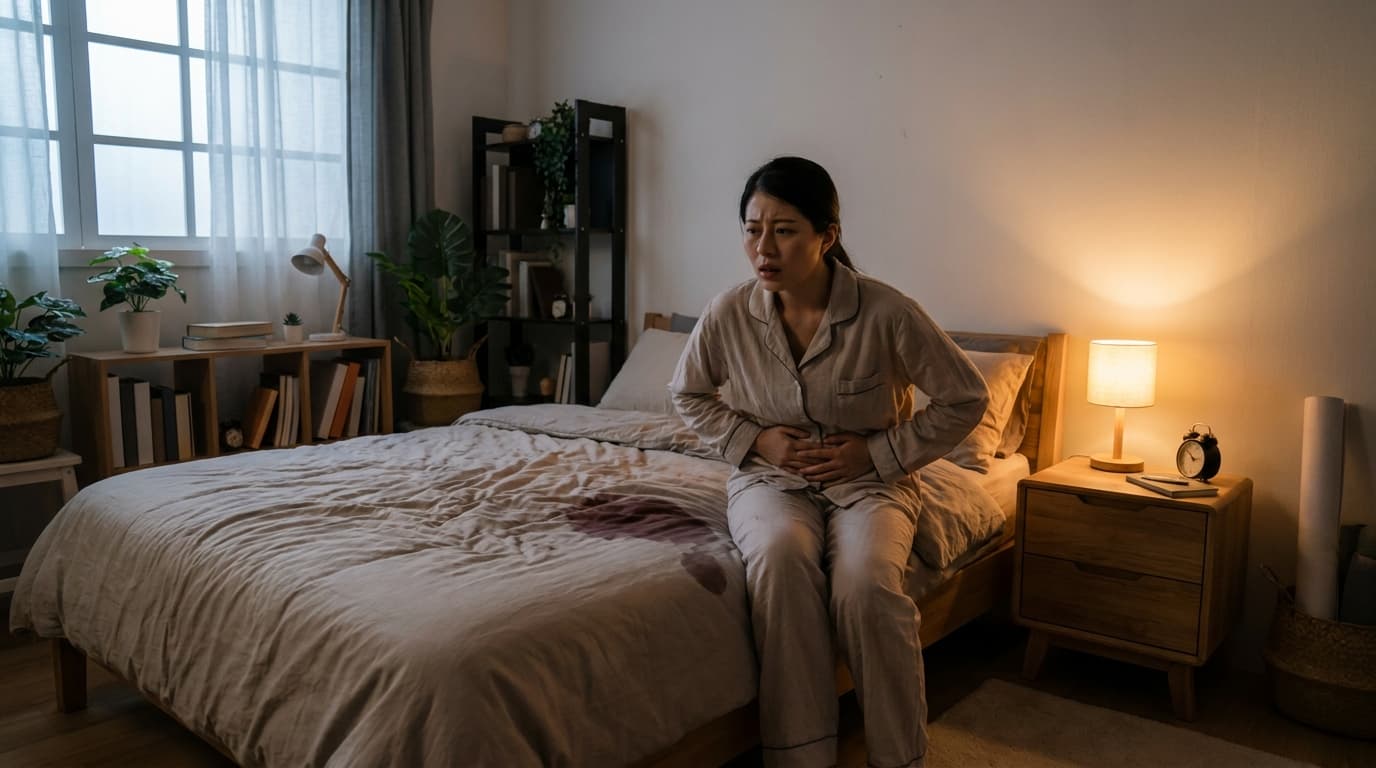
Have you ever experienced a sudden, uncontrollable increase in menstrual flow or a sudden discharge of clotted blood? Many people feel anxious about unusual menstrual amounts and cycles but often ignore them, thinking, 'It will get better.' However, a sudden increase in menstrual volume can be a temporary phenomenon due to stress or overwork, but sometimes it can be an important signal from the body that a serious problem has occurred in uterine health. In particular, if the amount is so large that the bedding gets wet or the pad needs to be replaced once an hour, you should never overlook it.
💡 Key Answer The 3 most common causes of a sudden increase in menstrual flow (menorrhagia): ① Hormonal imbalance: Hormonal regulation problems due to immature ovarian function, stress, overwork, etc. ② Uterine fibroids: Benign tumors that occur in the muscle layer of the uterus. ③ Adenomyosis: A condition where endometrial tissue grows into the uterine muscle layer, causing the uterus to enlarge. Dalimchae Clinic helps prevent the recurrence of menorrhagia and restore a healthy menstrual cycle by strengthening uterine function and improving constitution to regain the body's fundamental balance.
Why does the amount of menstruation suddenly increase?
A sudden increase in menstrual flow, known as menorrhagia, is a problem that significantly reduces a woman's quality of life and is a warning light indicating internal imbalance. A normal menstrual volume is about 20 to 80 mL, and it is diagnosed as menorrhagia if it is more than 80 mL or lasts for more than 8 days. These changes can occur mainly due to the following causes.
First, hormonal imbalance is one of the most common causes. In particular, during periods of significant hormonal changes, such as puberty or the menopausal transition, menstrual amounts can increase as ovarian regulation function becomes immature or unstable. Stress, overwork, and lack of sleep can also cause temporary hormonal imbalance, leading to menorrhagia.
Second, uterine fibroids are benign tumors that occur in the smooth muscle that makes up the uterine wall and are a major cause of menorrhagia. Depending on the size, location, and number of fibroids, the amount of menstruation may increase and menstrual cramps may become severe, and in severe cases, it can lead to anemia or chronic fatigue.
Third, adenomyosis is a disease in which endometrial tissue grows into the uterine muscle layer, making the uterus overall larger and thicker. This causes huge menstrual amounts along with extreme menstrual cramps and is characterized by a lot of clotted blood.
Fourth, endometrial hyperplasia or endometrial polyps can also cause menorrhagia. Endometrial hyperplasia is an abnormal thickening of the endometrium due to hormonal imbalance, which rarely has the potential to develop into cancer, so caution is required. Endometrial polyps are small bumps that occur in the endometrium and can cause bleeding.

Menorrhagia, until when should you not neglect it?
Menorrhagia goes beyond just an increase in menstrual flow and is a problem that can cause anemia, chronic fatigue, dizziness, and in severe cases, strain on heart function. In particular, if it is noticeably more than the usual menstrual amount and is accompanied by the following symptoms, it is important not to neglect it any longer and seek professional help.
- When the amount of menstruation is so large that pads must be replaced at night
- When pads need to be replaced once an hour on days with heavy menstruation
- When menstruation lasts longer than 8 days
- When you feel anemia symptoms such as tiredness, helplessness, and shortness of breath during menstruation
- When large clotted blood (clotting blood) larger than a 100-won coin comes out frequently
- When daily life or studies are hindered because of the large amount of menstruation
- When menstrual cramps become severe, such as lower abdominal pain and pelvic pressure
If these symptoms persist for more than two months, it is advisable to undergo a precise examination to check the possibility of uterine disease. Dalimchae Clinic Songdo, a Songdo women's clinic, identifies the root cause of menorrhagia and helps restore uterine health through oriental medicine treatment tailored to individual constitutions.
How does oriental medicine treat heavy periods?
In oriental medicine, menorrhagia is seen not as a simple bleeding problem, but as being caused by an imbalance in the circulation of Gi (energy) and Blood (vital force) throughout the body, including the uterus, and a decrease in the function of the internal organs. In particular, it is explained that waste products and cold energy stagnant and stagnant in the body, such as 'Stagnant Blood' or 'Cold Accumulation,' affect uterine function and cause bleeding problems.
Dalimchae Clinic approaches treatment with the goal of improving constitution by finding the cause of menorrhagia from this perspective. Instead of temporarily suppressing symptoms, we focus on building fundamental physical strength and improving the uterine environment so that the body can regain a healthy menstrual cycle on its own and prevent symptoms from manifesting again. This is like not just turning off the symptoms but creating a body that doesn't turn on again.
Herbal medicine prescription that strengthens uterine function and improves blood circulation
At Dalimchae Clinic, we prescribe customized herbal medicines according to individual constitution and symptoms. Herbal medicine helps strengthen uterine function by removing stagnant blood in the uterus and promoting Gi and blood circulation. In addition, it can be expected to improve anemia or fatigue caused by menorrhagia by supplementing insufficient blood and enhancing overall physical strength.
In fact, oriental medicine treatment has shown meaningful effects in improving women's menstrual-related symptoms. According to a study published in Frontiers in Medicine in 2026, as a result of applying individual customized herbal medicine prescriptions (THD) to a total of 119 menstrual cramp patients aged 19-65 at 33 oriental medical clinics and 1 oriental medical hospital, a significant decrease in menstrual cramp intensity (p = 0.029) and a decrease in analgesic dosage (p = 0.001) were confirmed compared to the non-herbal medicine group. In addition, in a prospective observational study published in the journal Medicine in 2025, as a result of applying oriental medicine treatment including herbal medicine prescriptions to 135 menstrual cramp patients, it was observed that menstrual cramp intensity, duration, and analgesic use significantly decreased in the herbal medicine group. Researchers concluded that these results suggest that individual customized herbal medicine can be a safe and effective treatment option for relieving menstrual cramps. Although these studies focused on menstrual cramps, they show the overall effectiveness of oriental medicine treatment for menstrual-related diseases and support that Dalimchae Clinic's uterine function strengthening and constitutional improvement treatment can contribute to solving the root problems leading to menorrhagia.
In particular, Dalimchae Clinic, a Songdo menorrhagia clinic, focuses on resolving circulation stagnation and cold accumulation in the body, which are considered major causes of uterine diseases. We help improve congestion by facilitating blood circulation in the uterus and pelvis and help the uterus maintain a warm and healthy environment. This can also have a positive effect on alleviating menorrhagia symptoms caused by uterine fibroids or adenomyosis.
Improvement of local circulation through acupuncture and moxibustion treatment
Acupuncture and moxibustion treatments are applied in parallel with herbal medicine treatment. Acupuncture treatment alleviates menorrhagia symptoms and regulates uterine function by communicating meridians around the uterus and pelvis and facilitating Gi and blood circulation. Moxibustion treatment is effective in removing cold from the uterus by warming the lower abdomen, promoting blood circulation, reducing inflammation in the uterus, and alleviating pain. This complex treatment is especially helpful for those who suffer from menorrhagia at Dalimchae, a Songdo clinic. These treatments can also have a good impact on those who have severe menstrual cramps or difficulty with infertility.
✔️ Am I also having menorrhagia? Self-diagnosis checklist
Count how many of the items below apply to you.
- The amount of menstruation is too much, so I have to change pads in my sleep at night.
- On heavy days, pads must be replaced every 1-2 hours.
- There are many cases where menstruation lasts longer than 8 days.
- Large clotted blood larger than a 100-won coin comes out frequently during menstruation.
- I have no energy during menstruation, am often tired, and have felt dizzy.
- Daily life (going out, work, etc.) is restricted because the amount of menstruation is too large.
- Severe menstrual cramps or lower abdominal discomfort are often accompanied.
- 1-2 items: It may be a temporary hormonal imbalance or stress. Sufficient rest and stress management are important.
- 3-4 items: There is a high possibility of menorrhagia. It is recommended to check uterine health and consider oriental medicine complex treatment.
- 5+ items: Menorrhagia may have intensified or it may be a signal of uterine disease. It is necessary to identify the cause and start treatment through immediate professional medical treatment and examination.
FAQ
Q. Is it a natural phenomenon to have a sudden increase in menstrual flow as you get older? A. No. It is common for women to gradually decrease their menstrual flow after age 35. Rather, if the amount of menstruation increases with age, it may be a signal of uterine diseases such as uterine fibroids and adenomyosis, so it is advisable to get a checkup.
Q. Can anemia occur if menorrhagia is severe? A. Yes, that's right. If the amount of menstruation is excessive or the period is long, iron in the body becomes insufficient, making it easy for anemia to occur. If anemia becomes severe, it can cause strain on heart function as well as chronic fatigue, low energy, and dizziness, so active treatment is necessary.
Q. What kind of examination does Songdo menorrhagia clinic use to identify the cause? A. Dalimchae Clinic Songdo analyzes the causes of excessive menstrual flow from various angles through ultrasound, body heat, constitutional examination, and precise pulse diagnosis and consultation. Based on this, we comprehensively evaluate the state of uterine health, hormonal imbalance, and systemic Gi and blood conditions to establish an optimized treatment plan for individuals.
Q. I have menstrual cramps and menorrhagia together, can they be treated together? A. Yes, it is possible. Menstrual cramps and menorrhagia often originate from similar causes, such as imbalance in uterine function, stagnant blood, and cold accumulation. Dalimchae Clinic's oriental medicine treatment can help improve menstrual cramps and menorrhagia at the same time by strengthening uterine function and regaining the body's balance.
Menorrhagia is not a problem that can be solved by enduring. You no longer have to ignore the signals the body has been sending for a long time. If you approach it in the right direction, your body reacts faster than you think. Bring the symptoms you are experiencing as they are. Dalimchae Clinic will find the cause together.
A place where life blooms. Herbal medicine is, after all, Dalimchae Clinic. Check for symptoms similar to mine first with AI consultation on the Dalimchae Clinic website!
This health information was compiled together by the Dalimchae medical staff based on questions frequently received in the consultation room. Medical Supervision | Women's and Pregnancy Medical Standards Dalimchae Clinic Songdo Branch Oriental Doctor Oh Hyun-min (Heavy Menstruation Column)