
Hello. This is Dalimchae Korean Medicine Clinic.
Why do you sweat even when staying still? The answer is autonomic nerve balance, the signal your body sends.
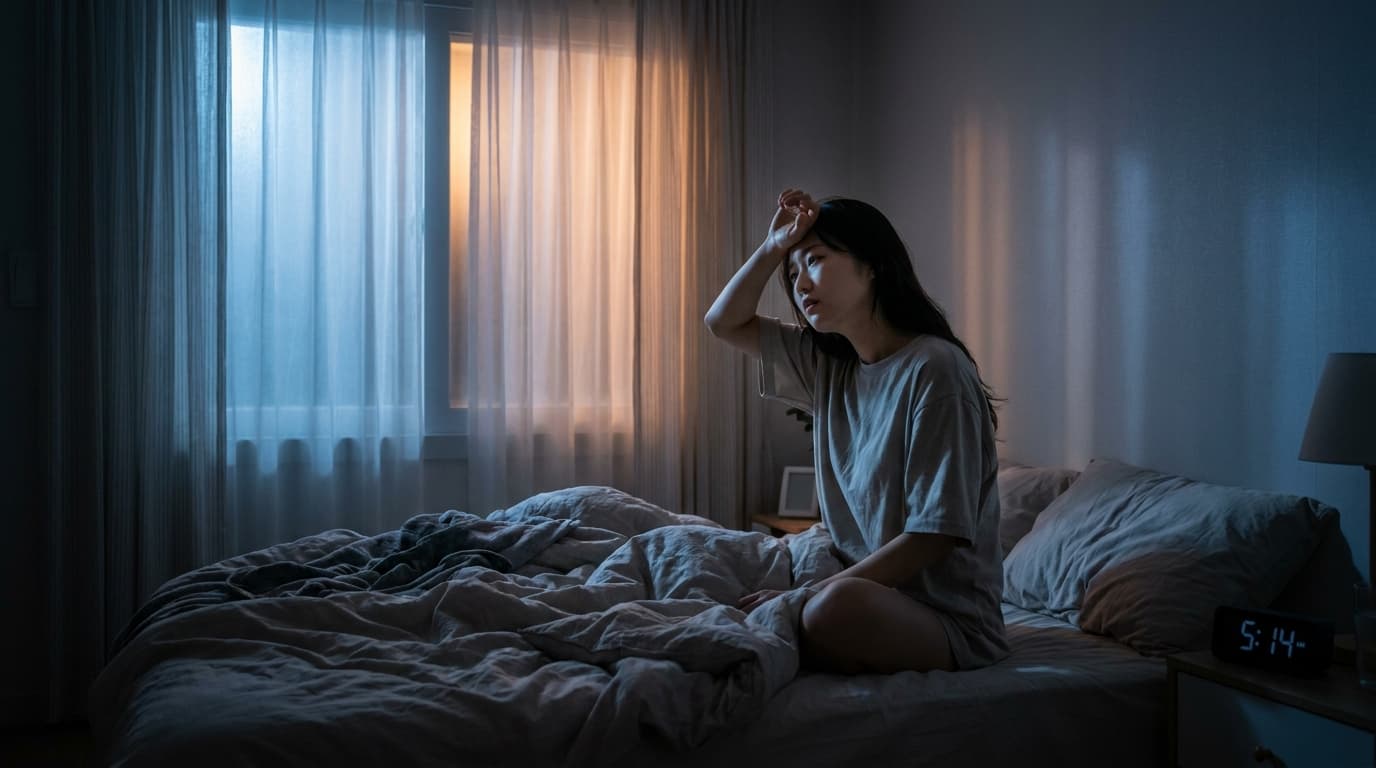
Have you ever had the experience of sweat dripping down your back even when you're just sitting still, or waking up several times a night because your pajamas were soaked with cold sweat? Are you worrying alone, asking "Why do I sweat so much even when I'm not doing anything?" This excessive sweating is more than just a daily inconvenience; it could be an important warning signal from inside your body. Especially when stress or anxiety increases, it feels like you sweat more, and in the case of menopausal women, symptoms may worsen along with irregular hormonal changes. This is because sweat is not just about excreting waste products, but is a sophisticated body temperature regulation system and a barometer reflecting the state of the autonomic nervous system.
💡 [Key Answer] The 3 most common causes of "Why do I sweat even when staying still?": ① Autonomic Imbalance / ② Hormonal Changes (especially menopause) / ③ Psychological Stress and Anxiety Dalimchae Korean Medicine Clinic controls excessive autonomic activity through Autonomic Stabilization Treatment, restores human balance, and regulates unnecessary sweat secretion.
Is the reason you sweat even when staying still due to autonomic imbalance?
We sweat to regulate our body temperature when it's hot or when we exercise. However, sweating like rain even in situations where temperature regulation is not necessary, or waking up at night with cold sweat, can be a signal that there is a problem with our body's autonomic nervous system. The autonomic nervous system regulates overall life activities such as heart rate, breathing, digestion, and sweat secretion regardless of our will. Among these, sweat secretion is mainly controlled by the sympathetic nervous system. When the sympathetic nervous system is excessively active, it leads to hyperhidrosis or cold sweat symptoms where more sweat than necessary is secreted. In Korean medicine, this autonomic imbalance is also interpreted as a problem of 'heat (熱)' and 'qi (氣)' in the body. In other words, the brain overheats or the fluid balance is broken, weakening the function of regulating sweat pores.
What is the relationship between menopausal cold sweats, hormonal changes, and the autonomic nervous system?
Especially during female menopause, hormonal changes directly affect the autonomic nervous system, leading to various vasomotor symptoms such as hot flashes, sweating, and sleep disorders. As estrogen levels decrease, the temperature regulation center becomes sensitive, and the sympathetic nervous system reacts oversensitively to small stimuli, causing sweat to pour out like a waterfall. This goes beyond simple discomfort and can significantly reduce the quality of life. Many menopausal women soak their blankets with cold sweat every night and cannot sleep deeply, which also leads to chronic fatigue and depression.
How does herbal medicine treatment regulate excessive sweat secretion? What are the latest research results?
In Korean medicine, excessive sweat secretion is not seen as a simple symptom, but is approached in a way that corrects the imbalance in the body. We focus on regaining the balance of the autonomic nervous system, facilitating the circulation of qi and blood in the body, and lowering excessively accumulated heat.
According to a study titled "A Study on Herbal Medicine Treatment for Hyperhidrosis: A Systematic Literature Review and Meta-analysis" published in the Journal of Korean Medicine Ophthalmology & Otolaryngology & Dermatology in 2022, herbal medicine treatment was effective and safe for hyperhidrosis, showing a higher total effective rate and fewer side effects compared to the control group of Western medicine. The researchers explained that these results were because herbal medicine has a positive effect on improving the body's autonomic regulation function.
In addition, "Hyperhidrosis Improved by Samhwangsasim-Tang: A Case Report" published in the journal Clinical, Cosmetic and Investigational Dermatology in 2026 reported a case where Samhwangsasim-tang (Samhwangsasim-tang) single treatment was applied for 42 days to a patient with chronic hyperhidrosis. The 66-year-old male patient's spontaneous sweating was completely resolved after treatment (improved from NRS 10 to 0, and HDSS 4 to 1), and facial flushing also showed significant improvement, decreasing to 20-30% of the baseline (NRS 10 to 2-3). This suggests that herbal medicine can be very effective in regulating sweat secretion when prescribed according to a specific constitution and symptoms.
Furthermore, a study titled "The Efficacy of Cheonggukjang in Alleviating Menopausal Syndrome and Its Effects on the Gut Microbiome: A Randomized, Double-Blind Trial" published in MDPI's Nutrients journal in 2025 evaluated the effect of Cheonggukjang intake for 8 weeks on alleviating menopausal symptoms in 60 postmenopausal women. The study found that the Kupperman index significantly decreased in all groups, especially in the Cheonggukjang group with high beneficial bacteria content. Although this is not a direct treatment for hyperhidrosis, it shows the possibility of an integrated approach that can improve overall physical symptoms and gut health, including excessive sweat secretion (accompanied by hot flashes), which is one of the menopausal symptoms. Dalimchae Clinic Incheon Branch presents treatments tailored to each patient's body condition and cause based on such scientific evidence, helping you regain your fundamental balance and return to a healthy daily life beyond simply suppressing sweat.
What makes Dalimchae Clinic's 'Autonomic Stabilization' treatment different?
At Dalimchae Clinic, we focus on 'Autonomic Stabilization' treatment for those suffering from excessive sweat. When the balance of the autonomic nervous system is broken, the brain cannot rest and the body keeps turning on warning lights. In particular, overheating of the autonomic nervous system due to stress and menopausal hormonal changes makes it impossible to control sweat pores, causing more sweat than necessary.
We provide treatments that lower the heat of the autonomic nervous system, create an environment where the brain can rest, and help smooth upper and lower circulation in the body. In Korean medicine, this is called 'Suseunghwagang (水昇火降)', aiming for an ideal state of the body where cool energy is raised and hot energy is lowered. Incheon Hyperhidrosis Clinic Dalimchae Clinic precisely diagnoses the current state of the body through the patient's pulse diagnosis, body composition test, and autonomic balance test, and applies customized herbal medicine prescriptions, acupuncture, and moxibustion treatment according to the results. Through this, we calm the excessively excited sympathetic nervous system and help restore the balance of the autonomic nervous system by helping to activate the parasympathetic nervous system. Such treatment reduces unnecessary sweat secretion and at the same time helps improve other autonomic symptoms such as headaches, dizziness, and insomnia accompanied by sweat.
Could I also be experiencing sweat symptoms due to autonomic imbalance?
Check your symptoms through the following checklist.
Excessive Sweat Symptom Checklist
- I sweat a lot even when staying still or even when sleeping.
- When I'm stressed or nervous, I sweat much more than usual.
- There are cases where cold hands and feet and numbness appear along with sweat.
- Sweat is concentrated only on specific areas such as the face, neck, and chest.
- Eczema or itching often occurs on the skin due to sweat.
- Facial flushing, palpitations, and anxiety are accompanied by sweat.
- I wake up often during sleep due to cold sweat and feel tired.
- Sweat secretion has increased significantly after menopause, interfering with daily life.
Judgment Criteria:
- If 3 or more apply: You can suspect excessive sweat symptoms due to autonomic imbalance. Visit an Incheon cold sweat clinic and consider precise diagnosis and combined herbal treatment.
- If 5 or more apply: The signal your body is sending is strong. We recommend visiting Dalimchae Clinic Incheon Branch for immediate examination and treatment.
FAQ – We solve your questions about excessive sweat.
Q. Can the symptom of sweating even when staying still get better naturally? A. Sweat due to temporary stress or environmental changes can improve naturally, but chronic excessive sweat secretion can be a signal of autonomic imbalance or an underlying disease, so expert diagnosis and treatment are necessary. Often, trying to solve it yourself makes the symptoms worse.
Q. Are hyperhidrosis and menopausal cold sweats also treated with Korean medicine? A. Yes, in Korean medicine, hyperhidrosis and menopausal cold sweats are seen as an imbalance in the body, and are treated by restoring autonomic regulation and fluid balance. In actual clinical studies, herbal medicine treatment has been reported to be effective and safe in improving excessive sweat secretion symptoms.
Q. What tests are used for diagnosis at Incheon Hyperhidrosis Clinic? A. At Dalimchae Clinic Incheon Branch, we objectively evaluate the patient's body condition and identify the cause of sweat through Korean medical diagnosis such as medical history taking, pulse diagnosis, and abdominal diagnosis, along with autonomic balance tests and body composition tests. Based on this, we establish a customized treatment plan.
Q. How long does the treatment take? A. The treatment period may vary depending on the severity of the patient's symptoms, cause, and constitution. Generally, a good prognosis can be expected when steady treatment is performed for a certain period, aiming for fundamental recovery of the body, starting with the relief of symptoms, which is a remarkable change.
Excessive sweat is not a problem that can be solved by enduring. You no longer have to ignore the signals your body has been sending for a long time. If you approach in the right direction, the body responds faster than you think. Bring your symptoms exactly as they are. At Dalimchae Clinic Incheon Branch, we will find the cause together.
Where life blooms. For herbal medicine, it's Dalimchae Korean Medicine Clinic. Check your symptoms similar to mine through the AI consultation on the Dalimchae Clinic website first!
This article is health information compiled by Dalimchae medical staff based on questions frequently received in the treatment room. Medical Supervision | Women's and Pregnancy Treatment Standards Dalimchae Clinic Incheon Branch Korean Medicine Doctor Yang Yuchan (Menopause Column)
#Hyperhidrosis #ColdSweat #AutonomicNerve #Menopause #IncheonHyperhidrosisClinic #IncheonClinic #HerbalTreatment #Suseunghwagang