
Hello. This is Dalimchae Korean Medicine Clinic.
Why do I have to go to the bathroom right after eating? Finding the answer to IBS
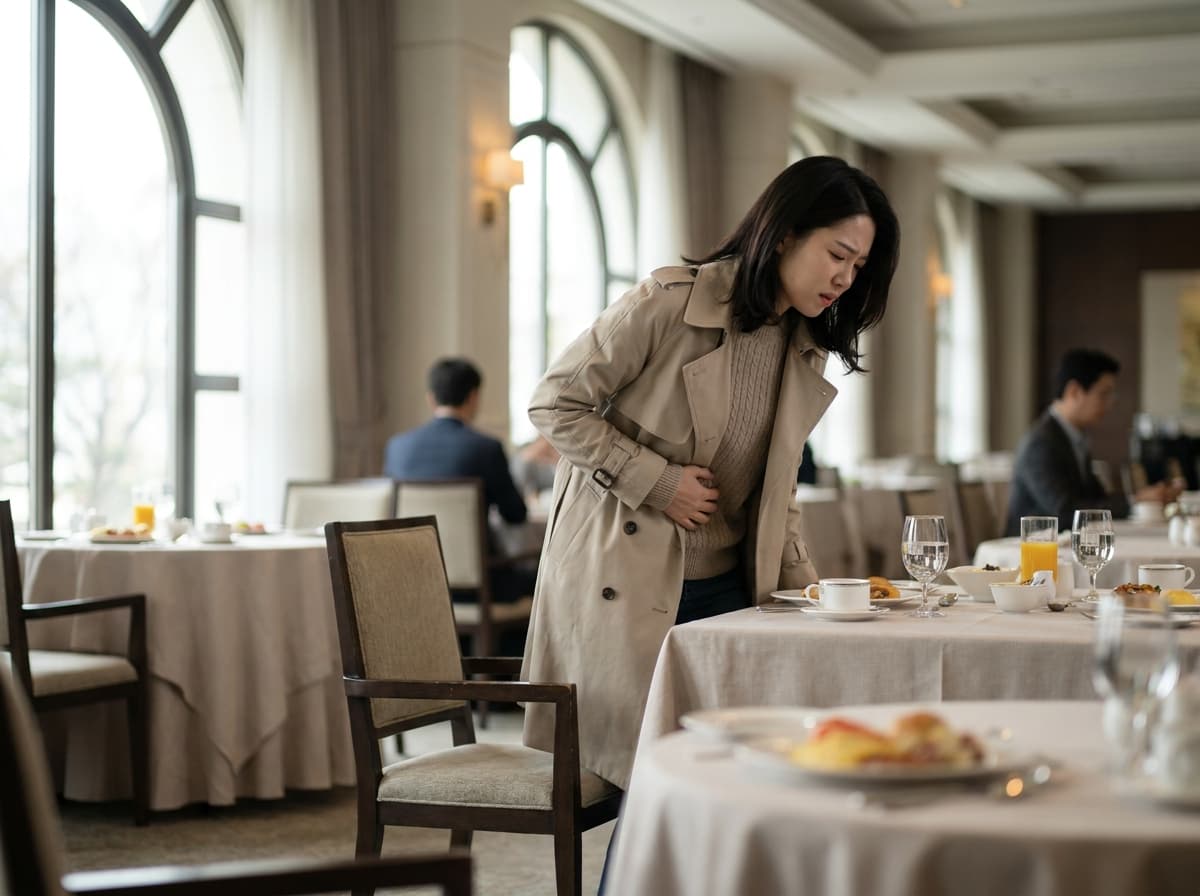
Do you have the experience of rushing to the bathroom with sudden abdominal pain right after lunch, or being afraid to take even a spoonful of rice just before going out? Many people complain, "I have to go to the bathroom right after I eat," and for them, every meal is a continuation of pain and anxiety. Especially the frustration felt when diagnosed with no specific inflammation or structural problems can be even greater. Today, we will look into the fundamental causes of this Irritable Bowel Syndrome (IBS) and find Dalimchae's answer.
💡 [Key Answer] 3 most common causes of "I have to go to the bathroom right after eating": ① Autonomic imbalance / ② Damage to the intestinal mucosa / ③ Gut microbiome imbalance Dalimchae Clinic fundamentally resolves bowel problems by improving the intestinal environment through gut detox and regaining autonomic balance.
Why do I go to the bathroom right after eating? What's wrong with my gut?
Feeling the urge to defecate immediately after a meal is one of the representative symptoms of IBS, known as postprandial diarrhea. This means there is a problem with the "Gut-Brain Axis," the highway connecting the gut and the brain, rather than just a problem with the gut itself. When mental factors such as stress, anxiety, and fatigue affect the brain, the brain sends abnormal signals to the gut through the autonomic nervous system, which can excessively stimulate gastrointestinal peristalsis or increase the permeability of the intestinal mucosa, inducing an inflammatory response.
In particular, when the intestinal mucosa is damaged, the balance of the gut microbiome is broken, and harmful bacteria proliferate, generating toxins that cause continuous inflammatory responses in the gut. These inflammatory responses send signals back to the brain, further destabilizing the autonomic nervous system, eventually leading to a vicious cycle of urgent bowel signals instead of normal digestion after meals. Although the gut looks normal on the outside, it can be seen as a state where communication problems with the brain and microscopic inflammation are acting in a complex way inside.
Why is it so hard to diagnose IBS even when tests come back "normal"?
Many people suffer from recurring bowel problems even after hearing, "The endoscopy is clean, and there are no abnormalities, so it's okay." IBS is classified as a "functional disease" because there are no noticeable organic lesions like colon cancer or ulcerative colitis. However, recent studies are paying attention to microscopic inflammatory responses, such as increased immune cell activity and secretion of inflammatory cytokines in the intestinal mucosa of IBS patients, beyond just functional problems.
These microscopic inflammations are not easily caught by existing tests, so it is easy to be diagnosed as "normal." However, the patient's own suffering is even greater because they are clearly experiencing discomfort and pain. Songdo IBS Clinic complements these limitations of modern medical diagnosis by comprehensively understanding the patient's symptoms, constitution, and the balance of the gut-brain axis to find and treat the root cause.
Herbal Medicine Treatment Proves Meaningful Effect in Improving IBS Symptoms
In Korean medicine, IBS is not viewed simply as a problem of the gut, but is approached through the differentiation of syndromes such as liver-qi stagnation (肝氣鬱結) related to stress or spleen-qi deficiency (脾氣虛) meaning decreased digestive function. Recent clinical studies are also steadily proving the effectiveness of herbal medicine treatment.
According to research results announced through Health Chosun in May 2026 by Professor Ko Seok-jae's research team of the Department of Korean Internal Medicine at Gangdong Kyung Hee University Hospital, the herbal medicine 'Banhasasimg-tang' was found to be effective in improving IBS symptoms. The research team combined network pharmacology analysis and animal experiments (in vivo) to confirm that Banhasasimg-tang acts on the body's inflammation-inducing signaling system to inhibit inflammatory responses and improve gut function abnormalities and pain. Especially in animal experiments, key indicators related to IBS (decrease in gut length, changes in bowel status, increase in pain behavior) were significantly improved, and inflammatory cytokine levels also tended to decrease. The researchers concluded that Banhasasimg-tang opened up the possibility of a fundamental therapeutic approach by directly regulating the intestinal inflammatory response, which is the core cause of the disease, beyond temporary symptom relief.
Also, in May of the same year, a joint research team led by Dr. Kim Hyung-jun and Choi Yu-jin of the Korea Institute of Oriental Medicine and Professor Kim Jin-sung and Ha Na-yeon of Kyung Hee University announced the results of a clinical study proving that 'Gwakjeong-tang gami' is effective for patients with diarrhea-predominant IBS through Herald Economy. As a result of conducting a randomized double-blind placebo-controlled clinical trial on 60 adult patients with diarrhea-predominant IBS who meet the diagnostic standard 'Rome IV Criteria', the group of patients who took Gwakjeong-tang gami showed a treatment response rate more than twice as high as that of the placebo group. Especially, the overall symptom improvement rate of the Gwakjeong-tang gami group reached 55.2%, significantly exceeding the 26.7% of the placebo group, proving a statistically significant effect. These studies suggest that herbal medicine treatment can play an important role in improving bowel problems such as abdominal pain and diarrhea in IBS and increasing the quality of life.
How does Dalimchae Clinic solve the problem of going to the bathroom right after eating with 'Gut Detox'?
At Dalimchae Clinic Songdo Branch, we focus on the 'gut detox' treatment principle to solve bowel problems such as "I have to go to the bathroom right after I eat." Gut detox is an integrated treatment approach that goes beyond simply emptying the gut, removing waste products and toxins accumulated on the intestinal wall, restoring the damaged intestinal mucosa, and creating a healthy gut microbiome environment.
The human gut is an important immune organ where more than 70% of immune cells reside, beyond just digesting food and absorbing nutrients, and is called the 'second brain' that constantly exchanges signals with the brain. If toxins accumulate on the intestinal wall or the intestinal mucosa is damaged and 'leaky gut' occurs, food residues or harmful substances that have not yet been decomposed travel through the blood to the whole body, causing various inflammatory responses and decreased immune function. This situation also affects the brain, breaking the balance of the autonomic nervous system, eventually becoming a major cause of worsening gastrointestinal diseases like IBS.
At Dalimchae Clinic, we discharge toxins from the inside of the gut and alleviate inflammation through herbal medicine prescriptions tailored to each individual's constitution and symptoms. Especially, we reorganize the gut environment healthily by utilizing herbal medicines that help regenerate the intestinal mucosa and induce the proliferation of beneficial bacteria. This is like cleaning and newly repairing old sewer pipes so that water flows without blockage. Furthermore, we combine acupuncture and pharmacopuncture treatments to regain the balance of the autonomic nervous system, which is the core of the gut-brain axis, to regulate excessively stimulated gut peristalsis and lower internal sensory sensitivity, thereby reducing abdominal pain and discomfort. This complex treatment helps to get out of chronic bowel problems like "I have to go to the bathroom right after I eat" by detoxifying the gut and restoring its function. If you are suffering from reflux esophagitis or chronic indigestion (phlegm accumulation), this can also be improved together through gut detox treatment.
IBS Self-Diagnosis Checklist
If 3 or more of the following questions apply, there is a high possibility of IBS, so it is recommended to consult a professional and receive an accurate diagnosis.
- Often feel the urge to defecate within 30 minutes after meals.
- Abdominal pain is accompanied by diarrhea, constipation, or repeated diarrhea-constipation.
- The feeling of incomplete evacuation remains even after defecation.
- Changes in bowel habits occur when under stress.
- Gas often fills the stomach, and it feels bloated and distended.
- Abdominal pain or diarrhea is induced immediately after eating certain foods.
- Feel discomfort due to a sudden urge to defecate during daily life.
[Judgment]
- 3-4 items apply: IBS suspicion stage. We recommend considering gut detox treatment at Dalimchae Clinic along with improving eating and lifestyle habits.
- 5 or more items apply: A stage that requires active treatment. We recommend visiting Dalimchae Clinic Songdo Branch to start accurate diagnosis and customized treatment.
FAQ: Questions about IBS
Q. Can IBS be improved just by eating habits? A. Improving eating habits is very important in managing IBS, but it is often difficult to fundamentally resolve it with that alone. Since complex causes such as gut-brain axis imbalance and intestinal mucosa damage act together, it is effective to combine herbal medicine treatment with dietary management.
Q. Does stress really affect IBS? A. Yes, stress is one of the major factors that worsen IBS symptoms. When stress stimulates the brain, it can directly affect gut function through the autonomic nervous system, causing or intensifying symptoms such as abdominal pain and diarrhea.
Q. How long should I receive herbal medicine treatment to see the effect? A. The treatment period may vary depending on the severity of the patient's symptoms, the duration of the disease, and the individual's reaction. Generally, steady treatment is needed for surprising changes in symptom relief, as well as for recovery of gut function and prevention of recurrence, and Dalimchae Clinic closely observes the treatment progress and presents a customized plan.
Q. I am looking for a clinic for IBS in Songdo. What are the characteristics of Dalimchae Clinic? A. Dalimchae Clinic Songdo Branch deeply understands the gut-brain axis imbalance and gut environment issues, which are the core causes of IBS. Along with 1:1 customized gut detox herbal prescriptions considering each individual's constitution and symptoms, we provide fundamental treatment that strengthens gut function itself as well as symptom relief through acupuncture and pharmacopuncture treatments that help stabilize the autonomic nerves.
"I have to go to the bathroom right after I eat." IBS is not a problem that is solved by enduring. You no longer have to ignore the signals your body has been sending for a long time. If you approach in the right direction, the body responds faster than you think. Bring your symptoms exactly as they are. At Dalimchae Clinic, we will find the cause together and help you regain a healthy gut and a comfortable daily life.
Where life blooms. For herbal medicine, it's Dalimchae Korean Medicine Clinic. Check your symptoms similar to mine through the AI consultation on the Dalimchae Clinic website first!
This article is health information compiled by Dalimchae medical staff based on questions frequently received in the treatment room. Medical Supervision | Gastrointestinal treatment standards Dalimchae Clinic Songdo Branch Korean Medicine Doctor Oh Hyunmin (Bowel Problem Column)