
Hello. This is Dalimchae Korean Medicine Clinic.
When Your Chest Feels Tight and Your Heart Beats Fast: Heart Attack or Panic Attack?
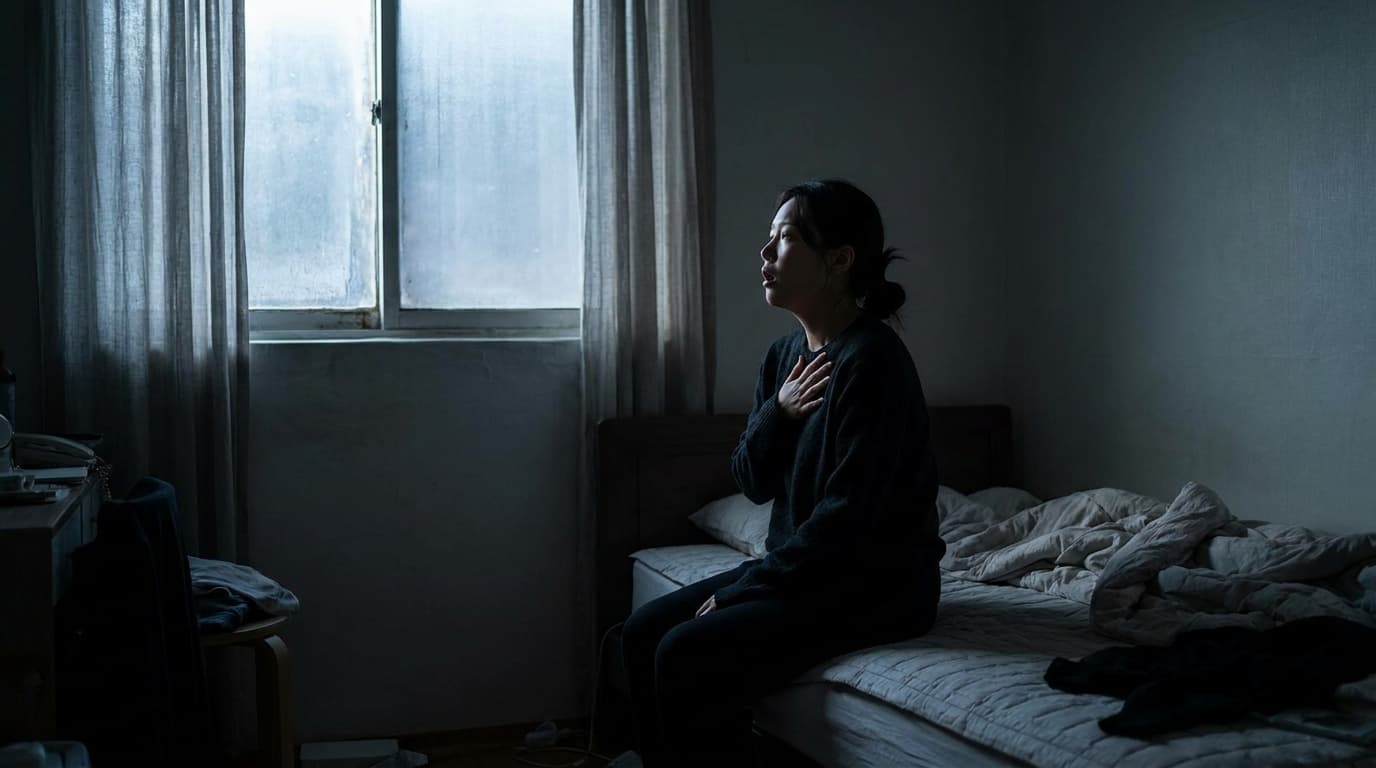
One day, suddenly and without warning, your heart beats wildly and your chest feels tight as if you can't breathe. Overwhelmed by the intense fear that it might be a heart attack, you visit the emergency room, only to be told that all tests are "normal." Your body feels so exhausted and agonizingly close to death, yet the unknown cause leaves you even more frustrated. When your chest is tight and breathing is difficult, these symptoms could indicate a life-threatening heart attack, but they are also frequently signs of a panic attack. The important thing is to accurately distinguish between the two and take appropriate action.
💡 [Core Answer] Top 3 most common causes when your chest feels tight and your heart beats fast: ① Extreme anxiety leading to a panic attack / ② Severe stress leading to autonomic imbalance / ③ Life-threatening heart attack Dalimchae Korean Medicine restores bodily balance through autonomic stabilization, allowing your heart to rest comfortably and your brain to calm down.
Panic Attack vs. Heart Attack: How Are They Different?
Chest pain, shortness of breath, and heart palpitations can occur in both heart attacks and panic attacks. However, a few key differences can help gauge the situation.
First is the onset pattern of symptoms. Panic attacks typically start suddenly, peak within 10 minutes, and subside within 20 to 30 minutes, or at most an hour. In contrast, heart attacks tend to start gradually and build up in intensity, or come in waves that improve and worsen again, and do not disappear without medical intervention.
Second is the nature and location of pain. During a panic attack, chest pain stays mainly in the center of the chest and is often described as sharp or stabbing. Pain from a heart attack feels like pressure or a squeezing sensation crushing the chest, frequently radiating to the arm, jaw, neck, back, or even the abdomen.
Third is the trigger factor. Heart attacks usually tend to occur after physical activity or excessive physical tension. On the other hand, panic attacks can be triggered by specific situations or thoughts, or appear out of nowhere without warning. While they can occur during sleep, individuals experiencing this usually experience panic attacks during the day as well.
Recognizing these differences is important, but if symptoms suggesting a heart attack appear, visiting the emergency room immediately for an accurate diagnosis is the safest course of action. Especially if you have a history of heart disease risk, or if chest pain persists for more than a few minutes or worsens, do not hesitate to seek medical help.
Your Body's Warning Light: Could It Be Autonomic Imbalance?
Frequent anxiety and panic attacks can be powerful warning signals sent by our body's 'autonomic nervous system'. The autonomic nervous system is a nervous system that operates automatically to maintain life without our conscious awareness, controlling heart rate, breathing, digestion, and body temperature regulation. It is largely divided into the sympathetic nervous system, which handles tension and activation, and the parasympathetic nervous system, which handles relaxation and recovery. When the two are in balance, the body maintains a state of peace.
However, due to various factors such as stress, overwork, and lack of sleep, if the sympathetic nervous system becomes excessively hyperactive and parasympathetic function decreases, autonomic balance breaks down. In Korean medicine, this state is viewed similarly to modern autonomic imbalance, interpreted as an imbalance of internal organs like the Heart, Liver, and Kidney, or issues with qi and blood circulation.
When autonomic imbalance occurs, it is difficult for the brain to maintain a stable state, causing it to react hypersensitively to minor stimuli. This can lead to various physical symptoms such as inexplicable heart palpitations, tightness of breath, cold sweats, or dizziness. These symptoms closely resemble panic attacks and are sometimes the root cause of panic disorder. In particular, many people visiting Dalimchae Korean Medicine Clinic in Songdo complain of chronic anxiety and physical discomfort despite no abnormalities on tests.
How Does Korean Medicine Treat Panic Disorder?
At Dalimchae Korean Medicine Clinic Songdo Branch, treatment for autonomic-related disorders such as panic disorder does not simply suppress symptoms; instead, it restores the balance of the autonomic nervous system—the root of the symptoms—helping our body maintain a sense of stability on its own.
A 2021 study published in 'Evid Based Complement Alternat Med' reported on 67 anxiety disorder patients who received combined Korean medicine treatments such as acupuncture, herbal medicine, Chuna therapy, and aromatherapy for over 4 weeks. The results showed that patients' anxiety scores (STAI X-1, STAI X-2, BAI), depression scores (BDI-II), and anger scores (AKI-K-I, AKI-K-O) all significantly decreased compared to before treatment (p<0.0001), while quality of life (EQ-5D, EQ-VAS) significantly increased. The researchers concluded that these combined treatments can positively impact clinical symptom improvement and quality of life in anxiety disorder patients. Based on these research data, Dalimchae Korean Medicine aims to restore autonomic balance and enhance psychological stability through personalized treatments tailored to each patient's constitution and symptoms.
Furthermore, a meta-analysis published in 'Neuroscience & Biobehavioral Reviews' in 2019 confirmed that heart rate variability (HRV) was significantly reduced in patient groups with psychiatric disorders. Notably, this decrease in HRV was observed regardless of whether patients were taking medication, showing that autonomic dysfunction can act as an underlying mechanism for various psychiatric disorders. HRV can be used as an objective indicator to evaluate the regulatory action of the autonomic nervous system and the balance between sympathetic and parasympathetic nerves. These research findings suggest that panic disorder goes beyond mere psychological issues, deeply correlating with physiological imbalance—namely, autonomic dysfunction. At Dalimchae Korean Medicine Clinic, we objectively assess patients' autonomic states through HRV tests and help achieve fundamental recovery through tailored autonomic stabilization treatments.
Principles of Dalimchae Korean Medicine's Autonomic Stabilization Treatment When autonomic balance collapses, the brain cannot rest. Like an overheated engine, the brain constantly detects danger signals and keeps the body in a state of tension. Dalimchae Korean Medicine's autonomic stabilization treatment focuses on lowering excessive heat in the nervous system and creating an environment where the brain can rest. In Korean medicine, this is called 'Su Seung Hwa Gang' (Water rises, Fire descends)—keeping the head clear and cool while maintaining warmth in the lower abdomen to ensure smooth energy circulation throughout the body.
To achieve this, personalized herbal medicines are prescribed to regulate neurotransmitter balance and relieve brain fatigue, while acupuncture, moxibustion, and pharmacopuncture treatments relax bodily tension and increase stress resistance. As a Songdo autonomic Korean medicine clinic, we provide systematic treatment plans to help patients regain peace of mind and break free from the cycle of anxiety. Those suffering from headaches or dizziness can also expect overall symptom improvement through autonomic stabilization treatment.
Are Your Symptoms a Panic Attack? Symptom Checklist
If 3 or more of the following items apply to you, you may be experiencing a panic attack due to autonomic nervous system dysfunction. If 5 or more apply, consider active combined Korean medicine treatment.
- Sudden, pounding, or racing heartbeat.
- Tightness in the chest or a suffocating feeling.
- Cold sweats or feeling flushed.
- Numbness or tingling sensations in hands and feet.
- Dizziness, lightheadedness, or feeling like you might faint.
- Overwhelming terror like you are going to die.
- Feeling unreal, as if reality is distorted.
- Fear of suffocating or stopping breathing.
- Nausea or stomach upset.
- Body trembling or shaking.
FAQ
Q. How often do panic attacks occur? A. The frequency of panic attacks varies greatly from person to person. Some experience them only once in a lifetime, while others may experience them multiple times a day. They may appear more frequently during severe stress or when specific triggers are present.
Q. Can panic disorder be treated with Korean medicine? A. Yes, panic disorder can be sufficiently improved through Korean medicine treatments. Combined therapies such as herbal medicine, acupuncture, moxibustion, and pharmacopuncture restore autonomic balance, increase stress resistance, alleviate panic symptoms, and prevent recurrence.
Q. Can I take Western medicine and herbal medicine together? A. Dalimchae Korean Medicine Clinic carefully reviews interactions with any Western medications you are currently taking to determine safe herbal prescriptions. Many patients experience symptom improvement while combining Western and herbal medicines, and treatment often aims to reduce the dosage of Western medication over time.
Q. Does having panic disorder increase the risk of heart disease? A. While panic disorder itself does not directly cause heart attacks, chronic anxiety and excessive activation of the autonomic nervous system can negatively impact cardiovascular health over time. Therefore, receiving prompt and appropriate treatment for panic disorder is crucial.
Chest tightness and anxiety are not problems solved by simply enduring them. You no longer have to ignore the signals your body has been sending for a long time. When approached in the right direction, your body responds faster than you think. Bring the symptoms you are experiencing as they are. Dalimchae Korean Medicine Clinic in Songdo will help you find the root cause and regain a healthy daily life.
Where life blossoms. Herbal medicine is Dalimchae Korean Medicine. Check similar symptoms first through Dalimchae Korean Medicine's website AI consultation!
This health information was compiled by Dalimchae medical staff based on questions frequently received in the consulting room. Medical Supervision | Dalimchae Korean Medicine Clinic Songdo Branch Hanui-sa Oh Hyun-min (Panic Disorder Column)