
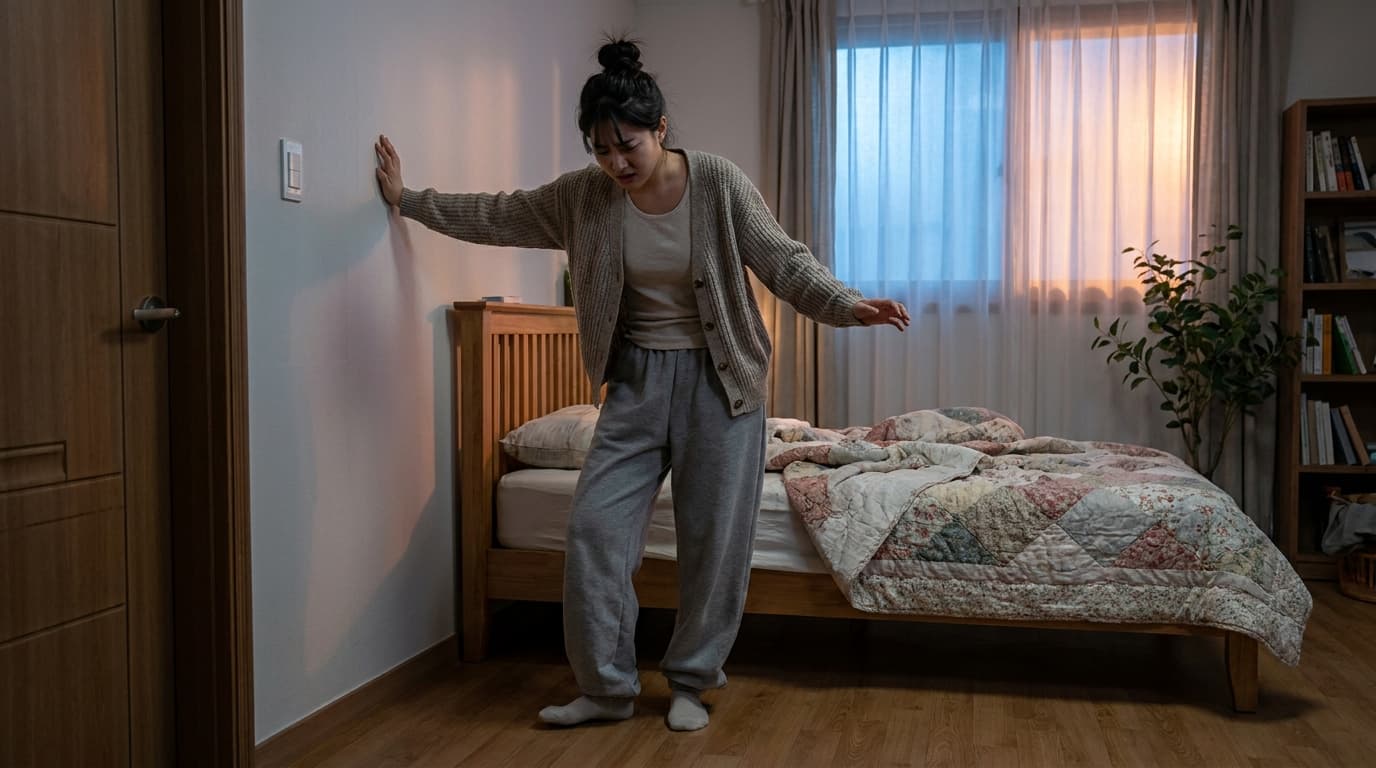
When Walking, My Feet Feel Like They're Stuck to the Ground? Frustrating Steps: Could This Be an Early Symptom of Parkinson's Disease?
"I'm walking, but my feet feel like they're stuck to the ground." "My body feels stiff, and I feel frustrated because I can't move as I wish." Are you experiencing difficulty lifting your feet when trying to walk, or noticing slower steps and shorter strides? Such gait disturbances are difficult to dismiss as mere aging or muscle weakness. If these symptoms recur, they may be early signs of Parkinson's disease, requiring careful observation and professional diagnosis.
💡 [Key Answer]
The 3 most common causes of the symptom "When walking, my feet feel stuck to the ground":
① Dopamine deficiency due to brain neuron damage / ② Degenerative changes in the substantia nigra of the midbrain / ③ Autonomic nervous system imbalance
Dalimchae Korean Medicine Clinic helps restore natural walking ability by improving the root cause of brain function decline through autonomic nervous system stabilization treatment.
Why do my feet feel stuck and walking uncomfortable?
Gait disturbance, where feet feel stuck to the ground when walking, is one of the representative motor symptoms of Parkinson's disease. Deep inside our brain is the basal ganglia, responsible for movement control. Problems begin when the substantia nigra neurons, which send the neurotransmitter dopamine to this area, are damaged. When dopamine is deficient, movement commands from the brain to muscles are not smoothly transmitted, causing body movements to become slow and stiff, and balance to deteriorate. In particular, when passing through narrow spaces, changing direction, or initiating a movement, the "Freezing of Gait" phenomenon can occur, where feet seem fixed to the ground.
Parkinson's disease occurs as brain neurons are progressively damaged by complex causes such as brain inflammatory responses, increased oxidative stress, and accumulation of abnormal protein alpha-synuclein, in addition to dopamine deficiency. These brain changes lead not only to motor functions but also to autonomic nervous system imbalance, resulting in various non-motor symptoms such as sleep disorders, depression, and constipation. This autonomic instability prevents the brain from resting and recovering sufficiently, worsening symptoms.
What are other early symptoms of Parkinson's disease besides gait disturbance?
Although Parkinson's disease varies from person to person, various early symptoms can appear besides gait disturbance. In particular, non-motor symptoms often appear early, making the disease difficult to recognize.
- Tremor: Tremors usually appear in hands, feet, or jaw while at rest, and can worsen when nervous or stressed.
- Rigidity: Limbs or torso feel stiff and unnatural. Moving joints can feel like turning a cogwheel.
- Bradykinesia: All movements become generally slow, and repetitive movements become difficult. Everyday actions like buttoning, writing, and washing take longer.
- Postural Instability: Balance becomes difficult, making falls easy. Recovery is hard when the center of gravity shifts.
- Masked Face: Facial muscle movement decreases, making expressions stiff and expressionless.
- Voice Changes: Voice becomes soft and monotonous, and speech slows down.
- Digestive Issues: Constipation can worsen or appetite loss can occur.
- Sleep Disorders: Difficulty falling asleep, frequent waking, or REM sleep behavior disorder where one shouts or moves while dreaming.
- Mental Health Issues: Frequent complaints of depression, anxiety, and lethargy.
Because these symptoms progress gradually, they are easily dismissed early on. However, as types and intensity increase over time, seeing a professional medical institution for accurate diagnosis and treatment is crucial when multiple symptoms appear complexly. Many people seeking an Incheon Parkinson's Korean Medicine Clinic visit with these non-motor symptoms.
How does Korean medicine view and treat Parkinson's disease gait disturbance?
In Korean medicine, Parkinson's disease gait disturbance and other symptoms are interpreted not merely as specific organ problems, but as a state where overall body balance is broken and brain function is weakened. In particular, "Wind (風)", "Phlegm (痰)", and "Stasis (瘀血)" are seen as obstructing the circulation of the brain and nervous system, causing symptoms. This aligns with modern medicine's concepts of brain neuron damage, autonomic imbalance, and inflammatory responses.
From this perspective, Dalimchae Korean Medicine Clinic regards autonomic stabilization as the core treatment principle for Parkinson's disease. When autonomic balance collapses, the brain cannot rest and becomes excessively excited or depressed, accelerating neuron damage. Korean medicine approaches this by lowering nervous system heat and creating an environment where the brain can rest—similar to the principle of "Water Up, Fire Down" (水升火降)—smoothing qi and blood circulation and fostering the brain's self-recovery and regeneration power.
Personalized herbal prescriptions help protect brain neurons, suppress inflammation, and restore neurotransmitter balance, while acupuncture relaxes stiff muscles and improves qi and blood circulation, showing effectiveness in improving walking ability and motor symptoms. In particular, Songdo Parkinson's Korean Medicine Clinic combines pharmacopuncture therapy to stabilize brain function for faster recovery.
Parkinson's disease: Possibility of Korean medicine treatment seen in research results
Recent studies support the effectiveness of Korean medicine treatment for Parkinson's disease.
In a 2022 study published in the international journal 'Frontiers in Neurology' by a Kyung Hee University research team involving 60 Parkinson's patients who received a 6-week combination of Ukgansan (an herbal formula) and acupuncture or acupuncture alone, significant improvements were confirmed in mobility (P=0.007) and activities of daily living (P=0.042) domains of PDQ-39 (Parkinson's Disease Questionnaire-39) in patients with anxiety symptoms. In particular, mobility (P=0.001) and ADL (P=0.013) scores significantly decreased by week 7 in patients with anxiety. Researchers concluded that Ukgansan can positively impact quality of life, especially mobility and ADL improvement, in Parkinson's patients with anxiety. This data connects with Dalimchae Clinic's treatment philosophy that autonomic stabilization contributes to improving both non-motor and motor symptoms of Parkinson's disease.
Additionally, in a 2023 systematic review and meta-analysis published in 'Frontiers in Pharmacology' by domestic research teams including the Korea Institute of Oriental Medicine, 843 Parkinson's patients across 13 randomized controlled trials were analyzed. The study reported that the group combining herbal medicine and Western medical treatment showed a significant improvement of an average -8.03 points (95% CI -10.27 to -5.79, p<0.00001) in total UPDRS (Unified Parkinson's Disease Rating Scale) score compared to the placebo group. This strongly suggests that herbal medicine treatment can provide significant additional benefits across motor and non-motor symptoms of Parkinson's disease. Researchers concluded that combination treatment of syndrome-differentiated herbal medicine and Western medicine can provide additional benefits in Parkinson's disease management. Based on these research results, Dalimchae Korean Medicine Clinic helps patients restore brain and autonomic balance through personalized Korean medicine treatment considering individual symptoms and constitutions.
Could I also have early symptoms of Parkinson's disease? Self-checklist
Check the symptoms you are currently experiencing through the following questions.
- Movements feel slower and duller than usual.
- Tremors appear in hands, feet, or jaw while at rest.
- Limbs or torso feel stiff and rigid.
- When walking, feet feel stuck to the ground or stride shortens and shuffles.
- Balance is difficult, feeling anxious about falling frequently.
- Handwriting has become smaller and harder to read.
- Constipation worsened or ability to smell diminished without reason.
- Difficulty falling asleep at night or shouting/moving violently while dreaming.
- Depression or anxiety persists without reason.
Result:
- 3 or more items: Brain function decline due to autonomic imbalance is suspected. Consider Dalimchae Clinic's autonomic stabilization Korean medicine complex treatment.
- 5 or more items: High possibility of early Parkinson's disease symptoms. Promptly visit Dalimchae Korean Medicine Clinic Incheon branch for consultation and diagnosis.
Q. How fast does Parkinson's disease gait disturbance progress?
A. Parkinson's disease progression speed varies greatly among individuals. It tends to progress slowly at first and then accelerate, but steady management and treatment can slow progression and alleviate symptoms.
Q. Can early symptoms of Parkinson's disease be treated with Korean medicine?
A. Yes, Korean medicine treatment can help alleviate early symptoms and delay progression of Parkinson's disease. Dalimchae Clinic manages symptoms through complex treatments such as herbal medicine, acupuncture, and pharmacopuncture aimed at autonomic stabilization and brain function improvement.
Q. I have hand tremors along with gait abnormalities, will they be treated together?
A. Various motor and non-motor symptoms of Parkinson's disease stem from fundamental brain problems and autonomic nervous system imbalance. Dalimchae Clinic's autonomic stabilization treatment approaches these root causes to comprehensively improve not only gait abnormalities but also tremors and rigidity.
Q. How should exercise be done after a Parkinson's disease diagnosis?
A. Regular exercise is very important after diagnosis. Exercises that build balance and flexibility such as walking, stretching, Tai Chi, and yoga are good. However, consistency at an intensity fitting your body state is more important than excessive exercise, and establishing a personalized exercise plan with a professional is safe.
Frustration when "feet feel stuck to the ground when walking" is not something to endure and resolve. You no longer need to ignore the bodily signals sent for a long time. When approached in the right direction, the body responds faster than expected. Bring the symptoms you are experiencing as they are. Dalimchae Korean Medicine Clinic Incheon branch will find the cause together.
Where life blooms. Herbal medicine is, after all, Dalimchae Korean Medicine Clinic. Check symptoms similar to yours first through Dalimchae Korean Medicine Clinic website AI consultation!
Medical Supervision | Brain & Autonomic Nervous System Treatment Standard, Incheon Branch, Dalimchae Korean Medicine Clinic, Korean Medicine Doctor Yang Yuchan (Parkinson's Disease Column)