
Hello, this is Dalimchae Korean Medicine Clinic.
When My Hands Sweat Excessively During Exams, Could It Be Tension Hyperhidrosis? Finding Answers Through Autonomic Balance.
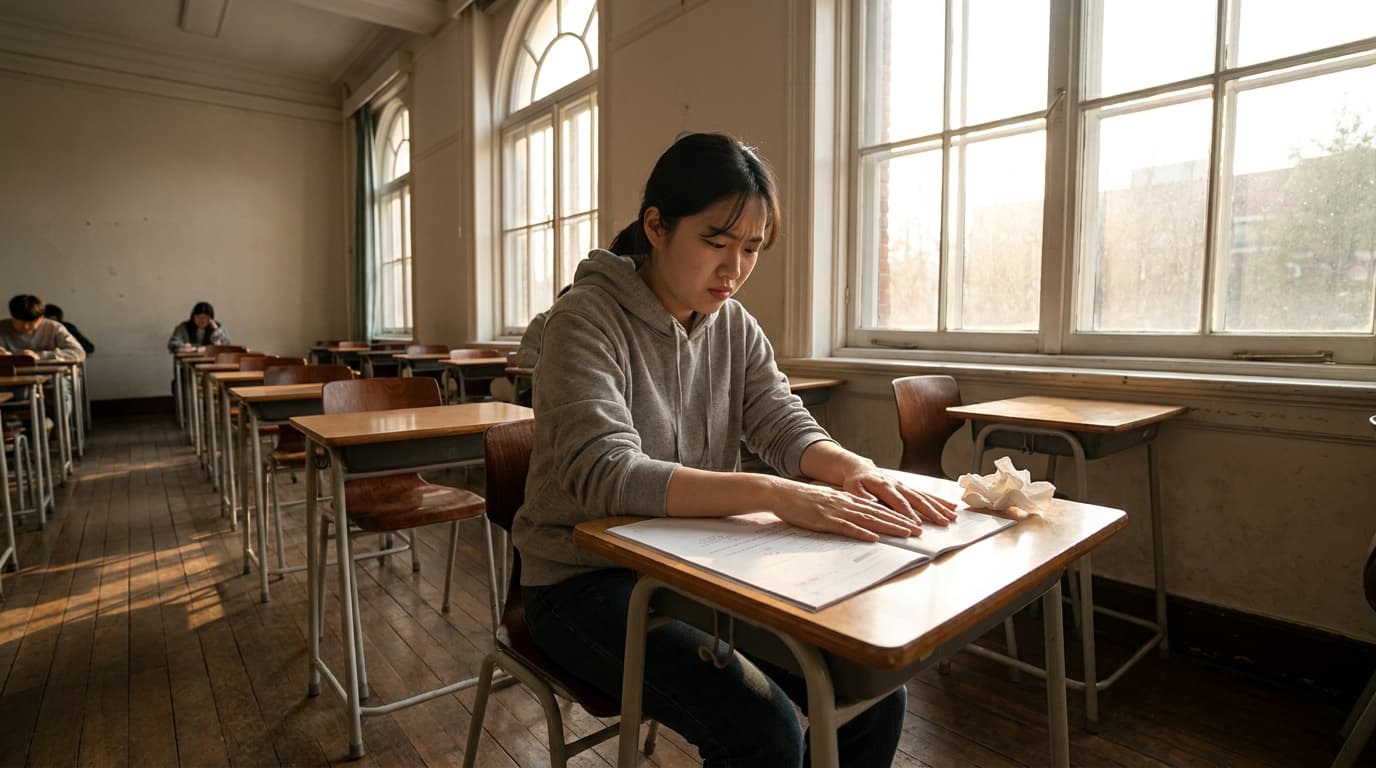
Have you ever experienced an embarrassing moment when your hands become drenched in sweat before an exam, presentation, or meeting with an important person? When you hold a pen, the paper becomes damp, handshakes feel awkward, and even smartphone fingerprint recognition fails. Such excessive sweating in the hands and feet when you are particularly nervous or stressed cannot simply be dismissed as having 'sweaty constitution'; it may be an important signal from our body. Especially for students, excessive hand sweating during exams can impair concentration or amplify anxiety.
💡 [Key Answer] 3 most common causes of excessive hand sweating during exams: ① Autonomic imbalance (sympathetic hyperactivity) / ② Psychological tension and anxiety / ③ Genetic factors. Dalimchae Korean Medicine Clinic regulates hypersensitive nervous systems and normalizes sweat gland responses through autonomic stabilization treatment.
Why Does Tension Hyperhidrosis Occur When Only Nervous?
Sweating in hands and feet when nervous is not just a localized sweat problem but a typical form of 'stress-induced sweating.' Many hyperhidrosis patients commonly complain, "I sweat when I am nervous." This phenomenon is deeply related to the excessive activation of our body's autonomic nervous system, especially the sympathetic nervous system.
The autonomic nervous system regulates biological functions such as heart rate, respiration, digestion, and sweat secretion without our will. The sympathetic nervous system acts to tense and activate the body, while the parasympathetic nervous system relaxes and rests the body. When placed in stress situations such as exams or presentations, the sympathetic nervous system is hyperactive, increasing heart rate, constricting blood vessels, and stimulating sweat glands to increase sweat secretion. In hyperhidrosis patients, because the activity of this sympathetic nervous system is excessively higher than normal, sweat glands react hypersensitively to small stimuli. When the brain's limbic system is activated by emotional stimuli, stress hormones are secreted, further exciting the sympathetic nervous system and increasing sweat volume.
Can Hyperhidrosis Really Be Treated Effectively with Korean Medicine?
Korean medical treatment for hyperhidrosis is gaining interest due to the side effects and limitations of Western medical treatments (topical agents, anticholinergics, surgery, etc.). While Western medical treatments block sweat glands or block nerves to suppress sweat secretion, Korean medicine approaches by finding and adjusting the fundamental causes of sweating. Korean medicine classifies hyperhidrosis into spontaneous sweating, night sweating, head sweating, and hand/foot sweating according to the pattern, area, and time of sweating. In particular, tension hyperhidrosis is closely related to the function of the heart, and the more the heart rhythm and autonomic control shake, the easier sweat reactions are triggered.
In fact, there are studies proving the efficacy of herbal medicine treatment for hyperhidrosis. According to a systematic review and meta-analysis published by Korean researchers in 2022 comparing herbal medicine and Western medicine for hyperhidrosis, analyzing 8 randomized controlled trials (RCTs), herbal medicine treatment was effective and safe in improving hyperhidrosis. In addition, a case report published in The Journal of Internal Korean Medicine in 2021 reported that when a hand/foot hyperhidrosis patient who had not improved with various treatments for nearly 30 years was prescribed herbal medicine supplemented with drugs controlling sympathetic hyperactivity for 6 weeks, symptoms improved by 80%. This study confirmed sympathetic hyperactivity status through iris diagnosis, suggesting that herbal medicine treatment can be effective for chronic hyperhidrosis.
Based on these data, the Songdo branch of Dalimchae Korean Medicine Clinic does not simply suppress sweat but conducts treatment to help the body regulate sweat secretion itself by restoring the balance of the autonomic nervous system. In particular, we focus on stabilizing the sympathetic nervous system excessively hyperactive due to tension and stress, lowering heart heat, and normalizing sweat gland responses.
Principles of Autonomic Stabilization Treatment at Dalimchae Korean Medicine Clinic
When the balance of the autonomic nervous system collapses, the brain cannot rest and the body continuously turns on 'warning lights.' Sweating too much in hands during exams is one of these warning lights. The Songdo branch of Dalimchae Korean Medicine Clinic focuses on restoring autonomic balance, calming excessively excited sympathetic nerves, and stabilizing overall physical functions.
The autonomic nervous system of our body is like a car's accelerator (sympathetic) and brake (parasympathetic). Tension hyperhidrosis can be seen as a state where the accelerator is pressed too excessively, meaning sympathetic nerves are hyperactive. Such imbalance occurs due to various causes such as stress, anxiety, and lack of sleep, hypersensitively stimulating sweat glands to secrete more sweat than necessary.
At Dalimchae Korean Medicine Clinic, we coordinate the autonomic nervous system through customized herbal prescriptions tailored to individual constitutions and symptoms. In particular, we use medicinal herbs that stabilize heart function overheated by tension and anxiety and lower neural system heat, creating an environment where the brain can comfortably rest. A study published in PubMed in 2004 reported that Ondamtanggamibang, a traditional Korean herbal prescription, significantly decreased systolic blood pressure, norepinephrine, and cortisol levels in medical students experiencing exam stress, and showed positive changes in psychological variables such as anxiety, depression, and stress. This suggests that herbal medicine can stabilize the sympathetic nervous system and reduce stress-related physiological and psychological responses. Along with this, acupuncture, moxibustion, and pharmacopuncture therapies are combined to smooth body circulation and stimulate acupuncture points related to sweat control to help regain autonomic balance. This Korean medical treatment aims not only to suppress sweat but to restore our body's control ability and achieve fundamental treatment.
Self-Checklist for Tension Hyperhidrosis
Check how many of the following items apply to you. It may be a signal of autonomic imbalance that can appear along with the symptom of excessive hand sweating during exams.
Tension Hyperhidrosis & Autonomic Imbalance Checklist
- Sweat excessively on palms, soles, and armpits in tense situations such as exams and presentations.
- Sweat makes paper wet or handshaking uncomfortable.
- Sweat flows even when it is not particularly hot or exercising.
- Difficult to fall asleep at night or waking up frequently during sleep.
- Heart frequently beats fast or feels stuffy.
- Easily anxious or jittery over trivial matters.
- Frequently have headaches or dizziness.
- Poor digestion or chronic gastrointestinal discomfort.
- Accompanied by cold or numb hands and feet.
- Feel that stress makes sweating worse.
Criteria:
- 3 or less apply: May be a temporary tension response, but steady management is needed.
- 4-6 apply: Tension hyperhidrosis due to autonomic imbalance can be suspected. Consider precise diagnosis and autonomic testing at Songdo Hyperhidrosis Oriental Clinic.
- 7 or more apply: Autonomic dysfunction may be in an advanced stage. Immediate visit and active Korean medical complex treatment are recommended.
Hyperhidrosis Treatment Process at Dalimchae Korean Medicine Clinic Songdo
The Songdo branch of Dalimchae Korean Medicine Clinic provides a systematic medical treatment process for patients visiting with tension hyperhidrosis.
- Precision Diagnosis: We accurately diagnose the cause of sweat and the patient's physical condition through objective tests grasping autonomic balance state as well as Korean medical diagnoses such as inquiry, inspection, and pulse diagnosis.
- Customized Herbal Prescription: Based on diagnosis results, we prescribe personalized herbal medicine that cools overheated heart and relaxes sympathetic hyperactivity to correct autonomic balance.
- Korean Medical Complex Treatment: Acupuncture, moxibustion, and pharmacopuncture therapies are combined to improve sweat gland control and blood circulation, and stabilize mind and body. Depending on needs, Korean medical psychological counseling helping with stress management may also be conducted.
- Lifestyle Management Guidance: We guide sweat management know-hows that can be practiced in daily life, such as diet, sleep habits, and stress management methods, to enhance treatment effects and prevent recurrence.
FAQ: Frequently Asked Questions About Tension Hyperhidrosis
Q. My hands sweat too much during exams, how long should I get treated? A. Treatment duration varies depending on individual symptom severity, constitution, and degree of autonomic imbalance. Generally, when sweat secretion control ability recovers through steady Korean medical treatment, symptoms can gradually improve, and usually weeks to months of treatment may be needed.
Q. Can dizziness or headaches occur if hyperhidrosis is severe? A. Yes, tension hyperhidrosis is closely related to autonomic imbalance, so patients often complain of autonomic symptoms such as dizziness, headaches, insomnia, and heart palpitations together. The Songdo branch of Dalimchae Korean Medicine Clinic considers these related symptoms together and treats them comprehensively.
Q. Can hand hyperhidrosis heal naturally? A. In some mild cases, it may naturally alleviate when stress factors disappear. However, primary hyperhidrosis tends to start before puberty and persist for life, and worsens due to stress or emotional stimuli, so managing it through active treatment rather than neglecting it is important for improving quality of life.
Q. Is compensatory hyperhidrosis treatable at Songdo Autonomic Clinic? A. Yes, compensatory hyperhidrosis that can occur after Western sympathetic nerve surgery is also a target of Korean medical treatment. Research results show that herbal medicine treatment had a significant reduction effect on compensatory hyperhidrosis. The Songdo branch of Dalimchae Korean Medicine Clinic helps reduce discomfort caused by compensatory hyperhidrosis through treatments calming excessively excited sympathetic nerves and replenishing body fluids.
Tension hyperhidrosis goes beyond excessive sweating to significantly affect overall daily life such as academics, occupation, and interpersonal relationships. You no longer need to ignore the body signals sent for a long time. If approached in the right direction, the body responds faster than you think. Bring the discomfort you are experiencing as it is. The Songdo branch of Dalimchae Korean Medicine Clinic will help you find the cause together and regain a comfortable and healthy daily life.
Where life blooms. Herbal medicine is Dalimchae Korean Medicine Clinic. Check symptoms similar to yours first through the AI consultation on the Dalimchae Korean Medicine Clinic website!
This article is health information organized together by Dalimchae medical staff based on questions frequently received in the consultation room. Medical Supervision | Department of Neurology & Autonomic System, Songdo Branch of Dalimchae Korean Medicine Clinic, Korean Medicine Doctor Oh Hyun-min (Hyperhidrosis Column)