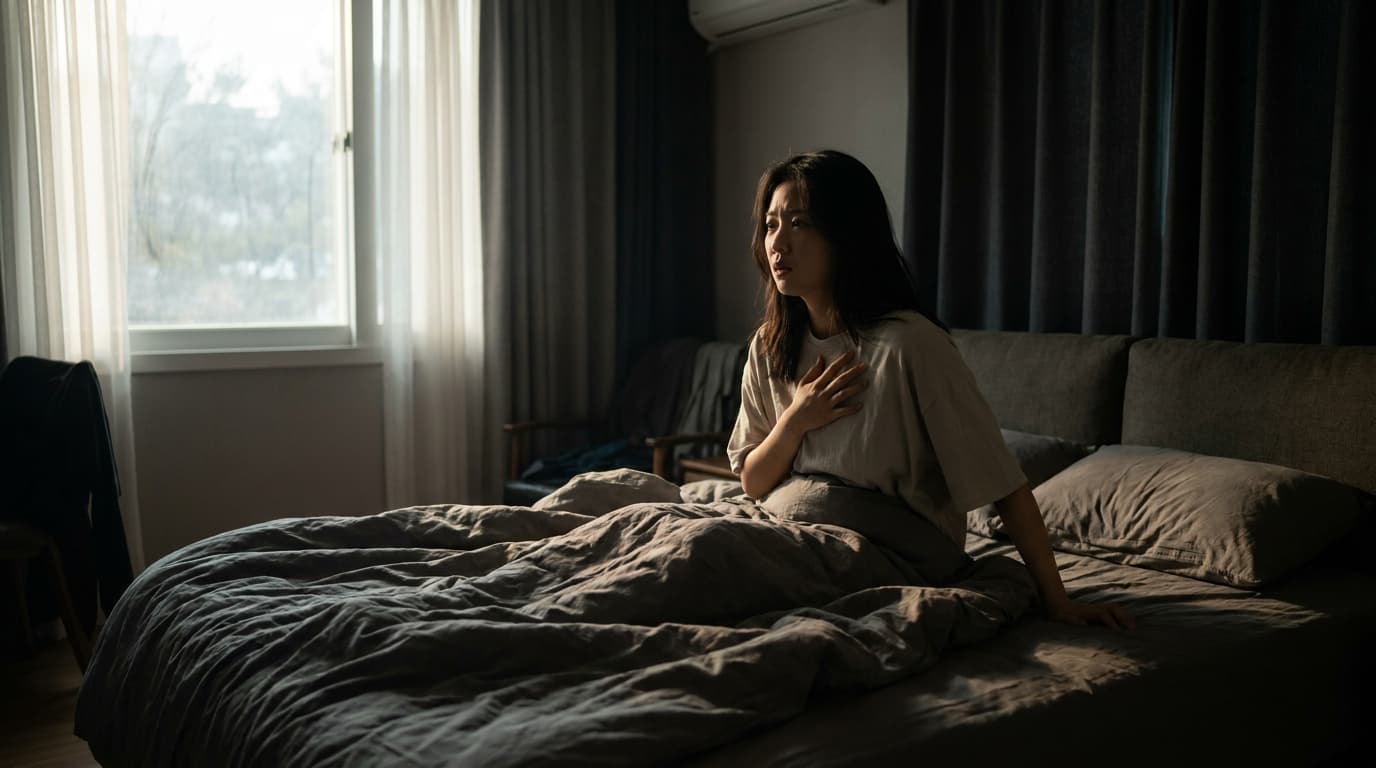
안녕하세요. Dalimchae Oriental Clinic. # When My Chest Pounds After Menopause An SOS Signal of Menopausal Autonomic Nervous System Many women facing or experiencing menopause complain that their chest pounds after menopause. At night, it is difficult to fall asleep because the heart pounds, and during the day, tightness in the chest with anxiety and difficulty breathing often occurs. These symptoms are too uncomfortable and painful to simply brush off as a result of aging. It is important not to ignore the signals your body sends, but to understand the causes accurately and actively manage them. 💡 [Key Answer] 3 most common causes of chest pounding after menopause: ① Autonomic nervous system instability due to female hormone changes / ② Sympathetic nerve hyperactivity and parasympathetic nerve decline / ③ Complex factors such as stress and lack of sleep Dalimchae Oriental Clinic helps the brain rest comfortably and the body regain balance through autonomic nerve stabilization. ## Chest Pounding After Menopause, Is It Just Normal Aging? Many people consider chest pounding after menopause as a natural phenomenon of getting older and endure it. However, this may be a signal that an imbalance has occurred in our body's important autonomic nervous system. During menopause, estrogen rapidly decreases, affecting various functions of the brain including the thermoregulatory center. This leads to autonomic imbalance where sympathetic nerves become excessively active and parasympathetic nerves decline, manifesting as palpitations or tightness in the chest. ## Why Does Menopausal Chest Pounding Occur? Menopausal chest pounding occurs due to a complex combination of factors besides the impact of hormone changes on the autonomic nervous system. Stress, irregular lifestyle habits, and lack of sleep can further break the balance of the autonomic nerves and intensify symptoms. In Oriental medicine, this is explained as a state where the energy of the heart and kidneys is not harmonized and yin fluid is deficient, causing heat to rise upward, focusing on restoring overall physical balance. ## How Does Oriental Medicine Treatment Help Menopausal Chest Pounding? Oriental medicine focuses on restoring overall Qi and Blood circulation and the balance of the autonomic nervous system rather than viewing menopausal chest pounding simply as a heart problem. Through herbal medicine, acupuncture, and pharmacopuncture, it stabilizes hyperactive sympathetic nerves and supplements deficient body fluids and energy to strengthen parasympathetic nerve functions. 2025년 8월 11일 data shows that acupuncture significantly reduces the frequency and severity of hot flashes and night sweats, improves sleep quality, and reduces menopause transition-related anxiety. 2026년 6월 5일 data reports positive changes in clinical symptoms, anxiety and depression scores, and hormone indices such as estradiol and FSH with herbal formulas like Dangguiliuhuang-tang and Xiangsu-granules. Dalimchae Oriental Clinic provides personalized treatment tailored to each patient's constitution and symptoms based on these data. ## Dalimchae Oriental Clinic Autonomic Nervous System Stabilization Principle Menopausal symptoms such as chest pounding, anxiety, and insomnia often stem from autonomic nervous system imbalance. Dalimchae Oriental Clinic sets autonomic nerve stabilization as its core treatment principle, lowering the heat of the overheated nervous system and creating an environment where the brain can rest comfortably. ## Self-Diagnosis Checklist for Menopausal Autonomic Imbalance If 3 or more of the following questions apply, you suspect menopausal autonomic imbalance causing chest pounding and should consult an expert. * Frequent sudden chest tightness and rapid heartbeat. * Difficulty falling asleep at night, often waking up with cold sweats. * Unreasonable anxiety, agitation, or easy irritation. * Sudden heat rising to face or upper body with sweating (hot flashes, sweating). * Unclear head, frequent dizziness, or headaches. * Easily fatigued and reduced energy compared to usual. * Frequent indigestion, bloating, or discomfort. * Frequent neck or shoulder stiffness and muscle pain. * Upper body heat rising while hands and feet are cold. 3+ matches: Suspected menopausal autonomic imbalance -> Consider oriental combination treatment. 5+ matches: Symptoms likely affecting daily life -> Immediate visit recommended. FAQ: Q. How long does menopausal chest pounding last? A. Individual differences exist, but it usually lasts 5-7 years around menopause. Q. Should I visit a hospital if chest pounding continues after menopause? A. Yes, specialized consultation is recommended. Q. Can anxiety accompanying menopausal chest pounding be treated with oriental medicine? A. Yes, comprehensive treatment for emotional symptoms is provided through autonomic stabilization. Q. Is treatment available in Incheon? A. Yes, Dalimchae Incheon branch provides customized oriental treatments. 生명이 꽃피는 곳. 한약은 역시, 달임채 한의원. 나와 비슷한 증상, 달임채한의원 홈페이지 AI 상담으로 먼저 확인해 보세요! 의학적 감수 | 여성·임신 진료 기준 달임채한의원 인천점 한의사 양유찬 (갱년기칼럼)
콘텐츠
When My Chest Pounds After Menopause An SOS Signal of Menopausal Autonomic Nervous System
Correct the SOS signal of autonomic imbalance causing chest pounding after menopause.