
안녕하세요. 달임채한의원입니다.
When Chills and Sudden Heat Surges Signal Autonomic Distress
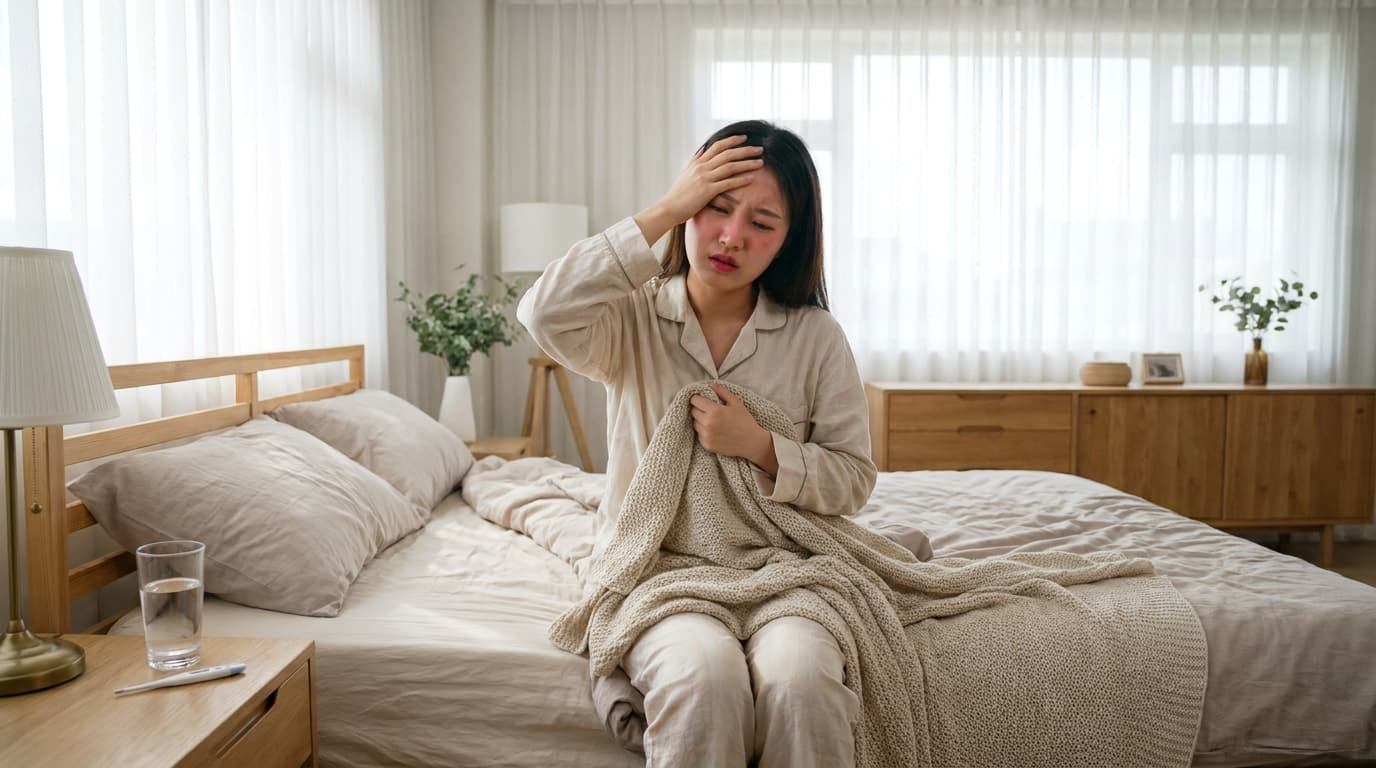
Have you ever experienced sudden chills followed by a wave of intense heat sweeping through your entire body? You might wonder if it is a sign of menopause, but it can happen regardless of age, or be accompanied by facial and upper body heat surges (sangyeolgam) along with freezing cold hands and feet (coldness/reung). This phenomenon where your body feels chilly then suddenly hot can be an important signal sent by your body's temperature regulation center—namely, an imbalance in the autonomic nervous system.
💡 [Key Answer] The 3 most common causes of feeling chilly then suddenly hot: ① Autonomic nervous system imbalance / ② Sympathetic nerve hyperactivity due to stress and overwork / ③ Hormonal changes (such as menopause) Dalimchae Clinic turns off your body's warning lights and helps you regain the power to regulate your body temperature through autonomic stabilizing treatments.
Why do chills followed by sudden heat surges happen?
Body temperature is precisely regulated by the thermoregulatory center in the brain's hypothalamus via the autonomic nervous system, keeping it around 36.5°C by sweating or constricting/relaxing blood vessels. However, when this autonomic balance is disrupted, errors occur in the temperature regulation system like a broken boiler.
As modern individuals face excessive stress, irregular habits, and lack of sleep, sympathetic hyperactivity easily occurs, leading to poor circulation and cold extremities. Simultaneously, heat generation increases or cannot be properly dissipated, causing heat to rush to the face and head (sangyeolgam).
How can autonomic imbalance be improved through Oriental medicine?
Treatment for thermoregulatory disorders caused by autonomic imbalance focuses on restoring the root cause: autonomic balance. Oriental medicine diagnoses chills and sudden heat surges as "yin-yang imbalance" or "ulheat" and applies personalized treatments.
Clinical studies (such as Kim Jung-sun et al., 2017) have shown that combined herbal medicine, acupuncture, and moxibustion significantly improved HRV (Heart Rate Variability) and balanced sympathetic and parasympathetic activity (LF/HF ratio decreased from 2.44 to 1.57, p<0.05). Furthermore, studies on menopausal heat surges (Lee Jung-min et al., 2019) demonstrated significant reductions in Kupperman Index scores (p<0.001) using herbal formulas like Gamisoyosan.
Dalimchae's Autonomic Stabilization Principles
When autonomic balance collapses, the brain cannot rest and regulatory functions become disorganized. Dalimchae Clinic focuses on "autonomic stabilization"—lowering neural heat and creating an environment where the brain can rest and recover its natural functions (known as Suseungwhagang in Oriental medicine).
We prescribe personalized herbal medicine, acupuncture to relieve muscle tension and improve circulation, and moxibustion/cupping to warm the body and enhance recovery.
Autonomic Imbalance Checklist
- Constant fatigue and low energy without specific reason.
- Frequent heart palpitations and chest tightness.
- Indigestion, bloating, constipation, or diarrhea.
- Unclear head, dizziness, or frequent headaches.
- Insomnia or unrefreshing sleep.
- Anxiety or nervousness over minor matters.
- Coldness/numbness in hands and feet or feeling bloated.
- Easily flushed face or excessive sweating.
Criteria:
- 3+ items: Suspected autonomic decline -> Consult Dalimchae Clinic.
- 5+ items: High possibility of autonomic imbalance -> Immediate visit recommended.
FAQ:
- How long does treatment take? Improvements are achieved progressively through consistent care and individualized herbal medicine.
- Can menopausal symptoms be treated together? Yes, Dalimchae addresses hormonal changes and autonomic imbalance simultaneously.
Life blossoms here. Herbal medicine is Dalimchae. Check your symptoms first through Dalimchae's homepage AI consultation!
Medical Supervision | Brain & Autonomic Nervous System Division, Dalimchae Clinic Incheon Branch, Korean Medicine Doctor Yang Yuchan