
Hello, this is Dalimchae Korean Medicine Clinic.
Troubled by nighttime insomnia after menopause? Now is the time to find a solution for a comfortable night.
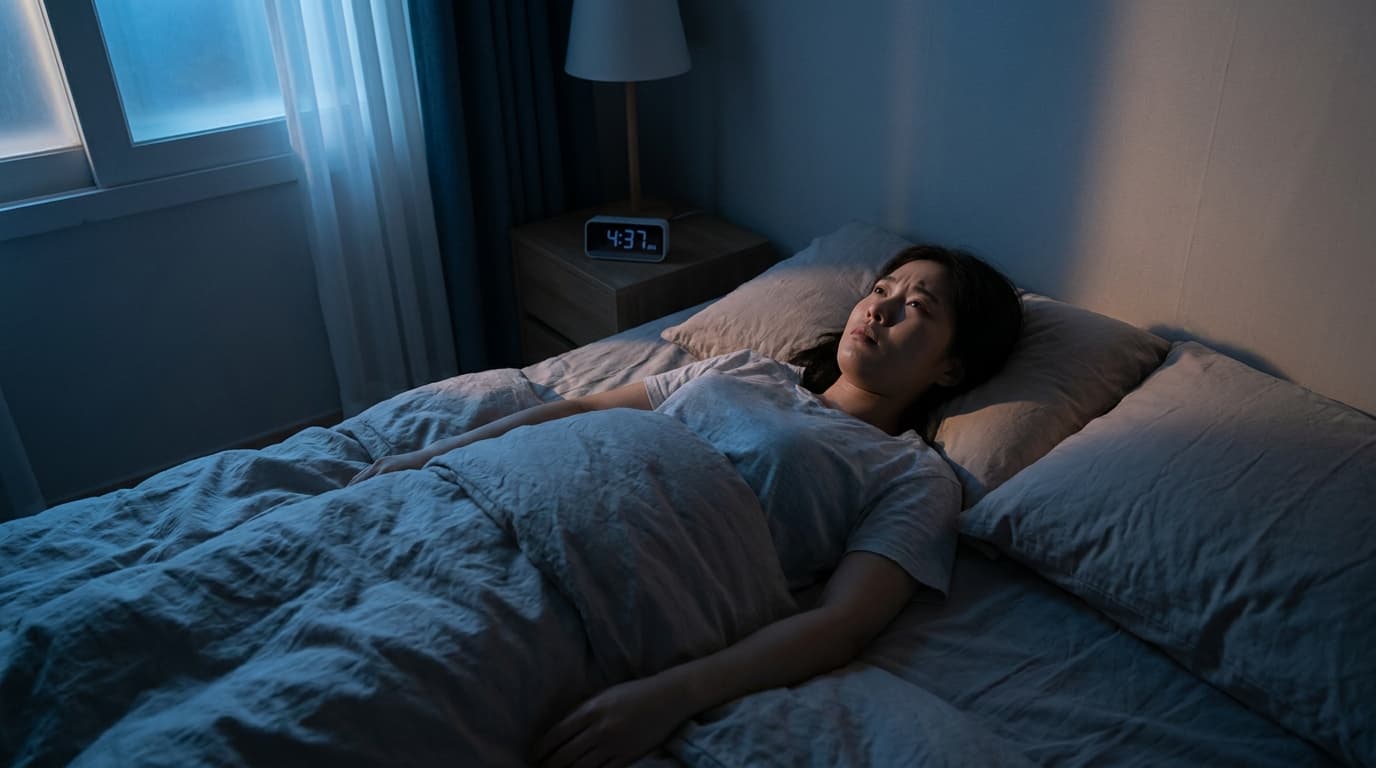
Menopause is a period that brings various physical and mental changes to women. In particular, sleep problems such as "experiencing insomnia every night after menopause" are one of the typical difficulties experienced by many people. The vicious cycle where nighttime, which should be used to relieve fatigue and recharge during the day, turns into stress can not only sap daily vitality but also worsen other menopausal symptoms such as hot flashes, mood swings, and depression.
💡 [Core Answer] Top 3 most common causes of "insomnia after menopause": ① Autonomic nervous system disturbance due to female hormone imbalance / ② Increased anxiety and stress / ③ Physical symptoms such as night sweats and a feeling of heat Dalimchae Korean Medicine Clinic fundamentally improves sleep quality and restores comfortable nights through autonomic stabilization.
Why does menopausal insomnia occur?
Menopausal insomnia is not simply a problem of getting older. One of the major causes is the sharp drop in estrogen, a female hormone. Estrogen affects the quality and depth of sleep, and when this hormone decreases, disturbances easily occur in the autonomic nervous system that regulates the brain's sleep-wake cycle. This leads to sleep disorders such as difficulty falling asleep, frequent waking during the night, or waking up early in the morning. In addition, psychological changes such as depression, anxiety, and restlessness appear significantly during menopause, creating a vicious cycle where these psychological factors further disturb sleep.
Could I also have menopausal insomnia? (Symptom Checklist)
Check the items below to assess your condition.
- ① It takes more than 30 minutes to fall asleep once in bed.
- ② I wake up frequently during the night and find it hard to fall back asleep.
- ③ Once I wake up early in the morning, I cannot fall back asleep.
- ④ Total sleep time is less than 6 hours.
- ⑤ I still feel tired and unrefreshed even after sleeping.
- ⑥ I feel lethargic and lack concentration during the day.
- ⑦ I am more irritable and experience severe mood swings than usual.
- ⑧ I frequently feel heat, cold sweats, and hot flashes at night.
- ⑨ I feel chest tightness and palpitations.
Criteria:
- 3 or more items checked → Suspect insomnia due to menopausal autonomic imbalance → Time to consider Korean medicine diagnosis and treatment.
- 5 or more items checked → Stage requiring active sleep improvement → Immediate consultation with medical staff at Dalimchae Korean Medicine Clinic Songdo Branch is recommended.
How does Korean medicine treatment help with menopausal insomnia?
In Korean medicine, menopausal insomnia is not simply viewed as a problem of not being able to sleep. It is understood as a complex result of functional imbalance of internal organs, stagnation of qi and blood circulation, and confusion of the autonomic nervous system. Particularly during menopause, kidney energy declines, easily causing 'Yin deficiency and fire agitation (陰虛火動)', a phenomenon where insufficient body fluid causes empty heat to rise upward. This empty heat stimulates the heart and overheats the brain, hindering deep sleep.
Recent research results support the validity of this Korean medicine approach. A systematic review and meta-analysis published in 2024 analyzed 70 randomized controlled trials (involving a total of 6,035 participants) and confirmed that herbal medicine treatment significantly improved sleep quality (Pittsburgh Sleep Quality Index, PSQI) compared to sleeping pills (mean difference (MD) –2.18, 95% confidence interval –2.56 to –1.80), and also reduced menopausal symptoms (Kupperman index) (MD –4.92, 95% CI –6.03 to –3.80). This study concluded that herbal medicine treatment is superior in safety with fewer side effects than sleeping pills.
Furthermore, a systematic review on acupuncture published in the Journal of Korean Obstetrics and Gynecology in 2022 analyzed 8 randomized controlled trials targeting patients with menopausal insomnia, and all studies concluded that acupuncture was effective in improving sleep. In particular, the Shenmen (HT7) acupoint was frequently mentioned as a core acupoint utilized in treating menopausal insomnia. These research results suggest that Korean medicine combination treatment performed at Songdo insomnia clinics can be an effective alternative for improving menopausal insomnia.
The Principle of Autonomic Stabilization Treatment at Dalimchae Korean Medicine Clinic
Menopausal insomnia, which causes distress through nighttime wakefulness, is not something to endure, but a condition requiring active treatment tailored to bodily changes. Dalimchae Korean Medicine Clinic treats the root cause of menopausal insomnia with autonomic stabilization as its core treatment principle.
When menopause arrives, hormone changes easily break the balance of our body's autonomic nervous system. Like a car with broken brakes (parasympathetic nervous system) and accelerator (sympathetic nervous system), the brain stays continuously overheated and excited even when it should rest. When this autonomic balance collapses, the brain cannot rest, heart rate variability becomes unstable, and this eventually leads to insomnia with degraded sleep quality. Dalimchae Korean Medicine Clinic Songdo Branch helps restore the disturbed autonomic balance so the brain can comfortably rest, inducing deep sleep. In Korean medicine, this is called 'Suseunghwagang (水昇火降)'—restoring the body's natural circulation of lowering hot energy and raising cool energy.
This autonomic stabilization treatment can also bring overall improvement effects to autonomic abnormality symptoms that appear together with menopausal insomnia, such as headaches, dizziness, and heart palpitations. At the Songdo Autonomic Nervous Clinic, we help restore harmony in the autonomic system and build the body's self-healing power through customized Korean medicine combination treatments such as herbal medicine, acupuncture, moxibustion, and pharmacopuncture according to individual constitutions and symptoms.
Treatment Process for Menopausal Insomnia at Dalimchae Korean Medicine Clinic
Dalimchae Korean Medicine Clinic Songdo Branch provides a systematic treatment process for patients suffering from menopausal insomnia.
- Precise Examination: Upon visit, we assess your current bodily state and the degree of autonomic imbalance through interviews, pulse wave tests, autonomic balance tests, and body composition tests.
- Individual Diagnosis: Based on test results, we comprehensively analyze your constitution, accompanying symptoms, and sleep patterns to deeply diagnose the cause of menopausal insomnia.
- Customized Prescription: According to the diagnosis results, we prescribe customized herbal medicine to help autonomic stabilization and improve sleep quality. In addition, we combine acupuncture, moxibustion, and pharmacopuncture treatments to promote qi and blood circulation, relax mind and body, and induce sound sleep.
- Recovery Management: Even during the treatment process, we provide continuous consultation and lifestyle coaching to maximize treatment effects, prevent recurrence, and support a healthy menopause.
Q. How long does menopausal insomnia treatment take? A. The treatment period for menopausal insomnia can vary depending on the severity of symptoms, duration of insomnia, and accompanying conditions. Usually, we aim for gradual symptom improvement through 2 to 3 months of intensive treatment followed by steady management.
Q. Can menopausal insomnia resolve naturally? A. Some mild menopausal insomnia may improve naturally over time, but in most cases, it can lead to chronic sleep disorders. Since hormonal changes and autonomic imbalance are the main causes, expecting symptoms to resolve on their own without active treatment is difficult.
Q. Are other menopausal symptoms treated along with insomnia? A. Yes, Dalimchae Korean Medicine Clinic's autonomic stabilization treatment can help improve various menopausal symptoms resulting from autonomic imbalance, such as hot flashes, facial flushing, sweating, mood swings, depression, and chronic fatigue, as well as insomnia. Since it is a treatment that restores the balance of the whole body, multiple symptoms often improve simultaneously.
Menopausal insomnia is not a problem to be solved by endurance. You no longer need to ignore the signals your body has been sending for a long time. When approached in the right direction, the body responds faster than you think. Bring the symptoms you are experiencing just as they are. Dalimchae Korean Medicine Clinic will find the cause together.
A place where life blooms. Herbal medicine is Dalimchae Korean Medicine Clinic. Check symptoms similar to yours first through AI consultation on the Dalimchae Korean Medicine Clinic website!
This article is health information compiled by Dalimchae medical staff based on frequently asked questions in the clinic. Medical Supervision | Brain & Autonomic Nervous System Treatment Standards, Dalimchae Korean Medicine Clinic Songdo Branch, Korean Medicine Doctor Oh Hyunmin (Insomnia Column) #insomnia #menopausalinsomnia #sleepdisorder #autonomic #songdoinsomnia #koreanmedicine #herbaltreatment #menopause