
안녕하세요. 달임채한의원입니다.
Thought It Was Just Menstrual Cramps... Could It Be Endometriosis? Persistent menstrual pain—it's time to find the root cause.
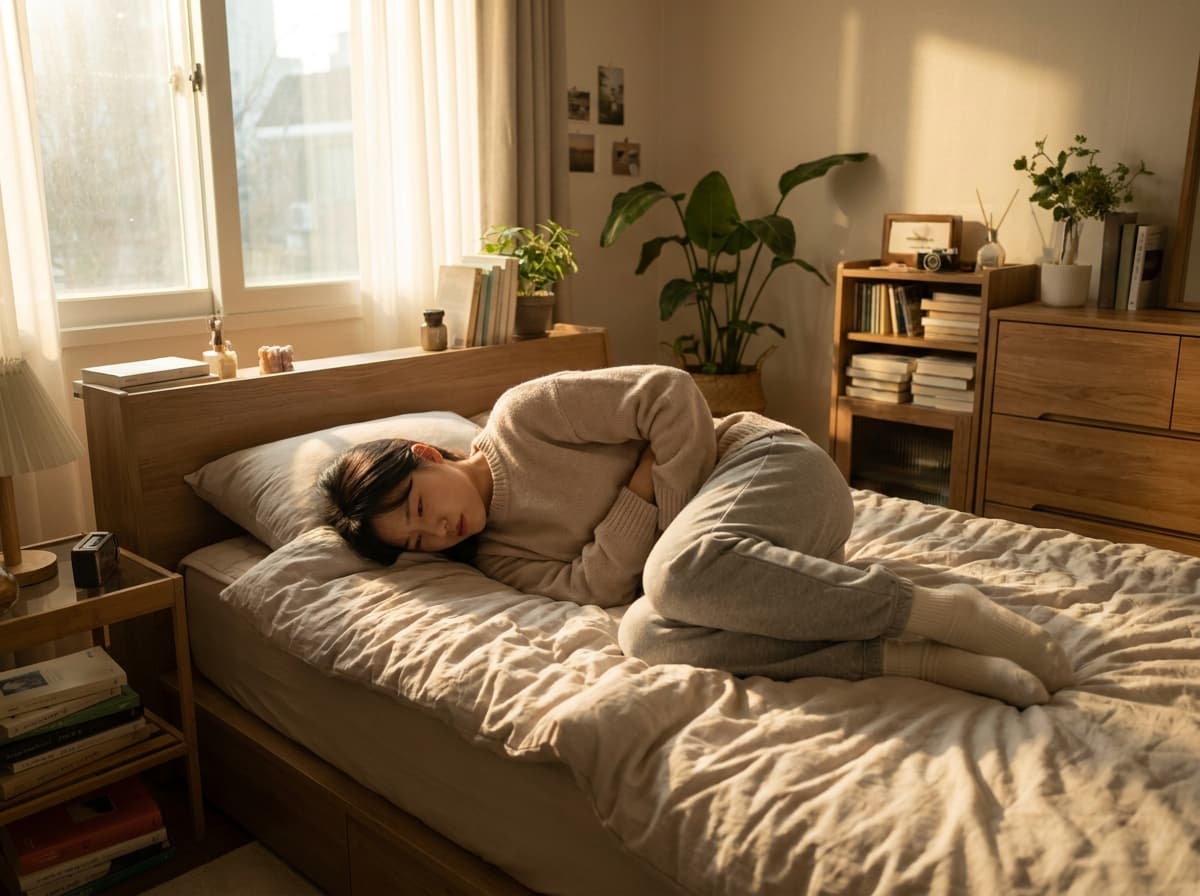
Are you just enduring the menstrual pain that comes every month, dismissing it as "pain every woman goes through"? Many women rely solely on painkillers, considering severe menstrual pain normal, but in fact, menstrual pain can be an important warning sign from our body. Especially if you're wondering, "Thought it was just menstrual pain... could it be endometriosis?", you need to look at the fundamental cause beyond just the pain.
💡 [Key Answer] The core of the question "Thought it was just menstrual pain... could it be endometriosis?" is the 'cause of pain'. The three most common causes of severe menstrual pain: ① Abnormal growth of endometrial tissue and inflammatory response (Endometriosis) ② Extreme uterine contractions caused by excessive prostaglandin secretion ③ Chronic congestion and poor blood circulation in the uterus and pelvis Dalimchae Clinic creates a healthy body where symptoms do not recur through constitutional improvement.
Persistent menstrual pain, when should you suspect endometriosis?
Menstrual pain can be broadly divided into primary dysmenorrhea and secondary dysmenorrhea. Primary dysmenorrhea refers to pain caused by excessive contraction of the uterus without a specific disease, and mainly appears in young women after puberty. However, if the pain gradually worsens and the amount of painkillers taken increases, you should suspect secondary dysmenorrhea, especially endometriosis.
Endometriosis is a disease in which endometrial tissue, which should be inside the uterus, exists and proliferates in other parts outside the uterus, such as the ovaries, fallopian tubes, and peritoneum. These tissues also cause bleeding according to the menstrual cycle, but the problem is that this blood cannot be discharged out of the body and causes inflammation and adhesions in the surrounding tissues. This can cause not only extreme menstrual pain but also chronic pelvic pain, dyspareunia, painful bowel movements, and, in severe cases, infertility. In particular, many people who visit Songdo Endometriosis Clinic often consider it simply menstrual pain and are diagnosed late.
Why does endometriosis occur?
The exact cause of endometriosis is not yet clearly known, but there are several influential hypotheses. The most representative is the 'retrograde menstruation theory'. It is a theory that part of the menstrual blood flows back into the abdominal cavity through the fallopian tubes, and the endometrial tissue implants and grows in the abdominal cavity. However, since not all women suffer from endometriosis even though all women experience retrograde menstruation, it is believed that various complex causes such as immunological factors, genetic factors, and exposure to environmental hormones are at work.
In Korean medicine, endometriosis is seen as closely related to stagnant blood (Eo-hyeol), phlegm (Dam-eum), and Qi stagnation (Gi-che). Stagnant blood refers to a state where blood circulation is stagnant and waste products accumulate, and phlegm refers to the accumulation of abnormal liquid substances due to an abnormality in water metabolism in the body. Qi stagnation refers to a state where the circulation of Qi and blood is not smooth due to stress, etc. These causes work in combination to make the environment in the uterus and pelvis unstable, induce abnormal growth of endometrial tissue, and deepen the inflammatory response.
How does Korean medicine treatment help with endometriosis?
Endometriosis is known as a disease accompanied by chronic inflammation and pain, with a high recurrence rate. It is important to solve the fundamental cause and regain the balance of the body beyond simply suppressing pain. In Korean medicine, endometriosis is managed by improving the internal environment.
A meta-analysis study by Xin Li's research team published in 『Phytotherapy Research』 in 2017 analyzed the effect of herbal medicine treatment on endometriosis. This study synthesized data from 970 patients who participated in a total of 13 randomized controlled trials and confirmed that herbal medicine treatment was significantly more effective (SMD = -1.26, 95% CI [-1.60, -0.92], p < 0.00001) than placebo or other treatments in relieving endometriosis-related pain (menstrual pain, chronic pelvic pain, dyspareunia), and also contributed to a decrease in CA-125 levels (SMD = -0.74, 95% CI [-1.11, -0.37], p < 0.0001). In addition, the incidence of side effects was found to be similar to or lower than that of the control group. Based on these results, the researchers concluded that herbal medicine can be an effective and safe treatment for improving endometriosis-related pain and CA-125 levels.
These data show the potential of the Korean medicine approach in the treatment of endometriosis. At Dalimchae Clinic in Songdo, based on the core principle of constitutional improvement, we help prevent the recurrence of endometriosis and maintain a healthy body condition by normalizing the body's functions rather than simply suppressing symptoms.
In a "Endometriosis in Traditional Korean Medicine: A Comprehensive Review" paper by Soohyeon Kim's research team published in the 『Journal of Clinical Medicine』 in 2021, the Korean medicine approach to endometriosis was comprehensively reviewed. This review paper emphasized that Korean medicine views endometriosis as stagnant blood, phlegm, and Qi stagnation, and focuses on resolving these and regulating uterine function. In particular, it analyzed and presented several clinical studies and case reports showing that acupuncture, moxibustion, and herbal medicine treatments have positive effects on pain relief, inflammation reduction, and improvement of the uterine environment. The researchers concluded that Korean medicine treatment can be a promising alternative that can contribute to symptom management and improvement of quality of life for endometriosis.
As such, Korean medicine sees the cause of endometriosis as an internal imbalance and focuses on healthily reorganizing the uterine and pelvic environment through blood circulation improvement, inflammation relief, and immunity enhancement. At Dalimchae Clinic, through herbal prescriptions tailored to each individual's constitution and symptoms, and acupuncture and moxibustion treatments, we aim to dissolve stagnant blood, smooth the circulation of Qi and blood, reduce pain caused by endometriosis, and restore uterine function, thereby focusing on lowering the possibility of recurrence.
Dalimchae Clinic's Constitutional Improvement Treatment: Creating a body that doesn't turn on again, not just turning off symptoms
Dalimchae Clinic approaches endometriosis not just by looking at the painful area, but as a problem of a broken balance in the whole body. Because our bodies are connected in amazing ways, a problem in one part can affect other parts. In particular, chronic recurrent diseases such as endometriosis can expect lasting effects only when the fundamental environment of the body is improved.
Constitutional improvement treatment is not a way to forcibly turn off symptoms from the outside, but a treatment that helps our body maintain a healthy state on its own. This is like not just turning off the warning light of a broken car, but repairing the engine itself so that the warning light never turns on again. It removes stagnant blood and inflammation stagnant in the uterus and pelvis, strengthens weakened uterine function, and regulates hormone balance to create an environment where endometrial tissue cannot grow abnormally. In this process, immunity is also naturally enhanced, improving overall physical health. This constitutional improvement aims to improve chronic pelvic pain, infertility, and even the possibility of sterility. If you are considering Songdo endometriosis treatment, Dalimchae Clinic's constitutional improvement treatment can be a good alternative.
Could I have endometriosis? Symptom Checklist
If you fall under 3 or more of the following symptoms, it is recommended to suspect endometriosis and receive a professional diagnosis.
- Menstrual pain is getting worse, and the dosage of painkillers is increasing.
- The pain does not subside well even after taking painkillers.
- Menstrual pain starts a few days before the start of menstruation and continues after menstruation.
- The lower abdomen continues to hurt or the pelvis feels stiff even when it is not during menstruation.
- Discomfort or pain is felt during intercourse.
- Pain is felt toward the anus during bowel movements, or diarrhea or constipation worsens during menstruation.
- Frequent urination or pain during urination.
- Infertility (difficulty getting pregnant) without a specific reason.
- Menstrual flow becomes excessive or the menstrual period becomes longer.
Judgment Criteria:
- 3 or more: Endometriosis suspicion stage. It is necessary to review accurate diagnosis and Korean medicine complex treatment.
- 5 or more: Immediate professional medical care and treatment are recommended. Please visit Dalimchae Clinic Songdo Branch in Songdo for a detailed consultation.
Q. Is it okay to just endure severe menstrual pain?
A. Severe menstrual pain is an abnormal signal sent by the body. Especially if it is pain caused by a disease such as endometriosis, the more you neglect it, the worse the symptoms get and it can lead to more serious problems such as infertility, so the cause must be found and treated.
Q. Is there no other way for endometriosis other than surgery?
A. Surgery is an effective way to directly remove endometriosis lesions, but it has a high recurrence rate and can have side effects such as decreased ovarian function. Korean medicine treatment can help relieve pain, suppress recurrence, and improve quality of life by improving the body's fundamental environment without surgery.
Q. Is endometriosis related to infertility?
A. Yes, it is deeply related. As endometrial tissue proliferates in the ovaries, fallopian tubes, and peritoneum, it causes inflammation and adhesions, interfering with the discharge of eggs or implantation of fertilized eggs, and causing hormonal imbalance, making pregnancy difficult.
Q. How much does Korean medicine clinic treatment help with endometriosis pain?
A. Korean medicine treatment is effective in reducing pain by removing stagnant blood, improving Qi and blood circulation, and relieving inflammation. Many studies have shown that herbal medicine and acupuncture treatment significantly reduce menstrual pain and chronic pelvic pain caused by endometriosis.
Endometriosis is not a problem that can be solved by enduring it. You no longer have to ignore the signals your body has been sending for a long time. If you approach it in the right direction, your body reacts faster than you think. Bring the symptoms you are experiencing as they are. Dalimchae Clinic will find the cause together.
Where life blooms. Herbal medicine is, after all, Dalimchae. Check your symptoms first with the AI consultation on the Dalimchae Clinic website!
This article is health information compiled by the Dalimchae medical staff based on questions frequently received in the consultation room. Medical Supervision | Female/Pregnancy Treatment Standard Dalimchae Clinic Songdo Branch Korean Medicine Doctor Oh Hyunmin (Endometriosis Column)
#Endometriosis #MenstrualPain #PelvicPain #SongdoEndometriosisClinic #IncheonClinic #Infertility #ConstitutionalImprovement