
Hello. This is Dalimchae Oriental Medicine Clinic.
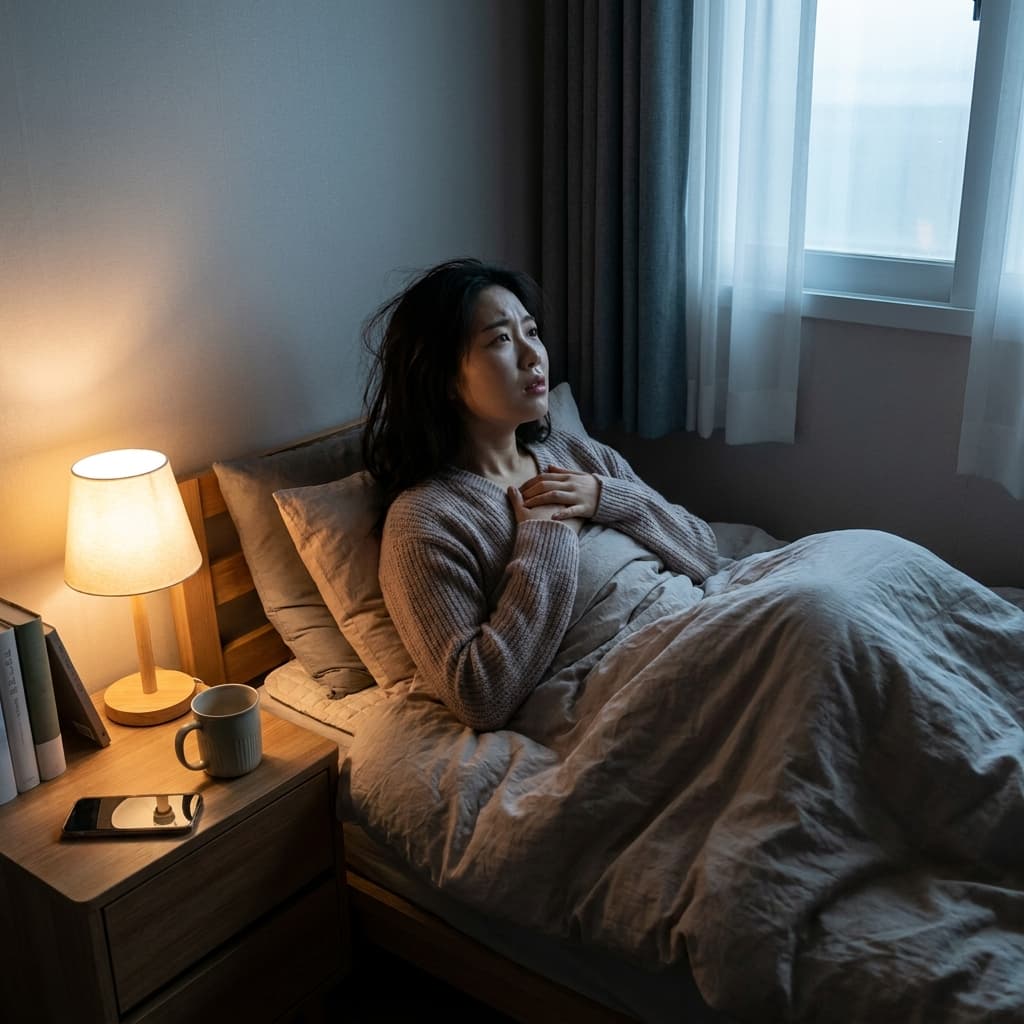
Suddenly my heart is thumping and I feel anxious: Is it a warning sign of autonomic dysfunction?
Have you ever experienced your heart suddenly thumping and feeling a sense of extreme anxiety for no reason? Many people experience these symptoms but dismiss them as 'it's nothing' or 'it's probably just stress,' or they suffer in silence when they're told there's nothing wrong in medical tests. It's like not recognizing the emergency signals your body is sending. However, symptoms like suddenly my heart is thumping and I feel anxious can be a danger signal from your autonomic nervous system, an important regulatory system in our body.
💡 [Key Answer] 3 most common causes of suddenly my heart is thumping and I feel anxious: ① Autonomic imbalance due to excessive stress ② Hypersensitivity and functional decline of the cranial nervous system ③ Irregular lifestyle habits and chronic fatigue Dalimchae Oriental Medicine Clinic aims for fundamental treatment through autonomic stabilization to make the mind and body feel comfortable.
Why does my heart suddenly thump and anxiety strike?
Symptoms of a thumping heart and feelings of anxiety are usually closely related to an imbalance in the autonomic nervous system. The autonomic nervous system is responsible for essential life-sustaining functions such as heart rate, digestion, respiration, blood pressure, and temperature control without our conscious control. In particular, it is divided into the sympathetic and parasympathetic nervous systems, which work in opposition to each other to maintain balance. When this balance is broken due to stress or overwork, symptoms such as heart palpitations, shortness of breath, extreme anxiety and restlessness, and even panic attacks can occur.
Modern medical research has also shown that anxiety disorders account for a significant portion of cardiovascular symptoms such as palpitations, and many patients who repeatedly experience heart thumping and chest discomfort despite having no structural heart problems meet the criteria for anxiety-related conditions. This suggests that the fundamental cause may be an abnormality in the regulation of the nervous system, not just a heart problem.
How does Oriental medicine view and treat autonomic dysfunction?
In Oriental medicine, symptoms of heart thumping and anxiety were viewed as 'Gyeonggye (驚悸)' or 'Jeongchung (怔忡),' and are diagnosed as being caused mainly by functional abnormalities of the five viscera and six entrails, such as the heart (心), kidney (腎), and liver (肝), and disharmony of Qi and Blood (氣血). If the heart function weakens due to stress and overwork, or if the nervous system becomes overheated leading to a state like Heart Yin Deficiency (心陰虛), symptoms such as anxiety, insomnia, and palpitations can be accompanied.
Dalimchae Oriental Medicine Clinic in Songdo objectively evaluates the activity and balance of the autonomic nervous system using tests such as Heart Rate Variability (HRV). Through these tests, we identify the autonomic imbalance pattern of each individual patient and implement appropriate customized treatment. In particular, herbal medicine treatment plays an important role in regaining the balance of the autonomic nervous system and stabilizing the mind and body.
Actual research cases of Oriental medicine treatment for anxiety and palpitations
Oriental medicine treatment for anxiety and palpitation symptoms accompanied by autonomic dysfunction is being continuously researched.
A clinical study published in 2018 presented the results of comparing acupuncture treatment and Western medicine (alprazolam and oryzanol) treatment for 87 patients with anxiety disorders. The group that received acupuncture treatment showed an effective rate of 92.9% in the Self-Rating Anxiety Scale (SAS), which was significantly higher than the 71.1% of the control group. Another study showed that the group that combined acupuncture treatment and self-massage showed an effective rate of 93.85%, showing a higher improvement rate than the 80% of the control group.
According to another domestic research trend, a meta-analysis of 14 randomized controlled trials (RCTs) involving 1,256 patients with insomnia found that the herbal prescription Cheonwangbosimdan (天王補心丹) was beneficial in shortening sleep onset time and showed a positive trend in clinical effectiveness rate and sleep quality (PSQI) improvement when used alone or in combination with Western medicine. In particular, Cheonwangbosimdan is known to have a mechanism for regulating hyper-excitation of the nervous system and stabilizing the autonomic nervous system, so it can be effectively used for insomnia accompanied by palpitations and anxiety.
These research results provide scientific evidence for Oriental medicine treatment for autonomic dysfunction symptoms such as suddenly my heart is thumping and I feel anxious, and Dalimchae Oriental Medicine Clinic in Songdo uses this data to restore the balance of the autonomic nervous system and regain stability of the body and mind through herbal and acupuncture treatment suitable for each patient's symptoms and constitution.
How does Dalimchae Oriental Medicine Clinic's autonomic stabilization treatment work?
Dalimchae Oriental Medicine Clinic's autonomic stabilization treatment focuses on correcting the overheated brain and imbalanced autonomic nervous system. Just as an overheated car engine cannot function properly, if the balance of the autonomic nervous system is broken, the brain cannot rest and symptoms such as anxiety, restlessness, and palpitations are likely to appear. In Oriental medicine, this is viewed as a state where 'Heart Fire (心火)' is flourishing or 'Qi Stagnation (氣鬱)' has occurred, and the goal is to lower the excessive heat of the nervous system and create an environment where the brain can rest comfortably.
Herbal medicine prescribed according to individual constitution and symptoms helps to relax the tensed sympathetic nervous system and activate the declined parasympathetic nervous system function to regain the balance of the autonomic nervous system. In addition, Oriental therapies such as acupuncture, moxibustion, and pharmacopuncture smooth the circulation of Qi and Blood and relieve tension in the body caused by stress, making the heart feel comfortable and reducing anxiety. This integrated Oriental treatment aims for fundamental constitutional improvement that creates a body where symptoms do not recur, rather than simple symptom suppression.
Am I also suffering from autonomic dysfunction? Symptom Checklist
If you apply to 3 or more of the following questions, you should suspect autonomic dysfunction, and if it's 5 or more, you need to consider active treatment.
- My heart suddenly thumps or I often feel like it's beating fast.
- My chest feels tight and I have difficulty breathing sometimes.
- I feel anxious or restless for no reason.
- It's hard to fall asleep or I wake up frequently, and I don't feel refreshed after sleeping.
- I often feel dizzy, my head isn't clear, or I have headaches.
- My hands and feet are cold or numb, and I sweat a lot.
- My digestion isn't good and my stomach is bloated with gas, or constipation/diarrhea repeats.
- I have severe chronic fatigue and no energy.
- I've become sensitive and easily startled or irritated by small stimuli.
Judgment Criteria:
- 3 or more applies: Suspicion of autonomic imbalance → In-depth consultation and testing through Songdo Autonomic Nervous System Oriental Clinic are recommended.
- 5 or more applies: High possibility of autonomic dysfunction → Immediate visit to Songdo Oriental Clinic and review of complex Oriental treatment are recommended.
Q. How long should I be treated for heart thumping and anxiety symptoms to get better? A. The treatment period can vary depending on the severity of individual symptoms, the cause, and lifestyle habits. Usually, through 3 to 6 months of steady treatment, you can expect symptoms to gradually stabilize and prevent recurrence.
Q. Can panic disorder also be treated with Oriental medicine? A. Yes, panic disorder is also often caused by a sudden imbalance of the autonomic nervous system and a hypersensitive reaction of the cranial nervous system, so Oriental medicine treatment can be effective. At Dalimchae Oriental Medicine Clinic, we help improve symptoms through customized herbal and acupuncture treatments that alleviate anxiety and panic symptoms and stabilize the autonomic nervous system.
Q. Can autonomic dysfunction heal naturally? A. Some mild symptoms can be improved through lifestyle habit improvement and stress management, but if it becomes chronic or symptoms are severe, it is difficult to heal naturally. If left unattended, it can lead to other related diseases such as chronic fatigue, insomnia, dizziness, and headaches, so early diagnosis and treatment are important.
Q. I have insomnia along with heart palpitations; can they be treated together? A. Yes, heart palpitations and insomnia are representative symptoms of autonomic dysfunction, and Dalimchae Oriental Medicine Clinic treats the autonomic imbalance, which is the fundamental cause of these two symptoms, together. In particular, herbal prescriptions such as Cheonwangbosimdan can help alleviate anxiety, palpitations, and insomnia symptoms simultaneously.
Symptoms like suddenly my heart is thumping and I feel anxious are not problems that can be solved by enduring them. You no longer have to ignore the signals your body has been sending for a long time. If you approach it in the right direction, your body reacts faster than you think. Bring your current symptoms as they are. Songdo Autonomic Nervous System Oriental Clinic, Dalimchae Oriental Medicine Clinic will find the cause together.
Where life blooms. Herbal medicine is, after all, Dalimchae Oriental Medicine Clinic. Check your symptoms, similar to mine, through the AI consultation on the Dalimchae Oriental Medicine Clinic website first!
This article is health information summarized together by Dalimchae medical staff based on questions frequently received in the consultation room. Medical Supervision | Autonomic Nerve/Brain Treatment Criteria, Dalimchae Oriental Medicine Clinic Songdo Branch, Oriental Medical Doctor Oh Hyunmin (Autonomic Dysfunction Column)