Hello. This is Dalimchae Korean Medicine Clinic.
Suddenly Feeling Suffocated and Tight-Chested: Clear Differences Between General Anxiety and Panic Disorder, and the Korean Medicine Solution
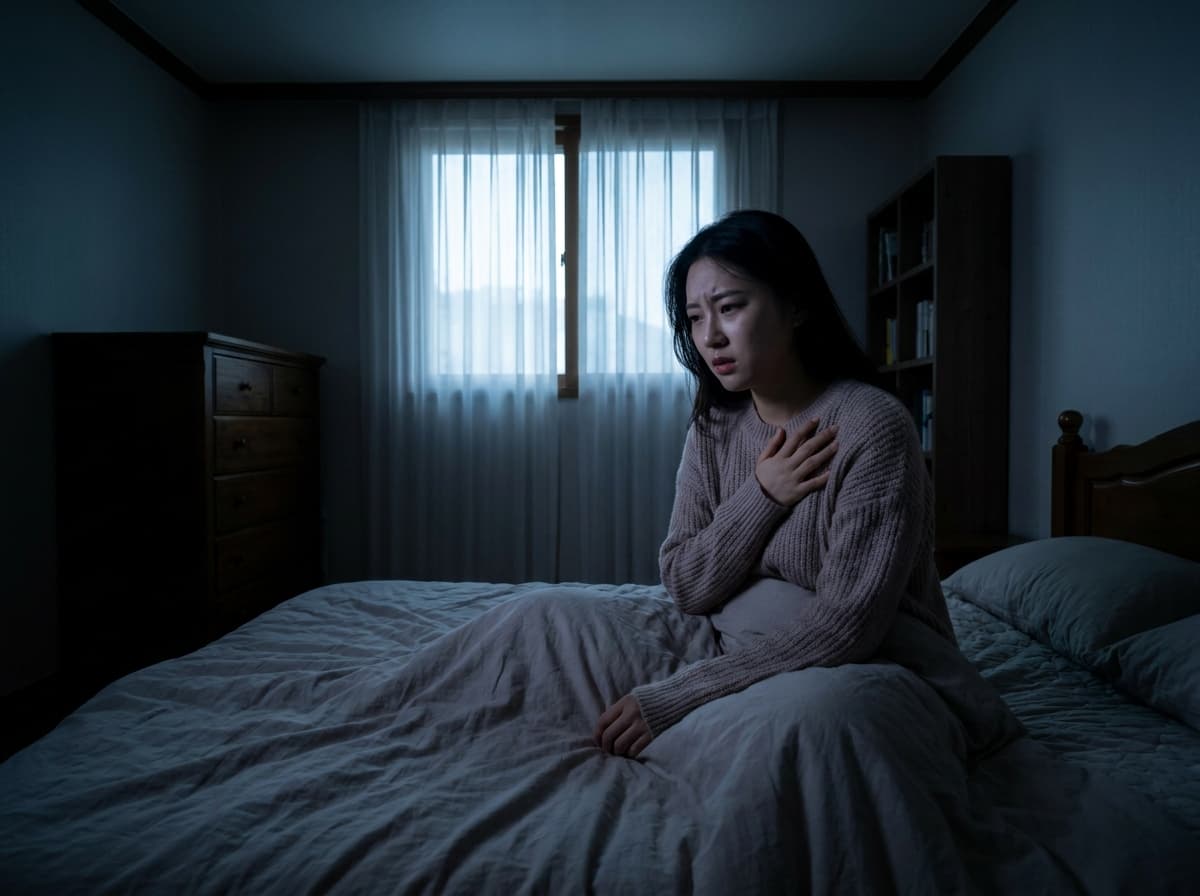
If you suddenly feel tight in your chest, find it difficult to breathe, and are seized by a fear of death in your daily life, this may be a signal beyond simple anxiety. Many people visit the emergency room complaining that "suddenly my chest is tight and I can't breathe," only to be confused by a diagnosis that there is nothing wrong. Understanding the subtle but important difference between general anxiety and panic disorder is the first step in treating these symptoms. It's time to accurately grasp the signal sent by your body's warning light and find a wise solution.
💡 Key Answer The 3 most common causes of feeling tight in the chest and unable to breathe: ① Autonomic nervous system overactivation / ② Hypersensitivity of the brain's amygdala / ③ Chronic stress and physical vulnerability Dalimchae Clinic helps turn off the body's overheated warning lights through autonomic stabilization treatment and helps the brain and body function harmoniously.
How are General Anxiety and Panic Disorder different?
Both general anxiety and panic disorder have anxiety as a core symptom, but they differ significantly in their pattern of occurrence, intensity, and impact on life. General Anxiety Disorder (GAD) is characterized by chronic, pervasive worry and anxiety without a specific object. It is expressed as "I feel anxious for no reason" or "I always worry a lot," and can be accompanied by muscle tension, insomnia, and fatigue. On the other hand, Panic Disorder is centered on unpredictable 'Panic Attacks.' A panic attack involves intense fear along with various physical symptoms such as a pounding heart, difficulty breathing, dizziness, and numbness in the hands and feet, causing a feeling like you're going to die or lose your mind. These attacks usually reach their peak within 10 minutes and often lead to 'anticipatory anxiety'—the fear that an attack will happen again—and 'avoidance behavior'—avoiding certain places or situations.
Why do panic attacks come on so suddenly?
Panic attacks occur when the autonomic nervous system, our body's 'danger detection system,' malfunctions. Even in the absence of an actual external threat, the brain's amygdala becomes excessively active, rapidly stimulating the sympathetic nervous system. It's like a fire alarm malfunctioning and going off, with sprinklers activating, even though there is no actual fire. This overactivation of the sympathetic nervous system causes various physical reactions such as increased heart rate, elevated blood pressure, accelerated breathing, and decreased digestive function, leading the patient to feel intense anxiety along with uncomfortable symptoms like chest tightness, difficulty breathing, and dizziness. In particular, chronic stress breaks the balance of the autonomic nervous system and makes the brain's emotional control center vulnerable, which is a major cause of increased frequency of panic attacks. This is why people suffering from panic disorder in the Incheon area look for Incheon Panic Disorder Clinics, to resolve this fundamental imbalance of the autonomic nervous system.
How does Korean medicine interpret and treat panic disorder and anxiety?
In Korean medicine, panic disorder and anxiety are not viewed simply as psychological issues. They are understood as a complex interaction of functional abnormalities in the five viscera and six entrails (especially the Heart, Liver, Kidney, and Gallbladder), problems with the circulation of Qi and Blood, and imbalances in the autonomic nervous system. In particular, pathological factors such as 'Phlegm-fluid (痰飮)' or 'Blood Deficiency (血虛)' weaken the heart's function and make the spirit unstable, leading to symptoms such as 'Gyeong-gye (驚悸)' or 'Jeong-chung (怔忡)' (palpitations and anxiety).
Dalimchae Clinic Incheon Branch focuses on identifying the root cause of these symptoms from this perspective, stabilizing the over-stimulated sympathetic nervous system, and activating the parasympathetic nervous system to restore the balance of the autonomic nervous system. For this purpose, we apply a combination of customized herbal prescriptions, acupuncture, pharmacopuncture, and moxibustion suitable for each individual's constitution and symptoms. In particular, treatment is directed toward smoothing communication between the brain and the autonomic nervous system and increasing resistance to stress.
Checking the Effectiveness of Korean Medicine Treatment with Latest Clinical Research
In a study conducted by Korean researchers published in the journal 'Healthcare (Basel)' in 2024, the results of applying Korean medicine treatment (acupuncture, psychotherapy, Chuna, aromatherapy, herbal medicine, etc.) for at least 4 weeks to 67 patients with anxiety disorders were analyzed. As a result of the study, not only the patients' anxiety symptoms (STAI X-1, STAI X-2, BAI scales) but also depression (BDI-II) and anger (AKI-K-I, AKI-K-O) symptoms significantly decreased (all p<0.05), and quality of life (QoL) was also found to be greatly improved (p<0.0001). In particular, anxiety levels showed significant improvements of 22.5% on the BAI scale, 14.6% on the STAI X-1 scale, and 9.6% on the STAI X-2 scale after 4 weeks of treatment. The researchers concluded that these results suggest that Korean medicine treatment is effective in improving clinical symptoms and quality of life for patients with anxiety disorders.
In addition, a study published in the 'Journal of Clinical Pharmacy and Therapeutics' in 2004 conducted a randomized placebo-controlled study comparing herbal medicine (Ondam-tang-gami-bang) and placebo in 40 medical students experiencing exam stress. As a result, systolic blood pressure, norepinephrine, and cortisol levels significantly decreased in the herbal medicine group compared to the placebo group. Furthermore, positive changes were seen in psychological variables such as anxiety, depression, stress, and emotional state. The researchers suggested that this herbal medicine can reduce stress-related physiological and psychological symptoms by stabilizing the sympathetic nervous system.
These studies scientifically support that Korean medicine treatment is effective in regulating the balance of the autonomic nervous system and alleviating physical and mental stress responses. At Dalimchae Clinic Incheon Branch, based on this data, we understand the connection between the body and mind of each patient and focus on resolving the root autonomic imbalance of anxiety rather than just focusing on symptoms, helping the body regain its own power to recover.
How is Dalimchae Clinic's 'Autonomic Stabilization' treatment performed?
When the balance of the autonomic nervous system is broken, the brain cannot rest. When exposed to constant tension and excessive stress day and night, our body's autonomic nervous system maintains an 'emergency' state. As the sympathetic nervous system is excessively activated and the parasympathetic nervous system, which relaxes the body and mind, fails to function properly, the brain constantly turns on warning lights and cannot rest. In Korean medicine, this state is diagnosed as 'Heart Fire Rising (心火上炎)' or 'Liver Qi Stagnation (肝氣鬱結),' and treatment focuses on lowering the excessive heat in the nervous system and creating an environment where the brain can rest. In Korean medicine, this is called 'Suseung-hwagang (水昇火降),' which seeks to lower the heat gathered in the upper body and warm the lower body to pursue systemic circulation and autonomic harmony.
At Dalimchae Clinic, you can expect the following effects through autonomic stabilization treatment:
- Calming Sympathetic Overactivation: Relieves excessive tension and lowers physical arousal.
- Activating Parasympathetic Nervous System: Induces relaxation of body and mind and increases natural recovery.
- Improving Brain Function: Regulates stress hormone secretion and strengthens the brain's emotional control function.
- Alleviating Physical Symptoms: Improves accompanying physical symptoms such as chest tightness, palpitations, difficulty breathing, dizziness, insomnia, and gastrointestinal disorders.
This process is not simply about suppressing symptoms, but about helping the body restore its natural regulatory ability so that it can maintain a strong and comfortable state against stress. This is why many people in Incheon suffering from anxiety or panic disorder look for Incheon Autonomic Nervous System Clinics.
Could I also have an Anxiety Disorder? Autonomic Imbalance Checklist
If 3 or more of the following symptoms apply, we recommend considering a combined Korean medicine treatment for suspected anxiety disorder due to autonomic imbalance. If 5 or more apply, it is best to visit immediately for a detailed diagnosis.
- I often feel tense and anxious for no particular reason.
- I suddenly experience a pounding heart, difficulty breathing, and intense fear.
- I have difficulty falling asleep at night or wake up frequently, and don't feel refreshed after sleep.
- Digestion is poor, I feel bloated, and often have nervous stomach problems.
- I feel chronic pain such as headaches, dizziness, and neck stiffness.
- It is difficult to regulate body temperature, such as hands and feet feeling cold or sweating a lot.
- I get annoyed easily by small things or have severe mood swings.
- I feel like my concentration has dropped and my memory has declined.
- I avoid going to crowded places or specific locations.
- I experience an unrealistic fear of dying or losing my mind.
Q. What is the biggest difference between panic disorder and general anxiety? A. The biggest difference is the presence of 'panic attacks.' Panic disorder is characterized by repeated panic attacks where intense fear and various physical symptoms suddenly appear, accompanied by anticipatory anxiety and avoidance behavior. General anxiety is characterized by chronic and pervasive worry and anxiety without a specific object.
Q. Is Korean medicine treatment effective for panic disorder? A. Yes, multiple clinical studies are proving that Korean medicine treatment is effective in alleviating panic disorder and anxiety symptoms. It is particularly strong in regulating autonomic balance and reducing stress responses.
Q. I am undergoing drug treatment for panic disorder. Can I combine it with clinic treatment? A. Yes, western drug treatment and Korean medicine treatment are often combined. Korean medicine treatment can help reduce drug side effects, improve drug dependency, and restore overall physical condition. It is important to decide on the combination after consulting with western medical staff.
Q. I'm looking for a clinic to treat panic disorder in Incheon. How is Dalimchae Clinic? A. Dalimchae Clinic Incheon Branch focuses on autonomic imbalance, the root cause of panic disorder and anxiety. We help restore the body and mind through various Korean medical treatments such as personalized herbal medicine, acupuncture, moxibustion, and pharmacopuncture.
Symptoms like "suddenly my chest is tight and I can't breathe" are not problems that can be solved by just enduring them. You no longer have to ignore the signals your body has been sending for a long time. When approached in the right direction, the body responds faster than you think. Bring your current symptoms as they are. At Dalimchae Clinic, we will find the cause together.
Where life blooms. For herbal medicine, it's Dalimchae Clinic. Check your symptoms with the AI consultation on the Dalimchae Clinic website first!
This health information was compiled by the Dalimchae medical team based on questions frequently received in the consultation room. Medical Supervision | Brain/Autonomic Nervous System Treatment Standards, Dalimchae Clinic Incheon Branch, Oriental Doctor Min Ji-hong (Panic Disorder Column)