
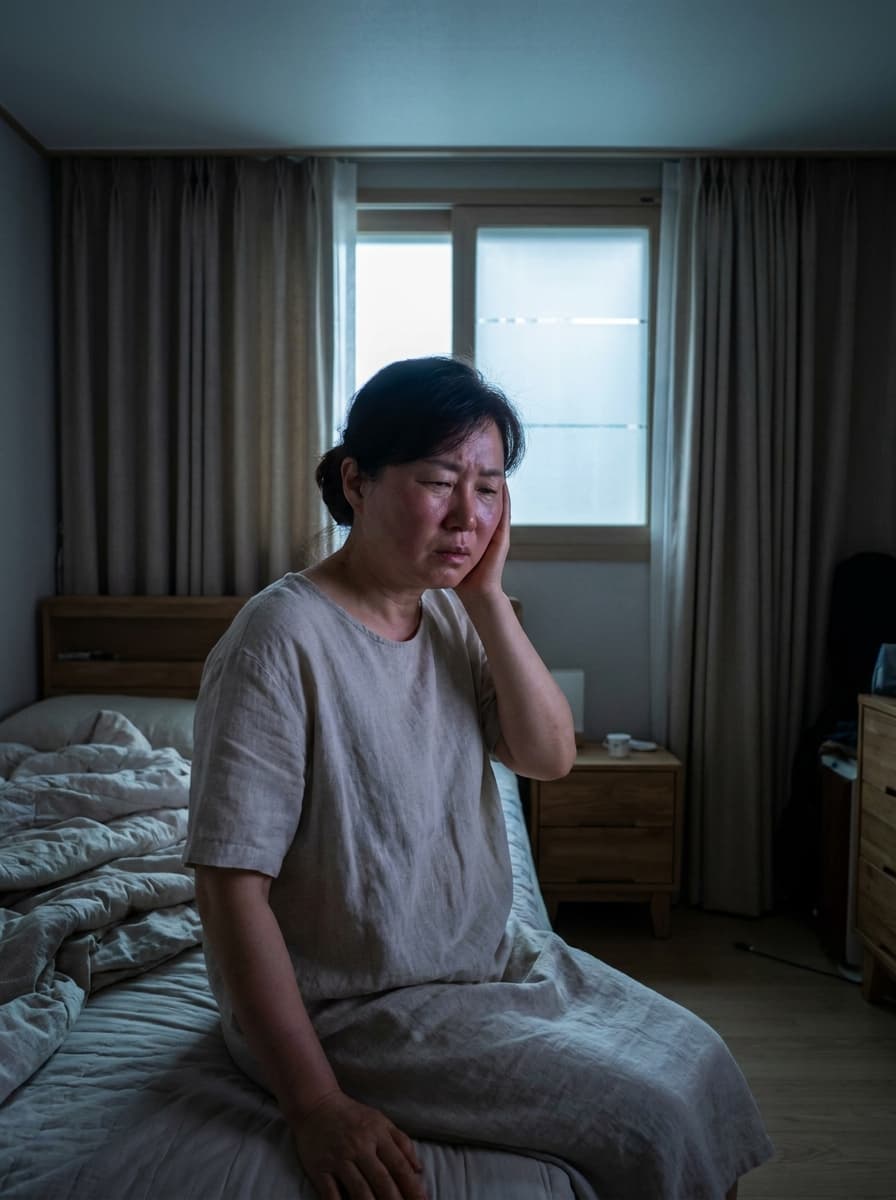
Sudden facial flushing, heat rising, and sweat pouring down. Is this happening to you? Especially at night, you can't sleep because of the heat, and during the day, you feel lethargic due to these symptoms. This facial heat is likely menopausal hot flashes, a common symptom for women in menopause. Dalimchae Clinic understands these signals and focuses on restoring balance.
💡 Key Answer Top 3 reasons for sudden facial heat in menopause: ① Autonomic imbalance due to hormone decrease / ② Vascular expansion from thermoregulatory dysfunction / ③ Internal heat due to 'Kidney Water Deficiency' in Korean medicine Dalimchae Clinic restores autonomic balance to cool down your body's overheated warning lights.
Why do menopausal hot flashes happen?
It's not just aging. It's a complex internal change, specifically autonomic nervous system confusion. As estrogen drops, the hypothalamus—your body's thermostat—malfunctions. It thinks you're hot when you're not, expanding blood vessels to release heat, leading to flushing in the face, neck, and chest.
In Korean medicine, this is explained as 'Yin Deficiency and Fire Activity' (陰虛火動). When the body's fluids and essence are lacking, 'Fire' rises upward. Like a pot with too little water boiling over, the lack of cooling fluids causes heat to surge to the upper body.
Is it just heat?
Hot flashes often come with night sweats, insomnia, palpitations, and mood swings. These symptoms create a vicious cycle: poor sleep worsens autonomic balance, which then intensifies the hot flashes.
How Dalimchae Clinic treats hot flashes
We focus on resolving the root cause: autonomic imbalance.
Research published in Menopause (2010) showed that acupuncture significantly reduced hot flash scores compared to control groups (p<0.0001) and improved general menopausal symptoms (p<0.001). Also, a 2022 meta-analysis in Complementary Therapies in Clinical Practice confirmed that Ginseng (Panax ginseng) significantly reduces hot flashes (p=0.04) and improves quality of life. Based on these findings, we use acupuncture and customized herbal medicine (including Ginseng) to stabilize nerve function and clear excess heat.
Does autonomic stabilization help?
Yes, it's the core of treatment. Autonomic nerves control heart rate, digestion, and temperature. When balance is broken, your body is like an overheated engine. Our 'Autonomic Stabilization' treatment cools the heat, replenishes fluids, and allows the brain to rest. This restores the natural circulation of 'Water up, Fire down' (水昇火降).
Menopausal Hot Flash Self-Checklist
Check if these apply to you:
- Sudden flushing in face, neck, or chest.
- Frequent sudden sweating.
- Difficulty sleeping due to heat.
- Frequent palpitations or chest tightness.
- Anxiety, irritability, or mood swings.
- Severe fatigue or lethargy.
- Frequent headaches or dizziness.
- Dry skin or loss of elasticity.
- Feeling hot regardless of ambient temperature.
- Symptoms started after menopause.
[Diagnosis]
- 3 or fewer: Mild autonomic imbalance.
- 4-6: Autonomic-type hot flashes. Consultation recommended.
- 7 or more: Moderate to severe imbalance. Systematic treatment required.
Q. How long do they last? A. Usually 4-5 years around menopause, but some experience them for 10+ years. Active management improves quality of life.
Q. Are there other causes? A. Yes: stress, hyperthyroidism, certain medications, or rosacea. Accurate diagnosis is key.
Q. Does herbal medicine help? A. Yes, it addresses 'Kidney Water Deficiency' and 'Yin Deficiency,' cooling the body and restoring autonomic balance.
Where life blooms. For herbal medicine, it's Dalimchae Clinic.
Medical Supervision | Oh Hyunmin, KMD, Dalimchae Clinic Songdo Branch (Menopause Column)