
Hello. This is Dalimchae Korean Medicine Clinic.
Sudden Heart Palpitations: Heart Issue or Panic Disorder? Catching Anxiety Signals
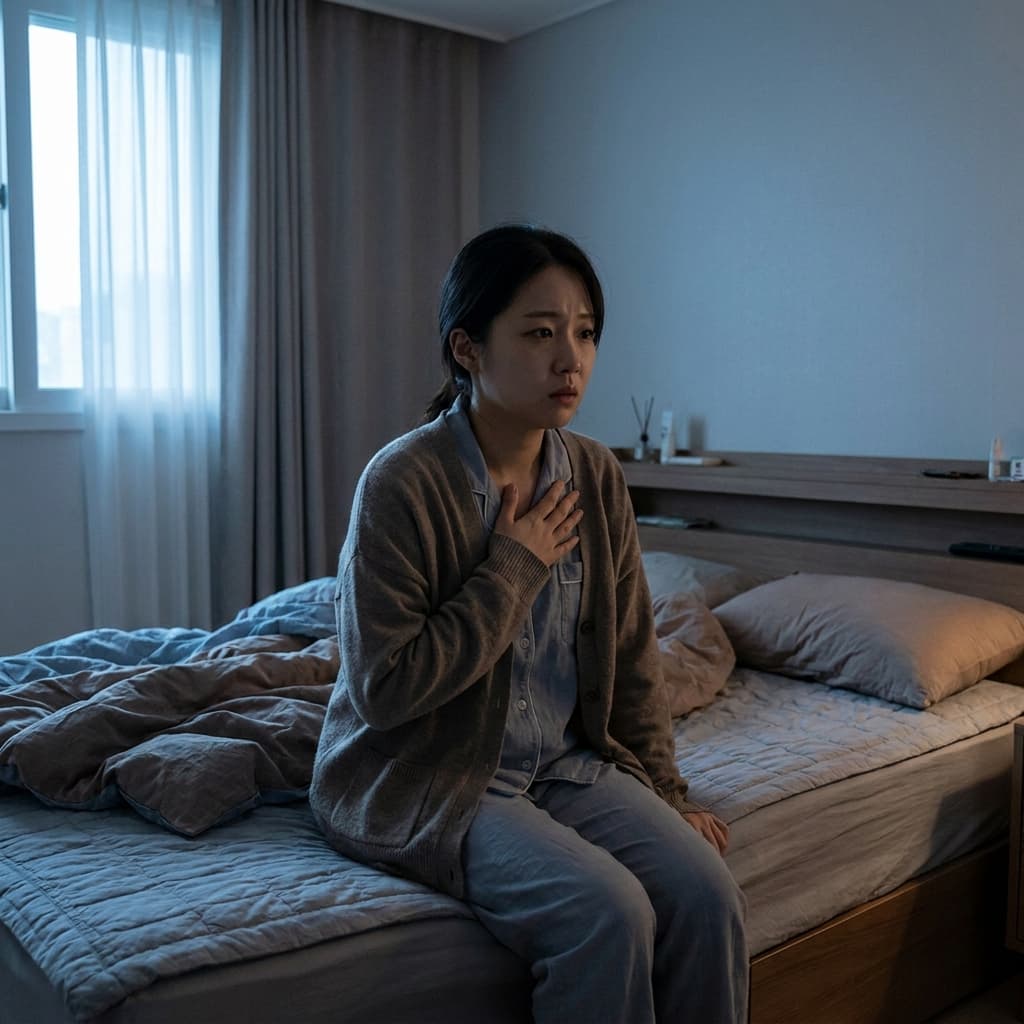
Have you ever experienced sudden heart palpitations along with difficulty breathing and a loss of strength throughout your body during your peaceful daily life? You might have rushed to the emergency room feeling as if your heart was about to burst out and gripped by a fear that you were about to die, only to be told that "there is nothing wrong with your heart." It is confusing when your body is sending abnormal signals, but the test results are normal. Such unexpected heart palpitations and extreme anxiety can be important warning signals from our body.
💡 Key Answer The 3 most common causes of sudden heart palpitations: ① Autonomic Imbalance / ② Stress and Overwork / ③ Anxiety Disorder (Panic Disorder) Dalimchae Clinic resolves the root cause of anxiety through autonomic stabilization treatment, restoring the balance between the brain and the body.
Why Do Sudden Heart Palpitations Occur?
Heart palpitations are a symptom where you feel your heart beating fast or irregularly, and they can occur for various reasons besides heart problems themselves. Especially when there is no specific abnormality in heart tests, imbalance of the autonomic nervous system is pointed out as a key cause. Our body's autonomic nervous system automatically regulates essential life-sustaining functions such as heart rate, breathing, and digestion, but this balance is broken when exposed to stress, overwork, or chronic anxiety.
When the sympathetic nervous system is excessively hyperactivated, the heart rate increases and blood pressure rises, making the body react hypersensitively as if in a dangerous situation. If this state persists, you can easily be startled by minor stimuli, experience chest tightness, difficulty breathing, and even extreme fear.
Why Do I Keep Having Palpitations Even Though Heart Tests Are Normal?
Many people visit cardiologists for heart palpitations, only to be diagnosed as normal. This is highly likely due to a malfunction of the autonomic nervous system, rather than a problem with the heart's structure or function. The autonomic nervous system is like our body's "automatic control system," and when stress or fatigue accumulates, this system overheats or malfunctions, continuously turning on unnecessary warning lights.
This autonomic imbalance is not just a psychological problem. it is accompanied by physiological changes such as overactivation of specific parts of the brain, including the brainstem, and imbalance of neurotransmitters. Therefore, no matter how much you try to soothe yourself by saying "it's okay," the symptoms often don't improve and can easily lead to greater anxiety. Dalimchae Clinic in Incheon focuses on identifying and regulating these subtle changes in the autonomic nervous system.
How Are Panic Disorder and Simple Anxiety Symptoms Different?
Panic disorder is characterized by extreme fear and panic attacks that occur unexpectedly. It is accompanied by various physical symptoms such as heart palpitations, shortness of breath, dizziness, cold sweats, and a feeling of impending death. It can be diagnosed when these attacks occur repeatedly and anticipatory anxiety, the fear of another attack, becomes severe. Simple anxiety symptoms appear as a reaction to a specific situation or worry, but panic disorder can strike suddenly without any particular trigger and seriously interfere with daily life.
According to a 2025 study published in PMC, "Traditional Chinese Medicine in the Management of Anxiety Disorders," Korean medicine classifies anxiety-related symptoms as 'depression,' 'heart palpitations,' and 'insomnia.' This study reported that in patients with anxiety disorders, a group that combined acupuncture and Korean medicine treatment showed greater benefits in alleviating anxiety symptoms and improving quality of life compared to a Western medicine monotherapy group, with fewer side effects. This suggests that a Korean medicine approach can be an effective alternative for improving panic disorder symptoms such as anxiety and heart palpitations.
How Are Heart Palpitations and Anxiety Treated in Korean Medicine?
Dalimchae Clinic in Incheon focuses on restoring the balance of the autonomic nervous system, which is the root cause of the symptoms, beyond simply suppressing sudden heart palpitations, anxiety, and panic disorder symptoms. Since our body's autonomic nervous system is closely connected to the brain, if the brain is excessively excited or exhausted, the regulatory function of the autonomic nervous system also decreases. Korean medicine explains this as 'abnormal heart function' or 'liver Qi stagnation' and provides treatment that lowers the heat of the brain and nervous system and provides rest to the exhausted mind and body.
A study published in the journal Psychiatry Clin Neurosci. in 2002 reported that four patients with panic disorder (with agoraphobia) were successfully treated with Kampo (Japanese herbal) medicines such as Kami-shoyo-san and Hange-koboku-to, resulting in the alleviation of panic attacks, anticipatory anxiety, and agoraphobia. The researchers concluded that these Kampo medicines could be useful as an adjuvant or alternative treatment for panic disorder.
These research results are consistent with Dalimchae Clinic's philosophy of autonomic stabilization treatment. Dalimchae Clinic prescribes herbal medicine tailored to each patient's constitution and symptoms to calm the excessive excitation of the nervous system and create an environment where the brain can rest comfortably. The goal is to correct the autonomic nervous system, which has become unstable like an overheated engine due to stress, and to improve heart rate variability and stabilize overall body functions such as blood pressure and body temperature. In addition, acupuncture and moxibustion are combined to help the circulation of Qi and blood and relax the body's tension, thereby improving associated symptoms such as chronic headaches, dizziness, and insomnia. Those looking for a panic disorder clinic in Songdo can also experience this integrated treatment at Dalimchae Clinic.
Could I Have Panic Disorder? Autonomic Instability Self-Diagnosis Checklist
If you fall into 3 or more of the following symptoms, it is recommended to suspect anxiety and panic disorder due to autonomic imbalance and receive professional diagnosis.
- I feel sudden chest tightness and difficulty breathing or a feeling of being blocked.
- My heart beats severely and I sweat a lot.
- I feel my hands and feet trembling or a loss of strength in my body.
- I feel dizzy or lightheaded and feel like I'm going to collapse.
- I feel sudden heat or chills in my body.
- I feel nauseous, queasy, or have abdominal discomfort.
- I am seized by an extreme fear that I am about to die or go crazy.
- I feel anxious and restless for no reason and am often tense.
- The quality of sleep is poor, and it is difficult to fall asleep or I wake up frequently.
- I am always anxious that these symptoms might appear again at any time.
If 3 or more apply: Anxiety symptoms due to autonomic imbalance suspected → Review complex Korean medicine treatment If 5 or more apply: High possibility of panic disorder → Immediate visit and professional diagnosis and treatment recommended
FAQ
Q. How long do heart palpitations last? A. The duration of heart palpitations varies depending on the cause. Palpitations due to temporary stress or caffeine intake last relatively short, but heart palpitations due to autonomic imbalance or panic disorder can last from several minutes to tens of minutes and tend to recur.
Q. Can panic disorder be treated with Korean medicine? A. Yes, panic disorder is a condition that can be effectively improved through Korean medicine treatment. Dalimchae Clinic in Incheon focuses on restoring the balance of the autonomic nervous system and mental stability rather than symptom suppression, helping for fundamental healing and prevention of recurrence.
Q. I have dizziness along with heart palpitations; can they be treated together? A. Yes, both heart palpitations and dizziness are symptoms closely related to autonomic imbalance. Dalimchae Clinic integrally diagnoses and treats these associated symptoms, helping patients experience overall health recovery.
Q. Does it get worse if I am under a lot of stress normally? A. Yes, stress greatly affects the autonomic nervous system and is a major factor that worsens heart palpitations and panic disorder symptoms. Chronic stress and overwork break the balance of the autonomic nervous system, making the body hypersensitive and easily anxious even with minor stimuli.
Sudden heart palpitations are not a problem that can be solved by just enduring. You no longer have to ignore the signals your body has been sending for a long time. If you approach in the right direction, your body will respond faster than you think. Bring your symptoms as they are. At Dalimchae Clinic, we will find the cause together.
Where life blooms. For herbal medicine, it's Dalimchae Korean Medicine Clinic. Check your symptoms similar to mine through the AI consultation on the Dalimchae Clinic website first!
This article is health information compiled by Dalimchae medical staff based on questions frequently received in the treatment room. Medical Supervision | Brain/Autonomic Nervous System Treatment Standards Dalimchae Clinic Incheon Branch Korean Medicine Doctor Yang Yuchan (Panic Disorder Column)