
Hello, this is Dalimchae Korean Medicine Clinic.
Sudden Heart Palpitations and Shortness of Breath: Simple Anxiety or Panic Disorder? An Oriental Medicine Answer
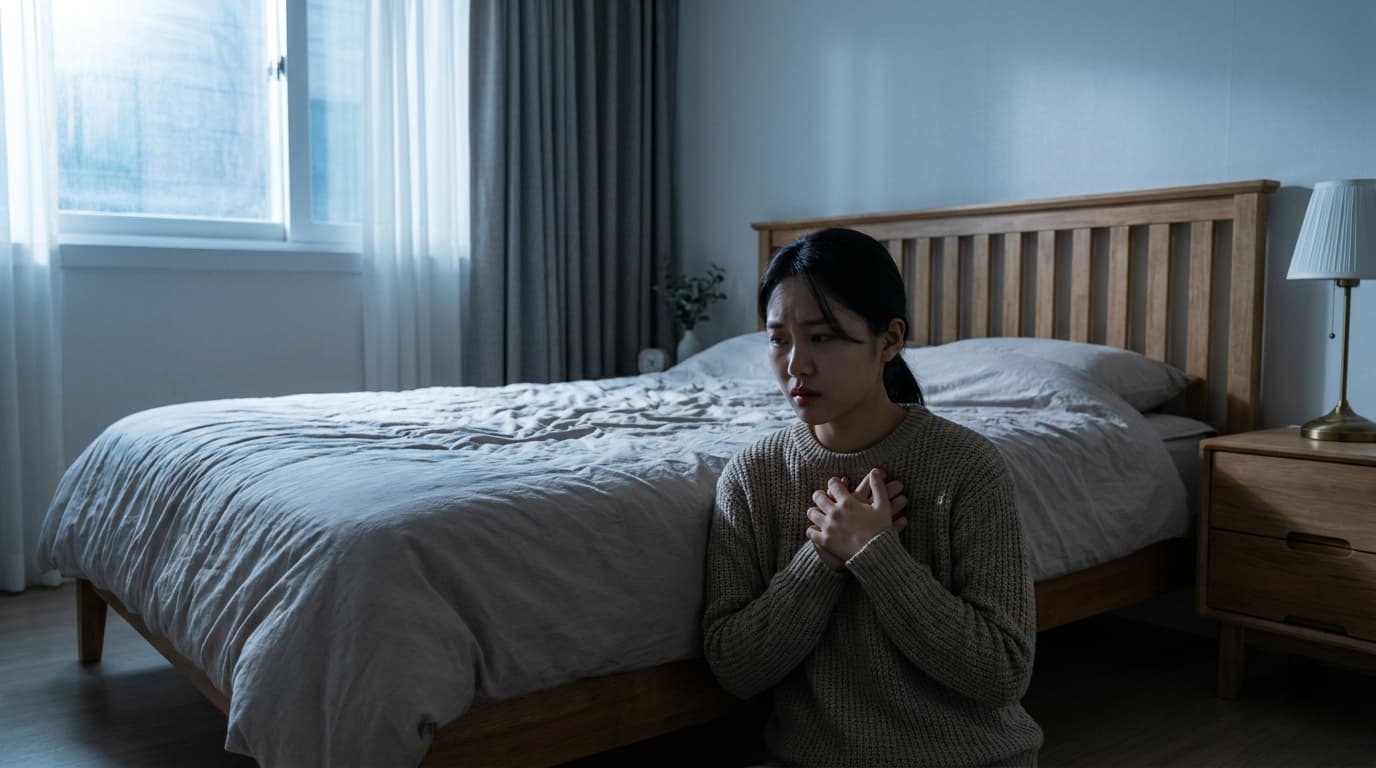
Have you ever experienced your heart beating wildly, your breath catching in your throat, and your whole body losing strength? Overwhelmed by a terror that felt like dying, you might have visited the emergency room, only to be told your test results were 'normal', leaving you even more frustrated. Many people wonder whether such symptoms are simple anxiety or other issues like panic disorder. In particular, physical symptoms such as "sudden heart palpitations and shortness of breath" are classic signs of panic disorder and are easily mistaken for heart disease. However, behind these symptoms often lies an imbalance in the autonomic nervous system, our body's vital regulatory system.
💡 [Core Answer] Top 3 most common causes of "sudden heart palpitations and shortness of breath": ① Autonomic nervous system imbalance / ② Chronic stress and excessive tension / ③ Brain neurotransmitter malfunction. Dalimchae Korean Medicine Clinic helps turn off the body's overheated warning lights through autonomic stabilization and helps the body regain balance on its own.
Panic Disorder vs. Simple Anxiety: How Are They Different?
Routine anxiety is a natural response to a specific threat or stress situation. For example, feeling nervous before an important presentation or worrying about failing an exam are emotions anyone can experience. However, panic disorder differs in pattern from this general anxiety. The core of panic disorder is that extreme anxiety symptoms called 'panic attacks' strike unexpectedly and suddenly.
Panic attacks usually peak within 10 minutes and are accompanied by 4 or more of the following physical and cognitive symptoms:
- Feelings of pounding or racing heart
- Sweating and body tremors
- Shortness of breath or smothering feeling
- Feeling of choking
- Chest pain or discomfort
- Nausea or abdominal distress
- Feeling dizzy, unsteady, light-headed, or faint
- Chills or heat sensations
- Paresthesias (numbness or tingling sensations)
- Derealization (feelings of unreality) or depersonalization (being detached from oneself)
- Fear of losing control or 'going crazy'
- Fear of dying
If these panic attacks occur repeatedly, accompanied by persistent worry about additional attacks and avoidance of certain places or situations, panic disorder can be suspected. While simple anxiety is triggered by specific factors and is relatively controllable, panic disorder causes severe disruption to daily life due to the unpredictability of attacks and overwhelming terror.
The Vicious Cycle of Anxiety: How the Autonomic Nervous System Destroys the Body
To understand the essence of panic disorder, understanding the 'autonomic nervous system' is essential. The autonomic nervous system is a system that automatically regulates life-sustaining functions such as heartbeat, breathing, digestion, and body temperature without conscious effort. It consists of two main axes: the 'sympathetic nervous system' and the 'parasympathetic nervous system', which act antagonistically. The sympathetic nervous system prepares the body for a 'fight-or-flight' state in dangerous situations to mobilize energy, while the parasympathetic nervous system relaxes the body and shifts it into a 'rest-and-repair' state to store energy.
The problem is that chronic stress and modern irregular lifestyles disrupt the balance of this autonomic nervous system. In particular, when the sympathetic nervous system is excessively hyperactive, the body remains in a constant state of tension, which can trigger physical symptoms similar to panic attacks—such as heart palpitations, shortness of breath, and indigestion—even in the absence of actual danger. When this 'overheated engine' state persists, it also affects brain neurotransmitters, causing difficulties in emotional regulation such as anxiety and depression.
This is why many people visit cardiology departments with stuffy chests and difficulty breathing, only to hear 'normal' test results. It is often because the body's warning lights are clearly turned on, but the functional abnormalities of the autonomic nervous system are difficult to detect through Western medical tests. At Dalimchae Korean Medicine Clinic, we thoroughly diagnose these imbalances in the autonomic nervous system from an oriental medicine perspective and help the body restore its own balance by finding and treating the root cause.
Panic Disorder: Clinical Evidence of Oriental Medicine Treatment
Oriental medicine does not view anxiety disorders like panic disorder merely as psychological problems, but focuses on the amazing connection between body and mind, especially the restoration of autonomic nervous system balance. Recent clinical studies are gradually shedding light on the effectiveness of oriental medicine treatments.
A 2022 multicenter, prospective, double-blind, double-dummy randomized controlled trial published by Li et al. in Evidence-Based Complementary and Alternative Medicine evaluated the efficacy of the herbal formula Jie Yu Wan (JYW) in 133 patients with Generalized Anxiety Disorder (GAD). The results showed that the JYW-treated group effectively alleviated anxiety symptoms in GAD patients compared to the buspirone-treated group. In particular, high-dose JYW (24g/day) significantly decreased Hamilton Anxiety Scale (HAMA) scores compared to low-dose JYW (12g/day) (P=0.04), and both treatments were concluded to be effective and safe for patients with mild to moderate GAD. This suggests that herbal medicine treatment is effective in improving anxiety disorder symptoms and that specific herbal formulas contribute to neurological and psychological stabilization.
Additionally, a 2025 study published in Frontiers in Human Neuroscience investigated the effects of acupuncture on physical stress modulation through autonomic nervous system activity in 35 healthy adult volunteers using Heart Rate Variability (HRV). According to the study, acupuncture stimulation at the ST36 (Zusanli) acupoint significantly increased HRV indices such as high-frequency power (HF) and the root mean square of successive differences (RMSSD), thereby enhancing parasympathetic nerve activity. Acupuncture stimulation at the CV12 (Zhongwan) acupoint also showed similar improvements in HRV indices along with a decreased heart rate (HR). The researchers concluded that these findings provide important evidence that acupuncture has positive anti-stress effects through autonomic regulation, which can serve as a crucial basis for treating autonomic imbalance disorders such as panic disorder.
These research data support the scientific foundation of the autonomic stabilization treatment pursued by Dalimchae Korean Medicine Clinic. Rather than simply suppressing symptoms, the oriental medicine approach of restoring the body's fundamental balance and breaking the cycle of anxiety can greatly help patients regain a healthier and more stable life.
Panic Disorder: You Are Not Alone. Dalimchae's Oriental Medicine Approach
Panic disorder is never a condition you have to handle alone. At the Songdo branch of Dalimchae Korean Medicine Clinic, we help those struggling with panic disorder find peace in body and mind again through the core treatment principle of 'autonomic stabilization'.
When autonomic balance is disrupted, the brain cannot rest. The brain continuously sends excessive warning signals, resulting in panic attacks with pounding hearts and shortness of breath. Dalimchae's autonomic stabilization treatment calms the hyperactivity of the sympathetic nervous system and activates the impaired parasympathetic nervous system function, creating an environment where the brain can rest comfortably. Just like flipping a circuit breaker switch, this turns off the anxiety warning lights sent by the brain and helps the body regain the power to regulate its own balance. Such oriental medicine treatments are effective not only for panic disorder but also for improving various symptoms of the brain and autonomic nervous system such as headaches, dizziness, insomnia, and chronic fatigue. For those looking for a Songdo panic disorder clinic, Dalimchae Korean Medicine Clinic focuses on solving the root of anxiety through fundamental autonomic treatment and preventing recurrence.
Panic Disorder Self-Diagnosis Checklist
Check how many of the following items apply to you:
- Unexpected and intense fear or discomfort suddenly surges.
- Heart beats too fast or palpitations are felt during an attack.
- Sudden difficulty breathing or smothering sensation.
- Chest pain or tightness is felt.
- Feeling dizzy, light-headed, or faint.
- Sensory abnormalities such as tingling or numbness in limbs or shaking.
- Fear of losing control or going crazy.
- Fear of another attack leading to avoidance of certain places or situations (crowded places, public transportation, etc.).
- Difficulty in daily life (work, study, social activities) due to attack symptoms.
Criteria:
- 3 or fewer apply: May be a reaction to routine anxiety or temporary stress. Can improve with lifestyle improvements and stress management.
- 4 or more apply: High possibility of panic disorder due to autonomic nervous system imbalance. Consider oriental combination treatment with experts like Dalimchae Korean Medicine Clinic Songdo branch.
- 7 or more apply: Immediate professional diagnosis and treatment are needed. Before panic attacks worsen, visit Dalimchae Korean Medicine Clinic for an accurate diagnosis and customized treatment plan.
FAQ: Frequently Asked Questions About Panic Disorder
Q. How long does panic disorder treatment take? A. The duration of panic disorder treatment varies depending on the patient's symptom severity, duration of illness, and personal recovery capacity. Usually, symptoms improve after several weeks to months of intensive treatment, and steady management is required to prevent recurrence. Dalimchae Songdo branch helps effective recovery by establishing personalized treatment plans.
Q. I am taking psychiatric medication. Is it okay to combine it with oriental medicine treatment? A. Yes, combining psychiatric medication and oriental medicine treatment is possible and can actually create synergy. Oriental medicine treatment can help reduce medication side effects and assist in dosage reduction while restoring the body's fundamental balance, contributing to lower recurrence rates. Be sure to inform your medical staff about your current medications and consult with a professional oriental doctor before establishing a treatment plan.
Q. Can panic attacks resolve naturally? A. Some mild anxiety symptoms may naturally improve when stress factors disappear. However, if left untreated, panic disorder can become chronic or lead to other problems such as depression or agoraphobia. Starting active treatment early is important.
Q. I have both autonomic imbalance and panic disorder. Can they be treated together? A. Yes, autonomic imbalance and panic disorder are closely related, so treating them together is effective. This is because the physical symptoms of panic disorder often stem from autonomic imbalance. Dalimchae Korean Medicine Clinic provides integrated treatment that simultaneously improves the root causes of both conditions through autonomic stabilization.
Sudden heart palpitations and suffocating anxiety are not problems solved by endurance. You no longer need to ignore the signals your body has been sending for a long time. Approaching in the right direction, the body responds faster than you think. Bring the symptoms you are experiencing right now as they are. Dalimchae Korean Medicine Clinic will find the cause together with you.
A place where life blossoms. Herbal medicine is, after all, Dalimchae Korean Medicine Clinic. Check symptoms similar to yours first through Dalimchae Korean Medicine Clinic's website AI consultation!
This article is health information compiled by Dalimchae medical staff based on questions frequently received in the consulting room. Medical Supervision | Brain & Autonomic Nervous System Treatment Standards, Dr. Oh Hyunmin, Songdo Branch, Dalimchae Korean Medicine Clinic (Panic Disorder Column)
#PanicDisorder #PanicAttack #AnxietyDisorder #AutonomicNervousSystem #AutonomicAtaxia #SongdoPanicDisorderClinic #SongdoOrientalClinic #OrientalTreatment