
Hello. This is Dalimchae Korean Medicine Clinic.
Sudden Breathlessness on the Subway: Your Body's Warning Light, Panic Disorder Symptoms and Korean Medicine Solutions
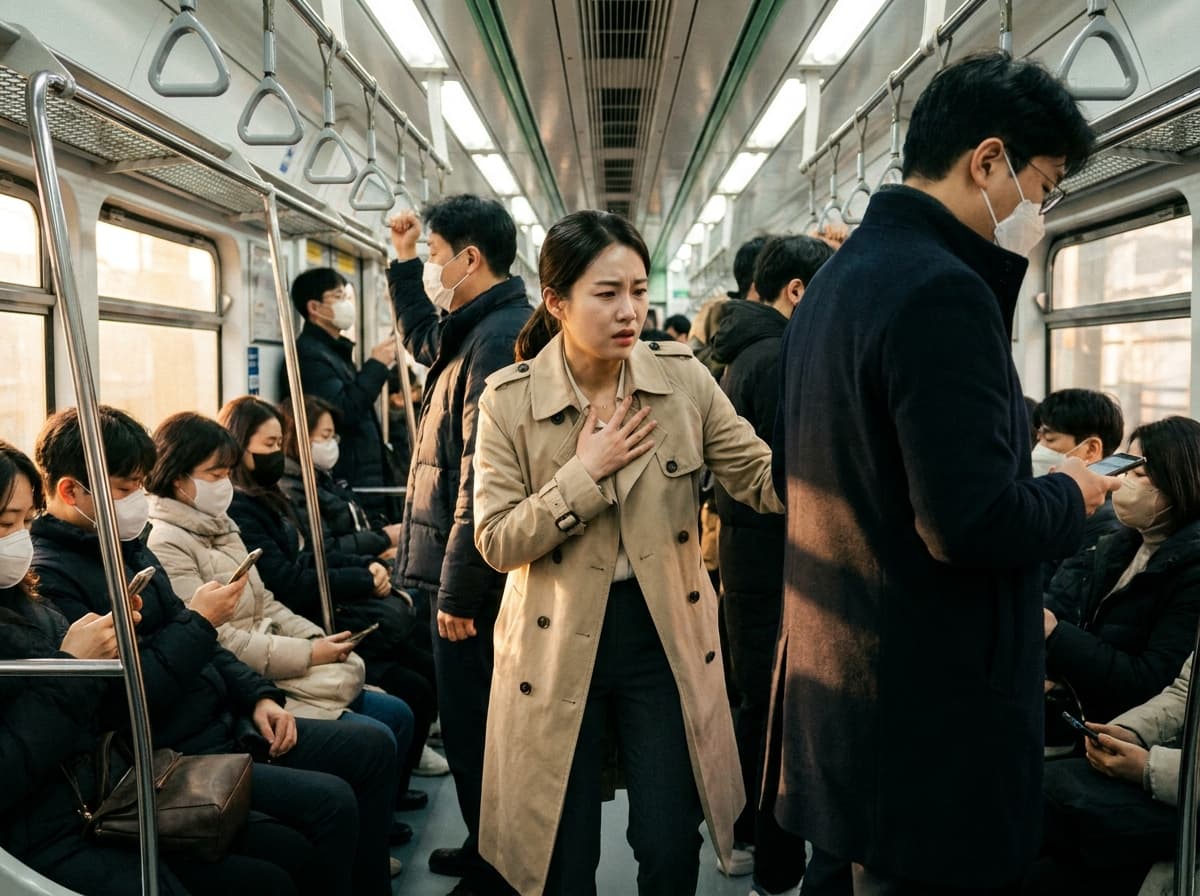
Have you ever experienced your heart pounding and feeling like you can't breathe, with an overwhelming fear of "Am I going to die?" while on a crowded subway, in a waiting room before an important presentation, or in an unfamiliar place? In these moments, your body reacts as if to a real threat, but there's no actual danger—this is the irony of a panic attack. Repeated anxiety and fear in specific situations, like "suddenly I can't breathe just by getting on the subway," can severely restrict your daily life and lower your quality of life.
💡 [Key Answer] 3 most common causes of panic attacks like "I can't breathe on the subway": ① Overly sensitive brain alarm system (overactive amygdala and neurotransmitter imbalance) / ② Extreme stress and traumatic experiences (psychological factors) / ③ Disturbance in autonomic nervous system function (physical factors) Dalimchae Korean Medicine Clinic calms the brain's oversensitive alarm system and restores the balance of body and mind through autonomic stabilizing treatment.
Why do these symptoms occur when I just get on the subway?
A panic attack, where you suddenly feel suffocated, your heart races, and you feel a terrifying fear of death, is a "false alarm" sent by the brain. Our brain has an area called the "amygdala" that detects fear and threats. In panic disorder patients, this amygdala is overactivated and reacts to minor stimuli as if they were real danger situations. At this time, imbalances in neurotransmitters like serotonin, norepinephrine, and GABA occur, leading to sudden physical symptoms by stimulating the sympathetic nervous system throughout the body.
In addition to these biological factors, various environmental and psychological factors such as extreme stress, traumatic experiences, chronic fatigue, sleep deprivation, and excessive caffeine or alcohol consumption contribute to the development of panic disorder. In particular, "anticipatory anxiety," where one fears the place or situation where they previously experienced a panic attack, leads to avoidance behavior, which can develop into "agoraphobia" and make daily life even more difficult.
Is panic disorder just a "sickness of the heart"?
Panic disorder is not simply a disease that occurs because "the heart is weak." If stress persists or the balance of the autonomic nervous system is disrupted, our body's "alarm system" overheats and responds sensitively to small stimuli. The autonomic nervous system is a crucial nervous system that regulates all functions of our body, playing an essential role in maintaining life, such as heart rate, breathing, digestion, and body temperature regulation. It consists of the sympathetic and parasympathetic nervous systems and should be balanced, but if the sympathetic nervous system becomes overly active due to excessive stress or specific factors, symptoms like panic attacks can appear.
This autonomic imbalance also affects brain function, causing anticipatory anxiety, decreased concentration, and sleep disorders, which in turn leads to a vicious cycle that further destabilizes the autonomic nervous system. Therefore, panic disorder treatment must go beyond just suppressing anxiety and take a fundamental approach to restoring the balance of the autonomic nervous system and calming the brain's overreaction.
How does Korean medicine diagnose and treat panic disorder?
In Korean medicine, symptoms similar to panic disorder are explained as "Gyeonggye (驚悸)," "Jeongchung (怔忡)," and "Simdamheogeop (心膽虛怯)." This is seen as a result of weakened functions of the heart (心) and gallbladder (膽) or obstacles in the circulation of Qi and Blood due to stress. Dalimchae Clinic focuses on restoring the balance of the autonomic nervous system and stabilizing the brain's oversensitive alarm system.
According to a study analyzing trends in clinical research on panic disorder in traditional Chinese medicine published in the Journal of Oriental Neuropsychiatry in 2015, herbal treatment significantly reduced anxiety symptoms (HAMA scores). In particular, the treatment group that combined Western and herbal medicine showed statistically significantly better therapeutic effects than the Western medicine monotherapy group. This suggests that Korean medicine treatment is effective in improving panic disorder symptoms and can create a synergistic effect when combined with Western treatment.
Furthermore, a 2024 study published in MDPI titled "Mental Health Outcomes and Cost Estimation According to Korean Medicine Treatment for Patients with Anxiety Disorders" followed 67 patients with anxiety disorders who underwent Korean medicine treatment (acupuncture, psychotherapy, Chuna therapy, aromatherapy, herbal medicine, etc.) for more than 4 weeks. The results showed that anxiety levels (BAI, STAI X-1, STAI X-2) decreased by 22.5%, 14.6%, and 9.6%, respectively, showing a statistically significant improvement (p < 0.0001) after 4 weeks of treatment. This study demonstrates that Korean medicine treatment contributes to reducing not only anxiety but also depression and anger, and can improve quality of life. These research results are important evidence for Dalimchae Clinic's treatment of panic disorder through autonomic stabilization and recovery of overall body balance.
Dalimchae Clinic approaches this with "autonomic stabilization" as the core treatment principle. When the balance of the autonomic nervous system is disrupted, the brain cannot rest and maintains a constant state of tension. This state is like a broken warning light, sending excessive emergency signals to the body even when there is no actual danger, triggering panic attacks. Dalimchae Clinic creates an environment where the brain can rest by cooling the heat in the nervous system, protects weakened organs, and facilitates the circulation of Qi and Blood to help the autonomic nervous system regain its self-regulation ability. In Korean medicine, this is called "Suseunghwagang (水昇火降)," which emphasizes balancing the whole body by raising the cool energy of the body and lowering the hot energy.
Do I also fall into this? Check yourself.
Check your condition through the following checklist.
Panic Disorder Symptom Self-Checklist
- Your heart suddenly beats wildly or thumps.
- You feel short of breath or like you're choking.
- You sweat excessively and your body trembles.
- You feel pain or discomfort in your chest.
- You feel nauseous or your stomach is uncomfortable and you feel like vomiting.
- You feel dizzy, lightheaded, and like you're going to faint.
- You have sensory abnormalities like numbness or tingling in your hands and feet.
- You feel a sense of unreality or like you're not yourself.
- You feel a fear of losing control or going crazy.
- An extreme fear of dying washes over you.
Judgment Criteria: If 4 or more of the above symptoms occur suddenly and reach their peak within 10 minutes, and there is persistent worry about these experiences or behavioral changes because of them, panic disorder can be suspected. If 5 or more apply, immediate professional consultation is recommended.
What kind of treatment does Dalimchae Clinic Songdo provide?
At Dalimchae Clinic Songdo, we provide complex Korean medicine treatment tailored to individual constitutions and symptoms to address the root causes of panic disorder.
- Customized Herbal Prescription: We prescribe herbal medicine that helps calm the brain's overreaction and restore autonomic balance. It contributes to reducing anxiety, stabilizing the mind and body, and reducing the frequency and intensity of panic attacks by regulating the balance of brain neurotransmitters. This is also effective in improving accompanied symptoms such as insomnia, headache, and dizziness.
- Acupuncture and Moxibustion Treatment: We perform acupuncture treatment on acupuncture points effective for autonomic regulation to relax the excited sympathetic nervous system and activate the parasympathetic nervous system. Moxibustion treatment helps the circulation of Qi and Blood in the body and has the effect of stabilizing the mind and body.
- Korean Medicine Psychotherapy: Panic disorder is a disease that appears as the body and mind are closely connected. By combining counseling and meditation therapy for psychological stability and stress management, we help patients control anxiety themselves and develop resilience.
Dalimchae Clinic does not just suppress symptoms, but focuses on the body regaining its own regulation ability and preventing recurrence. Many people looking for a clinic in Songdo are regaining their daily lives through this customized treatment.
Q. I have frequent panic attacks, is it okay to go to the emergency room? A. When a panic attack is severe, you may feel great fear due to symptoms similar to a heart attack, so it is important to get an accurate examination at a medical institution to check for other physical diseases. If the test results show no particular abnormalities, panic disorder diagnosis and treatment can be considered.
Q. I'm worried that panic disorder will recur if I stop taking medicine. A. Panic disorder is known as a disease with a high probability of recurrence if treatment is stopped. Korean medicine treatment can help reduce drug dependency and the risk of recurrence by restoring the balance of the autonomic nervous system and increasing the body's natural healing power.
Q. How long does the treatment period for panic disorder take? A. The treatment period for panic disorder can vary depending on the severity of the individual's symptoms, the duration of the disease, the presence of accompanying diseases, and the response to treatment. Generally, 3 to 6 months or more of steady treatment is required, and long-term management is important.
Q. Can other anxiety disorders be treated together? A. Yes, panic disorder often appears accompanied by other anxiety disorders such as generalized anxiety disorder, social phobia, and obsessive-compulsive disorder. Dalimchae's autonomic stabilization treatment manages the overall nervous system imbalance that causes anxiety, so it can also have a positive effect on these accompanying anxiety symptoms.
Panic disorder is not a problem that is solved by enduring it. You no longer have to ignore the signals your body has been sending for a long time. If you approach it in the right direction, your body responds faster than you think. Bring the symptoms you are experiencing now as they are. Dalimchae Clinic will find the cause together with you.
Where life blooms. Herbal medicine is, after all, Dalimchae. Check your symptoms first with Dalimchae Clinic's website AI consultation!
Medical Review | Dalimchae Clinic Songdo, KMD Oh Hyun-min (Panic Disorder Column)
#PanicDisorder #PanicAttack #AutonomicNervousSystem #AnxietyDisorder #SongdoPanicDisorderClinic #SongdoAutonomicNervousSystemClinic #Suffocation #KoreanMedicineTreatment