
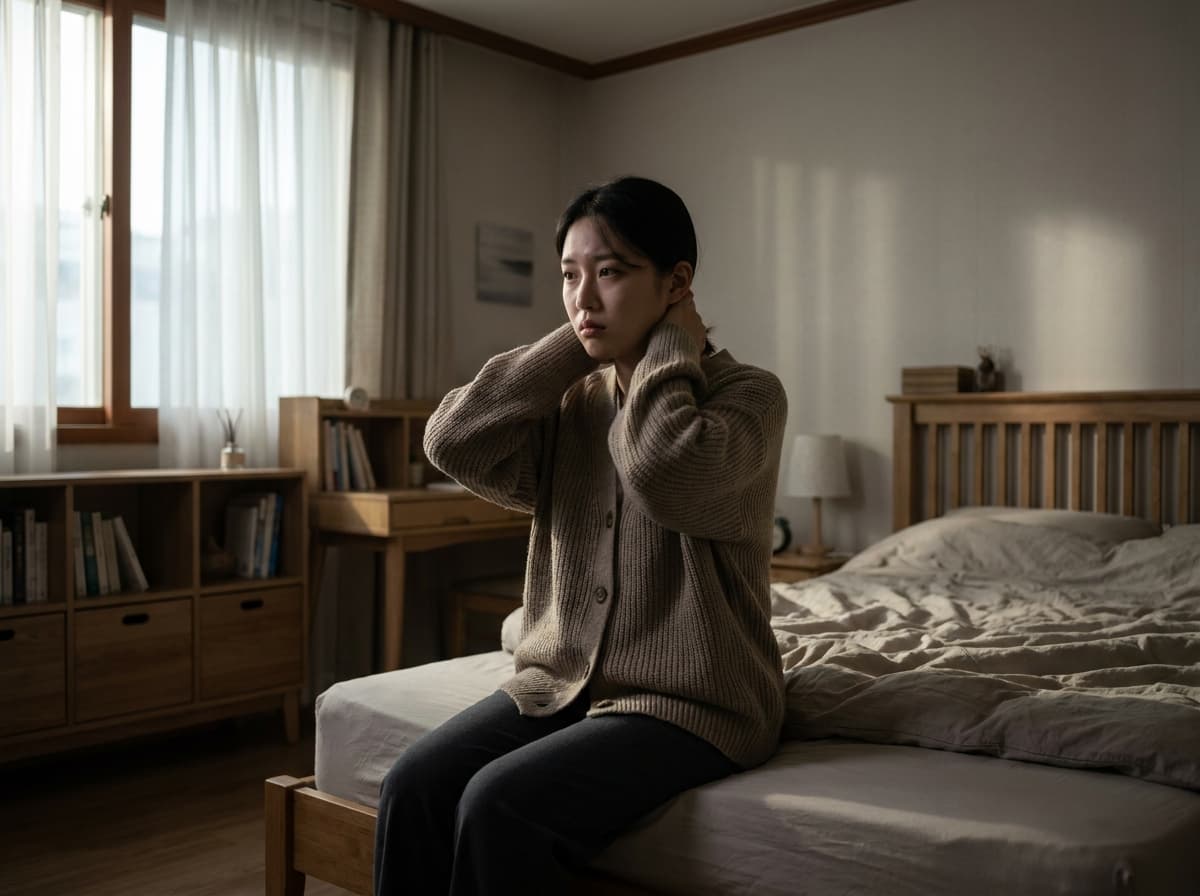
Suddenly, if the back of your head feels tight and has a stinging pain, you may feel a great deal of anxiety. When the pain repeats as if you're being poked by electricity or stabbed with a knife, you might worry if there's a problem with your brain. What is the real reason for this stinging pain in the back of the head? In most cases, it could be a signal resulting from a combination of autonomic nervous system imbalance due to stress or overwork, and nerve compression around the cervical spine.
💡 [Key Answer] The three most common causes of stinging pain in the back of the head: ① Autonomic imbalance due to excessive stress / ② Tension in the muscles around the cervical spine and occipital nerve compression / ③ Chronic fatigue of the neck and shoulders due to poor posture. Dalimchae Oriental Medicine Clinic resolves the root cause of the pain through autonomic stabilization treatment and prevents recurrence.
Can back-of-the-head pain be dismissed as just 'nervous'?
The term "nervous" sometimes becomes an ambiguous expression that fails to properly explain the cause of a disease. If you simply blame the stinging pain in the back of your head on stress, you might miss the treatment period or lead to chronic pain. Especially in the case of occipital neuralgia or cervicogenic headaches, complex problems of the nervous and musculoskeletal systems are the cause, and regulatory abnormalities of the autonomic nervous system often worsen the intensity and frequency of the pain.
What is the relationship between chronic headache and autonomic imbalance?
Our body's autonomic nervous system autonomously regulates essential functions for life maintenance such as heart rate, digestion, and temperature regulation. The sympathetic and parasympathetic nerves must work in balance, but modern people's chronic stress, lack of sleep, and overwork break this balance. When the autonomic balance is broken, the brain cannot rest and responds sensitively even to small stimuli, lowering the pain threshold and making pain feel stronger.
Research published in the "Journal of Meridian & Acupoint" in 2023 confirmed that applying autonomic balance Korean medicine treatment to 60 chronic headache patients for 8 weeks resulted in a significant decrease in headache intensity and frequency. In particular, the autonomic balance index (LF/HF ratio) measured through Heart Rate Variability (HRV) testing improved from an average of 3.5 before treatment to 1.8 after treatment (p<0.01).
How does Dalimchae's autonomic stabilization treatment work?
Dalimchae understands that the stinging pain in the back of the head is not just a problem of pain itself, but a warning signal sent by our body's internal system. We focus on the imbalance of the brain and autonomic nervous system as the core cause.
When the autonomic balance is broken, the brain cannot rest. Like an overheated engine, the sympathetic nervous system is hyperactivated, leading to continuous tension, blood circulation disorders, and inflammatory responses that worsen headaches. At Dalimchae Songdo, we focus on correcting this autonomic imbalance to create an environment where the brain can maintain a peaceful state and recover on its own.
Autonomic Imbalance Headache Checklist
If 3 or more items apply, autonomic imbalance headache is suspected:
- Neck and shoulders are always stiff.
- Stinging or tightening pain when stressed.
- Difficulty falling asleep or waking up frequently.
- Indigestion and feeling bloated.
- Heart palpitations or chest tightness.
- Anxious or sensitive even to trivial matters.
- Cold or numb hands and feet.
- Frequently dizzy or blurred vision.
- Chronic fatigue.
[Judgment Criteria]
- 3+ items: Suspected autonomic imbalance headache → Consult at Dalimchae Songdo.
- 5+ items: Immediate autonomic treatment recommended → Active improvement through professional treatment needed.
The stinging pain in the back of the head is not a problem that can be solved by enduring it. Do not ignore the signals your body has been sending for a long time. Dalimchae will find the cause together with you.