
Hello. This is Dalimchae Korean Medicine Clinic.
Still getting hives? It's time to recognize your body's signals before they become chronic.
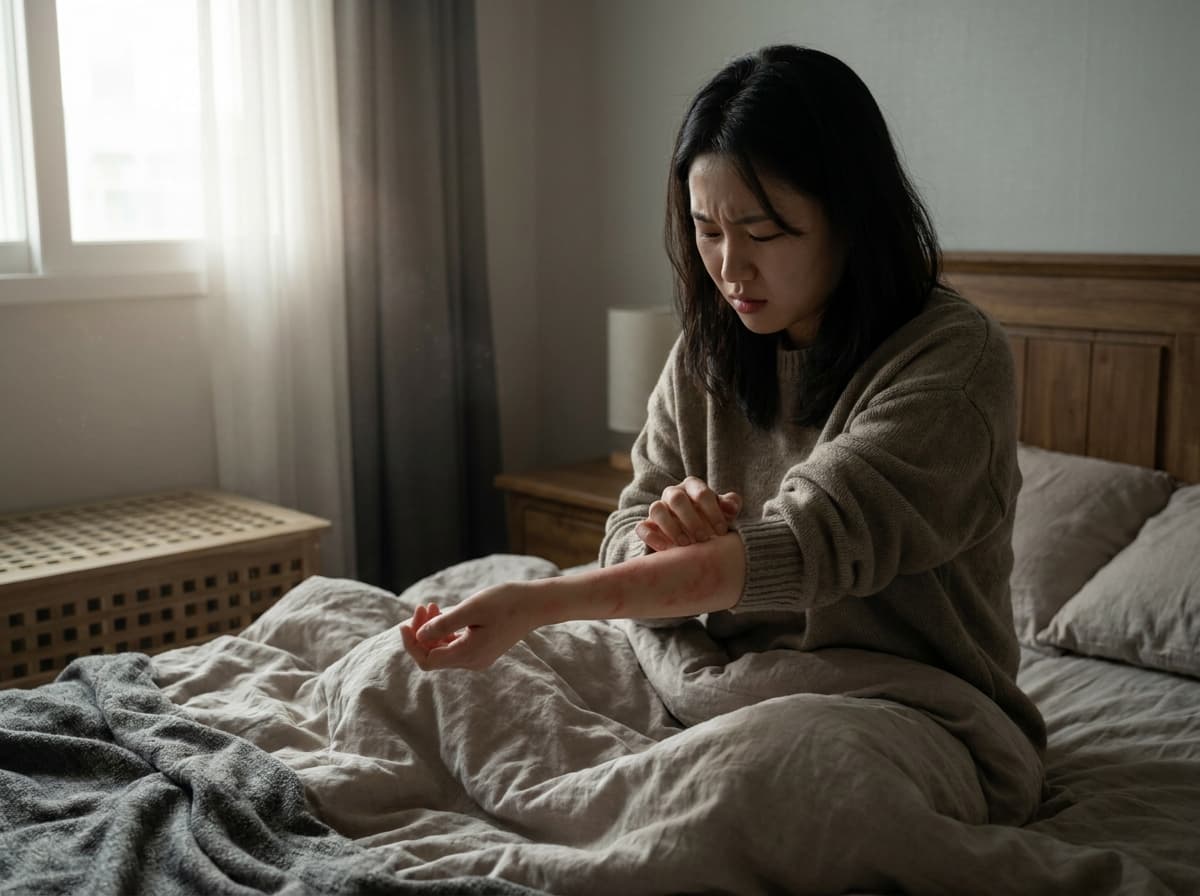
When red spots suddenly appear on your body and unbearable itching begins, it's easy to take it lightly. You might think it will get better after a few days of rest, or quickly subside after applying ointment or taking medicine. But what if these symptoms don't go away and repeat every day or every other day? Many people complain that "hives keep appearing" and experience difficulties in daily life. The wheals that bulge on the skin and the itching that keeps you awake at night go beyond simple discomfort and significantly lower the quality of life. In particular, if these symptoms persist for more than 6 weeks, it is classified as 'chronic hives,' which may be a signal of deep imbalance within the body, not just a problem on the skin's surface.
💡 [Key Answer] 3 most common causes of persistent hives: ① Immune system imbalance / ② Chronic stress and autonomic nervous system disturbance / ③ Worsening gut health and internal inflammation Dalimchae Clinic creates a body where symptoms don't turn on again through constitutional improvement and helps regain healthy skin without recurrence.
Q. How long does it take for hives to be considered 'chronic'?
Hives are a disease where plasma components temporarily accumulate in tissues as vascular permeability of the skin or mucous membranes increases, causing red or white swelling and severe itching. Generally, if hive symptoms improve within 6 weeks, they are classified as 'acute hives,' but if hives or angioedema persist daily or intermittently for 6 weeks or more, they are diagnosed as 'chronic hives.' Chronic hives are more common than acute hives, and idiopathic hives with unknown causes account for the majority. This shows different patterns from acute hives not only in the difference in duration but also in the approach to cause identification and treatment.
Q. Recurrent hives, is it just a skin problem?
Chronic hives are more likely to be a signal of internal imbalance caused by a broken balance in our body's immune system and autonomic nervous system, rather than a temporary skin reaction. Various factors such as stress, worsening gut health, infection, and drugs can cause or worsen hives, but especially 70-80% of chronic hives are classified as 'idiopathic' with no identifiable cause. This means you are struggling with a fundamental problem inside the body that is difficult to solve just by avoiding external stimuli.
In Korean medicine, hives are called 'Eunjin (癮疹)' and are explained as pathological reactions such as 'Wind (風)', 'Dampness (濕)', and 'Heat (熱)' appearing on the skin surface. Stress can induce overreaction of skin immune cells through the autonomic nervous system, and Korean medicine sees this as 'Gangiulgyeol (肝氣鬱結)', a state where emotional tension blocks the flow of Gi, and considers treatment that smooths the circulation of Gi and blood important. Ultimately, chronic hives are often caused by a complex combination of systemic factors such as decreased immunity, intestinal environment imbalance, and autonomic nervous system disturbance due to stress, in addition to problems with the skin itself.
Q. What help can Korean medicine treatment provide for chronic hives?
While chronic hives are attempted to be controlled with antihistamines as a basis in Western medicine, there is a great thirst for fundamental treatment because symptoms often recur or resistance develops when medication is stopped. In this situation, Korean medicine treatment focuses on finding the root cause of hives and restoring the body's balance, which can be a new hope for those looking for an Incheon Hives Clinic.
A study by the Dongguk University Bundang Korean Medicine Hospital research team published in the journal Complementary Therapies in Medicine in 2015 evaluated the efficacy of Gwakhyangjeonggi-san (GJS) in 30 patients with chronic hives after administering it for an average of 57.30 days. As a result, the Urticaria Activity Score (UAS), which was an average of 5.10 ± 0.99 before treatment, significantly decreased to 1.63 ± 2.06 after 6 months of treatment (p<0.001), and 46.67% of patients reported that symptoms had completely disappeared. Also, 66.67% of patients who were taking antihistamines were able to completely stop Western medication. Researchers estimated that Gwakhyangjeonggi-san helped improve chronic hive symptoms through gastrointestinal protection activity and antioxidant/antidepressant effects.
These results suggest that Korean medicine treatment can bring fundamental therapeutic effects by improving the environment inside the body, beyond simply suppressing symptoms. In a case reported in the Journal of Korean Medicine Ophthalmology, Otolaryngology & Dermatology in 2022, complex Korean medicine treatment such as herbal medicine, pharmacopuncture, and acupuncture for patients with chronic idiopathic hives resulted in the Urticaria Activity Score (UAS) improving from 6 to 0, and no recurrence was confirmed during the 4-month follow-up period. This shows that Korean medicine treatment can be an effective alternative for intractable hives.
Dalimchae Clinic Incheon Branch approaches chronic hives from the perspective of constitutional improvement. The goal is to correct the internal environment that causes symptoms and stabilize the overreaction of the immune system to create a body where hives do not occur again. 'Constitutional improvement' is not about temporarily suppressing symptoms, but a treatment principle that helps respond healthily to external stimuli by raising the body's fundamental recovery power. Through this, we are helping many chronic hive patients in the Incheon area regain healthy skin and daily life.
Hives Self-Diagnosis Checklist
If 3 or more of the following items apply, it is recommended to suspect chronic hives and receive a Korean medicine diagnosis.
- Hives have occurred every day or almost every day for the past 6 weeks.
- Hives appear, disappear within 24 hours, and reappear in other areas.
- The itching is so severe that it interferes with night sleep or daily life.
- Even when taking Western medicines such as antihistamines, the effect is temporary or recurrence is frequent.
- Hives become more severe when stress or fatigue is high.
- Frequent gastrointestinal symptoms such as indigestion and abdominal pain.
- Hives occur irregularly without specific food or environmental factors.
If 3 or more apply → Suspect chronic hives due to constitutional imbalance → Review Dalimchae's complex Korean medicine treatment If 5 or more apply → Immediate visit and active treatment through precise diagnosis is recommended.
Q. How long does it take for hives to become chronic? A. Chronic hives are diagnosed when hive symptoms persist daily or intermittently for 6 weeks or more. Before 6 weeks, they are classified as acute hives.
Q. Is treatment impossible if the cause of hives is not found? A. No. While more than 70% of chronic hives are classified as idiopathic, which is difficult to find the cause, Korean medicine can improve symptoms and prevent recurrence through constitutional improvement and restoring internal balance.
Q. Can chronic hives heal naturally? A. Some patients improve naturally, but according to a domestic study, 10.8% of chronic hive patients improve within 1 year and 32.9% within 5 years, showing that the natural cure rate is not high. It is better to consider active treatment rather than neglecting symptoms for a long time.
Q. I'm looking for a chronic hives clinic in Incheon. What should I consider? A. When choosing a hives clinic in the Incheon area, it's important to choose a place with a treatment philosophy that addresses fundamental causes such as constitutional improvement and immune system enhancement, rather than just focusing on symptom relief. Dalimchae Clinic Incheon Branch focuses on these treatment principles to help patients achieve healthy lives without recurrence.
Hives are not a problem that is solved by enduring. You no longer have to ignore the signals your body has been sending for a long time. If you approach it in the right direction, your body reacts faster than you think. Bring the symptoms you are experiencing exactly as they are. Dalimchae Clinic Incheon Branch will find the cause together with you.
Where life blooms. Herbal medicine is, after all, Dalimchae Clinic. Check your symptoms first through Dalimchae Clinic's website AI consultation!
Medical Supervision | KMD Yang Yu-chan, Dalimchae Clinic Incheon Branch (Allergic Skin Disease Column)