
Hello. This is Dalimchae Oriental Medicine Clinic.
Solutions for Deep Sleep and Frequent Awakening: For Those Tossing and Turning All Night
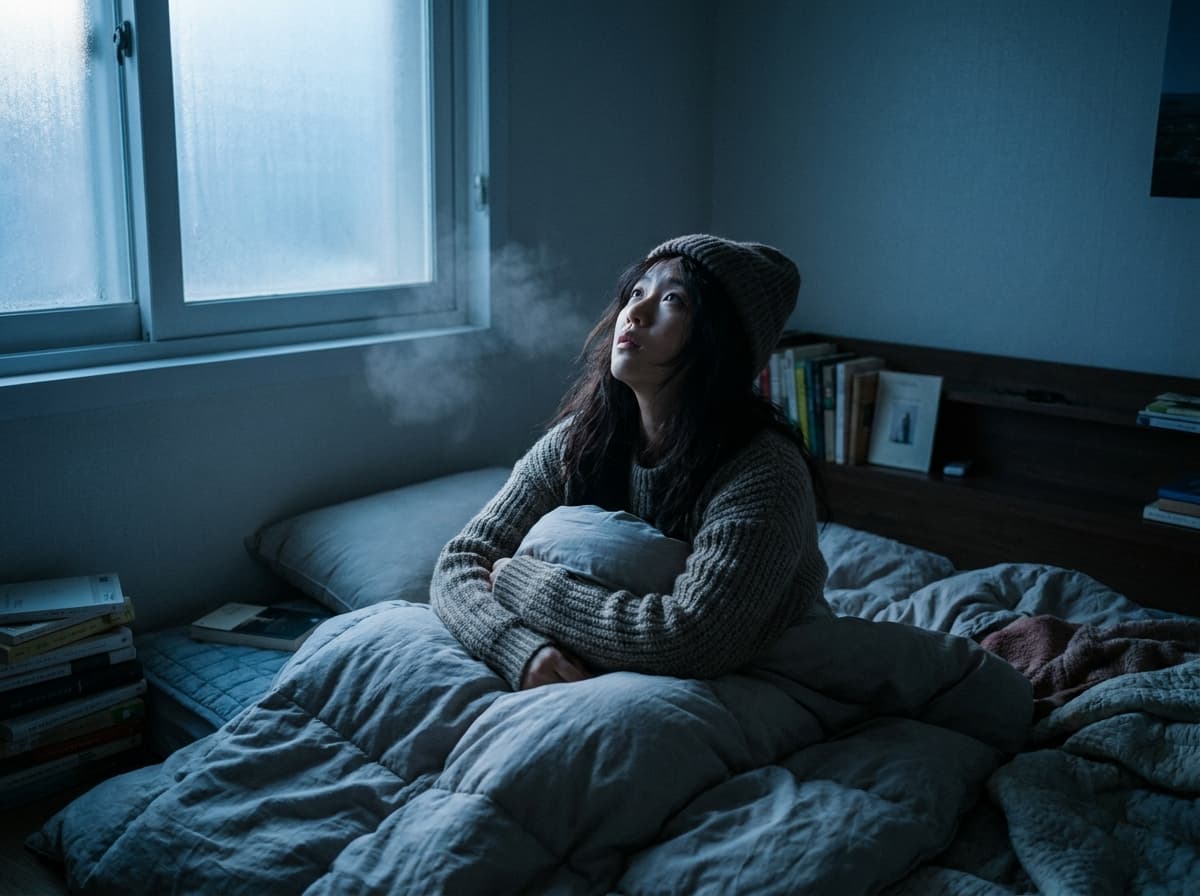
When night falls, you lie in bed, but your brain seems to stay awake. You can't fall into a deep sleep and keep waking up. Once awake, you toss and turn endlessly until morning. The next day, your body feels heavy, and you're in a fog all day, unable to concentrate. Many people complain of insomnia, saying, "I can't sleep at night," but often dismiss it as mere sleep deprivation. However, sleepless nights are more than just an inconvenience; they can be a critical warning sign from your body.
💡 [Core Answer] The three most common reasons for "not sleeping deeply and waking up frequently": ① Autonomic Nervous System Imbalance: A state where the brain cannot rest because the autonomic nerves regulating tension and relaxation are disrupted. ② Brain Over-activation and Heat: Constant arousal due to heat accumulation in the brain from stress and overwork. ③ Stress and Psychological Factors: Instability of mind and body due to anxiety, depression, and excessive thoughts. Dalimchae Oriental Medicine Clinic creates an environment where the brain can rest and recover through autonomic stabilization treatment.
Can't sleep at night? Check for autonomic imbalance first.
Many people think they can't sleep simply because they're 'tired' or have 'too much on their mind.' While temporary stress or irregular habits do affect sleep, a recurring inability to fall into a deep sleep is often deeply linked to an imbalance in the body's autonomic nervous system. The autonomic nervous system regulates functions we don't consciously control—like heartbeat, digestion, and breathing—and plays a crucial role in the 'sleep-wake' cycle. The sympathetic nervous system tenses and arouses the body, while the parasympathetic nervous system relaxes and aids recovery. For healthy sleep, the parasympathetic nervous system must activate at night. However, if the sympathetic nervous system is overactive due to stress and overwork, the brain stays awake, preventing deep sleep. At Dalimchae Oriental Medicine Clinic, we objectively identify these imbalances through tests like Heart Rate Variability (HRV) and help improve sleep quality through personalized treatments.
Can you sleep deeply without sleeping pills? Effectiveness and safety of Oriental medicine
When struggling with sleep deprivation, many consider sleeping pills but hesitate due to concerns about dependency or side effects. Oriental medicine views insomnia not just as a sleep problem, but as a result of an imbalance between mind and body, focusing on resolving the root cause.
A 2022 meta-analysis published in 'Frontiers in Pharmacology' by Professor Sung-woo Yun's team at Kyung Hee University Korean Medicine Hospital showed that herbal medicine significantly improved sleep quality for cancer patients with insomnia. Analyzing 14 randomized controlled trials (1,020 participants), the herbal medicine group showed an average improvement of 2.25 points in the Pittsburgh Sleep Quality Index (PSQI) (MD –2.25, 95% CI –3.46 to –1.05; p<0.001), a statistically significant improvement compared to the sleeping pill-only group (Relative Risk 1.26, 95% CI 1.07-1.48, p = 0.005). Ingredients like Sanjoin, Gamiguibi-tang, and Cheonwangbosim-dan were primarily used, acting on GABA receptors to produce sedative effects.
Furthermore, a 2021 study by Dr. Jun-hwan Lee's team at the Korea Institute of Oriental Medicine, featured in HelloDD, scientifically proved the effectiveness of electro-acupuncture for 150 insomnia patients. The Insomnia Severity Index (ISI) improved from an average of 19.02 to 10.13 after treatment, with effects lasting at 8.60 and 8.02 four and eight weeks post-treatment, respectively. This was a significant improvement compared to the sham group, with sleep efficiency improving by 8.2 percentage points—about 1.9 times higher than the sham group (4.3 percentage points). The study showed that electro-acupuncture improves not only sleep quality but also anxiety and depression scales.
These studies suggest that Oriental medicine is a safe and effective approach for improving sleep quality and mental health. Dalimchae doesn't just put you to sleep; we help your body regain the power to fall asleep peacefully on its own.
Autonomic stabilization helps the brain rest.
To resolve the root cause of insomnia, Dalimchae focuses on 'autonomic stabilization.' Excessive stress and stimulation in modern society break the balance of our autonomic nervous system, leaving the brain like an 'overheated engine' that cannot rest. The sympathetic nervous system, which should be active during the day, remains excited at night, disturbing sleep.
Dalimchae's autonomic stabilization treatment focuses on lowering heat in the nervous system and creating an environment for the brain to rest. In Oriental medicine, this is called 'Suseung-hwagang' (rising cool energy, falling warm energy). By keeping the head cool and the lower abdomen warm, we promote the smooth circulation of energy, relax the nervous system, and help you fall into a comfortable sleep. Many seeking autonomic treatment at our Incheon branch are experiencing improved sleep quality and overall condition through this approach.
Is your sleepless night insomnia? (Insomnia Self-Diagnostic Checklist)
If 3 or more apply, your sleep quality may already be declining. If 5 or more, autonomic imbalance-induced insomnia is suspected, and a professional consultation is recommended.
- ( ) It takes more than 30 minutes to fall asleep.
- ( ) I wake up frequently at night and find it hard to go back to sleep.
- ( ) I wake up too early in the morning and can't sleep further.
- ( ) My total sleep time is less than 6 hours more than 3 times a week.
- ( ) I don't feel refreshed after sleeping.
- ( ) I feel extremely sleepy during the day, affecting my daily life.
- ( ) I feel a decline in concentration or memory.
- ( ) I feel irritable, anxious, or depressed over small things.
3+ items → Suspected autonomic insomnia → Consider Oriental medical treatment 5+ items → Immediate visit and precision diagnosis recommended. Those complaining of headaches or dizziness often have links to autonomic imbalance, so getting a comprehensive consultation is important.
Q&A: Insomnia Treatment in Oriental Medicine
Q. How long does the treatment take? A. It varies based on the cause, constitution, and severity. Usually, 2-3 months of intensive treatment significantly improves sleep quality, followed by maintenance to prevent recurrence.
Q. Can I sleep deeply without sleeping pills? A. Yes, absolutely. Dalimchae helps the body regain its ability to sleep peacefully through herbal medicine, acupuncture, and pharmacopuncture that stabilize the autonomic nervous system and lower brain over-activation.
Q. How is autonomic imbalance diagnosed? A. Along with a consultation, we objectively measure autonomic balance and stress levels using Heart Rate Variability (HRV) testing to create a personalized treatment plan.
Q. Can I get treatment at the Incheon branch? A. Yes, our Incheon branch specializes in various sleep disorders and autonomic nervous system diseases. Our experienced medical staff provides systematic treatment to help you regain healthy sleep.
Insomnia isn't a problem solved by just enduring it. Don't ignore the signals your body has been sending. With the right approach, your body will respond faster than you think. Bring your symptoms to Dalimchae Oriental Medicine Clinic, and we will find the cause together.
Where life blossoms. For herbal medicine, it's Dalimchae. Check for similar symptoms through the AI consultation on Dalimchae's website first!
This health information was compiled by Dalimchae's medical staff based on frequently asked questions in the clinic. Medical Supervision | Brain/Autonomic Nervous System Standards, Dr. Ji-hong Min, Dalimchae Oriental Medicine Clinic Incheon (Insomnia Column)