
Hello. This is Dalimchae Korean Medicine Clinic.
Sleepless Nights, How is Korean Medicine Sleep Treatment Different from Sleeping Pills?
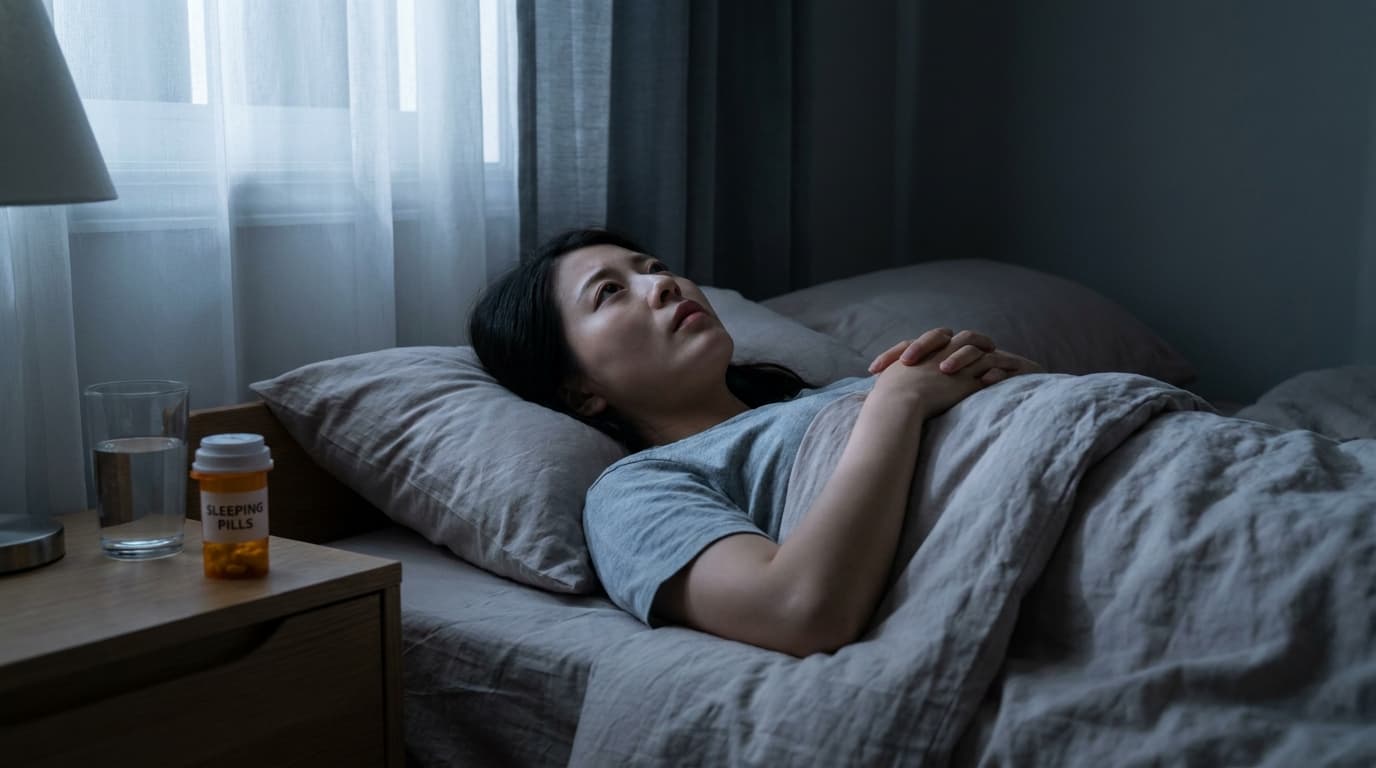
The time spent staring at the ceiling in bed every night feels longer, and the next morning, the body feels heavy like a thousand pounds, and the head is foggy with the pain of insomnia. Are you currently taking sleeping pills, or are you wondering if there are any other methods besides sleeping pills? As sleepless nights get longer, anxiety grows, and worries and fears about sleeping pills and dependency can also grow.
💡 [Key Answer] 3 most common causes of sleepless nights and Korean medicine sleep treatment: ① Autonomic nervous system imbalance / ② Stress and psychological factors / ③ Decreased internal organ function Dalimchae Clinic resolves the fundamental cause of sleep problems through autonomic stabilization and helps you regain a healthy sleep rhythm.
What is the difference between sleeping pills and Korean medicine treatment for reasons why you can't sleep?
Sleeping pills and Korean medicine sleep treatment have significant differences in the way they induce sleep and the perspective from which they view insomnia. Sleeping pills focus on inducing immediate sleep by temporarily suppressing the brain's arousal signals. On the other hand, Korean medicine sleep treatment aims not just to put you to sleep, but to find the fundamental cause of sleeplessness, restore body balance, and develop the strength to fall asleep on your own. This can be an important alternative, especially for those who have long-standing sleep problems or concerns about the side effects of sleeping pills.
Doesn't Korean medicine sleep treatment have dependency or side effects like sleeping pills?
Sleeping pills have a strong short-term effect, but long-term use can lead to side effects such as tolerance, dependency, and 'rebound insomnia'. If you have experienced that you can only fall asleep by increasing the dosage, or that it becomes even harder to sleep when you try to quit, you may already have developed a dependency on sleeping pills. On the other hand, since Korean medicine sleep treatment is not a method of forcibly inducing sleep through drugs, the risk of dependency or serious side effects is significantly low. Herbal medicine is prescribed according to individual constitution and symptoms, and acupuncture treatment helps natural sleep by stabilizing the nervous system.
How does Korean medicine diagnose and treat the cause of insomnia?
Korean medicine does not view insomnia as just a symptom of being unable to sleep. It finds the fundamental cause that interferes with sleep within the deep relationship between body and mind. In particular, autonomic nervous system imbalance is cited as an important cause. When the sympathetic nervous system is excessively activated due to stress, overwork, etc., the brain cannot rest even at night and maintains an aroused state, making it difficult to fall asleep.
At Dalimchae Clinic, we precisely diagnose the state of the body through pulse wave tests and autonomic balance tests to identify such autonomic nervous system imbalances. Afterwards, we apply various Korean medicine therapies such as acupuncture, moxibustion, herbal medicine, and pharmacopuncture in an integrated manner according to each patient's symptoms and constitution. For example, by applying the concept of 'Suseunghwagang (水昇火降)', which lowers the heat concentrated in the head and balances the heart and kidneys, we restore the harmony of the entire body and create a body condition that allows you to fall asleep comfortably on your own.
What are the actual research results for Korean medicine insomnia treatment?
Clinical studies on Korean medicine insomnia treatment are steadily proving its effectiveness and safety.
In 2021, Dr. Lee Jun-hwan's research team at the Korea Institute of Oriental Medicine identified the effect of electroacupuncture treatment on insomnia in a multicenter clinical study conducted with four Korean medicine college affiliated hospitals. 150 patients who had suffered from insomnia for more than 3 months participated in this study, and the ISI (Insomnia Severity Index) score of the electroacupuncture group significantly improved from an average of 19.02 before treatment to 10.13 after completion of treatment. In particular, the improvement effect persisted even during follow-up observations at 4 and 8 weeks after completion of treatment, at 8.60 and 8.02 points respectively, which showed a statistically significant improvement compared to the sham electroacupuncture group (p<0.05). In addition, sleep efficiency improved by 8.2 percentage points in the electroacupuncture group, which was about 1.9 times higher than the 4.3 percentage point improvement rate of the sham electroacupuncture group. The researchers concluded that these results suggest that electroacupuncture treatment effectively alleviates the severity of insomnia and improves the quality of sleep, and the effect can be maintained long-term. Based on this data, Dalimchae Clinic Songdo Branch is utilizing electroacupuncture treatment as an important part of autonomic stabilization treatment that goes beyond simply putting someone to sleep, regulating the imbalance of the nervous system and creating an environment where the brain can rest comfortably.
Another study confirmed the effectiveness of herbal medicine treatment. In 2022, Professor Yoon Sung-woo's team from the Department of Korean Internal Medicine at Kyung Hee University Korean Medicine Hospital at Gangdong announced the effectiveness and safety of herbal medicine treatment for insomnia in cancer patients through a meta-analysis study. This study comprehensively searched for papers until November 2020 in nine databases, finally selected 14 papers, and performed meta-analysis on 10 of them. As a result of the study, herbal medicine treatment showed a significant improvement effect in the Pittsburgh Sleep Quality Index (PSQI), which evaluates sleep quality, latency, and sleep time, and especially confirmed a statistically significant improvement compared to 8 studies using sleeping pills such as zolpidem and estazolam. Prescriptions mainly using Suan-zo-in (酸棗仁) as the main drug (Gamiguibi-tang, Cheonwangbosim-dan, etc.) were used, which is consistent with previous non-clinical research results that the effective ingredients of Suan-zo-in act on GABA receptors, an inhibitory neurotransmitter, to show sleep and sedative effects. The researchers concluded that herbal medicine treatment can be utilized as a safe and effective treatment for insomnia in cancer patients. These research results are in line with the treatment philosophy of Songdo Insomnia Clinic Dalimchae Clinic, which seeks autonomic stabilization through customized herbal medicine prescriptions considering each patient's body condition and comorbid diseases.
Sleepless Nights, Could I Also Have Autonomic Dysfunction? (Insomnia Self-Diagnosis Checklist)
If 3 or more of the items below apply, you may suspect insomnia due to autonomic imbalance. We recommend reviewing integrated Korean medicine treatment after precision diagnosis at Dalimchae Clinic. If 5 or more items apply, immediate visit is recommended.
- It takes more than 30 minutes to fall asleep, or I wake up frequently throughout the night.
- I don't feel refreshed even after sleeping, and daytime fatigue or sleepiness is severe.
- I often complain of headaches or dizziness as well.
- My chest feels stuffy, or I frequently feel palpitations or anxiety.
- My neck or shoulders are always knotted and tensed.
- Digestion is poor, or I frequently have symptoms of gas and bloating in my stomach.
- My hands and feet feel tingly or cold, and I sometimes break out in a cold sweat.
- For no particular reason, my mood swings are severe and I become sensitive.
How does autonomic stabilization help sleep?
Our body's autonomic nervous system is divided into the sympathetic and parasympathetic nervous systems and regulates essential functions for maintaining life such as heart rate, breathing, and digestion. The sympathetic nervous system is activated in tension and stress situations, and the parasympathetic nervous system is activated during rest and relaxation. For healthy sleep, it is important for the parasympathetic nervous system to take the lead at night and relax the body. However, when the balance of the autonomic nervous system is broken due to chronic stress, overwork, irregular lifestyle habits, etc., the sympathetic nervous system becomes excessively activated even at night, and the brain maintains an aroused state without being able to rest. This is like an overheated engine continuing to run at night without stopping.
Dalimchae Clinic Songdo Branch stabilizes the over-aroused sympathetic nervous system and restores the function of the lowered parasympathetic nervous system through customized Korean medicine treatments such as acupuncture, herbal medicine, and pharmacopuncture. Lowering the heat of the nervous system and creating an environment where the brain can rest—in Korean medicine, this is called 'Suseunghwagang (水昇火降)'—we help the body induce deep and comfortable sleep on its own. When the balance of the autonomic nervous system is restored, it goes beyond simply sleeping well; you can expect the effect of improving overall body functions and improving various symptoms accompanied by insomnia such as anxiety, fatigue, and indigestion.
FAQ: Questions about Korean medicine sleep treatment
Q. How long does Korean medicine sleep treatment take? A. The treatment period can vary depending on the cause of insomnia, the severity of symptoms, and chronicity. Generally, you can expect significant improvement through consistent treatment for about 4 to 12 weeks, and a management period for relapse prevention may be needed afterwards.
Q. I am taking sleeping pills, can I undergo Korean medicine treatment at the same time? A. Yes, it is possible to undergo Korean medicine treatment even if you are taking sleeping pills. Many studies have shown that the combined treatment of herbal medicine and sleeping pills is more effective in improving insomnia symptoms and sleep quality than taking sleeping pills alone, and has fewer adverse reactions. You can establish a 'tapering' strategy to gradually reduce sleeping pills by consulting with a medical professional.
Q. Can I still have trouble sleeping after Korean medicine sleep treatment? A. Dalimchae Clinic's Korean medicine sleep treatment does not simply suppress symptoms, but restores the body's fundamental balance to help you maintain a healthy sleep rhythm on your own. Even after the treatment is over, you can prevent sleepless nights from coming back through correct sleep habits and lifestyle management.
Q. What kind of tests are used for diagnosis at Songdo Insomnia Clinic? A. At Dalimchae Clinic Songdo Branch, in order to identify the cause of insomnia from various angles, we objectively and scientifically analyze your current body condition using autonomic balance tests, body composition analysis, and sleep questionnaires in addition to traditional Korean medicine diagnosis such as consultation, pulse diagnosis, and abdominal diagnosis.
Insomnia is not a problem that can be solved by enduring. You no longer have to ignore the signals your body has been sending for a long time. If you approach in the right direction, the body responds faster than you think. Bring your symptoms exactly as they are. At Dalimchae Clinic Songdo Branch, we will find the cause together.
Where life blooms. For herbal medicine, it's Dalimchae Korean Medicine Clinic. Check your symptoms similar to mine through the AI consultation on the Dalimchae Clinic website first!
This article is health information compiled by Dalimchae medical staff based on questions frequently received in the treatment room. Medical Supervision | Brain & Autonomic Nervous System Treatment Standards Dalimchae Clinic Songdo Branch Korean Medicine Doctor Oh Hyunmin (Insomnia Column)