
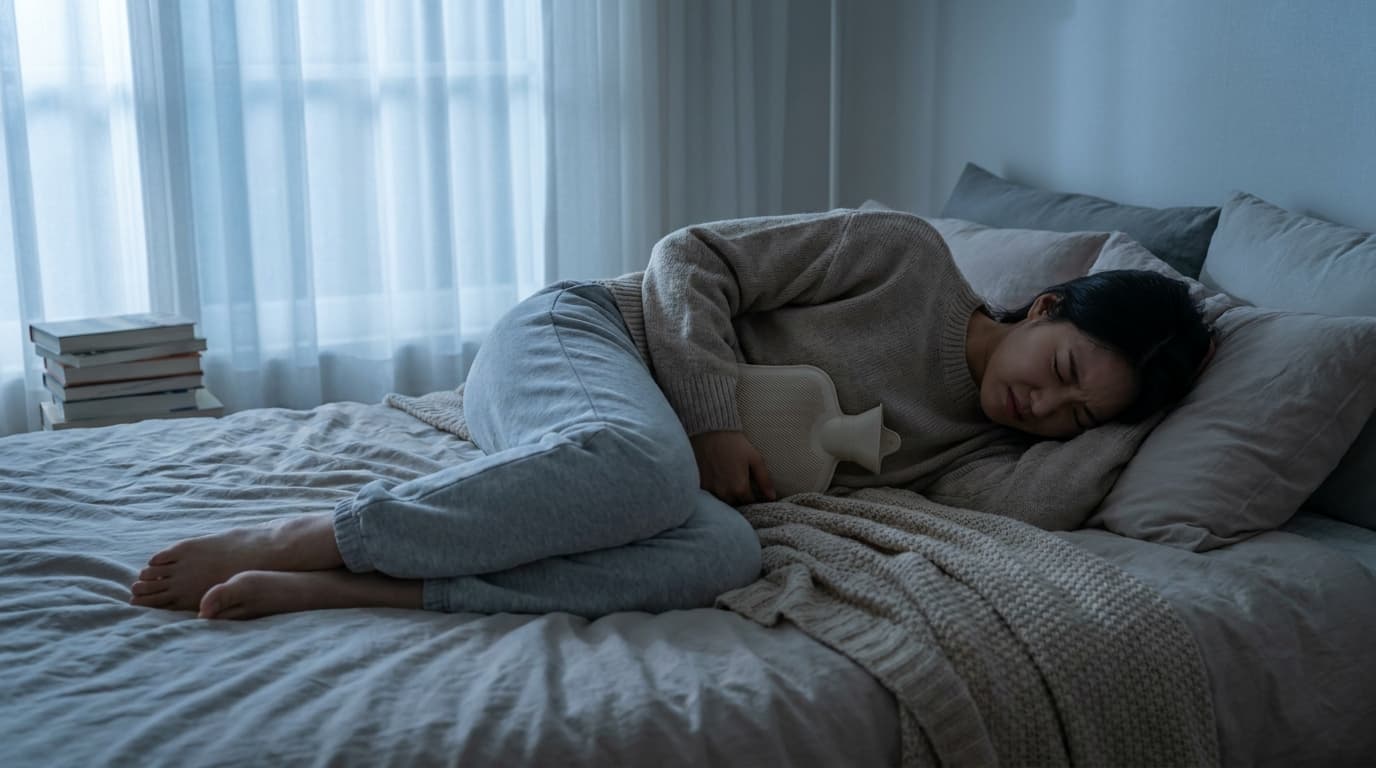
"My lower abdomen feels like it's being poked. What's wrong?" This is a common question at Dalimchae Clinic Incheon. Persistent pain, especially around menstruation or during stress, can be disruptive. While it might be simple indigestion, it could also signal conditions like ovarian cysts or uterine fibroids, or result from autonomic imbalance.
💡 [Key Answer] 3 most common causes of sharp lower abdominal pain: ① Gynecological conditions like ovarian cysts or uterine fibroids / ② Digestive issues like irritable bowel syndrome (IBS) / ③ Chronic pelvic pain due to autonomic imbalance. Dalimchae Clinic solves the root cause through constitution improvement, helping your body regain its self-healing power.
Is it just a passing pain?
The nature and location of pain provide clues. Right-side pain can suggest appendicitis or ovarian issues (ovulation pain, cyst rupture/torsion), while left-side pain might involve diverticulitis, IBS, or ovarian problems. Since many cases relate to the reproductive system, careful attention is required even if initial exams show no major abnormalities.
Why women should be extra cautious
Women's reproductive organs are located in the pelvis and are heavily influenced by hormonal cycles. Monthly cycles can lead to ovarian cysts, fibroids, endometriosis, and pelvic inflammatory disease (PID), which can cause infertility if severe. Ovarian cysts, though often asymptomatic, can cause acute pain if they grow large, rupture, or twist.
Why pain persists even when results are 'normal'
Many women are told to "just watch it" because cysts or fibroids are small. However, the sensitive autonomic nervous system already detects imbalances. Stress and poor habits disrupt this system, affecting pelvic blood circulation and triggering chronic pain.
A Korean Medicine Perspective
We see pain as a result of overall body imbalance. Lower abdominal pain is often attributed to the accumulation of "Eohyeol" (blood stasis) or "Seubdam" (damp-phlegm), and poor "Qi and Blood" circulation.
A 2023 study in Frontiers in Endocrinology found that acupuncture for women with poor ovarian reserve significantly improved FSH and Estradiol (E2) levels and increased uterine lining thickness (p<0.05). Another 2026 study in Integrative Medicine Research involving 135 patients showed that customized herbal medicine significantly reduced menstrual pain intensity and duration.
How Dalimchae's Treatment Works
Our goal is "not just turning off symptoms, but making a body where they don't turn back on."
We look at the whole environment. If the cause is a cyst or fibroid, we investigate why it grew—be it blood stasis, stress-induced autonomic imbalance, or weakened immunity. Through precise diagnosis, we provide tailored herbal medicine and acupuncture to clear stasis, stabilize hormones, and boost the body's natural recovery.
Self-Checklist
- Frequent sharp or heavy lower abdominal pain.
- Worsening menstrual pain or pain outside the period.
- Irregular cycles or changes in flow.
- Frequent indigestion, constipation, or diarrhea.
- Vulnerability to stress and frequent fatigue.
- Cold hands/feet and overall cold sensitivity.
- Poor sleep quality.
Scoring: 3+ (Active management needed), 5+ (Immediate consultation recommended).
FAQ
- Is it an ovarian cyst? It's a major cause, especially if the cyst ruptures or twists. Even if exams are normal, it could be a circulation issue.
- Can herbal medicine reduce cyst size? Yes, by improving pelvic circulation and balancing hormones.
- Is it related to infertility? Chronic pain from endometriosis or PID can affect implantation and ovulation.
- Can it treat menstrual pain too? Yes, as they often share common causes like blood stasis.
Where life blooms. Herbal medicine is, after all, Dalimchae. Check your symptoms with our AI consultant!
Medical Supervision | Yang Yuchan, KMD, Dalimchae Clinic Incheon Branch (Ovarian Cyst Column)