
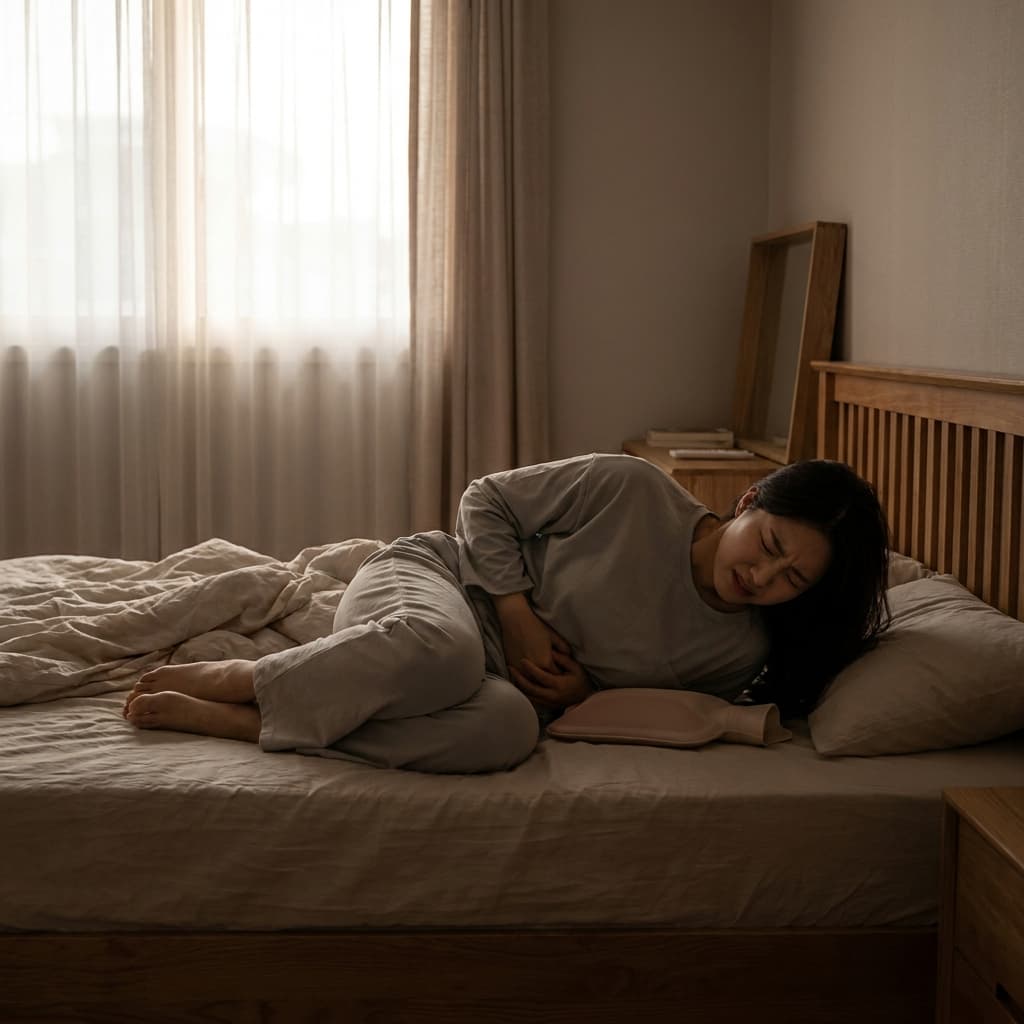
Whenever you go to the bathroom and have a bowel movement, do you feel a sharp pain in your lower abdomen, worrying if there is a major problem with your intestines? Many people easily dismiss these symptoms as simple constipation or irritable bowel syndrome. However, if symptoms worsen around menstruation or if you regularly experience chronic pelvic pain and severe menstrual pain, the story changes. This is because it can be a sign of women's diseases like endometriosis. The sharp pain in the lower abdomen during bowel movements causes great inconvenience in daily life and becomes a major factor degrading quality of life. Today, let's look at why this pain occurs and how it can be resolved.
💡 [Key Answer] The 3 most common causes of sharp lower abdomen pain when having a bowel movement: ① Intestinal adhesions and inflammation due to endometriosis / ② Pelvic blood stasis and circulation disorders / ③ Hormone imbalance and immune disturbance Dalimchae Oriental Medicine Clinic corrects the root imbalance of the body through constitutional improvement, preventing pain recurrence and helping you regain a healthy daily life.
The symptom of sharp lower abdomen pain when having a bowel movement, namely dyschezia, can in many cases be one of the main symptoms of endometriosis. Endometriosis is a condition where endometrial tissue, which should be inside the uterus, proliferates in extrauterine sites such as the ovaries, fallopian tubes, peritoneum, and even intestines (rectum, sigmoid colon, etc.). Endometrial tissue grown in this ectopic manner proliferates like normal endometrium according to the menstrual cycle and causes bleeding, but fails to be discharged out of the body, causing inflammation and adhesions in surrounding tissues. In particular, when endometrial tissue invades or causes adhesions around the intestines, it irritates the intestines every time stool passes through, inducing sharp pain. This is not a simple intestinal problem, but a warning light signaling internal bodily imbalance closely related to female reproductive health. Such pain is often accompanied by other endometriosis symptoms such as severe menstrual pain, chronic pelvic pain, dyspareunia, and abnormal uterine bleeding.
Endometriosis: Why frequent recurrence and tricky treatment
Endometriosis is a common disease affecting about 1 in 10 women of childbearing age, but it is known for frequent recurrence and tricky treatment. Western medicine mainly uses hormone therapy or surgical treatment, but these methods have limitations. For example, hormone therapy helps alleviate symptoms, but recurrence is common upon drug discontinuation, and it is difficult to apply to women preparing for pregnancy. Even if lesions are removed through surgery, it is difficult to completely remove microscopic tissues, and the recurrence rate within 5 years reaches 40%, showing high recurrence potential.
The fundamental reason why endometriosis easily recurs is that environmental factors inside our body causing the disease—such as chronic inflammation like 'blood stasis (瘀血)', immune disturbance, and hormone imbalance—are not resolved beyond simply removing lesions. In Oriental medicine, the pathogenesis of endometriosis is viewed as blood stasis caused by lower abdomen coldness (hyeolhan), Qi and blood circulation stagnation (giche-hyeore), and decreased immunity. Rather than simply suppressing visible symptoms, it is important to improve overall body functions to create an environment where endometriosis is difficult to recur.
How Can Oriental Medicine Contribute to Endometriosis Pain and Lesion Improvement?
In managing pain and lesions caused by endometriosis, Oriental medicine treatment can be an effective alternative. Oriental medicine focuses on removing blood stasis (瘀血) and improving lower abdominal circulation to reduce inflammation and alleviate pain.
In a meta-analysis study published in PubMed, Embase, and Cochrane Library in 2025, the effects and safety of Chinese herbal medicine (CHM) on endometriosis-associated pain (EAP) were systematically evaluated. In this study involving 1,401 patients across 11 randomized controlled trials (RCTs), CHM significantly reduced Visual Analog Scale (VAS) scores for dysmenorrhea (SMD=-2.04, p=0.0484) and dyspareunia (SMD=-2.42, p=0.0031), and significantly decreased inflammatory cytokines serum TNF-α (SMD=-0.85, p<0.0001) and IL-6 (SMD=-0.77, p<0.0001). The researchers concluded that CHM effectively alleviates endometriosis-related dysmenorrhea and dyspareunia, decreases inflammatory markers, and shows favorable safety. However, they noted that the effect on overall pelvic pain was not statistically significant in this study. These research results suggest that Oriental medicine treatment can have a positive effect on specific types of pain and inflammatory response regulation caused by endometriosis.
In addition, in a case study by the research team of Kyung Hee University Hospital at Gangdong published in PubMed in 2019, administering Gyejibokryeong-hwan and Bogol-gongjindan herbal medicine for 6 months to a 36-year-old endometrioma patient resulted in the size of the endometrioma in the right ovary decreasing from 25x21x17mm to 17x11x10mm, and tumor marker CA-125 levels also decreasing within normal range from 47.2 U/ml to 34.3 U/ml. In particular, overall symptoms such as premenstrual/postmenstrual pelvic pain (VAS 7→1) and vaginal discharge (VAS 4→1) were confirmed to have significantly improved. The researchers reported that herbal medicine can be a potential alternative treatment for patients with ovarian endometrioma.
Based on these research data, Dalimchae Oriental Medicine Clinic Incheon branch removes blood stasis, the root cause of endometriosis pain, smooths blood circulation in the uterus and pelvis, regulates inflammatory responses, and performs treatments suppressing excessive proliferation of endometrial tissue.
'Constitutional Improvement': Not Turning Off Symptoms, But Making the Body Not Turn On Again
Dalimchae Oriental Medicine Clinic aims for 'constitutional improvement' treatment that does not simply suppress endometriosis symptoms, but makes the body one where symptoms do not turn on again. Since our body is connected as a single system, chronic diseases like endometriosis often stem from systemic imbalance rather than just a specific part.
In particular, when lower abdominal circulation stagnates and blood stasis accumulates, uterine and ovarian functions decline and inflammatory responses easily occur. Constitutional improvement treatment meticulously analyzes the patient's constitution and symptom patterns, prescribing customized herbal medicine that clears accumulated blood stasis in the body, regulates immune function, and restores hormone balance. Through this, it aims to promote blood circulation in the pelvic cavity, suppress inflammation, prevent abnormal growth of endometrial tissue, alleviate pain, and lower recurrence rate. Many people visiting the Incheon Endometriosis Oriental Clinic are escaping chronic lower abdomen pain and discomfort through this fundamental approach. Helping restore the body's self-healing power so it can maintain health on its own is the core of Dalimchae Oriental Medicine Clinic's constitutional improvement treatment.
Could I Also Have Endometriosis? Symptom Checklist
If 3 or more of the items below apply to you, you need to suspect endometriosis and consider accurate diagnosis and treatment.
- During menstruation or bowel movements, sharp or stabbing pain is felt in the lower abdomen, especially in the rectal area.
- Menstrual pain gradually worsens and is not well controlled even with painkillers.
- There is chronic pelvic pain or back pain.
- Pain is felt during sexual intercourse (dyspareunia).
- Menstrual flow increases or abnormal uterine bleeding occurs.
- Diagnosed with infertility or difficulty getting pregnant.
- Changes in bowel habits such as indigestion, constipation, and diarrhea worsen according to the menstrual cycle.
- Systemic symptoms such as fatigue and lethargy are accompanied.
If 3+ apply → Suspect endometriosis → Consider complex Oriental medicine treatment If 5+ apply → Immediate visit and precision diagnosis recommended
FAQ: Frequently Asked Questions About Endometriosis and Dyschezia
Q. Does dyschezia necessarily occur if you have endometriosis? A. Dyschezia does not appear in all endometriosis patients, but dyschezia can occur when endometrial tissue invades or causes adhesions in the intestines, especially the rectum or sigmoid colon. It may show characteristics where pain worsens according to the menstrual cycle.
Q. What tests are used to diagnose endometriosis at the Incheon Endometriosis Oriental Clinic? A. At the Oriental clinic, in addition to Western imaging tests like ultrasound or MRI, patient symptom listening, pulse diagnosis, abdominal diagnosis, and tongue diagnosis are used to comprehensively diagnose Qi and blood circulation status, presence of blood stasis, and organ function imbalance of the whole body. Based on this, a personalized treatment plan is established.
Q. Can endometriosis dyschezia heal naturally? A. Since endometriosis is a disease where endometrial tissue grows abnormally, it rarely disappears on its own. Especially until menopause, it can continuously progress under the influence of female hormones, so leaving it unattended can worsen symptoms or become a cause of infertility.
Q. Severe menstrual pain and dyschezia are present together; can they be treated together? A. Yes, Oriental medicine treatment at Dalimchae Oriental Medicine Clinic Incheon branch focuses on improving severe menstrual pain and dyschezia caused by endometriosis together. Through herbal medicine that removes blood stasis, smooths lower abdominal circulation, and controls inflammation, various symptoms can be comprehensively managed.
Sharp lower abdomen pain during bowel movements is not a problem solved by enduring. You no longer need to ignore body signals sent for a long time. Approaching in the right direction makes the body react faster than you think. Bring symptoms you are experiencing as they are. Dalimchae Oriental Medicine Clinic will find the cause together.
Where life blooms. Herbal medicine is Dalimchae Oriental Medicine Clinic. Check symptoms similar to yours first through the AI consultation on the Dalimchae Oriental Medicine Clinic website!
Medical Supervision | Women & Pregnancy Treatment Standard, Incheon Branch of Dalimchae Oriental Medicine Clinic, Korean Medicine Doctor Yang Yuchan (Endometriosis Column)