
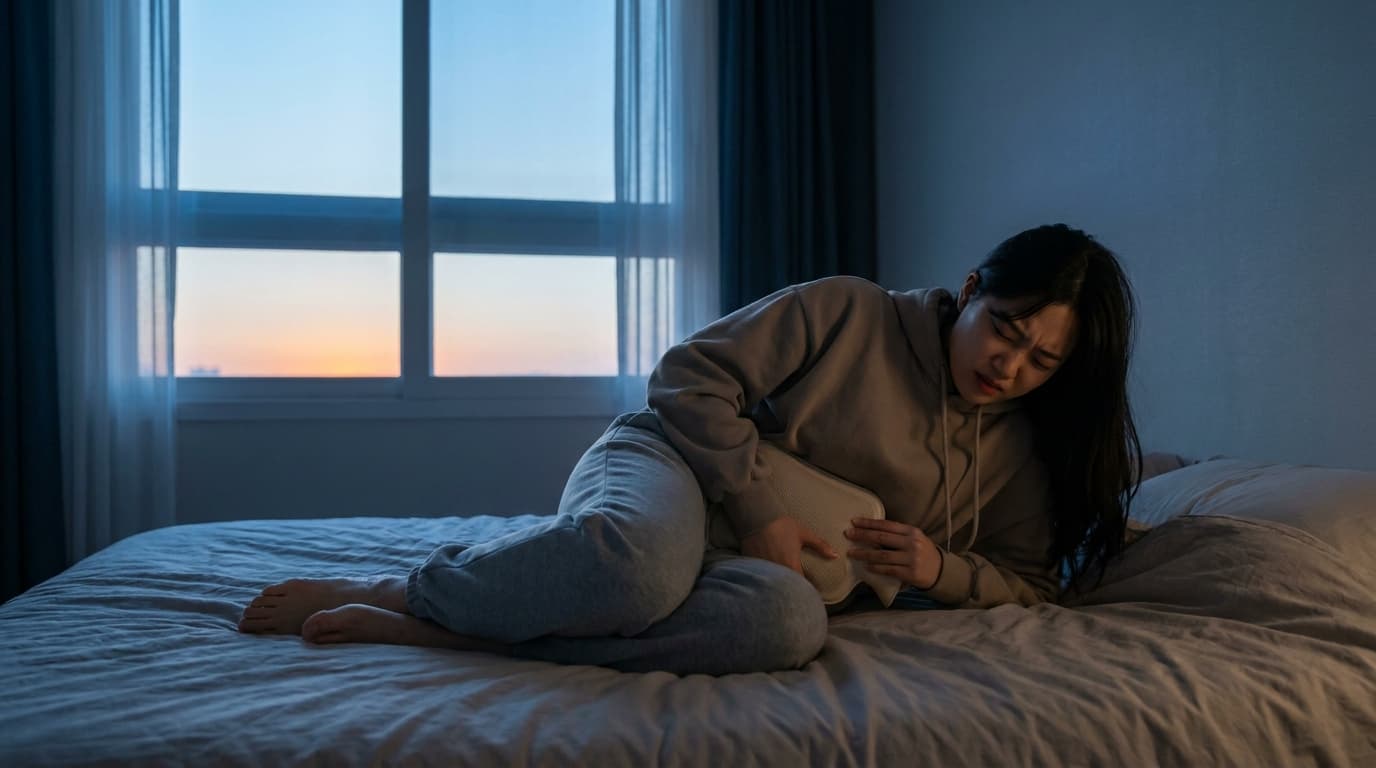
Every month you face pain during that day, enduring it with painkillers by thinking It is just about this much? Many people visit Dalimchae Korean Medicine Clinic Songdo branch, exhausted from the pain that does not improve even after taking painkillers saying Even if I take menstrual medicine, my stomach hurts too much. Many women consider menstrual pain as a destiny, but this can be an important warning signal sent by the body. Especially if the pain is not relieved by medicine, it is highly likely to be an abnormal signal sent from deep inside the body beyond a simple discomfort.
Core Answer: 3 most common causes of Even if I take menstrual medicine, my stomach hurts too much:
- Blood circulation disorder in the uterus and pelvic cavity (Stagnant blood) / 2. Excessive uterine contraction due to autonomic nervous imbalance / 3. Underlying diseases such as endometriosis and adenomyosis. Dalimchae Korean Medicine Clinic resolves the root cause of pain through constitutional improvement of the body and builds self-healing power to restore health on its own.
Why Painkillers Do Not Relieve Menstrual Pain Menstrual pain is largely divided into primary and secondary menstrual pain. Primary menstrual pain occurs without specific uterine disease, mainly caused by excessive secretion of prostaglandin leading to excessive contraction of uterine muscles. At this time, pain is mostly controlled by painkillers. However, when complaining that stomach still hurts even after taking medicine, it may be because painkillers can suppress inflammatory reactions and temporarily reduce pain, but fail to solve the root cause inducing pain.
Secondary menstrual pain is caused by structural problems in the uterus or ovaries such as uterine fibroids, endometriosis, adenomyosis, pelvic inflammatory disease, and ovarian cysts. When these underlying diseases exist, painkillers alone may not properly control the pain, or it may lead to chronic pelvic pain that persists even after menstruation ends. In particular, endometriosis is common in women of childbearing age and requires more careful treatment as it can lead to infertility.
accompagnied Symptoms Checklist:
- Lower abdominal pain starts 1-2 weeks before menstruation and remains after menstruation ends.
- Menstrual volume suddenly increases or the period becomes longer than usual.
- Menstrual blood color is dark red or contains many clots.
- Changes in bowel habits such as indigestion, constipation, and diarrhea worsen during the menstrual period.
- Frequently feel chronic fatigue, headaches, and dizziness.
- Hands and feet are unusually cold or lower abdomen is always cold.
- Usually stressed a lot, sensitive, and easily feel anxious.
Criterion:
- 3 or more: Suspected uterine and autonomic nervous function decline -> Consider Dalimchae Korean Medicine complex treatment.
- 5 or more: Stage requiring active medical attention -> Immediate visit recommended.
How Oriental Medicine Views Menstrual Pain: Dalimchae Korean Medicine Clinic does not view menstrual pain only as a uterine problem, but interprets it as stemming from the imbalance of whole-body qi-blood circulation and organ functions. In particular, when the balance of the autonomic nervous system collapses, the brain cannot rest and maintains a tense state, which can induce poor uterine blood circulation and excessive uterine contraction, further aggravating menstrual pain.
Types:
- Stagnant blood (Eoheul): Poor blood circulation in the uterus and pelvic cavity causing waste stagnation.
- Cold and dampness stagnation: Body is cold and circulation in uterus and abdomen drops.
- Qi-blood weakness: Inherently weak physical strength or excessive stress lacking sufficient nutrition and energy supply to the uterus.
Latest Clinical Research Results: Recent clinical studies prove that oriental medical treatment is effective in alleviating menstrual pain. A 2025 PubMed study utilizing big data showed that herbal decoction significantly reduced the severity of menstrual pain over time (\u03b2 = -0.072, p<0.001), with a low adverse event rate of 0.58%. A 2026 prospective observational study by Dongguk University Ilsan Oriental Hospital also demonstrated that personalized herbal prescriptions effectively reduced menstrual pain intensity, duration, and painkiller use safely.
Dalimchays Constitutional Improvement Treatment: Dalimchae Korean Medicine Clinic Songdo branch takes constitutional improvement as the core treatment principle to find and solve the root of symptoms. Rather than temporarily turning off symptoms like painkillers, it changes the internal body environment so the body can overcome disease and maintain health on its own.
FAQ: Q. Can I take only herbal medicine instead of painkillers when menstrual pain is severe? A. Painkillers provide temporary relief, but herbal medicine improves the uterine environment and strengthens constitution to treat root causes. Q. Can endometriosis or adenomyosis be treated with oriental medicine? A. Yes, herbal treatment helps alleviate symptoms and suppress progression of organic diseases by removing stagnant blood, reducing inflammation, and improving the uterine environment. Q. How long does oriental treatment for menstrual pain take? A. Treatment duration varies depending on individual constitution and severity, usually starting to feel relief over 2-3 menstrual cycles. Q. Does chronic menstrual pain affect infertility? A. Yes, chronic and severe menstrual pain is associated with uterine circulatory disorders, inflammation, and diseases, which can cause infertility.
Life flowers blossom. Herbal medicine is Dalimchae Korean Medicine. Check your symptoms through Dalimchae website AI consultation first!