
Hello. This is Dalimchae Korean Medicine Clinic.
Haven't Had Your Period for Over Two Months in Senior Year? Student Menstrual Irregularity Is a Warning Light from Your Body.
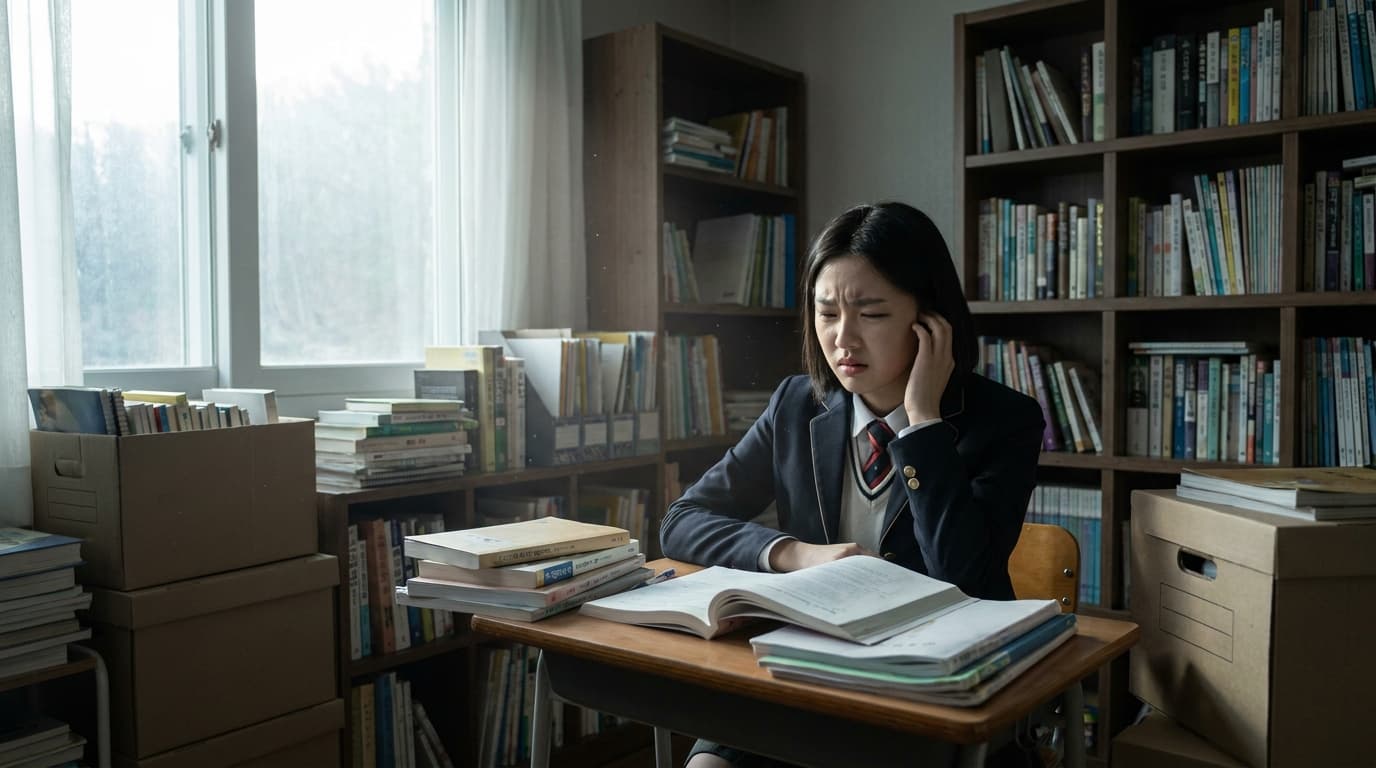
Late-night study sessions, repetitive mock exams, and pressure about grades... Every South Korean high school senior spends day after day under such stress. Have you noticed your once-regular menstrual cycle stopping for two or three months? It's easy to brush it off, thinking, "It's fine, I'm just having a hard time," but this may be an important warning signal from your body. Especially during this period, menstrual irregularity can affect health in surprising ways beyond simple discomfort, and should never be taken lightly.
💡 [Core Answer] 3 most common causes of not having your period for over two months in senior year: ① Autonomic imbalance due to extreme stress / ② Irregular lifestyle habits (lack of sleep, overwork) / ③ Hormonal imbalance (hypothalamus-pituitary-ovarian axis disruption). Dalimchae Korean Medicine Clinic helps normalize menstrual cycles by using autonomic stabilization to regulate overly activated stress responses and restore the body's natural recovery capacity.
Why haven't I had my period for over two months in senior year?
The biggest reason for irregular menstrual cycles in test-takers is stress. When our bodies experience stress, the hypothalamic-pituitary-adrenal (HPA) axis in the brain is activated, excessively secreting stress hormones like cortisol. The problem is that this HPA axis is closely connected to the hypothalamic-pituitary-ovarian (HPG) axis, which regulates female hormones. When stress hormones become excessive, the function of the HPG axis is suppressed, causing abnormalities in the secretion of follicle-stimulating hormone (FSH) and luteinizing hormone (LH). This ultimately affects ovarian function, hindering ovulation and leading to menstrual irregularity and even amenorrhea.
In fact, a 2017 study published in the Journal of Affective Disorders surveying 808 South Korean adolescents revealed that high stress levels, feelings of depression, and psychological counseling experiences were significantly associated with an increased risk of menstrual cycle irregularity. Higher stress levels increased the risk of menstrual irregularity by 1.88 times (95% confidence interval=1.1-3.21), and depression increased it by 2.01 times. (p<0.05) This suggests that menstrual irregularity during adolescence is deeply connected not only to physical problems but also to mental health.
Is student menstrual irregularity just a simple stress problem?
Dismissing it simply as "due to stress" fails to capture the complexity of the changes the body undergoes. Stress is the primary culprit in destroying the autonomic nervous system balance in our bodies. The autonomic nervous system regulates overall life activities such as heartbeat, digestion, respiration, and hormone secretion regardless of our will. It is mainly composed of the sympathetic nervous system, which is responsible for arousal, and the parasympathetic nervous system, which is responsible for relaxation. Continuous stress overly activates the sympathetic nervous system.
When the sympathetic nervous system is overly hyperactive, the secretion of stress hormones like adrenaline and cortisol increases. In particular, excessive cortisol can deplete the raw materials for progesterone, one of the female hormones. As a result, the balance between estrogen and progesterone breaks down, causing menstrual cycles to become irregular or, in severe cases, leading to amenorrhea where menstruation stops for 3 months or more. Furthermore, autonomic imbalance can accompany various symptoms such as insomnia, headaches, indigestion, anxiety, chest tightness, and irritability, alongside menstrual irregularity. Many students visiting Songdo for menstrual irregularity often complain of these complex, combined symptoms.
Is Korean medicine treatment effective for student menstrual irregularity?
In modern medicine, hormonal medication is often prescribed for menstrual irregularity. However, while hormones supplied from the outside can temporarily induce menstruation, concerns are raised that they may weaken the body's own ability to regulate hormone balance. In particular, they are difficult to serve as a fundamental solution for ovulatory dysfunction, and patients may experience various side effects such as weight gain, nausea, abdominal pain, and mood fluctuations.
On the other hand, Korean medicine understands menstrual irregularity not simply as a hormonal issue, but as a overall imbalance of the body including Qi and blood circulation, autonomic harmony, constitutional factors, and stress responses, aiming for fundamental improvement. Recent research trends include systematic reviews analyzing the efficacy of Korean medicine treatments for secondary amenorrhea. A systematic review published in the Journal of Korean Obstetrics and Gynecology in 2023 showed that Korean medicine treatment for secondary amenorrhea is based on Bushen (supplementing the kidney) therapy combined with regulating Qi and blood, and when herbal medicine and acupuncture treatments are performed together, it helps harmonious recovery of the body. This is significant in that it complements the limitations of hormone therapy and helps restore the body's resilience to naturally regain a healthy menstrual cycle.
How does Dalimchae Korean Medicine Clinic treat Songdo menstrual irregularity?
Dalimchae Korean Medicine Clinic solves the root cause of student menstrual irregularity through autonomic stabilization treatment. We stabilize the hyperactive sympathetic nervous system, which acts like an overheated engine, and create an environment where the brain can rest, helping the hypothalamus-pituitary-ovarian axis—the core of hormone regulation—restore balance on its own. In Korean medicine, this is explained as 'Suseunghagang' (Water rises, fire descends)—the process of lowering the heat floating upward and raising the cold energy below to ensure smooth circulation throughout the body.
Dalimchae Korean Medicine Clinic's autonomic stabilization treatment is based on customized herbal prescriptions tailored to each individual's constitution and symptoms. Customized herbal medicine replenishes Qi and blood damaged by stress, improves blood circulation to the uterus and ovaries, and restores the balance of the autonomic nervous system to boost the body's recovery capacity. In addition, acupuncture, moxibustion, and pharmacopuncture treatments are combined to clear blocked meridians, relieve physical tension, and stimulate key acupuncture points involved in hormone secretion to enhance treatment efficacy. As a Songdo autonomic nervous system oriental clinic, Dalimchae focuses on helping stressed students' bodies and minds find comfort and regaining their menstrual cycles naturally.
Menstrual Irregularity Autonomic Balance Checklist
Check how many of the following items apply to you:
- My menstrual cycle has become shorter than 21 days or longer than 35 days for more than 2 months recently.
- I haven't had my period at all for 3 months or more.
- I feel increasingly irritated, anxious, or depressed due to academic stress.
- The quality of my sleep has worsened, such as having difficulty falling asleep at night or waking up frequently.
- I experience accompanying symptoms such as headaches, dizziness, and indigestion (upset stomach or bloating).
- I have experienced sudden weight changes (gain or loss).
- I always feel tired, lethargic, and have a decreased concentration span.
- My chest frequently feels tight, and I have a habit of sighing.
Judgment Criteria:
- 1~2 items apply: You may be in the early stages of stress and autonomic imbalance. Try improving your lifestyle habits and observe symptom changes.
- 3~4 items apply: Autonomic imbalance-induced menstrual irregularity is suspected. Listen to your body's warning light and consider comprehensive Korean medicine treatment.
- 5 items or more apply: This is a strong signal that your body is extremely exhausted. Immediate diagnosis and treatment by a specialist are required, and visiting Dalimchae Korean Medicine Clinic is recommended to find the exact cause.
FAQ
Q. Can senior year menstrual irregularity improve naturally? A. Mild menstrual irregularity caused by temporary stress or overwork can recover naturally with sufficient rest and healthy lifestyle habits. However, if menstruation is absent for more than two months or irregular cycles repeat, it indicates a broken body balance, making it important to receive professional diagnosis and treatment.
Q. Is it okay to regulate student menstrual irregularity with contraceptive pills? A. Contraceptive pills artificially create a menstrual cycle by supplying hormones externally, but there are limitations in restoring the body's own hormone regulation ability. In particular, long-term use can affect ovarian function, requiring an approach to solve the fundamental cause.
Q. What kind of treatment should I receive for stress-induced menstrual irregularity? A. Since stress-induced menstrual irregularity occurs when the body's autonomic balance is broken and affects hormone secretion, treatments that stabilize the autonomic nervous system and increase the body's recovery capacity are effective. Dalimchae Korean Medicine Clinic provides Korean medicine treatments to normalize body functions through personalized herbal medicine, acupuncture, moxibustion, and pharmacopuncture.
Q. What tests are needed when treating menstrual irregularity at a Songdo Korean medicine clinic? A. At Dalimchae Korean Medicine Clinic, we accurately grasp the patient's current state through objective diagnoses such as HRV (Heart Rate Variability) testing, which identifies autonomic balance and stress resistance. Based on this, we establish an optimal treatment plan for each individual to help effective recovery.
Menstrual irregularity is not a problem that can be solved by enduring it. You no longer need to ignore the signals your body has been sending for a long time. When approached in the right direction, the body responds faster than you think. Bring the symptoms you are currently experiencing just as they are. Dalimchae Korean Medicine Clinic will find the cause together with you.
A place where life blossoms. Herbal medicine is Dalimchae Korean Medicine Clinic. Check symptoms similar to yours first through Dalimchae Korean Medicine Clinic's website AI consultation!
This article is health information compiled together by Dalimchae medical staff based on questions frequently received in the consulting room. Medical Supervision | Dalimchae Korean Medicine Clinic Songdo Branch Oriental Medical Doctor Oh Hyunmin (Menstrual Irregularity Column)