
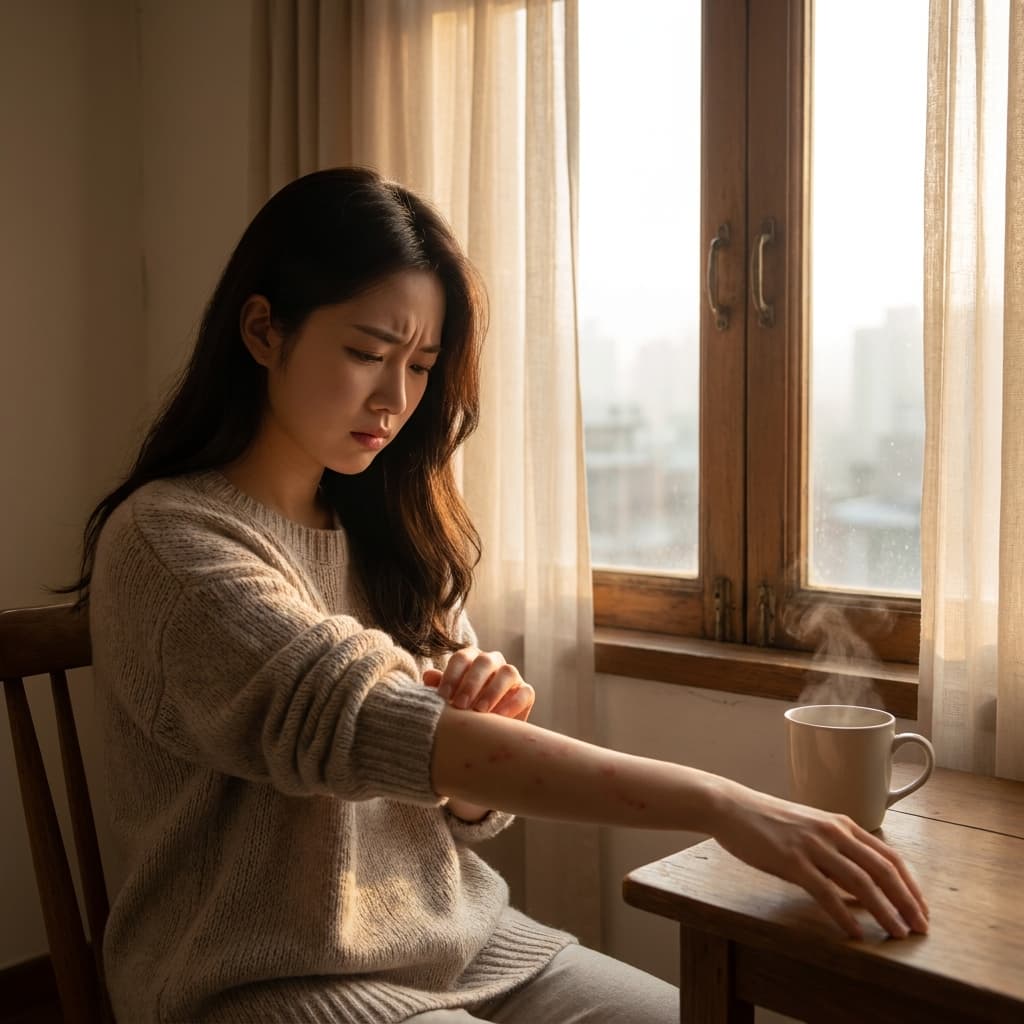
Red Spots on Skin: Urticaria or Purpura? Clear Distinction and Korean Medicine Solutions
When red spots suddenly appear on your skin, it's natural to feel concerned, especially if they are itchy. Many people mistake these for 'urticaria' (hives), but sometimes they could be 'purpura.' Distinguishing between the two is crucial because their causes and treatment approaches are entirely different.
💡 Key Insights The most common causes of red spots on the skin: ① Allergic reactions and mast cell activation (Urticaria) ② Vascular inflammation and damage (Purpura) ③ General immune imbalance and gut health issues Dalimchae Oriental Clinic stabilizes the skin immune system and restores a healthy skin environment through Gut Detox treatment.
Why Do Red Spots Appear?
Red spots occur when the immune system reacts to external or internal stimuli. Urticaria involves temporary swelling in the dermis, while Purpura happens when blood leaks from small vessels and collects under the skin, forming spots that don't fade when pressed.
Difference Between Urticaria and Purpura
- Urticaria (Hives): Extremely itchy, raised wheals, and temporary fading when pressed (blanching). Usually disappears within 24 hours.
- Purpura: Usually not itchy, flat red or purple spots that do not fade when pressed (non-blanching). Lasts for days to weeks.
Why Do They Recur?
Chronic recurrence often stems from immune system disruption and gut health issues. Recent studies suggest a strong link between the gut microbiome and chronic skin conditions like urticaria. Gut dysbiosis can lead to 'Leaky Gut Syndrome,' where toxins enter the bloodstream and trigger systemic inflammation.
Dalimchae’s Gut Detox Treatment
We focus on restoring gut health—where 70% of immune cells reside—to empower the skin to protect itself.
- Gut Barrier Regeneration: Customized herbal medicine to inhibit harmful bacteria and heal the gut lining.
- Immune Balance: Regulating overactive immune cells to reduce inflammation.
- Enhanced Detoxification: Improving liver function to effectively discharge waste and toxins.
Clinical Research Results
Studies show significant UAS score reduction in chronic urticaria patients treated with traditional herbal medicine (e.g., Gwakhyangjeonggi-san). For purpura, specialized formulas like Jarotang have shown effectiveness in resolving symptoms even where steroids failed.
FAQ
Q. Can they heal naturally? Acute cases might, but chronic conditions (over 6 weeks) require systemic treatment to prevent complications like kidney involvement in certain purpura types.
Q. How long does treatment take? Generally, 4-8 weeks of intensive treatment shows significant improvement, followed by maintenance for prevention.
Don't ignore your body's signals. Visit Dalimchae Oriental Clinic to find the root cause.
Health information provided by Dalimchae medical staff. Supervised by Min Ji-hong, KMD, Dalimchae Oriental Clinic Incheon.