
Hello. This is Dalimchae Korean Medicine Clinic.
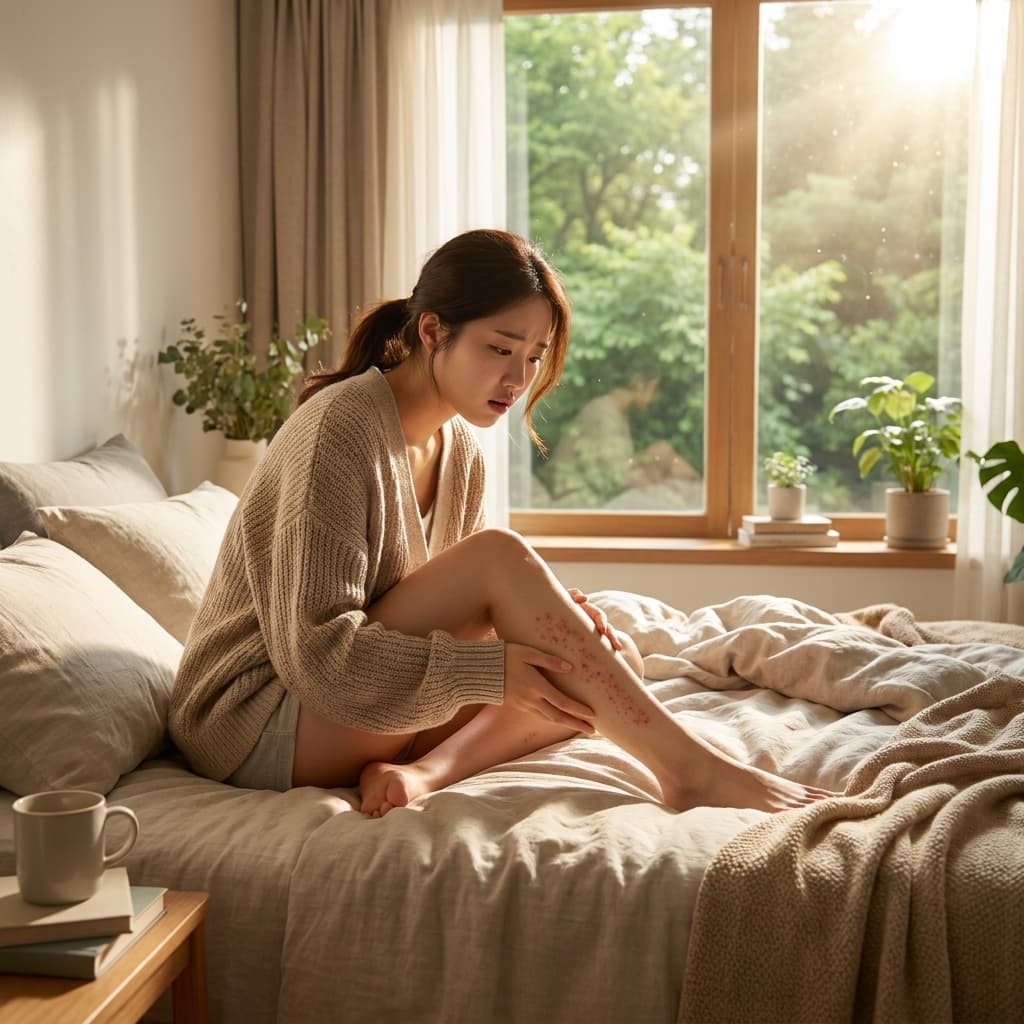
Red spots like bruises without bumping, could it be Purpura?
Have you ever been surprised by red or purple spots appearing on your skin? Especially if you have red spots like bruises despite no memory of bumping into anything, it's hard to dismiss them as simple bruises. While it's easy to think they'll go away over time, these symptoms can be an important signal from within your body. In particular, there's a possibility of 'Purpura,' which occurs due to problems with the blood vessels themselves or an imbalance in the immune system.
💡 [Key Answer] The 3 most common causes of red spots like bruises without bumping: ① Vessel Wall Fragility: Capillaries weaken and bleed even under small pressure. ② Platelet Abnormalities: Decrease in number or functional abnormality of platelets involved in blood clotting. ③ Autoimmune Response: The immune system attacks the blood vessels themselves, causing inflammation and bleeding. Dalimchae Clinic resolves the fundamental cause of vascular inflammation and restores immune balance through a gut detox approach.
Red spots like bruises without bumping, how is it different from a simple bruise?
When unusual red spots appear on the skin, the first thought is often 'Is it a bruise?' However, if these symptoms appear without any memory of a bump, you should suspect purpura. General bruises are caused by blood leaking under the skin tissue due to blood vessel damage from external impact, and they gradually change from blue/purple to yellow and disappear over time.
On the other hand, purpura is a disease where bleeding occurs due to problems with the blood vessels themselves or abnormalities in blood components without external impact, forming red spots. Purpura varies in size and shape and has the characteristic of not disappearing when pressed with a hand. It mainly appears on areas affected by gravity, such as the legs or ankles, and is sometimes accompanied by itching or pain. If red spots like bruises on the skin appear in a pattern different from simple bruises, it's important to identify the cause through accurate diagnosis. Dalimchae Clinic Incheon Branch closely examines these subtle differences to accurately diagnose patients' symptoms.
Why does purpura occur? It could be a warning signal from the immune system.
Purpura occurs for various reasons, but it's often closely related to an imbalance in the immune system. Our body's immune system plays an important role in protecting the body from external invaders, but sometimes it causes an autoimmune response that attacks its own normal cells or tissues for unknown reasons. Allergy-type purpura (Henoch-Schönlein purpura, HSP), the most common type, is a type of vasculitis where immune complexes are deposited on the vessel walls, causing inflammation, which damages capillaries and leads to bleeding.
In Korean medicine, purpura is seen not just as a simple skin problem but in connection with the disturbance of the body's internal immune system. In particular, gut health and immunity are deeply related. If problems occur in the intestinal wall and undigested substances or toxins enter the blood, the immune system can overreact and cause inflammation throughout the body. This is called 'Leaky Gut Syndrome,' and it can be the background for various autoimmune diseases including purpura. When our body's immune system becomes unstable, inflammatory reactions can easily occur even with small stimuli, weakening blood vessels and causing red spots.
Korean Medicine Treatment for Purpura, Proven Effective by Scientific Research
Purpura requires treatment that rebuilds the fundamental immune system rather than simply suppressing symptoms. Korean medicine has accumulated research and clinical experience in purpura treatment for a long time, and various research results proving its effectiveness are being published.
A study by Han Dong-ha's team published in the Journal of Internal Korean Medicine in 2007 analyzed the clinical effects of Korean medicine treatment on 106 patients with allergic purpura. According to this study, 67 (91.8%) out of 73 patients under 18 who received herbal treatment were managed after treatment, and 23 (69.7%) out of 33 patients aged 19 or older were managed. In particular, the recurrence rate was higher in the group that enjoyed meat or instant food and treated colds with Western medication (p<0.05), and a relatively high recurrence rate and side effects (moon face, weight gain of 47.1%, etc.) were observed in the group taking steroids. Researchers confirmed that Korean medicine treatment has a positive effect on the recovery of purpura patients.
Also, a case report by the Donggyeong Korean Medicine Clinic team published in the Journal of Pharmacopuncture in 2014 reported the effect of 'Jarotang' herbal medicine alone on 5 patients with HSP showing 'Yin Deficiency' symptoms. Purpura on the lower legs and abdominal pain, which had not improved with steroids before treatment, disappeared after Jarotang administration and maintained an improved state without recurrence for 6 months. These studies serve as important evidence for Dalimchae Clinic, an Incheon Purpura Clinic, to treat purpura by finding the cause of immune imbalance.
Purpura, Strengthening the Roots of Immunity with Gut Detox
At Dalimchae Clinic, gut detox is emphasized as the core principle of purpura treatment. About 70% of our body's immune cells are distributed in the gut, and gut health is directly linked to systemic immunity. A 'leaky gut' means that the intestinal mucosa becomes weak, allowing toxins or undigested proteins that should be blocked to enter the bloodstream, overstimulating the immune system and causing chronic inflammation. This can weaken vessel walls and cause various immune and skin diseases including purpura, atopy, and hives.
Dalimchae's gut detox treatment focuses on stabilizing the immune system by recovering the damaged intestinal mucosa and improving the gut microbial environment. By reducing inflammation in the blood and strengthening the intestinal wall to block toxin entry, we resolve the fundamental cause of not only red spots on the skin but also accompanied symptoms such as abdominal pain and joint pain. As an Incheon Skin Clinic, Dalimchae Clinic helps patients regain a healthy daily life through this gut detox treatment.
FAQ
Q. How long does purpura last? A. The duration varies depending on the type, severity, and immune status. Mild allergic purpura may improve naturally within weeks, but it often becomes chronic or recurs, especially in adults.
Q. Is purpura treated with Korean medicine? A. Yes, Korean medicine focuses on solving the fundamental cause by addressing immune imbalance, blood circulation problems, and gut health through customized herbal medicine, acupuncture, and moxibustion.
Q. Can purpura heal naturally? A. While some mild cases may improve naturally, it's important not to leave it untreated as recurrence is frequent and it can cause serious problems like kidney complications. Professional treatment is necessary if systemic symptoms are accompanied.
Q. Can purpura and atopy be treated together? A. Yes, since both are often related to immune imbalance and gut health, Dalimchae's gut detox and constitutional improvement treatment can help improve both simultaneously.
Red spots like bruises on the skin are not a problem to be solved by enduring. Dalimchae Clinic will find the cause together with you.
Where life blooms. Dalimchae Korean Medicine Clinic. Check your symptoms first with AI consultation!
Medical Supervision | KMD Yang Yu-chan, Dalimchae Clinic Incheon Branch (Purpura Column)