
Hello. This is Dalimchae Korean Medicine Clinic.
Red Face? Rosacea Misidentified as Acne, Time to Stop It Now
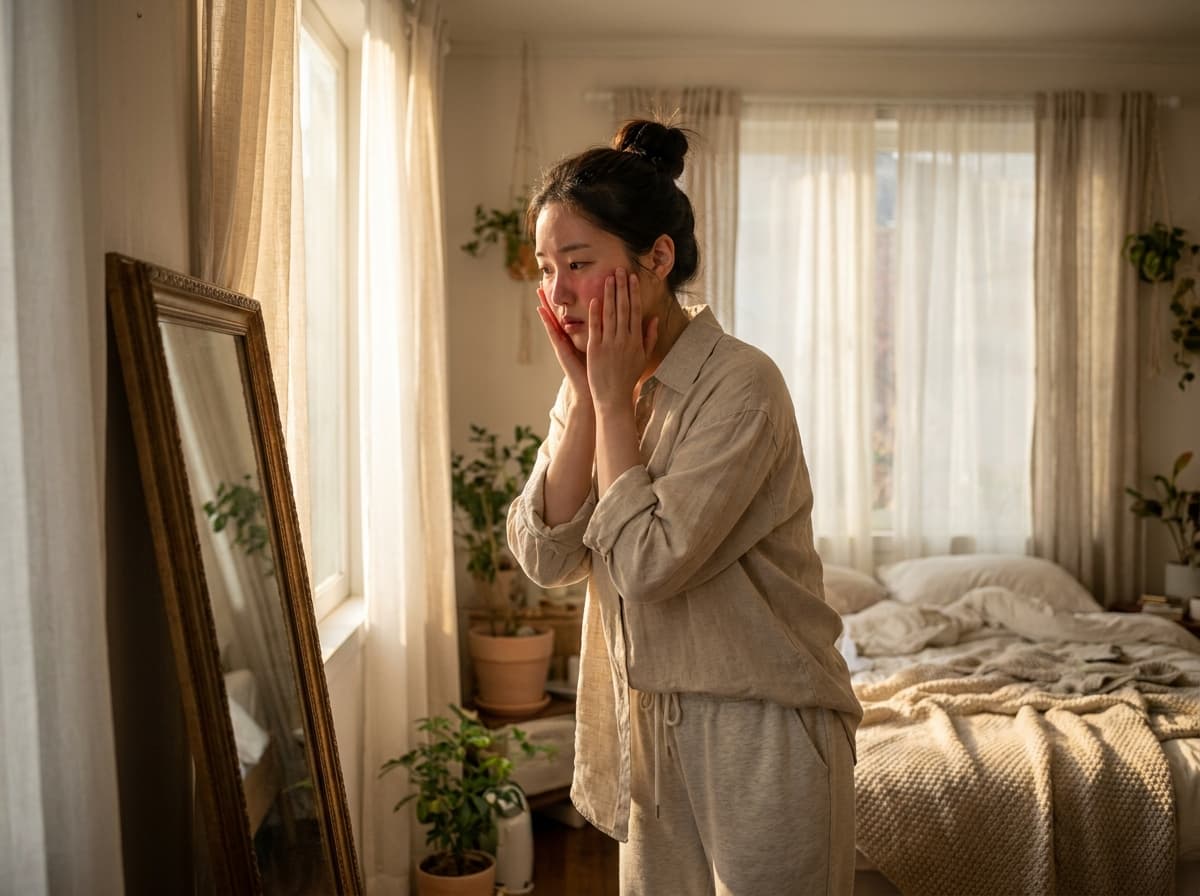
You look in the mirror and your face is constantly red. It might look as if you've had a drink, or you might be embarrassed because your face gets red and feels hot even at the slightest stimulation. At first, you might dismiss it, thinking, 'Maybe I didn't sleep well' or 'Maybe the cosmetics don't suit me,' or you might manage it like general acne, only to have the symptoms worsen. Especially if you have bumps along with redness around your cheeks and nose, you should suspect 'rosacea' rather than just simple acne.
💡 [Key Answer] The 3 most common causes of constant red face symptoms: ① Inflammatory reaction / ② Vasodilation and autonomic imbalance / ③ Worsening gut environment and accumulation of toxins Dalimchae Korean Medicine Clinic treats the root of inflammation in the body through gut detox and increases skin regeneration to help you regain a healthy complexion.
Why does my face keep getting red, and how is it different from acne?
Redness on the face can appear for various reasons, but 'rosacea' in particular is a chronic inflammatory skin disease that differs from acne in its pathogenesis and symptom patterns. Rosacea is characterized by persistent erythema, vasodilation, and papules or pustules, mainly in the central part of the face. It may also be accompanied by neurogenic symptoms such as a feeling of heat, stinging, or itching. On the other hand, acne is characterized by comedones (blackheads, whiteheads) and inflammatory papules caused by excessive sebum secretion. Since the redness of rosacea appears as blood vessels expand abnormally, the fundamental solution must address the weakened vasoconstriction function.
Rosacea, internal inflammation and autonomic imbalance are the main culprits.
Although the exact cause of rosacea is not yet fully understood, genetic factors, immunological abnormalities, microbial factors (Demodex), UV rays, and, above all, 'autonomic nervous system imbalance' and 'gut environment deterioration' are cited as important factors in its onset and worsening. If the sympathetic nervous system is excessively hyperactive due to stress or overwork, the blood vessels in the face can easily dilate and the inflammatory reaction can intensify. In addition, if gut health is poor, the gut barrier function is weakened, allowing harmful substances (toxins) to travel through the blood and cause or worsen skin inflammation, a relationship known as the 'Gut-Brain Axis.' In other words, rosacea is not just a problem with the surface of the skin, but a warning light that internal imbalances in the body are appearing on the skin.
How does Korean medicine treatment contribute to the improvement of rosacea symptoms?
Recent studies show that Korean medicine treatment can have a positive effect on improving rosacea and facial flushing symptoms. A systematic review and meta-analysis study on herbal medicine treatment for rosacea, published in the Journal of Korean Medical Ophthalmology & Otolaryngology & Dermatology in 2021, analyzed several randomized controlled trials (RCTs) and confirmed that combined therapy of herbal medicine and Western medicine for rosacea is safe and effective. The researchers concluded that these results suggest the effectiveness of a Korean medical approach to the multifaceted pathophysiology of rosacea.
In addition, a clinical case reported in the Minjok Medicine Newspaper in 2014 showed that a male rosacea patient in his 40s who took Ja-eum-gang-hwa-tang for 3 months (60 days) had a significant improvement, with about 70% of his long-lasting facial flushing disappearing. In this way, Korean medicine cultivates the skin's own power to recover through treatments that address fundamental causes such as imbalances in the five organs and six viscera, blood circulation problems, and autonomic nervous system dysfunction, as well as symptoms appearing on the skin.
Based on this data, Dalimchae Korean Medicine Clinic views rosacea not as a simple skin problem, but as a problem with the body's immune system and gut function. We focus on reducing skin inflammation and stabilizing abnormal vasodilation while increasing the body's natural healing power to prevent recurrence. Especially for many patients looking for an Incheon Rosacea Korean Medicine Clinic, we are helping them regain healthy skin through fundamental constitutional improvement rather than simply suppressing symptoms.
Dalimchae's 'Gut Detox' Treatment to Uproot Skin Inflammation
Chronic inflammatory skin diseases like rosacea are closely related to gut health. Dalimchae Korean Medicine Clinic identifies the root cause of skin inflammation as internal toxins and gut environment deterioration, and through gut detox treatment, we strengthen skin immunity and create an environment where the skin can regenerate itself.
Toxins accumulated in the gut wall can travel through the blood and cause inflammation on the skin or worsen other immune diseases such as atopy, seborrheic dermatitis, acne, and even gastroesophageal reflux disease. Dalimchae's gut detox treatment is based on herbal prescriptions that discharge toxins and normalize gut function according to individual constitution and symptoms. This calms hypersensitive immune responses and stabilizes abnormally dilated blood vessels to alleviate facial redness. It also strengthens skin barrier function to increase resistance to external stimuli and prevent recurrence. As a Songdo Dermatitis Korean Medicine Clinic, we establish a customized treatment plan by closely diagnosing each individual's physical condition.
Is it Rosacea? Self-Diagnosis Checklist
If 3 or more of the following items apply, it's a good idea to suspect rosacea and seek a professional diagnosis.
- Your face gets red easily and lasts for a long time even at minor stimuli (temperature changes, certain foods, stress).
- There is always redness on your face, especially around the cheeks and nose.
- You often feel a stinging or burning heat on your skin.
- Redness is accompanied by bumps or pustules.
- Capillaries are dilated and visible to the naked eye.
- Your skin feels very tight or dry after washing your face.
- It is sometimes accompanied by itching.
Judgment Criteria:
- If 3 or more apply → Suspect rosacea → Review Incheon Korean Medicine Clinic Dalimchae's treatment.
- If 5 or more apply → Immediate professional diagnosis and treatment recommended.
Q. How is rosacea different from acne? A. Rosacea is an inflammatory disease mainly characterized by persistent redness in the central part of the face, vasodilation, and stinging or burning symptoms. On the other hand, acne is characterized by comedones and inflammatory bumps caused by excessive sebum secretion, and its cause and appearance are different.
Q. Why does rosacea keep recurring? A. Rosacea is not just a skin surface problem, but is closely related to internal causes such as the body's inflammatory environment, immune system, and autonomic imbalance. If these root causes are not resolved, it is easy to recur with only external management.
Q. How long does it take to treat rosacea with Korean medicine? A. The treatment period varies depending on the severity of individual symptoms, constitution, and lifestyle, but usually requires steady treatment for 3 to 6 months or more. Dalimchae Korean Medicine Clinic aims for constitutional improvement to prevent recurrence along with symptom relief.
Q. Are there any foods or lifestyle habits to avoid during rosacea treatment? A. It is best to avoid factors that dilate blood vessels, such as hot or spicy foods, caffeine, and alcohol. In addition, lifestyle improvements such as stress management, sufficient sleep, UV protection, and the use of mild cosmetics are important for enhancing the treatment effect.
The symptom of 'my face is constantly red' is not a problem that can be solved by enduring it. You no longer have to ignore the signals your body has been sending for a long time. If you approach it in the right direction, your body will react faster than you think. Bring your symptoms exactly as they are. At Dalimchae Korean Medicine Clinic, we will find the cause together.
Where life blooms. For herbal medicine, it's Dalimchae Korean Medicine Clinic. Check your symptoms first through the AI consultation on the Dalimchae Korean Medicine Clinic website!
This article is health information compiled by the Dalimchae medical team based on questions often received in the consultation room. Medical Supervision | Skin Treatment Standards Dalimchae Korean Medicine Clinic Incheon Branch KMD Yang Yu-chan (Inflammatory Skin Disease Column)