
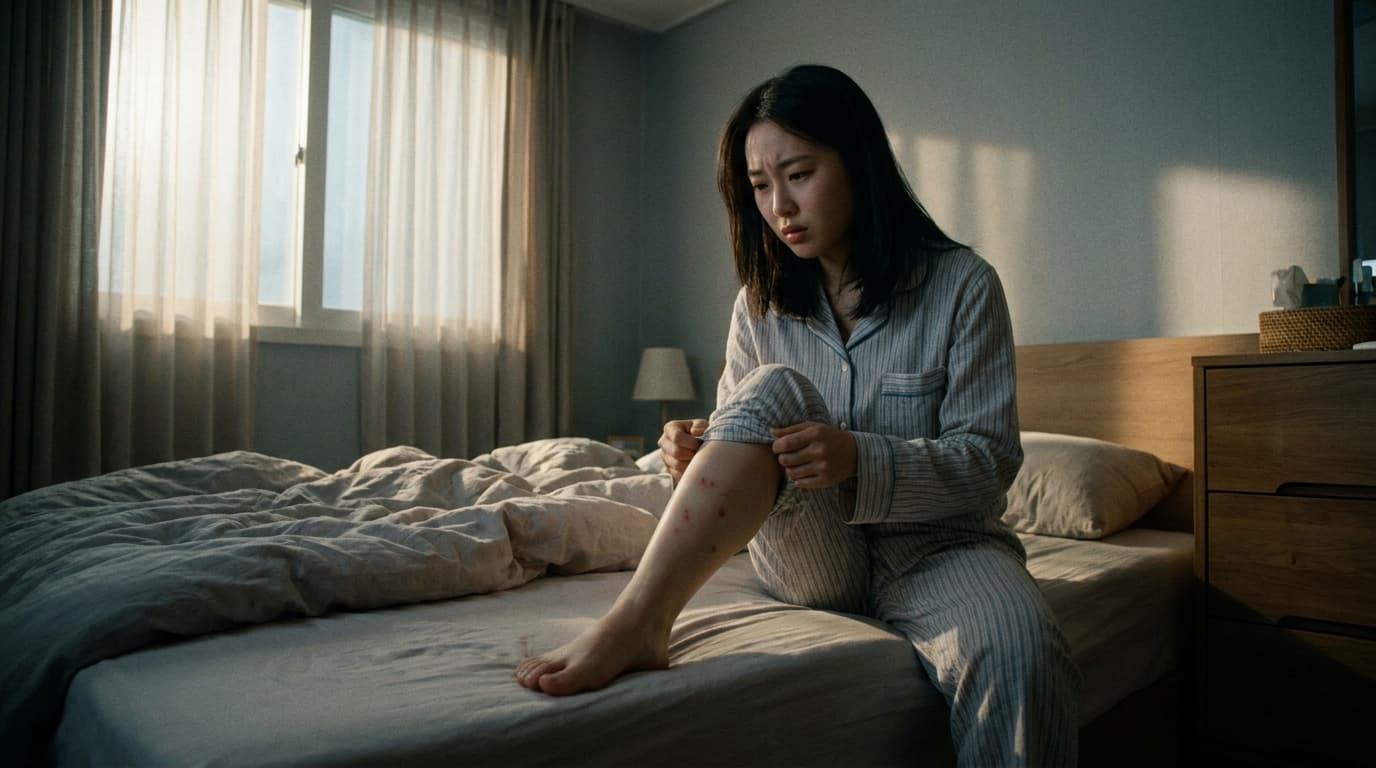
Why do non-itchy red spots appear? It might not just be a skin issue.
Red spots on the skin are often diagnosed as a type of Purpura. Purpura occurs when blood leaks from tiny blood vessels under the skin, and it can take various forms depending on its size and shape. Especially in the case of non-itchy red spots, attention must be paid to internal causes different from typical dermatitis.
One of the most representative causes is an imbalance in the immune system. When our body's immune system overreacts or fails to function properly, inflammation can occur in the microvessels, weakening the vessel walls. This affects blood circulation and eventually leads to blood components leaking into skin tissue, forming red spots. Furthermore, gut health is also pointed out as a crucial cause. Just like the concept of the 'Gut-Brain Axis,' the gut has a profound impact not only on the brain but also on systemic immunity. If the intestinal wall is damaged and toxins (gut toxins) leak into the blood, it can cause a systemic inflammatory response and even disrupt the skin's immune system. This inflammatory response damages microvessels, leading to red spots. Other factors such as stress, medication, and certain infections can also influence the occurrence and aggravation of red spots. Since this is a 'warning light' from your body, it is important to correct the internal imbalance rather than just treating the visible symptoms.
Red spots, could it be Purpura? Self-diagnosis Checklist
If you fall under 3 or more of the following items, it's good to listen to the signals your body is sending and seek professional consultation.
- Red spots are concentrated in specific areas like the legs, arms, or buttocks.
- The spots appear and disappear irregularly, sometimes reappearing in the same spot.
- There are no particular subjective symptoms such as itching or pain besides the spots.
- You have recently experienced upper respiratory infections like a cold or gastrointestinal issues like enteritis.
- You feel easily fatigued or feel that your immunity has dropped.
- You are under a lot of stress or have poor sleep quality.
- You also experience digestive symptoms like indigestion, abdominal pain, or diarrhea.
3 or more items: Suspected skin inflammation due to gut health issues and immune imbalance → Review combined Korean medicine treatment. 5 or more items: Immediate visit for precise diagnosis and treatment is recommended.
Even if Western tests are 'normal,' Korean medicine finds the cause.
Many people visit hospitals for non-itchy red spots and receive an 'unknown cause' diagnosis or are prescribed steroid ointments because no special abnormalities are found in tests. However, if symptoms repeat or worsen, it becomes frustrating. In Korean medicine, these red spots are interpreted deeply as internal imbalances, especially issues with gut health and immune function, rather than just skin problems.
At Dalimchae Korean Medicine Clinic, we find the cause of red spots appearing on the skin in Gut Detox. Modern dietary habits, stress, and environmental pollution can easily damage the intestinal mucosa and promote the growth of harmful bacteria, causing 'Leaky Gut Syndrome.' If gaps appear in the intestinal wall, undigested food particles or toxins enter the blood and circulate throughout the body, causing chronic inflammatory responses. Skin is one of the organs where these inflammatory responses appear first. Dalimchae creates a fundamental immune environment to prevent red spots from reappearing through treatment that discharges these Gut Toxins and regenerates the intestinal mucosa firmly. In Korean medicine, this process is called 'Cheong-yeol-hae-dok' (Clear Heat and Detoxify), which is considered important for removing unnecessary heat and toxins from the body, clearing the blood, and restoring immunity.
Allergic Purpura, Significant Effects of Korean Medicine Treatment
The effects of Korean Medicine treatment on skin diseases like Purpura are being continuously researched. According to a systematic review of randomized controlled trials (RCTs) published up to 2020, a herbal medicine called Huaiqihuang showed significant benefits in treating pediatric Henoch-Schonlein Purpura Nephritis (HSPN). This study included 7 RCTs, and when conventional Western treatment and herbal medicine were combined, the post-clinical management rate was 1.58 times higher than that of the single treatment group (RR 1.58; 95% CI 1.17 to 2.14; n=6), and the total effective rate was also 1.34 times higher (RR 1.34; 1.16 to 1.54; n=6). Researchers concluded that combined herbal treatment showed better post-clinical management and total effective rates than single treatment, with minor side effects. These data suggest that Korean medicine treatment can play a positive role in promoting recovery and preventing recurrence of inflammatory skin diseases like Purpura. At Dalimchae, we provide customized gut detox treatment tailored to each patient's constitution and symptoms based on these Korean medical principles, going beyond simple symptom relief to help restore the overall immune balance and healthy skin.
High Improvement Rate of Purpura Korean Medicine Treatment Confirmed by Domestic Research
There are also domestic studies proving the efficacy of Korean medicine treatment for allergic Purpura. A study titled "A Clinical Study on 106 Cases of Allergic Purpura" published in the Journal of Internal Korean Medicine in 2007 analyzed the results of Korean medicine treatment for 106 patients. The average treatment period was 6.7±6.2 weeks, with a follow-up of 15-24 months. The results showed that 67 out of 73 pediatric patients under 18 (91.8%) achieved complete recovery, with only 3 (4.5%) confirming recurrence. For adult patients 19 and older, 23 out of 33 (69.7%) achieved complete recovery, with 5 (21.7%) reporting recurrence. This study shows that Korean medicine treatment particularly exhibited high recovery rates and low recurrence rates for pediatric Purpura patients and significant improvement effects for adult patients.
While Western steroid treatment helps alleviate acute symptoms like abdominal or joint pain, it is known that it does not affect the purpura itself or kidney involvement. In contrast, Korean medicine treatment focuses on approaching the root cause of purpura and enhancing the body's own recovery power. These domestic and international research results can be a hopeful message for those seeking a Purpura clinic in Incheon. Dalimchae Incheon Branch, based on these research results, combines long clinical experience and know-how to help prevent the recurrence of red spots and regain a healthy life through customized treatment for each individual. Especially as an Incheon Skin Korean Medicine Clinic, we aim to contribute to the promotion of skin health for local residents.
Purpura requires treatment beyond just suppressing symptoms.
Non-itchy red spots, or Purpura, are not just a problem on the skin surface, so treatments that only temporarily suppress symptoms have limitations. What's important is to find and solve the 'root' of immune imbalances and inflammatory responses inside the body. At Dalimchae, we conduct thorough consultations and diagnoses to identify the root cause of red spots. We comprehensively evaluate the overall state of the body through traditional Korean medical diagnoses like pulse and abdominal diagnosis, as well as autonomic nerve balance tests and body composition analysis.
Afterward, we perform Gut Detox treatment to remove gut toxins, regenerate damaged intestinal mucosa, and strengthen immunity through sophisticated herbal prescriptions tailored to the individual's constitution and symptoms. Herbal medicine treats inflammation from deep within the body, clears the blood, and improves the environment where red spots occur. Along with this, we perform acupuncture, moxibustion, and pharmacopuncture to facilitate qi and blood circulation, enhance skin regeneration, and activate systemic immune functions. This integrated treatment process can help improve not only red spots but also other skin diseases like atopy and hives, or even chronic indigestion. Dalimchae Incheon Branch is doing its best to help patients regain a healthy body and clear skin.