
Hello. This is Dalimchae Korean Medicine Clinic.
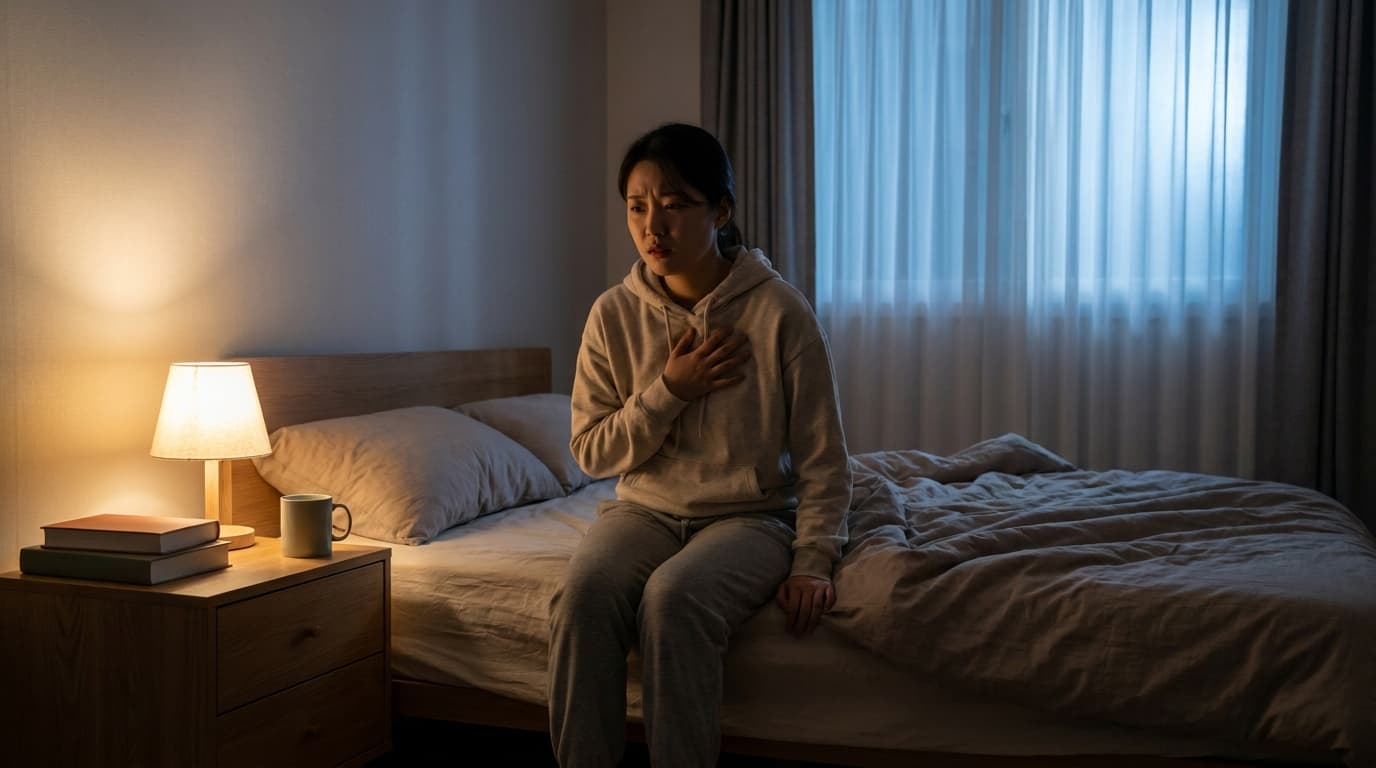
My heart is racing too much. Is it a heart problem or an anxiety disorder?
A sudden feeling of your heart sinking, or your heart thumping so hard that you feel anxious and even find it difficult to breathe. Many people worry, 'Is there something wrong with my heart? Or do I have a mental problem like an anxiety disorder?' and experience significant discomfort in their daily lives. They visit hospitals complaining that their heart is racing too much, but often feel even more frustrated when test results always come back 'normal'. However, you should never ignore these signals your body is sending.
💡 [Key Answer] The 3 most common causes of my heart is racing too much: ① Autonomic nervous system imbalance / ② Anxiety disorder due to chronic stress / ③ Cardiac hypersensitivity Dalimchae Clinic restores the balance of the collapsed autonomic nervous system to stabilize excessive palpitations and anxiety symptoms.
Why does my heart keep racing and why do I feel overwhelmed by anxiety?
Heart palpitations are symptoms of feeling your heart beating fast or irregularly. While many people immediately think of heart disease when they feel heart palpitations, they are actually much more often caused by non-cardiac reasons such as autonomic nervous system imbalance, anxiety, or stress. Especially if no particular abnormality is found in various tests, it is necessary to suspect problems related to the autonomic nervous system.
The autonomic nervous system is a nervous system that regulates all unconscious functions of our body. It plays an essential role in maintaining life, such as heart rate, breathing, digestion, and body temperature regulation. It is divided into the sympathetic and parasympathetic nervous systems, which work in balance with each other. If this balance is broken due to stress or overwork, symptoms such as excessive heart palpitations, cold sweats, indigestion, dizziness, or insomnia can appear.
Heart palpitations and anxiety, how are they treated in Korean medicine?
If you continuously experience heart palpitations and anxiety despite no particular abnormality in modern medical tests, this can be seen as a state where the regulatory function of the autonomic nervous system has weakened. In Korean medicine, these symptoms are called palpitations (心悸亢進) or throbbing (怔忡), and rather than simply suppressing symptoms, we focus on resolving the fundamental cause of the symptoms by correcting the balance of the entire body.
Recent studies support the effectiveness of Korean medicine treatment for mental health problems such as anxiety disorders. In a study published in MDPI in 2024, as a result of applying Korean medicine treatment for at least 4 weeks to 67 patients with anxiety disorders, anxiety (STAI X-1; STAI X-2; BAI, p < 0.0001), depression (BDI-II, p < 0.0001), and anger (AKI-K-I; AKI-K-O, p < 0.05) symptoms significantly decreased, and quality of life (EQ-5D; EQ-VAS, p < 0.0001) was also found to be improved. The researchers concluded that these results suggest that Korean medicine treatment can have a positive effect on improving clinical symptoms and quality of life in patients with anxiety disorders.
Also, in a systematic literature review and meta-analysis on Cardiac Neurosis published in Frontiers in Psychiatry by a research team from the College of Korean Medicine at Kyung Hee University in 2024, it was confirmed that Korean medicine treatment is effective for cardiovascular and neuropsychological symptoms caused by autonomic dysfunction. As a result of analyzing 151 randomized controlled trials, herbal medicine treatment alone, combined treatment of herbal medicine and Western medicine, combination of herbal medicine and acupuncture treatment, and acupuncture treatment alone generally showed better effects than Western medicine treatment alone. Especially, the combination of herbal medicine and psychotherapy showed better effects than the combination of Western medicine and psychotherapy. Through this study, the researchers emphasized that Korean medicine treatment is effective in improving anxiety, depression, and somatization symptoms in patients with cardiac neurosis, and that Korean medicine treatment can be an important basis for developing clinical practice guidelines for various symptoms caused by autonomic imbalance.
Based on this data, Dalimchae Clinic Incheon Branch goes beyond simply calming symptoms for those experiencing heart palpitations and anxiety and proceeds with treatment that helps the brain stabilize itself by restoring the balance of the autonomic nervous system.
How is Dalimchae Clinic's 'Autonomic Stabilization' treatment different?
Dalimchae Clinic views the imbalance of the autonomic nervous system, which causes heart palpitations and anxiety symptoms, as the key cause and focuses on stabilizing it. Our body's autonomic nervous system is like a car's engine. If excessive stress and tension persist, the sympathetic nervous system becomes hyperactive like an overheated engine, making the heart beat fast and amplifying anxiety. At this time, the brain cannot rest sufficiently and continues to send warning signals.
Dalimchae Clinic's autonomic stabilization treatment focuses on lowering the overheated heat of the nervous system and creating an environment where the brain can rest comfortably. In Korean medicine, this is called 'Suseunghwagang (水昇火降)'. In other words, it is to restore the balance of whole-body circulation by lowering the hot energy of the head and raising the cold energy of the lower body. Through this, the excessively hyperactive sympathetic nervous system is relaxed, and the function of the lowered parasympathetic nervous system is activated to restore the balance of the autonomic nervous system. This approach increases the body's recovery power, cultivates resistance to stress, and enables fundamental treatment that prevents recurrence.
Many people looking for an Incheon heart palpitations clinic often feel frustrated by being dismissed as having 'mental problems' or being told 'there is no particular abnormality'. However, according to an oriental clinical status survey on autonomic dysfunction, oriental doctors identify through medical history taking that the main complaints of patients related to autonomic dysfunction are 'heart palpitations' (59%) and 'anxiety/nervousness' (88%) and apply herbal treatments. This is in line with the treatment philosophy of Dalimchae Clinic.
Am I also in an autonomic imbalance? Self-diagnosis checklist
If 3 or more of the following questions apply to you, you may need to suspect heart palpitations and anxiety symptoms due to autonomic imbalance and consider the herbal complex treatment at Dalimchae Clinic Incheon Branch. Immediate visit is recommended if 5 or more apply.
- My chest often feels stuffy and palpitations occur for no reason.
- It's hard to fall asleep because my heart beats fast when I lie down to sleep.
- I shake and break out in cold sweats when I'm nervous or stressed.
- I feel anxious or nervous easily about small things.
- I often feel it's difficult to breathe or my chest is stuffy.
- I often experience dizziness or lightheadedness.
- Digestion is poor, the stomach is uncomfortable, and gas often builds up.
- Fatigue is extreme and I don't feel refreshed even after sleeping.
- Headaches or migraines occur frequently.
- Hands and feet are cold or there is a tingling sensation.
Frequently Asked Questions (FAQ)
Q. How long should heart palpitations be treated? A. The treatment period varies depending on the severity of the patient's symptoms, the cause of occurrence, and chronicity. Generally, steady treatment and management are needed to restore the balance of the autonomic nervous system, and in the beginning, we visit 2-3 times a week to stabilize symptoms quickly, and then gradually reduce the number of visits.
Q. Can heart palpitations occur even if there is no heart disease? A. Yes, it's definitely possible. Even if there is no structural problem in the heart itself, heart palpitation symptoms can appear due to stress, anxiety, overwork, autonomic imbalance, etc. Korean medicine sees this as non-organic heart palpitations and focuses on autonomic nervous system regulation.
Q. I have both heart palpitations and an anxiety disorder; can they be treated together? A. Yes, they can be treated together. Heart palpitations and anxiety disorders often have a common root in the imbalance of the autonomic nervous system. Dalimchae Clinic helps improve both symptoms simultaneously through treatment that stabilizes the autonomic nerves.
Q. What kind of tests are done at an Incheon anxiety disorder clinic? A. Dalimchae Clinic Incheon Branch utilizes various Korean medical diagnostic methods such as pulse wave tests and body composition tests to objectively evaluate the patient's overall health status and autonomic nervous system function. Through this, we establish a personalized treatment plan for each individual.
Heart palpitations and anxiety are not problems that can be solved by enduring them. You no longer have to ignore the signals your body has been sending for a long time. If you approach in the right direction, the body responds faster than you think. Bring your symptoms exactly as they are. We will find the cause together at Dalimchae Clinic.
Where life blooms. For herbal medicine, it's Dalimchae Korean Medicine Clinic. Check your symptoms similar to mine through the AI consultation on the Dalimchae Clinic website first!
This article is health information compiled by Dalimchae medical staff based on questions frequently received in the treatment room. Medical Supervision | Brain and Autonomic Nervous System Treatment Standards Dalimchae Clinic Incheon Branch Korean Medicine Doctor Min Jihong (Anxiety Disorder Column)