
Hello. This is Dalimchae Korean Medicine Clinic.
My Heart is Pounding and I Feel Anxious - A Warning Signal from the Autonomic Nervous System
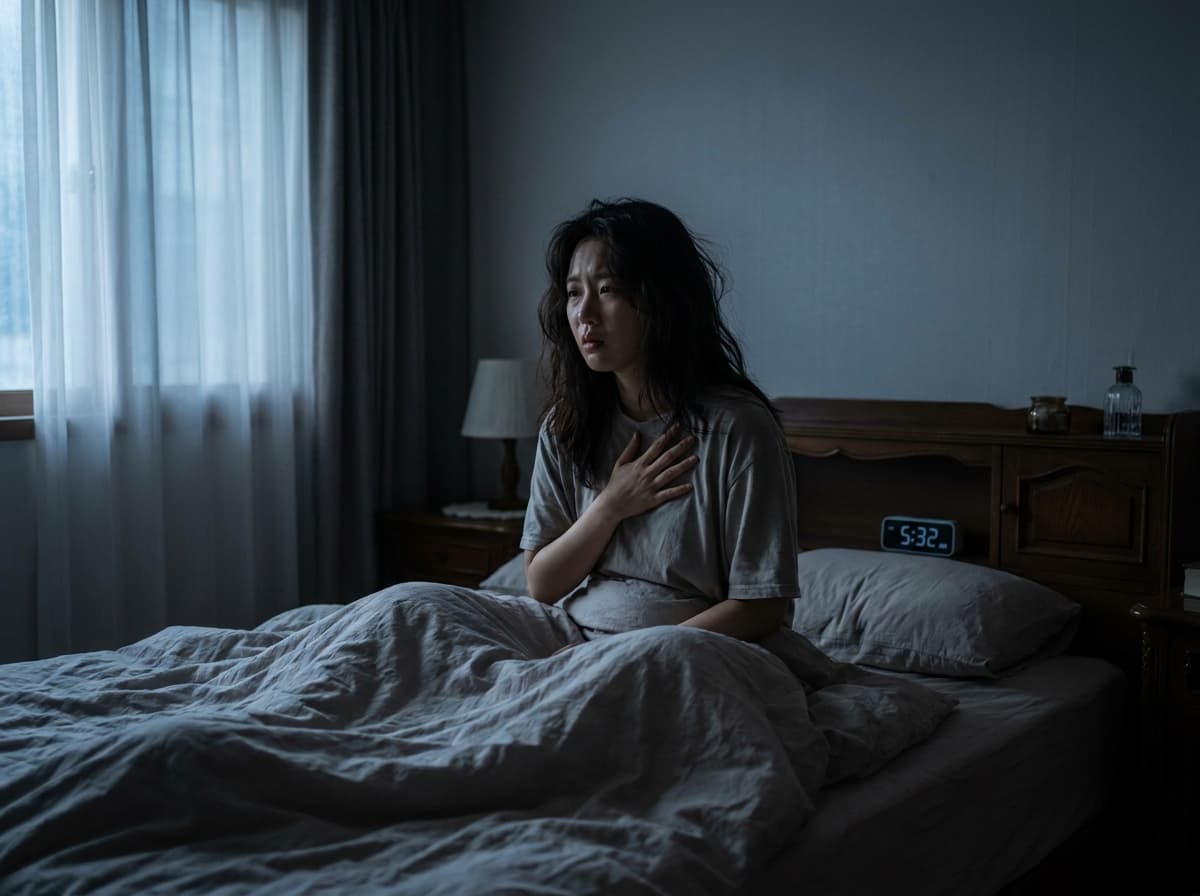
Have you ever felt your chest tighten and your heart pound violently for no apparent reason, accompanied by overwhelming anxiety? Many people experience these symptoms but tend to dismiss them, thinking, 'It's nothing,' or 'It's just stress.' However, these signals can be a powerful warning that an important balance in our body is being broken. Especially in modern society where stress and tension are prevalent, these physical and mental symptoms are becoming increasingly common.
💡 [Key Answer] The 3 most common causes of "My heart is pounding and I feel anxious": ① Autonomic nervous system imbalance due to excessive stress / ② Chronic fatigue accumulation / ③ Abnormalities in neurotransmitter regulation in the brain Dalimchae Clinic stabilizes unstable autonomic nervous systems and restores mind-body functions through autonomic stabilization treatment.
Why Do I Suddenly Feel Heart Palpitations and Anxiety? Could It Be 'This'?
Our body's autonomic nervous system plays an important role in maintaining life activities regardless of our will, such as heartbeat, breathing, digestion, and body temperature regulation. This autonomic nervous system is largely divided into the sympathetic and parasympathetic nervous systems, and our body maintains a stable state when the two systems are in proper balance.
The problem is the chronic stress and irregular lifestyle habits of modern people. Excessive stress over-stimulates the sympathetic nervous system, causing the body to remain in a state of 'crisis.' This over-activation of the sympathetic nervous system causes the heart to beat faster, raises blood pressure, and induces feelings of anxiety, impatience, and the sensation that the heart might burst. In Korean medicine, this imbalance of the autonomic nervous system is explained as an imbalance of Yin and Yang, and is specifically diagnosed as 'Sim-Dam-Heo-Geop (心膽虛怯),' a state where the functions of the heart and gallbladder (gallbladder) are weakened, making one easily startled and fearful at small stimuli.
Autonomic Dysfunction - Will It Get Better Simply by Resting?
Many people think that if symptoms of heart palpitations and anxiety appear, they will get better if they rest enough. While rest is important, chronic autonomic imbalance, or autonomic dysfunction, is often difficult to resolve through simple rest alone. If neglected, it can worsen into various physical and mental symptoms such as panic disorder, depression, insomnia, chronic fatigue, indigestion, headache, and dizziness.
This is because the autonomic nervous system affects the entire body. When the brain and autonomic nervous system overheat due to stress, a break in the autonomic balance can be confirmed in indicators such as heart rate variability (HRV). HRV is an objective test that measures minute changes in the heartbeat to evaluate the activity and balance of the autonomic nervous system, and it is widely used in clinical Korean medicine. If symptoms persist despite no specific organic abnormalities in tests, it is necessary to suspect autonomic dysfunction.
How Does Korean Medicine View and Treat Autonomic Imbalance?
Dalimchae Clinic aims for fundamental restoration of the autonomic nervous system's balance, rather than simple symptom suppression, for autonomic dysfunction. In Korean medicine, the heart is seen as an important organ that governs the spirit and emotions beyond just an organ that pumps blood. Therefore, the core of the treatment is to create an environment where the brain and autonomic nervous system can rest by correcting the function of the heart.
A study published in 2004 in a journal by John Wiley & Sons, Ltd., evaluated the effects of 'Ondam-tang-gami-bang,' a traditional Korean herbal prescription, in a randomized controlled trial of 40 stressed medical students. As a result, the group taking the medicine showed significant decreases in systolic blood pressure and levels of the stress hormones norepinephrine and cortisol. Positive changes were also confirmed in psychological variables such as anxiety, depression, stress, and emotional state. The researchers concluded that this herbal prescription can alleviate stress-related physiological and psychological symptoms by stabilizing the sympathetic nervous system. These data suggest that Korean medicine treatment can be effective in regulating over-activation of the autonomic nervous system due to stress. At Dalimchae Clinic, based on this treatment principle of regaining autonomic balance, we help patients find peace of mind and body through customized prescriptions tailored to each individual's constitution and symptoms.
According to another domestic study, the 'Survey on the Clinical Status of Autonomic Dysfunction in Korean Medicine' published in the Journal of Oriental Neuropsychiatry by Park Hee-young et al. in 2023, in a survey of 959 Korean medicine doctors, 'heart palpitations' (59%) was the highest physical symptom among autonomic dysfunction patients, and 'anxiety/impatience' (88%) was the most common psychological and mental symptom. Especially for herbal treatment for autonomic dysfunction, the average treatment period was 2-3 months (42%), and 91% of all respondents said they received treatment within 3 months, showing the actual clinical effectiveness of Korean medicine treatment. These results mean that heart palpitations and anxiety are core to autonomic dysfunction, and Korean medicine treatment can be an effective solution. Dalimchae Clinic precisely diagnoses heart palpitations and anxiety experienced by patients as a problem of the autonomic nervous system based on actual clinical data and helps recovery by suggesting appropriate treatment periods and methods.
How Does Dalimchae Clinic's Autonomic Stabilization Treatment Work?
At Dalimchae Clinic Songdo Branch, we perform autonomic stabilization treatment to correct the autonomic imbalance of patients who visit with symptoms of heart palpitations and anxiety. When the balance of the autonomic nervous system is broken, the brain cannot rest and remains in a state of constant tension. This state makes the body and mind exhausted like an overheated engine. We focus on lowering the excessive heat of the nervous system and creating an environment where the brain can rest comfortably — in Korean medicine, this is called 'Suseunghwagang (水升火降).'
The treatment proceeds through the following process:
- Precision Diagnosis: We objectively identify the patient's current autonomic state, stress index, and physical activity level through heart rate variability (HRV) tests and pulse wave diagnosis. We also meticulously analyze the cause of symptoms and the patient's constitutional characteristics through detailed inquiries and consultations.
- Customized Herbal Prescription: Based on the diagnosis results, we prescribe customized herbal medicines that stabilize the over-stimulated sympathetic nervous system and activate the lowered parasympathetic nervous system. At Dalimchae Clinic, a Songdo autonomic nervous system clinic, we use traditional Korean medicine prescriptions effective for mind-body stability, such as 'Ondam-tang' and 'Gwibi-tang,' customized for each individual.
- Complex Korean Medicine Treatment: We combine acupuncture, pharmacopuncture, and moxibustion therapy to improve Qi and blood circulation and relax the tense nervous system. Especially, acupuncture treatment is effective in alleviating stress by stabilizing the sympathetic nervous system and activating the parasympathetic nervous system.
- Life Management Guidance: We provide specific guides that can be practiced in daily life, such as eating habits, sleep habits, and stress management methods, to increase treatment effects and prevent recurrence.
Autonomic Dysfunction, Could It Be Me? Symptom Checklist
If 3 or more of the following questions apply, suspect autonomic dysfunction, and if 5 or more apply, we recommend starting accurate diagnosis and treatment through consultation with the medical staff of Dalimchae Clinic Songdo Branch.
- Suddenly, heart pounds and anxiety strikes for no special reason.
- It's frequent to feel that the chest is tight and it's hard to breathe.
- Suffering from insomnia, such as having difficulty falling asleep at night or waking up frequently.
- Chronic fatigue is severe, and it's not refreshing even after resting.
- Frequently feel headache or dizziness, and the body's balance doesn't seem to be well maintained.
- There are gastrointestinal problems such as indigestion or repeating constipation and diarrhea.
- Easily get irritated at small things or have severe mood swings.
- There are symptoms of cold sweats, or hands and feet are cold or numb.
- The neck or shoulders are frequently tight and stiff.
- Hospital tests say there's no special abnormality, but symptoms continue.
FAQ
Q. How long should I be treated for heart palpitations? A. The treatment period can vary depending on the individual's symptom severity, constitution, cause, and lifestyle habits. However, according to clinical studies, many autonomic dysfunction patients experience significant improvement with Korean medicine treatment within 2 to 3 months. At Dalimchae Clinic, we help gradual recovery through steady treatment and management.
Q. Can anxiety also be treated with Korean medicine? A. Yes, anxiety is one of the representative psychological symptoms of autonomic dysfunction and can be sufficiently improved through Korean medicine treatment. At Dalimchae Clinic, we effectively manage anxiety by resolving autonomic imbalance, the root cause of anxiety, and providing treatments that stabilize the mind and body.
Q. Does autonomic dysfunction get better naturally? A. While mild symptoms due to temporary stress or fatigue may improve naturally, chronic autonomic dysfunction rarely gets better on its own. Rather, if neglected, symptoms can worsen or develop into other diseases, so active treatment is important.
Q. I have heart palpitations and insomnia together; can they be treated at the same time? A. Yes, heart palpitations and insomnia are symptoms commonly accompanied due to autonomic dysfunction and can be improved simultaneously through autonomic stabilization treatment. At Dalimchae Clinic, we aim to restore overall mind-body health by diagnosing and treating such complex symptoms integratedly.
Symptoms of heart palpitations and anxiety are not problems to be solved by enduring. You no longer have to ignore the signals your body has been sending for a long time. If you approach in the right direction, the body responds faster than you think. Bring your symptoms exactly as they are. At Dalimchae Clinic, we will find the cause together.
Where life blooms. For herbal medicine, it's Dalimchae Korean Medicine Clinic. Check your symptoms similar to mine through the AI consultation on the Dalimchae Clinic website first!
This article is health information compiled by Dalimchae medical staff based on questions frequently received in the treatment room. Medical Supervision | Brain/Autonomic Nervous System Treatment Standards Dalimchae Clinic Songdo Branch Korean Medicine Doctor Oh Hyunmin (Autonomic Dysfunction Column)