
Hello. This is Dalimchae Korean Medicine Clinic.
My Head Feels Like It's Bursting: Unknown Headaches, Could It Be Due to the Autonomic Nervous System?
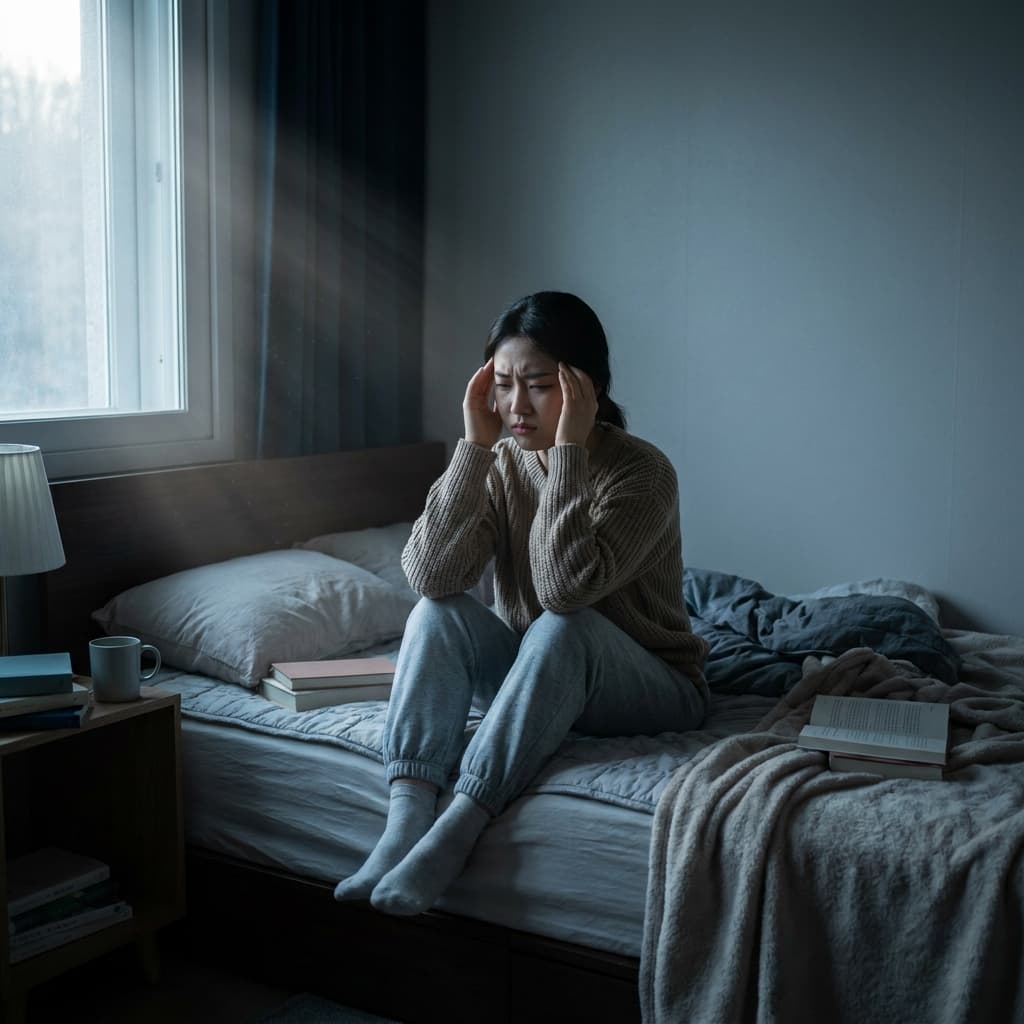
"My head feels like it's bursting." The pain contained in this single sentence is a great distress that goes beyond simple discomfort and paralyzes daily life. If you are diagnosed with no special abnormality even after various tests such as MRI and CT at the hospital, the frustration adds up. Many people are exhausted by the throbbing and aching that comes back even after trying to hold on with painkillers. These chronic headaches are not just head pain, but may be signals sent from deep within our body. In particular, the stress and irregular life of modern people directly affect important systems directly connected to brain function, being pointed out as the main culprits that induce and worsen headaches.
💡 [Key Answer] 3 most common causes of chronic headaches like "my head feels like it's bursting": ① Autonomic Nervous System Imbalance / ② Brain Blood Flow Regulation Abnormality / ③ Qi and Blood Circulation Decline and Waste Accumulation Dalimchae Clinic focuses on autonomic stabilization treatment that helps the brain recover on its own and regulate pain by correcting the broken autonomic balance.
Reasons for head pain, it may not be simple pain.
Headaches are common symptoms that everyone experiences at least once, but their causes and aspects are very diverse. Besides commonly known tension headaches or migraines, many people suffer from headaches whose clear causes are hard to find. These 'headaches of unknown cause' often start from an imbalance in the autonomic nervous system, which is an important regulation system of our body. The autonomic nervous system regulates functions essential for life maintenance, such as heart rate, respiration, digestion, and blood pressure regulation, regardless of our will. When the balance between the sympathetic and parasympathetic nerves is broken due to stress, lack of sleep, overwork, etc., abnormalities occur in brain blood flow regulation, which can appear as various nervous system symptoms such as headaches, dizziness, and chronic fatigue.
In Korean medicine, headaches are not seen as simple head pain, but are approached from a complex perspective such as systemic Qi and blood (氣血) circulation problems, functional abnormalities of the five organs and six viscera, and physical reactions to changes in the external environment. In particular, 'Liver Yang Rising (肝陽上亢)' where the energy of the liver soars upward due to stress and overwork, or 'Heart Qi Deficiency (心氣虛)' caused by mental and physical exhaustion, can be major causes of headaches. This approach provides an important clue to understanding and resolving the suffering of patients who experience persistent pain even if it is normal on examination.
Headaches, how will they improve with Korean medicine treatment? Autonomic stabilization and brain recovery
Dalimchae Clinic sees the fundamental cause of headaches as autonomic imbalance and brain function decline, and takes 'autonomic stabilization' as the core treatment principle. By relaxing excessively activated sympathetic nerves and restoring the function of declined parasympathetic nerves, we create an environment where the brain can rest comfortably and regulate pain on its own. Through this, we aim to make a healthy body where headaches do not recur, rather than simply suppressing pain.
Acupuncture treatment is well known to be effective in relieving and preventing headaches. According to a meta-analysis study published by the Cochrane Collaboration in 2016, a review of 22 clinical studies on 4,985 migraine patients confirmed that acupuncture treatment is effective in reducing migraine occurrence by more than 50%, and this preventive effect was confirmed to last for more than 6 months. In particular, it concluded that it has fewer side effects compared to existing drug treatments and is more effective in initial treatment response.
Also, the effectiveness of Korean medicine treatment can be confirmed in domestic studies. In a study published in the SCI(E)-level international journal 'Journal of Clinical Medicine' by a research team at Haeundae Jaseng Hospital of Korean Medicine for one year from September 2022, 80 patients with acute tension headaches induced by traffic accidents were compared between a group treated with suboccipital muscle pharmacopuncture (40 people) and a group treated with integrated Korean medicine treatment (40 people). As a result of the study, the pharmacopuncture-treated group showed a significantly faster decrease in headache intensity (NRS) and functional disability due to headache (HDI) than the group treated with integrated Korean medicine alone starting from the 3rd day of hospitalization, and showed a greater degree of improvement even at the time of discharge. In particular, the pharmacopuncture-treated group saw their NRS score decrease from 6.91 to 3.84 in just 3 days of hospitalization, with early recovery being prominent. These studies show that Korean medicine treatment can effectively alleviate headache pain and contribute to improving the impact on daily life. Dalimchae Clinic Songdo Branch is helping people escape the suffering of headaches and regain a healthy life through individual customized integrated Korean medicine treatments such as acupuncture, pharmacopuncture, and herbal medicine based on such scientific evidence.
Dalimchae Clinic's treatment that regains autonomic balance and lets the brain rest
A headache is similar to a state where the brain is overheated. When the balance of the autonomic nervous system is broken due to stress and overwork, the brain cannot rest and is constantly overloaded. Dalimchae Clinic Songdo Branch focuses on treatment that stabilizes this 'overheated brain' and regains the balance of the autonomic nervous system. In Korean medicine, this is called 'Suseung-hwagang (水升火降)', valuing the body's circulation principle of keeping the head cool and the lower abdomen warm.
Our body's autonomic nervous system is like a car's accelerator (sympathetic nerve) and brake (parasympathetic nerve). These two nerves must be appropriately harmonized for the body to operate smoothly, but modern life is prone to maintaining a state of constant tension and excitement with only the sympathetic nerve excessively activated. This imbalance leads to a decline in brain function, causing various symptoms such as headaches, dizziness, insomnia, anxiety, and concentration decline. Dalimchae Clinic creates an environment where the brain can sufficiently rest and recover through herbal medicine prescriptions and acupuncture treatments that strengthen the weakened parasympathetic nerve and calm excessive sympathetic nerve activity. This contributes to improving overall body function and quality of life, rather than just eliminating headaches.
Could I also have autonomic headaches? Self-Checklist
If 3 or more of the following items apply, it is recommended to suspect a headache due to autonomic imbalance and receive a consultation from a specialist.
- Throbbing and aching headaches of unknown cause occur frequently.
- Headaches do not disappear completely even after taking painkillers, or reappear soon.
- Headaches tend to worsen when stress or fatigue is severe.
- I often feel heart palpitations or stuffiness in my chest.
- The quality of sleep is poor, such as having difficulty falling asleep or waking up frequently.
- It is accompanied by gastrointestinal disorders such as poor digestion or gas in the stomach.
- The neck or shoulders are always stiff and painful.
- I frequently feel anxious or restless without reason.
- Concentration drops and memory is not what it used to be.
- I have cold sweats, cold hands and feet, or hot flashes.
When 3-4 apply: Suspected to be in the early stage of autonomic imbalance, and integrated Korean medicine treatment can be considered along with lifestyle improvements. When 5 or more apply: Since there is a high possibility that autonomic imbalance has progressed significantly, it is recommended to visit a professional medical institution like Dalimchae Clinic Songdo Branch, a Songdo headache clinic, for a consultation immediately for accurate diagnosis.
FAQ: Questions about headaches and Korean medicine treatment
Q. How long should chronic headaches be treated? A. The treatment period for chronic headaches varies depending on an individual's constitution, severity of symptoms, cause of onset, and lifestyle improvement efforts. Generally, steady management is important for autonomic imbalance treatment, and sufficient improvement can be expected through steady treatment for an average of 3 to 6 months.
Q. Headaches don't get better even though I keep taking painkillers. Why is that? A. Painkillers play a role in temporarily suppressing pain, but if the fundamental cause is not resolved, headaches can repeat. In particular, if painkillers are taken long-term for more than 10-15 days a month, it can lead to medication-overuse headaches, so caution is needed. In this case, Korean medicine treatment that finds the root of the pain and restores autonomic balance can be helpful.
Q. I also have dizziness or insomnia along with headaches. Can they be treated together? A. Yes, autonomic imbalance often causes various symptoms such as dizziness, insomnia, and indigestion in a complex way besides headaches. Dalimchae Clinic views all these associated symptoms as problems of the autonomic nervous system and approaches them integratedly, so you can expect the effect of improving not only headaches but also accompanying symptoms together.
Q. I'm looking for a place that is good at treating headaches among Songdo clinics. A. Dalimchae Clinic Songdo Branch sees the fundamental cause of headaches as autonomic imbalance and restores the balance of the brain and body through individual customized integrated Korean medicine treatments such as acupuncture, pharmacopuncture, and herbal medicine. We provide the best solutions for each individual's state based on systematic diagnosis and long clinical experience.
Headaches that feel like the head is bursting are not problems that can be solved by enduring. You no longer have to ignore the signals your body has been sending for a long time. If you approach in the right direction, the body responds faster than you think. Bring your symptoms exactly as they are. At Dalimchae Clinic, we will find the cause together and help you build the power for your body to recover on its own.
Where life blooms. For herbal medicine, it's Dalimchae Korean Medicine Clinic. Check your symptoms similar to mine through the AI consultation on the Dalimchae Clinic website first!
This article is health information compiled by Dalimchae medical staff based on questions frequently received in the treatment room. Medical Supervision | Brain and Autonomic Nervous System Treatment Standards Dalimchae Clinic Songdo Branch Korean Medicine Doctor Oh Hyunmin (Headache Column)