
Missing Periods in Your 30s? Could It Be Early Menopause?
Hello, this is Dalimchae Korean Medicine Clinic.
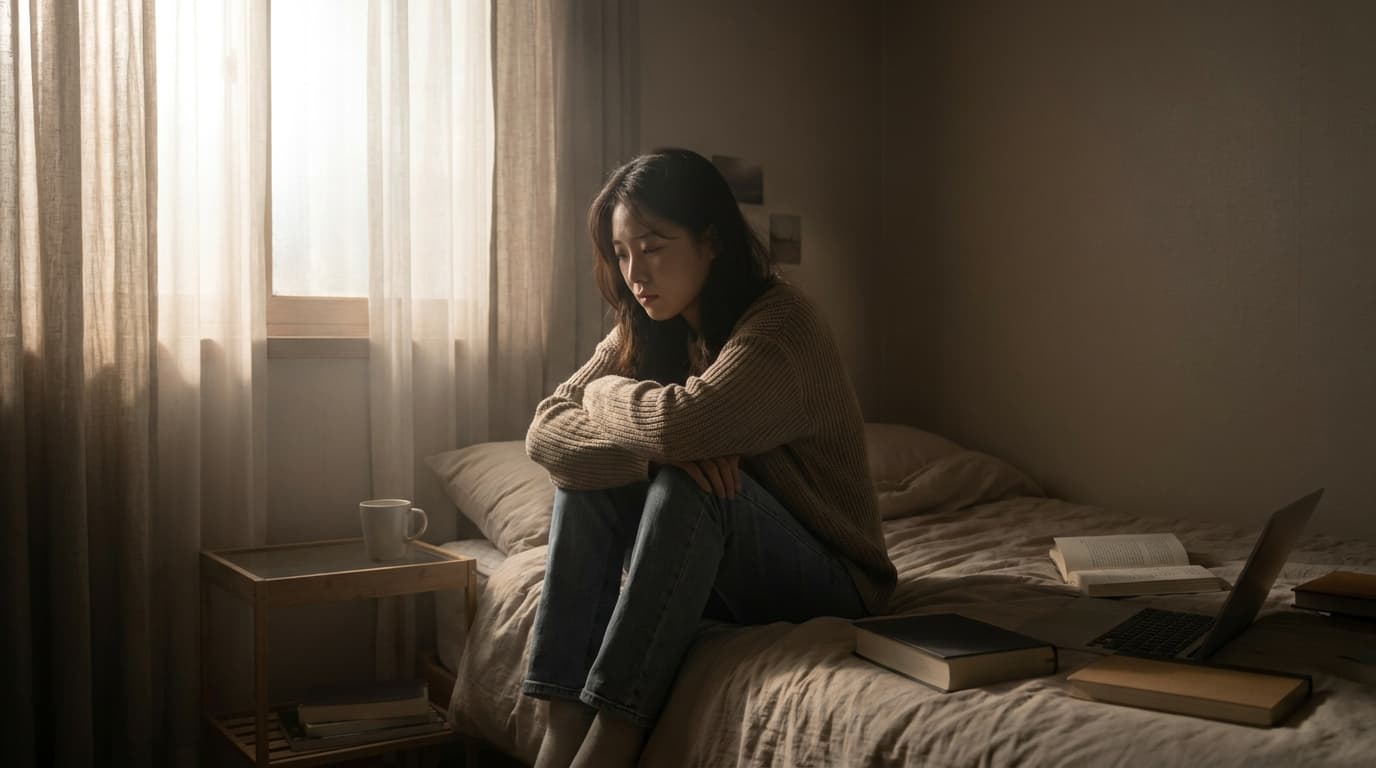
When periods that used to arrive regularly suddenly stop for several months, many women begin to feel anxious. Especially in your 30s, you might lie awake at night worrying, "Could this be early menopause?" or "Will I ever be able to have children?" Being told that hospital tests show no special abnormalities can leave you feeling even more at a loss, and the suggestion of taking hormone pills often feels unsettling. The absence of menstruation is more than just an uncomfortable symptom—it can be a powerful signal that your body's balance has been disrupted.
💡 [Key Takeaway] Top 3 most common causes of missing periods: ① Hypothalamic amenorrhea due to excessive stress ② Polycystic Ovary Syndrome (PCOS) ③ Diminished ovarian reserve and early menopause Dalimchae Korean Medicine Clinic helps your body naturally restore hormone balance and healthy menstrual cycles through constitution improvement.
Why Do Periods Stop in Your 30s? Don't Ignore Your Body's Warning Signals.
As women enter their 30s, an increasing number experience irregular periods or complete amenorrhea. According to Health Insurance Review and Assessment Service data from 2016, while menstrual disorder clinic visits among women in their 20s have been decreasing, those among women in their 30s have steadily increased. These changes stem from complex causes that cannot simply be blamed on aging. In particular, they are closely linked to modern women's lifestyles, such as excessive work stress, strict dieting, and irregular habits.
One of the most common causes of stopped periods is 'hypothalamic amenorrhea'. This occurs when the hypothalamus in the brain experiences reduced function and fails to send proper ovulation signals to the ovaries. Severe stress disrupts the balance of the hypothalamic-pituitary-ovarian (HPG) axis, directly affecting hormone secretion. Additionally, Polycystic Ovary Syndrome (PCOS) is a major cause of amenorrhea in the 30s; multiple small follicles grow in the ovaries without proper ovulation, accompanied by symptoms such as amenorrhea, irregular periods, hirsutism, acne, and obesity. Diminished ovarian reserve or premature ovarian insufficiency (early menopause) is another issue that cannot be overlooked. These problems arise within the complex network of our body's autonomic nervous system and hormones, requiring fundamental bodily recovery rather than simple drug prescriptions.
Can You Regain Your Menstrual Cycle Without Hormone Pills?
Many people are immediately prescribed hormone pills to induce menstruation when periods stop. However, hormone pills only induce bleeding artificially and fail to serve as a fundamental treatment to restore spontaneous ovulation function. In fact, long-term use can suppress ovulation, making it even harder to regain a normal cycle. Dalimchae Korean Medicine Clinic's Songdo branch focuses on changing the bodily environment so that the body can find its healthy menstrual cycle on its own.
Indeed, research studies suggest that Korean medicine treatment positively influences ovarian function improvement and menstrual cycle recovery. In a case report published in the Journal of Korean Obstetrics and Gynecology in February 2020, a single 32-year-old female patient overcame premature ovarian insufficiency through oriental medical treatment and successfully achieved natural pregnancy and childbirth. This patient had experienced amenorrhea for over 6 months, had a very high follicle-stimulating hormone (FSH) level of 88.35 mIU/mL, and low estradiol (E2) levels, diagnosing her with classic premature ovarian insufficiency. The researchers reported that applying herbal treatment centered on 'Daeyeongjeon-gamibang' normalized hormone levels, restored menstruation, and resulted in a healthy childbirth, concluding that herbal medicine is effective in improving ovarian function and regulating hormonal imbalance.
Another study showed that Korean medicine treatment significantly lowered FSH levels in patients with premature ovarian insufficiency. A meta-analysis of 10 randomized controlled trials (RCTs) involving 888 patients with premature ovarian insufficiency revealed that the herbal medicine treatment group had significantly lower FSH levels compared to the hormone replacement therapy group, with the difference becoming even more pronounced after 6 months or more of treatment. This means that Korean medicine treatment goes beyond mere symptom relief, helping to restore ovarian function and autonomously regulate hormone balance. Based on these foundations, Dalimchae Korean Medicine Clinic uses personalized oriental medicine treatments tailored to individual constitutions and symptoms to strengthen ovarian function, improve uterine environments, and help patients regain healthy menstrual cycles.
Dalimchae’s Constitution Improvement: Creating a Body Where Periods Return and Stay.
At Dalimchae Korean Medicine Clinic, amenorrhea and irregular periods in women in their 30s are approached from the perspective of 'constitution improvement'. Constitution improvement is not about temporarily suppressing symptoms or supplying external hormones, but about fostering our body's own regenerative power to create a fundamental bodily environment where symptoms do not recur. It is like repairing the internal gears of a broken clock so it moves accurately on its own, rather than forcefully turning it from the outside.
To achieve this, we utilize various Korean medicine therapies such as herbal medicine, acupuncture, moxibustion, and pharmacopuncture. In particular, acupuncture helps circulation in the lower abdomen, stimulates ovary-related acupuncture points to smooth qi and blood circulation, removes waste products, and encourages the remarkable change of ovulation to occur. Furthermore, herbal medicine is custom-prescribed based on each patient's constitution and the cause of amenorrhea (stress, stasis of blood, damp phlegm, etc.) to strengthen ovarian function, regulate hormone balance, and fortify the uterus and ovaries.
This constitution improvement treatment goes beyond merely inducing menstruation; it helps relieve worries about infertility or early menopause and assists in preparing for a healthy pregnancy. Dalimchae Korean Medicine Clinic's Songdo branch comprehensively grasps your body's signals, accurately diagnoses the cause of amenorrhea, and creates a healthy body without recurrence.
Could You Have Amenorrhea Too? Self-Diagnosis Checklist
If you check 3 or more of the following items, it is advisable to listen to your body's signals and consult a professional:
- Periods have not appeared for 3 months or more recently.
- Menstrual cycles have become increasingly long or irregular.
- You suffer from excessive stress and fatigue.
- You have experienced sudden weight gain or loss.
- Acne or hirsutism has appeared on your face or body.
- Emotional changes such as depression or anxiety have worsened without special reason.
- Sleep quality has deteriorated and falling asleep is difficult.
- You are experiencing difficulties with infertility or pregnancy preparation.
If 3 or more apply: Autonomic imbalance and hormone-related amenorrhea can be suspected. Consider precise diagnosis and complex Korean medicine treatment at Dalimchae Korean Medicine Clinic's Songdo branch. If 5 or more apply: Immediate visitation for professional diagnosis and treatment is recommended.
Q. Is it common to miss periods for several months in your 30s? A. According to Health Insurance Review and Assessment Service data, menstrual disorder clinic visits among women in their 30s are steadily increasing. Many experience irregular periods or amenorrhea due to various causes such as stress, dieting, and polycystic ovary syndrome.
Q. Why do periods come when taking birth control pills even though I have amenorrhea? A. Birth control pills artificially regulate hormone levels to proliferate the endometrium and induce bleeding. This is close to 'fake menstruation' and is not a fundamental treatment to restore spontaneous ovulation function.
Q. Can early menopause be treated with Korean medicine? A. Yes, there are cases where patients diagnosed with early menopause recovered ovarian function and regained menstrual cycles through Korean medicine treatment. Especially for premature ovarian insufficiency of 3 years or less, Korean medicine treatment showed meaningful therapeutic effects in 47.1% of cases.
Q. Can prolonged amenorrhea lead to infertility? A. Since amenorrhea is a sign that ovulation is not occurring properly, long-term persistence can make natural pregnancy difficult. 60 to 85% of amenorrhea in women in their 20s and 30s is likely associated with polycystic ovary syndrome, which is a major cause of infertility.
Missing periods for several months is not a problem that can be resolved by simply enduring it. You no longer need to ignore the signals your body has been sending for a long time. When approached in the right direction, your body can respond faster than you think. Bring the symptoms you are currently experiencing just as they are. Dalimchae Korean Medicine Clinic will find the cause together with you.
Where life blossoms. Herbal medicine is Dalimchae Korean Medicine Clinic. Check symptoms similar to yours first through Dalimchae Korean Medicine Clinic website AI consultation!
This health information was compiled together by Dalimchae medical staff based on questions frequently received in the consulting room. Medical Supervision | Women and Pregnancy Care Standard: Dalimchae Korean Medicine Clinic Songdo Branch, Korean Medicine Doctor Oh Hyunmin (Early Menopause Column)