
안녕하세요. 달임채한의원입니다.
Menstrual Pain That Does Not Respond to Painkillers: Finding the Root Cause
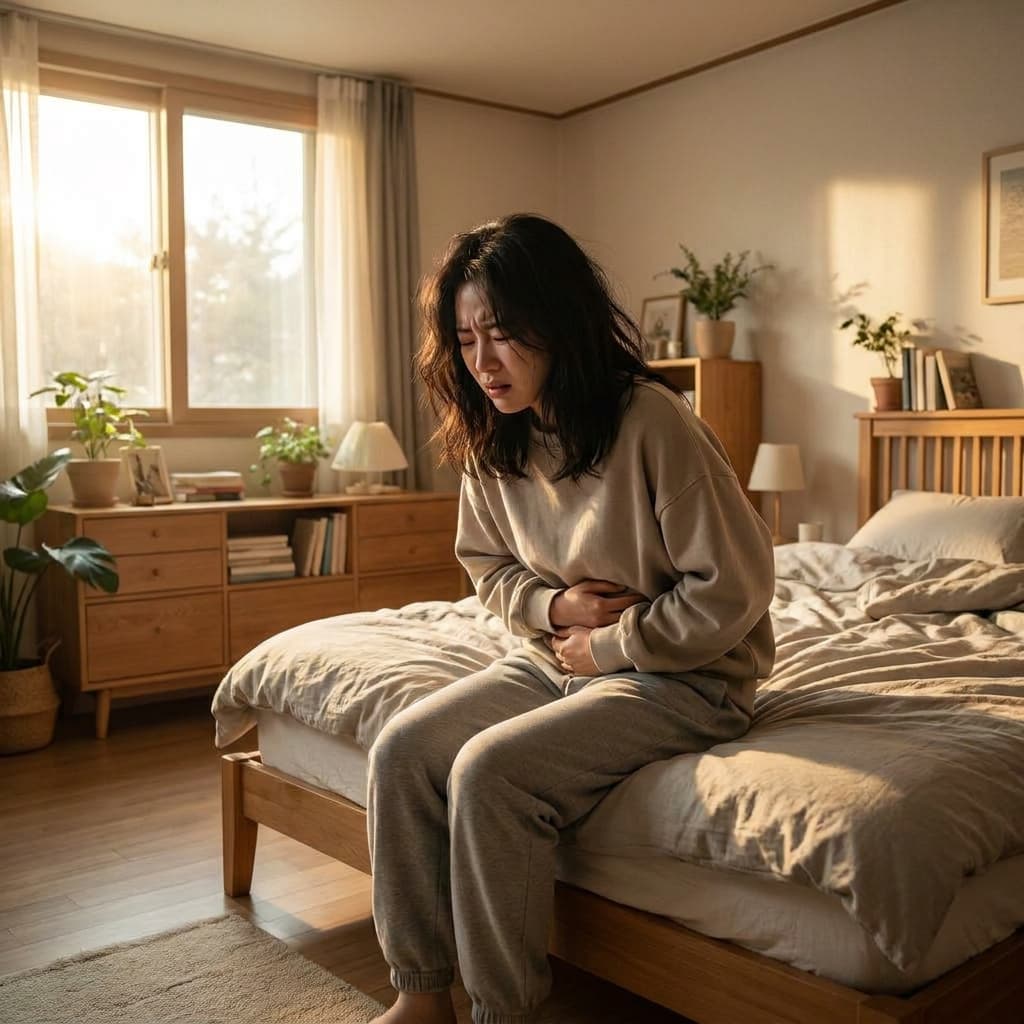
Many women suffer from severe menstrual pain every month. From lower abdominal cramps to backaches, headaches, nausea, and even vomiting, the quality of life is severely impaired to the point where daily life becomes difficult. When painkillers don't work or cause side effects like indigestion, giving up in despair is common. Enduring it with the thought that "it's just how it is" ignores the desperate signals your body is sending.
💡 [Key Answer] The 3 most common causes of menstrual pain that does not respond to painkillers: ① Uterine Blood Stasis: Impaired blood circulation causes waste accumulation. ② Autonomic Imbalance: Stress and overwork lower brain and uterine function. ③ Lower Abdominal Coldness: Cold lower abdomen weakens uterine function and worsens pain. Dalimchae Oriental Medicine Clinic breaks the vicious cycle of pain by restoring body balance through constitutional treatment.
Why is menstrual pain so severe even when painkillers fail?
Menstrual pain is divided into primary dysmenorrhea, occurring without specific disease, and secondary dysmenorrhea, caused by conditions like uterine myomas or endometriosis. In primary dysmenorrhea, an overproduction of prostaglandins in the endometrium during menstruation causes severe uterine muscle contractions and pain. While painkillers inhibit prostaglandin production to reduce pain, they do not solve the root cause. Thus, pain often persists or worsens the next month.
In Oriental medicine, severe menstrual pain that doesn't respond to painkillers is viewed not merely as a pain problem, but as 'blood stasis' (어혈) due to poor uterine blood circulation, 'qi-blood weakness' (기혈허약) from deficiency, or 'coldness' (한랭) lowering uterine function. These factors disrupt autonomic nervous system balance and make the body more sensitive to pain.
Why shouldn't menstrual pain be dismissed as just simple pain?
Menstrual pain can be an important signal of female health beyond mere discomfort. Severe menstrual pain disrupts concentration, reduces sleep quality, and causes anxiety or depression. Especially for secondary dysmenorrhea, neglecting conditions like endometriosis or myomas can lead to infertility, requiring special attention. Ignoring recurring monthly pain can cause symptoms to become chronic or develop into more serious diseases. Therefore, listening to small body signals and actively finding the root cause is crucial.
How does Oriental medicine treat menstrual pain that doesn't respond to painkillers?
Dalimchae Oriental Medicine Clinic Incheon branch provides constitutional improvement treatment to find the root cause of menstrual pain that painkillers cannot resolve, restoring body balance. We focus on making the uterine environment healthy and improving systemic circulation so the body naturally becomes less sensitive to pain.
According to a study published in the international journal 'Medicine' in 2020, Dangguijagyag-san (당귀작약산) proved effective for primary dysmenorrhea. This systematic review and meta-analysis of 14 randomized controlled trials showed that compared to western NSAIDs, Dangguijagyag-san was more effective in reducing pain (MD = -0.86, 95% CI -1.56–-0.16) and significantly higher in overall therapeutic efficacy (RR 1.16, 95% CI 1.08–1.24, p < .0001). Compared to placebo, it also showed superior effects in reducing pain (MD = -1.1, 95% CI -2.04–-0.16) and painkiller dosage (MD = -2.3, 95% CI -3.58–-1.02). Researchers concluded Dangguijagyag-san can be effective for primary dysmenorrhea. These data suggest Dalimchae's constitutional treatment drives fundamental changes through uterine environment improvement, not just pain relief.
Additionally, a 2021 systematic review and meta-analysis on Danggui Sini Decoction (당귀사역탕) analyzing 11 RCTs involving 1,005 women showed a significantly higher therapeutic rate in the herbal medicine group (n=1005, RR = 1.42, 95% CI = 1.30-1.55, p < .01). This study demonstrates that Danggui Sini Decoction increases primary dysmenorrhea treatment rates and particularly contributes to reducing recurrence. Incheon Dalimchae Oriental Medicine Clinic uses tailored herbal medicine prescriptions based on scientific evidence to promote uterine qi-blood circulation, creating a warm and healthy uterine environment, preventing recurrence, and stabilizing the autonomic nervous system.
How does Dalimchae's constitutional treatment for menstrual pain proceed?
Dalimchae's constitutional treatment in Incheon aims to create a body where symptoms do not turn back on, rather than just masking them. Severe menstrual pain signals that the uterus and surrounding organs are failing to function properly. This dysfunction is closely linked to autonomic imbalance, lower abdominal coldness, and blood stasis.
According to individual constitution and symptoms, we prescribe customized herbal medicine to promote uterine blood circulation, remove blood stasis, and replenish warm energy. Acupuncture and moxibustion are combined to promote lower abdominal circulation, relieve pain, and regulate autonomic balance. This combined Oriental treatment helps the uterus regain healthy function and positively impacts related conditions like irregular menstruation or infertility. Dalimchae provides fundamental solutions so you can spend comfortable months without relying on painkillers.
Menstrual Pain Self-Diagnosis Checklist
Check how many of the following apply to you:
- Even when taking painkillers during menstruation, pain does not subside completely.
- Menstrual pain interferes with daily life (studies, work, etc.).
- Menstrual blood has many clots or a dark red color.
- Lower abdomen or hands and feet always feel cold.
- Symptoms like headaches, backache, breast pain, and fatigue are severe around menstruation.
- You usually have high stress or irregular lifestyle habits.
- Menstruation is irregular, or menstrual flow suddenly increases or decreases.
Evaluation Criteria:
- 3 or more items apply: Uterine environment imbalance suspected → Incheon Women's Clinic Dalimchae consultation recommended
- 5 or more items apply: Chronic menstrual pain progression likely → Immediate combined Oriental treatment review
Q. How long does Oriental medical treatment for menstrual pain take? A. Treatment duration varies by individual constitution, cause, and severity. Typically, meaningful changes are experienced through about 3 months of consistent treatment, followed by symptom management and recurrence prevention.
Q. Does taking painkillers for a long time cause tolerance? A. Physical tolerance to painkillers does not develop, but psychological dependence of finding it hard to endure pain without them can occur. Also, long-term painkiller use can cause side effects like gastrointestinal disorders, requiring caution.
Q. Is severe menstrual pain related to infertility? A. Yes, secondary dysmenorrhea caused by endometriosis or uterine myomas can be a cause of infertility. Actively treating menstrual pain to create a healthy uterine environment positively impacts pregnancy potential.
Q. Are there lifestyle habits good for menstrual pain? A. Keeping the abdomen and lower body warm, and avoiding cold foods or caffeinated drinks is recommended. Light stretching or walking promotes pelvic circulation, and adequate rest and stress management are important.
Menstrual pain is not a problem solved by enduring it. You no longer need to ignore the body signals sent for a long time. Approaching in the right direction makes the body respond faster than expected. Bring the symptoms you are experiencing as they are. Dalimchae Oriental Medicine Clinic Incheon branch will find the cause together.
Where life blossoms. Herbal medicine is Dalimchae Oriental Medicine Clinic. Check your similar symptoms first through Dalimchae Clinic's website AI consultation!
Medical Review | Women & Pregnancy Care Standard, Dalimchae Oriental Medicine Clinic Incheon Branch, Oriental Medical Doctor Yang Yuchan (Menstrual Pain Column)