
Hello. This is Dalimchae Korean Medicine Clinic.
Menstrual pain that doesn't respond to medicine, is it a warning sign from my body?
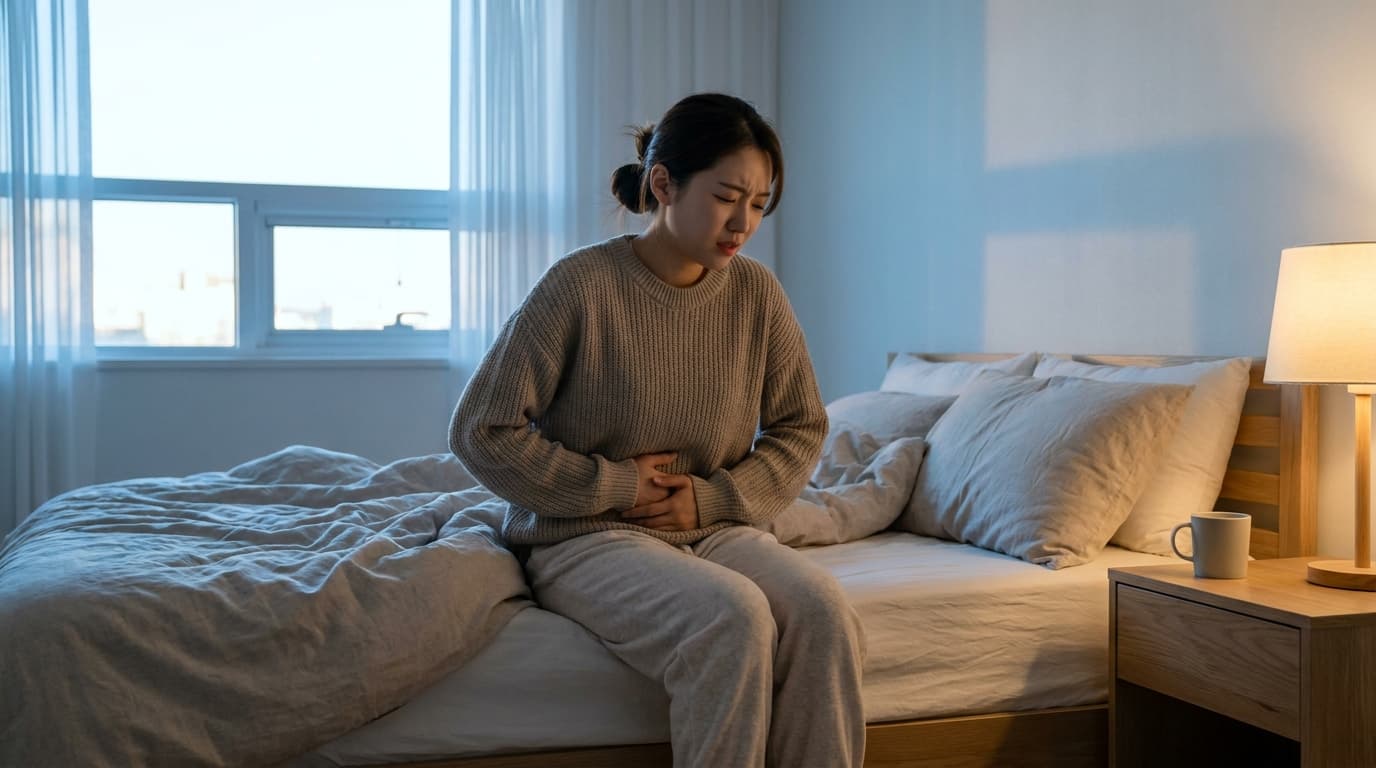
The monthly pain that comes with that time is something any woman can experience, but sometimes it is so severe that it paralyzes daily life and does not subside even with painkillers. Many people try to endure it, thinking 'menstrual pain is supposed to be painful,' but menstrual pain that does not respond to medication can be more than just simple discomfort; it can be an important warning sign from our body. Leaving such pain untreated can lead to more serious women's diseases.
💡 Key Answer The 3 most common causes of menstrual pain that doesn't respond to medicine: ① Excessive secretion of prostaglandins that cause uterine contractions / ② Blood circulation disorders in the uterus due to Blood Stasis (瘀血) / ③ Underlying diseases such as adenomyosis and endometriosis Dalimchae Korean Medicine Clinic solves the root cause with constitutional improvement treatment that improves individual constitution and the uterine environment.
Isn't enduring with painkillers alone the answer?
Many women reach for painkillers first when they experience menstrual pain. Non-steroidal anti-inflammatory drugs (NSAIDs) are an effective way to temporarily reduce pain by inhibiting the production of pain-inducing substances called prostaglandins. However, painkillers do not fundamentally solve the cause of the pain, so pain often recurs when medication is stopped. In addition, side effects such as gastrointestinal disorders may occur with long-term use.
Menstrual pain can be divided into two main types. 'Primary dysmenorrhea' occurs without a specific disease, and 'secondary dysmenorrhea' is caused by underlying diseases such as uterine fibroids, endometriosis, and adenomyosis. Especially if pain is not well-controlled with drugs, or if the amount of menstruation increases and pain gradually worsens, it is important to suspect secondary dysmenorrhea and find the exact cause for treatment.
What is the root cause of menstrual pain that cannot be solved with medicine?
In Korean medicine, menstrual pain is viewed not just as a problem of the uterus, but as stemming from an imbalance in the body's overall Qi and blood circulation and organ function. In 'Donguibogam', menstrual pain is expressed as 'Tonggyeong (痛經)', and its causes are largely explained as 'No flow, then pain (不通則痛)' and 'No nourishment, then pain (不榮則痛)'. 'No flow, then pain' means pain occurs because Qi and blood circulation is not smooth and is blocked, and 'No nourishment, then pain' means pain occurs because the uterus does not receive sufficient nourishment due to lack of Qi and blood.
These causes are further divided into details. First, Blood Stasis (瘀血) refers to a state where waste products accumulate because blood circulation in the uterus is stagnant. In this case, menstrual pain is very severe, and the menstrual blood appears dark red or clotted. Second, Qi and Blood Deficiency (氣血虛弱) is a type where pain occurs as uterine function weakens due to lack of energy and nutrients from usual weakness or overwork. Third, Coldness (寒冷) is a case where uterine function decreases and pain worsens due to reduced blood circulation in a constitution with a cold lower abdomen and cold hands and feet.
In addition, organic diseases such as adenomyosis, where endometrial tissue penetrates the uterine muscle layer causing the uterus to enlarge, or endometriosis, where endometrial tissue develops outside the uterus causing inflammation and adhesions, can be causes of extreme menstrual pain. These diseases cause menstrual pain and excessive menstrual flow, and often do not respond well to painkillers.
How does constitutional improvement treatment help with menstrual pain?
Dalimchae Korean Medicine Clinic Songdo Branch identifies the root cause of menstrual pain that doesn't respond to medicine and aims for Constitutional Improvement treatment that creates a healthy uterine environment where symptoms do not recur, rather than simply suppressing pain. It's not about turning off the warning light sent by the body, but normalizing the body's system so that the warning light turns off on its own.
A multi-center prospective observational study by Dongguk University College of Korean Medicine, published in the international journal 「Integrative Medicine Research」 in 2026, evaluated the effect of herbal medicine treatment on 135 patients with menstrual pain. According to the results of this study, the patient group that received individualized herbal prescriptions showed significant reductions in menstrual pain intensity, pain duration, and painkiller use compared to the control group. In particular, it suggests that customized treatment considering the constitutional imbalance of individual patients is effective in alleviating menstrual pain symptoms.
In addition, a nationwide insurance claim data analysis study by the Korea Institute of Oriental Medicine, published in 「Integrative Medicine Research」 in 2025, analyzed the effect of herbal medicine treatment on 7,016 participants among 39,574 participants. As a result of the study, herbal medicine treatment significantly reduced the severity of menstrual pain symptoms over time (β = -0.072, p < 0.001), and the incidence of side effects was only 0.58%, confirming its safety. These large-scale data show that herbal medicine treatment can be an effective and safe alternative for menstrual pain management.
Based on these research data, Dalimchae Korean Medicine Clinic Songdo Branch focuses on Constitutional Improvement treatment that removes blood stasis that hinders the body's circulation, replenishes insufficient Qi and blood, and warms the uterus to improve coldness. By smoothing the blood flow around the uterus and regulating hormone balance, it creates an environment where the uterus itself can become healthy, helping patients escape from the pain of menstrual pain.
Could I also have severe menstrual pain due to adenomyosis or endometriosis?
If you are experiencing severe menstrual pain that is not controlled even with painkillers, organic diseases such as adenomyosis or endometriosis could be the cause. These diseases can be accompanied by various symptoms in addition to menstrual pain, and can lead to infertility if left untreated, requiring more caution. In particular, many people visiting Songdo menstrual pain clinics complain of pain caused by these underlying diseases.
Menstrual Pain Self-Diagnosis Checklist
If 3 or more of the following items apply, the menstrual pain you are currently experiencing may not be simple pain.
- Menstrual pain does not decrease at all or is only temporarily relieved even after taking painkillers.
- Menstrual pain tends to get worse gradually.
- There is pain in the lower abdomen or pelvic area even when it is not the menstrual period.
- The amount of menstruation suddenly increased, or the menstrual period became longer than 7 days.
- Dark red clots are frequently mixed in the menstrual blood.
- Dizziness, fatigue, headache, indigestion, etc., appear severely along with menstrual pain.
- Pain is felt in the lower abdomen or pelvic area during intercourse.
- Pain does not subside well even when the abdomen is warmed.
- Hands, feet, or the lower abdomen are usually exceptionally cold.
Judgment Criteria:
- 3 or more items apply: Suspected severe menstrual pain or secondary dysmenorrhea. Consider precise diagnosis and combined herbal treatment at Dalimchae Korean Medicine Clinic Songdo Branch.
- 5 or more items apply: Immediate visit to a medical institution is recommended. It is important to find the exact cause through a detailed examination and start individualized treatment.
Q. How long do I have to take menstrual pain herbal medicine to see an effect? A. The treatment period for menstrual pain herbal medicine can vary depending on the intensity and cause of the pain and individual constitution. Usually, changes in the menstrual cycle and pain relief can be expected through consistent intake for 2 to 3 months, and management for preventing recurrence after that is important.
Q. Is it okay to take painkillers and herbal medicine together? A. Generally, taking herbal medicine and painkillers together is not recommended. Since herbal medicine is a treatment that balances the fundamental aspects of the body, it is better to adjust after consultation with medical staff to reduce the possibility of symptom masking or interactions caused by painkiller intake.
Q. I have adenomyosis, can it be improved with Korean medicine treatment? A. Adenomyosis is often effectively treated with Korean medicine that preserves the uterus without surgery. Through herbal medicine, acupuncture, moxibustion, and pharmacopuncture, it can help inhibit the growth of adenomyosis tissue and alleviate symptoms by removing blood stasis and improving blood circulation in the uterus.
Q. I have other symptoms (headache, indigestion, etc.) along with menstrual pain, are they treated together? A. Yes, Korean medicine treatment aims to improve not only menstrual pain but also various systemic symptoms accompanied by menstrual pain, such as headache, indigestion, fatigue, and mood swings. It is effective in improving the overall quality of life by restoring the balance of the entire body.
Menstrual pain is not a problem that can be solved by enduring. You no longer have to ignore the signals sent by your body for a long time. If you approach in the right direction, your body reacts faster than you think. Bring your current symptoms as they are. We will find the cause together at Dalimchae Korean Medicine Clinic.
Where life blooms. For herbal medicine, it's Dalimchae Korean Medicine Clinic. Check your symptoms similar to mine through the AI consultation on the Dalimchae website first!
This article is health information compiled by Dalimchae medical staff based on questions frequently received in the treatment room. Medical Supervision | Women & Pregnancy Treatment Standards Dalimchae Clinic Songdo Branch Korean Medicine Doctor Oh Hyun-min (Adenomyosis Column)