
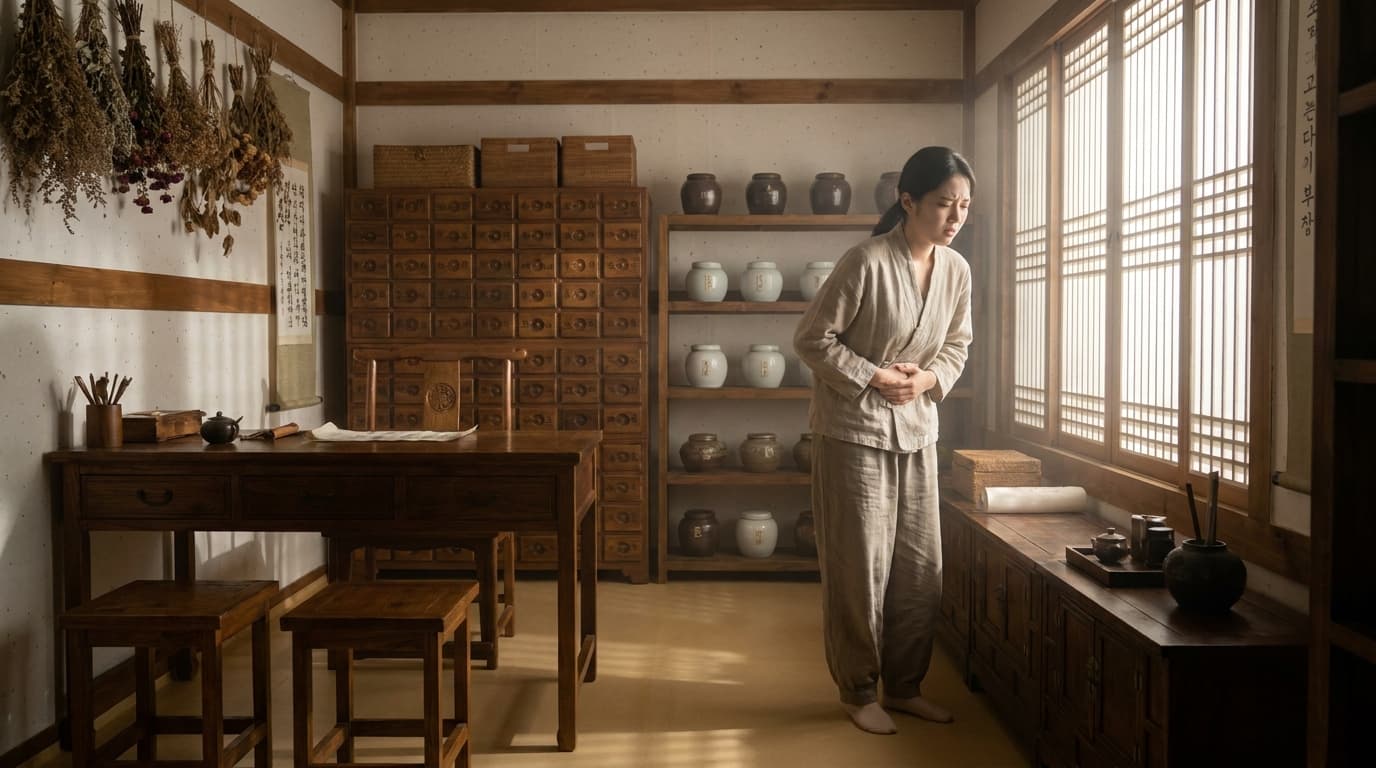
Does one side of your lower abdomen feel tingly and painful? Ovarian cysts could be the real cause of your pain.
When you suddenly feel a tingling or heavy pain on one side of your lower abdomen, many people dismiss it as simple indigestion or mild menstrual cramps. However, this pain could be an important signal from your body. Especially for women, when they complain of "tingling pain on one side of the lower abdomen," one of the conditions that should not be overlooked is ovarian cysts. Ovarian cysts are common, but if left untreated, they can lead to emergency situations such as rupture or torsion, so accurate diagnosis and proper management are important.
💡 Key Answer Top 3 most common causes of one-sided lower abdominal pain: ① Ovarian cyst rupture or torsion / ② Endometriosis / ③ Pelvic inflammatory disease Dalimchae Clinic restores ovarian function through constitutional improvement and resolves the root cause of pain.
Are ovarian cysts just 'water cysts' that you don't need to worry about?
An ovarian cyst refers to a fluid-filled sac in the ovary. Most are functional cysts that form during the ovulation process and disappear naturally. However, some cysts can grow continuously or develop into benign tumors such as endometriomas (caused by endometrial tissue growing in the ovary) or teratomas. While often asymptomatic in the early stages, as they grow or if complications occur, they can cause various symptoms.
Common symptoms include lower abdominal pain, abdominal bloating, indigestion, discomfort during urination or bowel movements, abnormal vaginal bleeding, and worsening menstrual pain. In particular, if an ovarian cyst suddenly twists (ovarian torsion) or ruptures (ovarian cyst rupture), extreme abdominal pain accompanied by dizziness, cold sweats, and in severe cases, fainting, can occur. If these symptoms appear, you should visit a medical institution immediately.
How does Korean medicine approach ovarian cysts?
In modern medicine, ovarian cysts are often monitored or surgery is considered depending on the size or symptoms. However, even after surgery, recurrence rates have been reported to be as high as 25-50%, so it is important to resolve the fundamental cause.
In Korean medicine, the cause of ovarian cysts is not limited to the cyst itself. It is viewed as a result of an overall imbalance in the body, leading to the accumulation of waste products and poor blood circulation, known as 'damp-phlegm (濕痰)' and 'blood stasis (瘀血).' In particular, treatment focuses on strengthening kidney function, which is closely related to ovarian function in women, and enhancing the body's overall immune function to improve the ovarian and uterine environment.
A systematic review and meta-analysis published in 'Frontiers in Pharmacology' in June 2024 analyzed 22 randomized controlled clinical trials involving 1,938 patients with ovarian endometrioma (OEC) after surgery. The study found that the herbal medicine treatment group had a significantly lower recurrence rate of ovarian endometrioma compared to the control and Western medicine treatment groups (OR = 0.25; 95% CI: 0.10–0.64 for herbal medicine vs. control). Furthermore, herbal medicine increased the total clinical effective rate and showed potential for increasing pregnancy rates, especially when combined with Western medicine. This suggests that Korean medicine treatment can have a positive impact on preventing recurrence and improving overall clinical outcomes.
Another study conducted at Beijing University of Chinese Medicine in 2000 compared herbal medicine treatment, combined laparoscopic surgery and herbal medicine, and Western medicine (Danazol) in 152 patients with endometriotic ovarian cysts. The results showed that the combined treatment group had significantly higher rates of cyst reduction, disappearance, and pregnancy compared to the Western medicine group (P < 0.05). Both the herbal and combined treatment groups were noted for having fewer side effects. These research results are why Dalimchae Clinic, an ovarian cyst clinic in Songdo, focuses on restoring ovarian function and preventing recurrence through constitutional improvement.
Dalimchae Clinic's 'Constitutional Improvement' Treatment Principles
At Dalimchae Clinic, we resolve the fundamental cause of ovarian cysts through constitutional improvement. Beyond simply removing the cyst, we aim to create a body where symptoms do not recur. Many female diseases stem from hormonal imbalances, weakened immunity, and circulatory disorders. Ovarian cysts, in particular, are likely to occur when blood circulation around the ovaries is stagnant or when water metabolism is not smooth, leading to the accumulation of waste products. This imbalance hinders ovulation and interferes with normal ovarian activity, ultimately leading to cyst formation.
The principles of Dalimchae's constitutional improvement treatment are as follows:
- Removal of Damp-phlegm and Blood Stasis: Herbal prescriptions remove stagnant waste (damp-phlegm and blood stasis) and promote blood circulation to purify the environment around the ovaries. This helps alleviate inflammation and swelling and inhibits cyst growth.
- Strengthening Ovarian Function and Hormonal Balance: We reinforce the energy of the kidneys (腎), which govern ovarian function, and smooth out the overall flow of Qi and blood to restore female hormonal balance. This normalizes ovulation and helps healthy follicle maturation.
- Enhancing Immunity and Preventing Recurrence: We increase the body's overall immunity to strengthen its self-healing power and create a healthy constitution that is not shaken by external environmental changes. This leads to the natural disappearance of cysts and the fundamental prevention of recurrence. At Dalimchae Clinic in Songdo, based on these principles, we use customized herbal medicine, acupuncture, moxibustion, and sitz baths tailored to each individual's constitution and symptoms to help effectively manage and recover from ovarian cysts. This can also improve related conditions such as irregular periods or uterine fibroids.
Ovarian Cyst Self-Diagnosis Checklist
If you have 3 or more of the following symptoms, it is recommended to visit a women's disease clinic in Songdo for a detailed diagnosis and consultation. If you have 5 or more, we recommend considering immediate Korean medicine treatment.
- Frequent tingling or heavy pain in one or both sides of the lower abdomen.
- Irregular menstrual cycles or significant changes in menstrual patterns.
- Menstrual pain has become more severe than before.
- Sudden abdominal bloating or a feeling that the lower abdomen is bulging.
- Indigestion, or discomfort in bowel movements such as constipation or diarrhea.
- Frequent urination or a feeling of residual urine.
- Pain during sexual intercourse.
- Accompanied by back pain.
- Tendency to gain weight without a specific reason.
Frequently Asked Questions (FAQ)
Q. Why do ovarian cysts occur? A. Ovarian cysts are mainly caused by problems in the ovulation process where follicles do not mature or discharge properly, or due to abnormal water metabolism and blood circulation disorders within the ovary, leading to the accumulation of waste products (damp-phlegm, blood stasis). Stress, irregular lifestyle habits, and hormonal imbalances can also be causes.
Q. Is surgery necessary for ovarian cysts? A. Not all ovarian cysts require surgery. Functional cysts often disappear naturally within a few weeks to months. However, surgery may be considered if the cyst is large, persists over time, causes severe pain, or poses a risk of rupture or torsion.
Q. Can ovarian cysts be treated with Korean medicine? A. Yes, ovarian cysts can be sufficiently managed and improved through Korean medicine. Korean medicine proceeds with fundamental treatment to inhibit cyst growth and prevent recurrence by removing damp-phlegm and blood stasis, strengthening ovarian function, and regulating hormonal balance.
Q. How does Dalimchae Clinic Songdo Branch treat ovarian cysts? A. Dalimchae Clinic Songdo Branch resolves damp-phlegm and blood stasis and restores ovarian function through herbal prescriptions tailored to the individual's constitution and symptoms. In addition, acupuncture, moxibustion, and sitz baths are combined to promote blood circulation in the pelvis and strengthen immunity to address the root cause and prevent recurrence.
Women's diseases like lower abdominal pain are not problems that can be solved by just enduring them. You no longer have to ignore the signals your body has been sending for a long time. If you approach it in the right way, your body reacts faster than you think. Bring the symptoms you are experiencing as they are. Dalimchae Clinic will find the cause together.
Where life blooms. For herbal medicine, it's Dalimchae Clinic. Check out symptoms similar to yours first through the AI consultation on Dalimchae Clinic's homepage!
Medical Supervision | Oh Hyunmin, Korean Medicine Doctor at Dalimchae Clinic Songdo Branch, specializing in Women and Pregnancy (Ovarian Cyst Column)
#OvarianCyst #LowerAbdominalPain #WomensHealth #SongdoOvarianCystClinic #ConstitutionalImprovement #MenstrualPain #KoreanMedicineTreatment